What Happens If You Default on a Car Loan? Full Consequences
Missing a car payment does not just risk repossession — that is often the most visible consequence, but it is not the only one. Defaulting on an auto loan can trigger a deficiency balance you still owe after the car is gone, a lawsuit, years of credit damage, and in some cases even a tax bill on debt the lender decides to forgive.
This guide covers the full range of consequences, from the first missed payment through the long-term financial fallout. If you specifically want to know how many payments you can miss before a tow truck shows up, our guide on how many car payments you can miss before repossession breaks down the timeline and state-by-state notice rules. If your car has already been taken, see what happens if your car gets repossessed for your rights and next steps.
Quick answer: Defaulting on a car loan can lead to repossession without a court order, a deficiency balance you still owe if the auction sale does not cover the loan, a possible lawsuit and wage garnishment, damage to your credit report that lasts up to seven years, and — if the lender forgives the leftover balance instead of collecting it — a 1099-C form that can make that forgiven debt taxable income.

When Does a Car Loan Officially Go Into Default?
Most loan contracts technically allow a lender to treat the account as in default after a single missed payment, but the practical timeline is a bit more forgiving. Around the 30-day-late mark, the missed payment gets reported to the credit bureaus — this is usually the single biggest hit to your score in the whole process. Most lenders wait until you are 60 to 90 days behind, roughly two to three missed payments, before they begin the repossession process, since sending a tow truck is expensive and a last resort for them as well.
Exactly how much room you have depends on your lender and your state — some states require a formal notice before a lender can act, others do not. For the full breakdown, including a state-by-state look at right-to-cure notice rules, see how many car payments you can miss before repossession.
Repossession Is the Best-Known Consequence, But Not the Only One
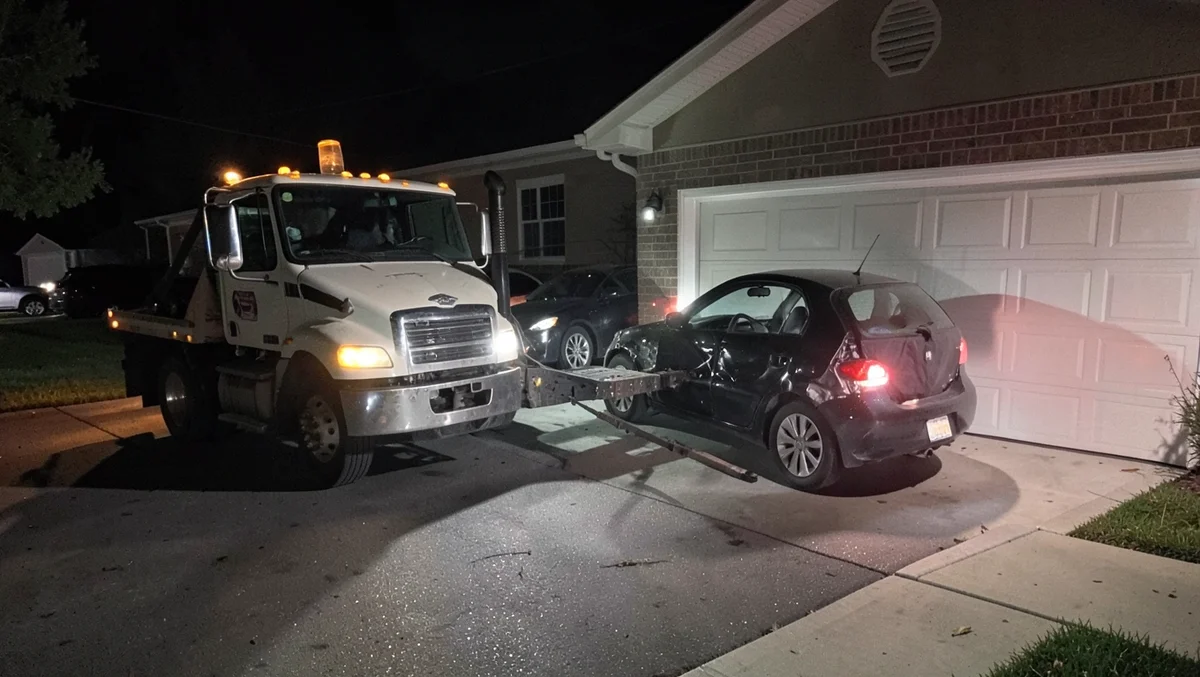
In nearly every state, a lender can repossess your car without ever going to court. This is called self-help repossession: the lender hires a repo agent, who can take the car from a driveway, a parking lot, or the street, usually without advance warning. The one legal limit is that the agent cannot “breach the peace” — they cannot break into a locked garage, use force, or continue if you physically object at the moment they try to take it.
Once the car is gone, though, the loan is not gone with it. What happens next — getting the car back before it is sold, what you owe if you cannot, and how it affects your credit — is its own process. If this has already happened to you, our full guide on what happens if your car gets repossessed walks through reinstatement, redemption, and your legal rights during and after the tow.
The Financial Fallout: Deficiency Balance and Possible Lawsuit
A repossessed car almost never sells at auction for what you still owe on it. The gap between the auction sale price and your remaining loan balance, plus repossession and storage fees, is called a deficiency balance. Legally, you are still responsible for that amount unless your state or loan contract says otherwise.
If you cannot pay the deficiency balance, the lender typically sells the debt to a collection agency, or pursues it directly. Either one can sue you for the remaining amount. If they win a judgment, depending on your state, that can lead to wage garnishment, a levy against your bank account, or a lien on other property you own. This is on top of the collection calls you are likely to get in the meantime as the debt works its way through the process.
Could You Owe Taxes on the Debt That Gets Forgiven?
This part surprises a lot of people. If a lender decides collecting the deficiency balance is not worth the effort and simply writes it off instead of suing you, that is not automatically good news. The IRS generally treats forgiven debt as taxable income, on the theory that you got the benefit of money you never had to pay back.
By law, a lender that cancels $600 or more of debt has to send you (and the IRS) a Form 1099-C, and you are expected to report that amount as income on your tax return. There is a common exception worth knowing about: if you were insolvent — meaning your total debts were higher than the value of everything you own — right before the debt was canceled, you may be able to exclude some or all of that forgiven amount from your taxable income using IRS Form 982. If you receive a 1099-C after a repossession, it is worth talking to a tax professional before you file, rather than assuming the forgiven balance is simply free.

How Long Does This Follow You?
A default and any related repossession or collection account can stay on your credit report for up to seven years from the date of the first missed payment that led to it, not from the date the car was taken. During that window, your score takes a real hit, and lenders will see you as a higher risk — expect higher interest rates and a harder time getting approved for future loans, credit cards, or even some apartment leases and jobs that run a credit or background check as part of the application.
Is Defaulting on a Car Loan a Crime?
No. Falling behind on a car loan and even having the car repossessed is a civil matter, not a criminal one — you cannot be arrested or jailed simply for missing payments or owing a deficiency balance. The exception is if you do something separate and deliberately illegal to avoid the debt, such as hiding or damaging the car specifically to keep the lender from repossessing it, which some states treat as a distinct offense.
How to Limit the Damage
The earlier you act, the more options you have. Call your lender as soon as you know a payment is going to be late — many offer a short-term deferment, a modified payment plan, or a temporary reduction while you get back on your feet, and early communication looks a lot better to them than silence. Refinancing to a lower payment can also help if your credit still qualifies.
If default already feels unavoidable, voluntarily surrendering the car to the lender can look slightly better on your credit report than an involuntary repossession, though you may still owe a deficiency balance afterward. A credit counselor or debt management plan can also help you negotiate more manageable terms with the lender or work out a broader repayment plan if the car loan is one of several debts you are behind on.
Frequently Asked Questions
What Happens If Your Car Loan Goes Into Default?
Your car can be repossessed without a court order, your credit score drops, and you remain responsible for any deficiency balance left after the car is sold. The lender or a collection agency can sue you for that balance, which can lead to wage garnishment in some states.
What Happens If You Walk Away From a Car Loan?
Walking away does not end the debt. The lender will typically repossess the car through self-help repossession, sell it at auction, and pursue you for any deficiency balance left over, on top of the credit damage from the missed payments themselves.
Can You Be Sued for a Deficiency Balance?
Yes. If the amount your repossessed car sold for at auction does not cover your remaining loan balance plus fees, the lender or a collection agency can sue you for the difference. A judgment against you can lead to wage garnishment, a bank account levy, or a lien, depending on your state.
Do I Owe Taxes If My Deficiency Balance Is Forgiven?
Possibly. If a lender cancels $600 or more of your deficiency balance instead of collecting it, they are required to send you a Form 1099-C, and the IRS generally treats that forgiven amount as taxable income. You may be able to reduce or eliminate that tax bill using the insolvency exclusion on IRS Form 982 — a tax professional can help you check whether you qualify.
How Long Does a Car Loan Default Stay on Your Credit Report?
Up to seven years from the date of the first missed payment that led to the default, not from the date of repossession or the last collection activity. It will continue to affect your score and loan approval odds for most of that period.
Can You Go to Jail for Defaulting on a Car Loan?
No. Defaulting on a car loan is a civil matter, not a crime, so you cannot be arrested or jailed simply for missing payments or owing money after a repossession. Deliberately hiding or damaging the car to prevent a lawful repossession is treated differently in some states and can carry its own legal consequences.
Conclusion
Defaulting on a car loan sets off more than just a repossession risk — it can mean a deficiency balance, a lawsuit, years of credit damage, and in some cases a surprise tax bill on debt you thought was simply written off. The earlier you talk to your lender, the more options you have to limit or avoid the fallout entirely. If you want the detailed timeline of exactly how many payments you can miss before a lender acts, or a full walkthrough of what to do if repossession has already happened, both linked guides above cover those next steps in depth.
Products related to this article
Sponsored / affiliate links. As an Amazon Associate I earn from qualifying purchases. I may earn additional commission from eligible campaigns.
![iPhone Car Charger,USB C Fast Car Charger[Apple MFi Certified] Apple Car Charging 38W Dual Port CarCharger Cigarette Lighter Adapter 2x3ft PD&QC 3.0 Lightning Cable for iPhone 14/13/12 Pro/11/Airpods](https://m.media-amazon.com/images/I/41XizrssoiL._SL500_.jpg)