Can Firefighters Unlock Cars: Essential Guide
Yes, firefighters can unlock cars, but it’s not their primary job and they’ll likely only do it in emergencies. They have specialized tools and training to access vehicles quickly if someone is locked inside, especially if there’s a safety risk. However, for routine lockouts, calling a locksmith or roadside assistance is usually the better option.
It’s a stressful situation: you’re rushing, you step away for just a second, and suddenly your keys are locked inside your car. The panic can set in quickly, and your mind might race through desperate solutions. One question that might pop into your head is, “Can firefighters unlock cars?” It’s a common thought, especially when you need help fast and see those red trucks in your neighborhood.
This guide is here to help you understand exactly when and how firefighters might assist with car lockouts, what their priorities are, and what other reliable options you have. We’ll break down a potentially confusing situation into simple, actionable steps, so you can feel confident and prepared, no matter what kind of car emergency you face. Let’s make sure you know who to call and what to expect!
Firefighters and Car Lockouts: The Emergency Connection
When you think of firefighters, you typically picture them battling blazes or responding to medical emergencies. So, the idea of them helping with a locked car might seem a bit unusual. However, the core mission of firefighters is to protect life and property. This mission can, in certain circumstances, extend to assisting individuals locked inside their vehicles, especially when immediate danger is present.
Fire departments operate under a broad mandate of public safety. This means they are equipped and trained to handle a wide range of emergencies, and a car lockout can become an emergency depending on the circumstances. Understanding their role and limitations is key to knowing when to consider this option.
When Firefighters Might Be Your Best Bet
Firefighters are not your average locksmith. They won’t typically come out to open your car because you accidentally left your keys on the seat. Their intervention is reserved for situations that pose a genuine risk. Here are the primary scenarios where a fire department might be called upon to unlock a car:
- Children or Vulnerable Adults Locked Inside: This is the most critical reason. If a child, elderly person, or someone with a disability is locked inside a hot car, a car running in an enclosed space, or any situation where their safety is immediately compromised, firefighters will respond with urgency.
- Medical Emergencies: If a person inside the vehicle is experiencing a medical crisis and cannot exit, firefighters will be dispatched.
- Imminent Danger to the Occupants: This could include situations like the car being in a precarious location (e.g., near a body of water, on a railway track) or if there’s any indication of foul play or distress.
- Extreme Weather Conditions: In very hot or very cold weather, a person trapped in a car can quickly face life-threatening conditions. Firefighters may respond to mitigate this risk.
It’s important to remember that there’s usually a specific emergency number (like 911 in the United States and Canada, or 112 in Europe) to report these critical situations. Non-emergency numbers for the fire department should not be used for car lockouts unless explicitly advised by the non-emergency dispatcher for a very specific, non-urgent scenario, which is extremely rare.
Why It’s Not Their Everyday Job
Fire departments are funded by taxpayer money and respond to emergencies that require their specialized equipment and skills, such as firefighting, rescue operations, and medical aid. While they have tools that can open car doors, it’s not their core competency or a service they readily offer for standard lockouts. Think of it this way: if you break a window with a hammer, you can open the door, but you wouldn’t call a construction crew for it. Likewise, firefighters possess tools like hydraulic spreaders (Jaws of Life) or specialized cutting equipment that are designed for severe vehicle extrication in accidents, not for gently opening a locked door.
Using these aggressive tools on a locked car door for a simple lockout would likely cause significant damage. Firefighters are trained to minimize damage during rescues, but their priority is speed and safety in life-threatening situations. Therefore, they will only resort to forceful entry if absolutely necessary and if no other option is available to save a life or prevent serious harm.
How Firefighters Unlock Cars (When They Do)
If a situation warrants firefighter intervention for a car lockout, they will approach it with a focus on efficiency and safety. Their methods depend heavily on the urgency of the situation and the type of vehicle. While they aim to cause as little damage as possible, especially in emergencies, sometimes property damage is an unfortunate necessity to save a life.
Tools and Techniques
Firefighters have a range of tools available, though not all are used for simple lockouts. Their primary goal is to gain access quickly and safely. The specific tool or method used will depend on the nature of the emergency and the type of car lock.
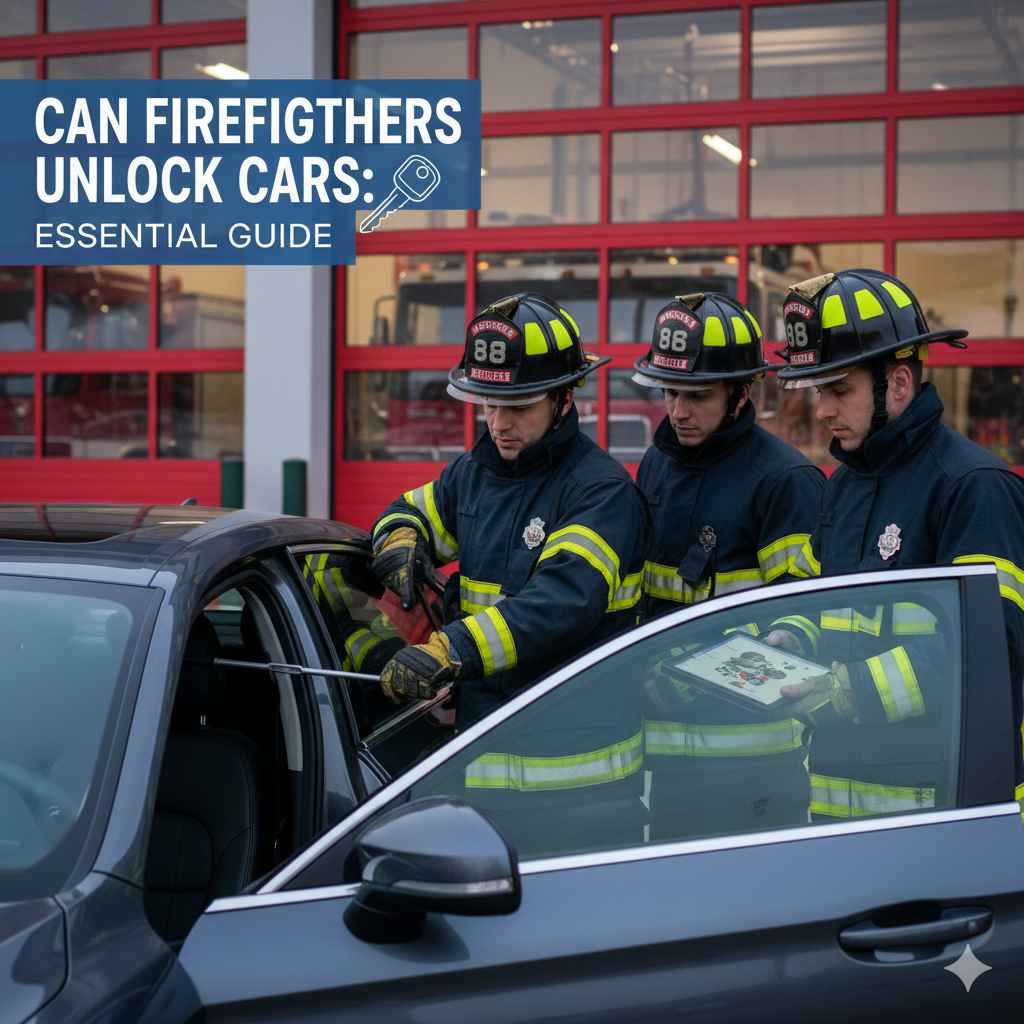
- Slim Jim or Wedge Tools: In less critical situations (and if they deem it appropriate), firefighters might use tools similar to those used by locksmiths. A slim jim can sometimes be slid between the window and the door frame to manipulate the locking mechanism. Air wedges can also be used to create a small gap, allowing access for other tools. These are the least damaging methods.
- Window Breaking: For a child or pet locked in a hot car, the fastest and often safest way to gain immediate access is to break a window. Firefighters will strategically choose which window to break to minimize risk to the occupant, often targeting a side window furthest from anyone inside. They are trained to do this efficiently and with specific tools designed for breaking tempered glass.
- More Aggressive Extrication Tools: In extreme, improbable scenarios where a door is jammed shut due to damage and a life is at stake, firefighters might use hydraulic tools like the Jaws of Life. However, this is exceedingly rare for a standard lockout and would only be considered in a critical rescue situation where standard unlocking methods fail and time is of the essence. This would cause significant damage to the vehicle.
The training firefighters receive covers vehicle extrication for accident rescue, which involves techniques for cutting roofs, doors, and other parts of a car. While they have this capability, it’s overkill for a simple lockout, and they would avoid it unless absolutely no other option exists and a life is in immediate peril.
The Decision to Intervene
The decision to have firefighters unlock a car rests with the incident commander on scene. They will assess the situation based on:
- The severity of the risk to the person(s) inside.
- The resources available and their suitability for the task.
- The potential for property damage versus the urgency of the safety concern.
For example, if a child is locked in a car on a sunny 80-degree Fahrenheit day, the risk of heatstroke is high and climbing. The commander will likely authorize immediate action, which might involve breaking a window. If it’s a cool evening and an adult is locked out, firefighters will likely advise calling a locksmith or roadside assistance.
When to Call Firefighters vs. Other Services
Knowing who to call is crucial, as using the wrong service can lead to delays, unnecessary costs, or even damage to your vehicle. Firefighters are for emergencies; for everything else, there are other professionals.
Calling the Fire Department: Emergency Scenarios
As discussed, you should call your local emergency number (e.g., 911) if:
- A child, elderly person, or pet is locked inside the vehicle, especially in extreme temperatures or if the car is running in an enclosed space.
- Someone inside is experiencing a medical emergency.
- There is an immediate threat to life or safety related to the vehicle.
When you call, be prepared to give your exact location, a description of the vehicle, and the nature of the emergency. Stay on the line until the dispatcher tells you to hang up.
Calling a Locksmith: Standard Lockouts
A professional automotive locksmith is your best friend for routine car lockouts. They are specialists trained to open car doors without causing damage, using non-destructive entry techniques. They have a wide array of specialized tools designed for different makes and models.
When to call a locksmith:
- You’ve accidentally locked your keys inside the car, and there is no immediate danger to anyone.
- You’ve lost your car keys and need a replacement made on-site.
- Your car key fob is malfunctioning, and you need a new one programmed or the old one repaired.
- Your car door lock is damaged or sticking.
Locksmiths are typically available 24/7 with mobile services. You can search online for “automotive locksmith near me” or use directories like FindALocksmith.com. Be sure to get a quote upfront to avoid surprises.
Calling Roadside Assistance: Broader Support
If you have roadside assistance through your car insurance, a membership service (like AAA), or even your credit card, they can often help with lockouts.
When to call roadside assistance:
- You are locked out of your car and have a membership or coverage.
- You need a tow to a repair shop.
- You have a flat tire or dead battery.
Roadside assistance services often include lockout assistance as part of their package. They can dispatch a technician who can often unlock your car. The response time can vary depending on your location and the service provider’s availability. Check your policy or membership details to see if lockout service is included and what the coverage limits are.
Here’s a quick comparison table to help decide who to call:
| Service Type | Best For | When to Use | Potential Pros | Potential Cons |
|---|---|---|---|---|
| Fire Department/Emergency Services | Life-threatening emergencies | Child/vulnerable person locked inside, medical emergency | Fastest response for critical situations, no direct cost to you (paid by taxes) | Will likely cause damage if used for non-emergencies, limited availability for non-life-threatening situations |
| Automotive Locksmith | Standard lockouts, key replacement | Keys locked in car, lost keys, malfunctioning locks | Specialized tools for non-destructive entry, often fast mobile service, can make new keys | Can be costly, response time varies |
| Roadside Assistance | Lockouts, towing, other vehicle issues | Routine lockouts if you have coverage, also for breakdowns | Often included in insurance or membership, convenient if you have it, covers other issues | May have limitations on lockout service, potentially slower response than a dedicated locksmith, service availability depends on provider |
DIY (Do It Yourself) Methods: Proceed with Extreme Caution
While it’s tempting to try and open the car yourself, most DIY methods carry a high risk of damaging your car. Tools like wire hangers or credit cards can scratch paint, damage weather stripping, or even interfere with the electronic locking mechanisms. Videos online might show quick fixes, but they often involve techniques that require practice and the right tools, and even then, damage is a real possibility. For most drivers, especially beginners, it’s safer and often cheaper in the long run to call a professional rather than risk costly repairs.
What to Expect When Firefighters Respond
If you’ve called emergency services because of a genuine lockout emergency, here’s what you can typically expect:
The Arrival
Fire trucks and personnel will arrive on the scene. They will likely approach the vehicle with urgency, assessing the situation quickly. The first responders will confirm the nature of the emergency and identify who is inside the vehicle.
Assessment and Action
An officer or incident commander will make the decision on how to proceed. If a child or vulnerable person is inside and the situation demands immediate action due to heat, cold, or other dangers, they will move swiftly. They will communicate their plan to you and to the team.
- For Hot Cars: If it’s a hot day and a child is locked inside, the priority is to get the child out immediately. This almost always means breaking a side window. They will try to do this in a way that causes the least harm to the child or any other occupants.
- For Non-Life-Threatening Situations (Rare): If, in a very unusual circumstance, they decide to assist with a non-dangerous lockout, they might use tools more akin to a locksmith’s, but this is not common.
Communication
Firefighters are trained to communicate effectively. They will explain their actions and ensure everyone involved understands what is happening. They may ask for the vehicle’s make and model to help them anticipate any specific challenges.
Post-Incident
Once the individual is safely out of the vehicle, medical personnel (if present) will assess their condition. The firefighters will then secure the scene. If a window was broken, they will inform you that this damage is a result of the emergency response and that you will need to arrange for repairs. They will not be able to fix the window or lock. They may provide you with information on how to contact your local fire department’s non-emergency line for any follow-up questions, but they will not be responsible for repairs.
It’s important to remember that fire departments do not charge for emergency responses. Their services are funded by taxes and donations, prioritizing public safety above all else.
Preventing Future Lockouts
The best way to deal with a car lockout is to avoid it altogether. As an automotive guide, I always recommend proactive measures to keep you and your keys where they should be.
- Make a Spare Key: A simple, but often overlooked step. Have a spare key made and keep it at home, with a trusted friend or family member, or in a secure magnetic key holder attached to your car’s chassis (though be aware of potential theft risks with external holders). Modern key fobs can be expensive to replace, so a spare traditional key is a wise investment.
- Keyless Entry Systems: Many modern cars come with keyless entry and start systems. Ensure you understand how your system works. Some have manual overrides, and all will eventually need battery replacements for the fob. Learn how to access your car manually if the fob battery dies. Many car manufacturers provide guides for this in their owner’s manuals.
- Develop a Habit: Make it a habit to pat your pockets and check your hands for your keys before you close and lock the car door. If your car has an auto-locking feature, be extra vigilant.
- Emergency Kit: Consider keeping a small emergency kit in your car that includes a basic set of tools, jumper cables, and perhaps a spare car battery for your key fob if applicable.
- Regular Maintenance: Ensure your car’s door locks and key fob are functioning correctly. If you notice any sluggishness, get it checked by a mechanic.
Taking these simple preventative steps can save you a lot of stress, time, and potential expense down the road. Think of it as routine car care – it’s just as important for your peace of mind!
Frequently Asked Questions (FAQs)
Here are some common questions beginner car owners have about firefighters and car lockouts.
Q1: Will firefighters charge me if they unlock my car?
A1: No, firefighters do not charge for emergency services. Their response is funded by taxpayers as part of their public safety mission.
Q2: How quickly will firefighters arrive if I call them for an emergency lockout?
A2: Response times can vary depending on your location, traffic, and the availability of units. However, for genuine emergencies (like a child locked in a hot car), they are typically very fast.
Q3: What if I’m locked out but there’s no emergency? Can firefighters still help?
A3: Generally, no. Firefighters are prioritized for life-threatening situations. For a non-emergency lockout, they will advise you to call a locksmith or your roadside assistance provider.
Q4: Will firefighters damage my car trying to get it open?
A4: In emergency situations, especially with a child inside, they might need to break a window to gain rapid access. Their goal is to minimize damage, but saving a life is the absolute priority. For non-emergencies, they typically won’t intervene.
Q5: Is it faster to call firefighters or a locksmith?
A5: For true emergencies, firefighters are usually faster. For a standard lockout, a professional locksmith who specializes in car doors will likely be faster and will not cause damage.
Q6: Can firefighters help if my car keys are stolen?
A6: No, firefighters cannot help with stolen keys. They only intervene in situations where immediate access is critical for safety and when someone is trapped inside or in imminent danger related to the vehicle.