What Paperwork Do You Need to Sell a Car?
You usually need the title, a bill of sale, a valid ID, an odometer disclosure if the vehicle qualifies, and any lien release or payoff letter; state rules can add extra forms. Missing one item can delay payment, block transfer, or leave you liable for tickets and fees. This guide covers private-party sales, dealer trade-ins, financed cars, lost titles, and co-owner paperwork.
Car paperwork checklist
This checklist separates the documents by who supplies them, when they matter, and what usually goes wrong. Use it as a quick scan before you meet the buyer or dealer.
| Document | Who provides it | When it is required | Common failure case |
|---|---|---|---|
| Vehicle title | Seller, or the lender/state office if the title must be released first | Almost every sale; the signed title transfers ownership | Name on title does not match the seller, the signature is missing, or a lien is still listed |
| Bill of sale | Usually seller and buyer together | Common in private sales and often useful for dealer paperwork too | Missing sale price, date, VIN, or both names; buyer later disputes what was sold |
| Odometer disclosure | Seller, and sometimes dealer forms handle the disclosure | Often required under federal rules for vehicles under 10 model years old | Mileage is omitted, altered, or the form is signed on the wrong date |
| Lien release | Lender or state title office | Required if the title still lists a lienholder or the loan was recently paid off | Seller brings a title with an active lien and no payoff proof |
| Release of liability | Seller files it with the state DMV or equivalent agency | After the sale, where the state requires notice of transfer | Seller forgets to file it and later gets tolls, tickets, or registration notices |
| Smog or emissions certificate | Usually seller, depending on state or county rules | Required in some states or counties before transfer | Certificate is expired, the wrong county rules were used, or the seller assumed it was optional |
| Photo ID | Seller | Often requested to verify the title owner or authorized representative | ID does not match the title name or the notary refuses the transaction |
| Service and maintenance records | Seller | Optional, but they often help private buyers and some dealers judge condition and maintenance history | Records are incomplete, so the buyer has less confidence and may lower the offer |
| Lost-title replacement paperwork | Title holder, sometimes with the DMV or lender | Needed if the paper title is missing before transfer | Seller waits until sale day to start the replacement, which delays closing |
| Co-owner consent or signature | All title owners, depending on how the names appear | Required when the title lists more than one owner | One owner signs when both are required, or the “and/or” wording is ignored |
| Notarization or county form | Seller, buyer, or both, depending on local rules | Required in some states, counties, or title office procedures | Form is not notarized when the state demands it |
What paperwork do you need to sell a car?
Most sellers need the title, a bill of sale, an odometer disclosure when the vehicle qualifies, and a valid photo ID. If a loan was paid off, the lien release matters too. Check your state DMV rules for emissions, notarization, transfer notices, and any exemptions before handoff, because the exact requirements can change.
The core documents most sellers need
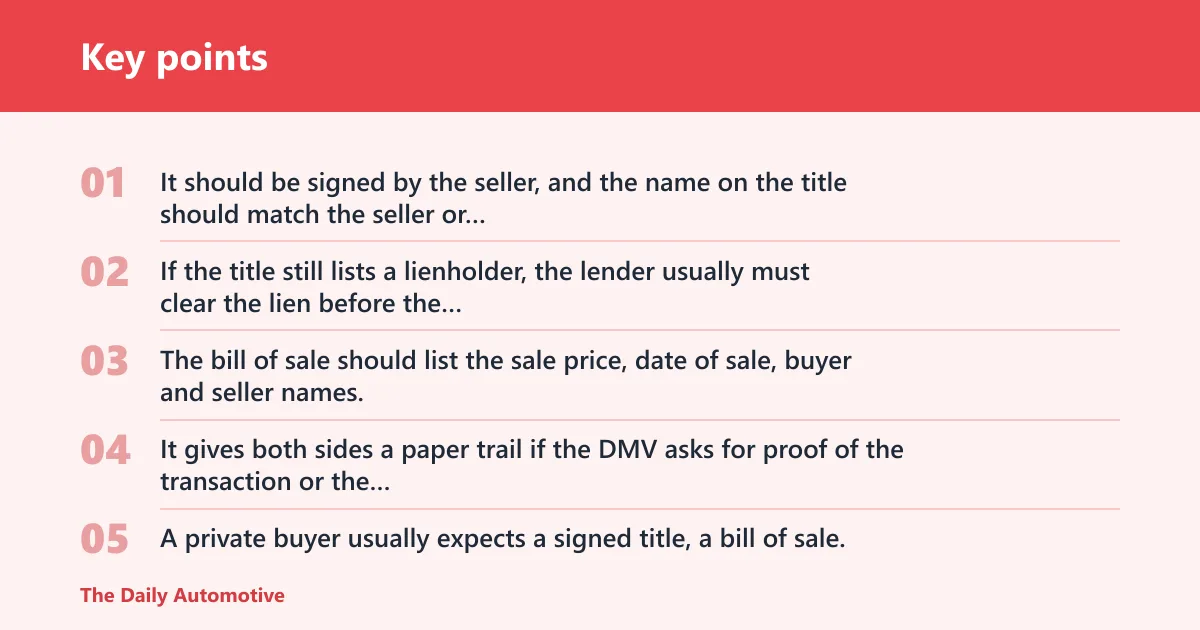
The title is the key ownership document. It should be signed by the seller, and the name on the title should match the seller or an authorized representative. If the title still lists a lienholder, the lender usually must clear the lien before the transfer can be completed.
The bill of sale should list the sale price, date of sale, buyer and seller names, and a vehicle description or VIN. It does not replace the title. It gives both sides a paper trail if the DMV asks for proof of the transaction or the buyer later questions the terms.
What the buyer usually expects at handoff
A private buyer usually expects a signed title, a bill of sale, an odometer statement if the vehicle is subject to federal disclosure rules, and any emissions certificate required by local law. Service records are helpful, but they are usually optional. Keys, remotes, and manuals also belong in the handoff.
Say your 8-year-old sedan is sold in a state that requires odometer disclosure on transfers under certain federal or state rules. If the mileage line is left blank, the buyer may refuse the packet, and the DMV may reject the title assignment until the form is corrected.
What to keep for your own records
Keep copies of every signed form, the buyer’s name, the date, and the amount paid. Save proof that you filed any release of liability. That record can help if the car later gets parking tickets, toll charges, or registration notices after the buyer drives away.
What paperwork do you need for a private sale?
Private sales need the most direct paperwork from the seller because there is no dealer to clean up missing steps. Bring the title, bill of sale, odometer disclosure if required, photo ID, and any lien release. Then file the state transfer notice or release of liability as soon as the sale closes.
Title and signature requirements
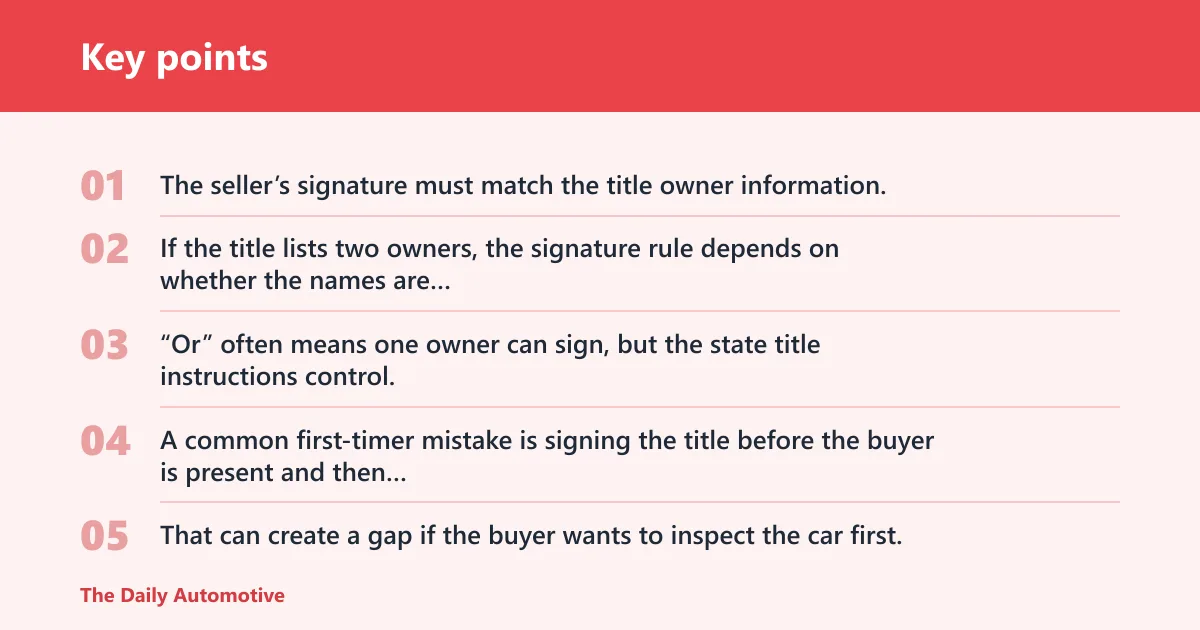
The seller’s signature must match the title owner information. If the title lists two owners, the signature rule depends on whether the names are joined by “and” or “or.” “And” often means both signatures are needed. “Or” often means one owner can sign, but the state title instructions control.
A common first-timer mistake is signing the title before the buyer is present and then filling in the wrong sale date. That can create a gap if the buyer wants to inspect the car first, and it can also complicate a DMV correction.
Bill of sale and odometer disclosure
Many private buyers expect a bill of sale even where the state does not require it. Include the sale price, date, names, VIN, and a short vehicle description. The odometer disclosure is separate. Federal rules usually apply to many vehicles within the current model-year exemption rules, so check the title instructions before you skip it.
Plate removal and release of liability
Remove your plates if your state requires that, but verify the rule before pickup because plate handling varies sharply by state. File the release of liability, notice of transfer, or similar DMV form right after the sale. That step helps limit tickets, tolls, and registration problems that can show up after the buyer leaves.
What changes when you sell to a dealer?
Dealer sales are usually simpler on the buyer-facing side because the dealer often handles title assignment, resale paperwork, and state filing steps. You still need the title, ID, and any lien payoff documents. If the car is a trade-in, the dealer may also ask for the registration and a payoff contact for the lender.
What the dealer usually handles
A dealer often prepares much of the transfer paperwork and may submit the title work for you. That does not remove your duty to bring the correct documents. If the title is missing, damaged, or still shows a lender, the dealer may delay the deal or reduce the offer until the problem is fixed.
What you still need to bring
Bring the title, a valid photo ID, keys, remotes, and any records the dealer wants to appraise the car. If there is a lien, bring the payoff information or lien release documents. If the car needs a smog or emissions certificate in your area, the dealer may expect that before closing.
Trade-in paperwork versus cash sale paperwork
A trade-in can involve fewer buyer-facing forms because the dealer is the buyer and the paperwork route is more standardized. A cash sale to a dealer still needs the same core ownership documents, and the dealer may want a bill of sale or purchase agreement that states the payout and vehicle details.
What if the car has a loan or lien?
If the title still lists a lienholder, the lender’s paperwork is part of the sale. The seller usually cannot hand over a clear title until the loan is paid off and the lien is released. That release may come from the lender or, in some states, from the title office after payoff processing.
How lien release works
The lien release proves the loan is satisfied. Some lenders mail a payoff letter or electronic release, while others send the title to the owner after the account closes. If the title still shows the lender, the buyer may not be able to register the car until the lien is cleared.
Selling before the title is clear
Selling a financed vehicle is possible, but it requires coordination. The lender must be paid from the sale proceeds, or the seller must bring funds to close the difference. Do not assume the buyer can take an unsigned or still-encumbered title and solve it later.
Suppose the payoff is $11,400 and the buyer agrees to pay $12,000. The seller still needs a lien release path that the DMV will accept. If the lender has not yet sent the release, the buyer may hold payment or ask the seller to wait until the lien clears.
When the lender must be involved
The lender usually must be involved whenever the lien remains active, the title is held electronically, or the payoff amount must be sent directly at closing. Ask for the exact payoff amount and any overnight or wire instructions. Scams often target sellers who do not verify lender contact information first.
What if the title is lost, damaged, or shared?
A lost or damaged title needs to be replaced before most sales can close. Co-owned titles can also change the signature rule, depending on whether the names are joined by “and” or “or.” If the seller is an heir or representative, the DMV usually wants extra proof of authority.
Replacing a lost or damaged title
Order a replacement title before listing the car if the paper copy is missing or unreadable. A buyer usually will not accept a promise that the title will arrive later. If the title is damaged but still legible, the DMV may still require a duplicate rather than an altered document.
Two owners on the title: and versus
If the title shows two owners, the wording matters. “And” commonly means both owners must sign. “Or” often means either owner can sign, but state forms control the final rule. If only one person signs when two signatures are required, the transfer can stall at the DMV window.
Inherited cars and authorized representatives
If the seller is not the titled owner, the DMV usually wants proof of authority, such as probate paperwork, a death certificate, or a power of attorney, depending on the state and transaction type. The name on the title must match the seller or the seller’s legal authority must be documented.
State forms you may need
State and county rules can change the paperwork list fast. Some places require emissions proof, notarization, or an online transfer notice. Others let a dealer file more of the transfer than a private seller can. Always verify the local DMV instructions before you meet the buyer, because the exact forms and exemptions can change.
Smog or emissions certificate
Some states and counties require a current smog or emissions certificate at the time of sale. In those places, the seller may be responsible for getting it done before the buyer can complete registration, though common exemptions can apply depending on the vehicle and transaction. If the certificate expires before transfer, the buyer may have to return or pay for retesting.
Notarization and county-specific steps
Certain states require notarized title signatures or a separate county form. A notary may ask for photo ID, and the ID should match the title owner information. If the signature block is completed incorrectly, the notary can refuse the document, which can delay the sale by days.
DMV release of liability or transfer notice
Many states expect the seller to notify the DMV that the car was sold. The form name varies, but the goal is the same: record the date the vehicle left your control. Some states allow online filing, while others want a paper form or mailed notice.
What should you hand over at pickup?
At pickup, hand over the signed title, bill of sale, odometer statement if needed, any lien release, and keys. Remove your plates if your state requires that. Keep copies of every signed page and save proof that you filed the release of liability. That record can matter if a toll bill shows up later.
Keys, remotes, and manuals
Give the buyer every key and remote you agreed to include. Owner’s manuals, wheel locks, charging cords for an EV, and service records are useful add-ons. Missing accessories can lead to a dispute even when the title transfer itself is correct.
Signed paperwork packet
Put the signed title, bill of sale, odometer disclosure, and any state forms in one packet before the buyer leaves. The buyer should know which form goes to the DMV and which form stays with the car. That cuts down on missed signatures and duplicate trips.
Copies you should keep
Keep a full copy of the signed packet, your filing confirmation, and the buyer’s contact details. If the sale involved a lien release or a notarized title, save those too. Insurance cancellation timing should follow your state transfer steps and your policy terms, not the buyer’s schedule.
Frequently asked questions
What paperwork do you need to sell a car privately?
Private sales usually need the signed title, a bill of sale, an odometer disclosure when required, and a valid photo ID. If the car has a loan, you also need lien release paperwork. Many states require a release of liability after the sale, so check the DMV form and deadline.
What documents should you have when selling a car?
Start with the title, then add a bill of sale, odometer disclosure if the car qualifies, and any lien release or payoff letter. Bring photo ID and, if applicable, emissions or notarization paperwork. Keep copies of everything you sign and send so you can prove the transfer later.
What paperwork do you need to sell a car in Texas?
Texas sales often center on the title, Form 130-U for title transfer, and the signed odometer disclosure when federal rules apply. Form 130-U is commonly completed as part of the transfer paperwork, with the buyer using it for the title and registration process after the sale and the seller providing the signed vehicle information at closing. A bill of sale can still help, especially in a private sale. Check whether the county or buyer needs extra tax or registration paperwork after the sale.
What paperwork do you need to sell a car in California?
California often requires the signed title, odometer disclosure where applicable, and a Notice of Transfer and Release of Liability filed with the DMV. Smog certification may be the seller’s responsibility in many cases, though common exemptions can apply. If the title is in two names or has a lien, confirm the exact signature and release rules first, because the required forms can vary.
Do you need a bill of sale to sell a car?
In many places, a bill of sale is not the ownership document, but it is still a smart transfer record. It should list the price, date, buyer and seller names, and the vehicle’s VIN or description. It cannot replace the title, but it can help if the transaction is questioned.
What title documents do you need when selling a car?
You need the title signed in the correct place, with the seller name matching the title owner or legal representative. If the title shows a lien, bring the lien release or payoff proof. If the title is lost, damaged, or joint-owned, fix that before transfer day if possible.
Products related to this article
Sponsored / affiliate links. As an Amazon Associate I earn from qualifying purchases. I may earn additional commission from eligible campaigns.