Can I Do Uber With Someone Else’s Car: Essential Guide
Yes, you can drive for Uber using someone else’s car, but with strict rules and specific requirements from Uber. The car must be properly insured, registered, and meet Uber’s standards. The owner of the car needs to give their explicit permission, and all documentation must be in order.
Driving for Uber can be a fantastic way to earn money, offering flexibility and independence. But what if you don’t own a car yourself? Many aspiring drivers wonder, “Can I do Uber with someone else’s car?” It’s a common question, especially for those looking to start driving without a major purchase. The good news is, yes, it’s often possible! However, it’s not as simple as just borrowing a friend’s car and signing up. Uber has specific guidelines to ensure safety and compliance for everyone involved. Stick with me, and we’ll break down exactly what you need to know, step-by-step, to navigate this popular option.
Driving for Uber with Someone Else’s Car: A Complete Guide
As Md Meraj, your trusted automotive guide, I understand that getting started with a new venture like driving for Uber can raise many questions. One of the biggest hurdles for some is not owning a suitable vehicle. This guide is designed to demystify the process of using a car that belongs to someone else for your Uber driving business. We’ll cover all the essential requirements, paperwork, and considerations to help you confidently get on the road.
Understanding Uber’s Vehicle Requirements
Before diving into using someone else’s car, it’s crucial to understand what kinds of vehicles Uber generally approves. These requirements ensure a safe and comfortable experience for riders.
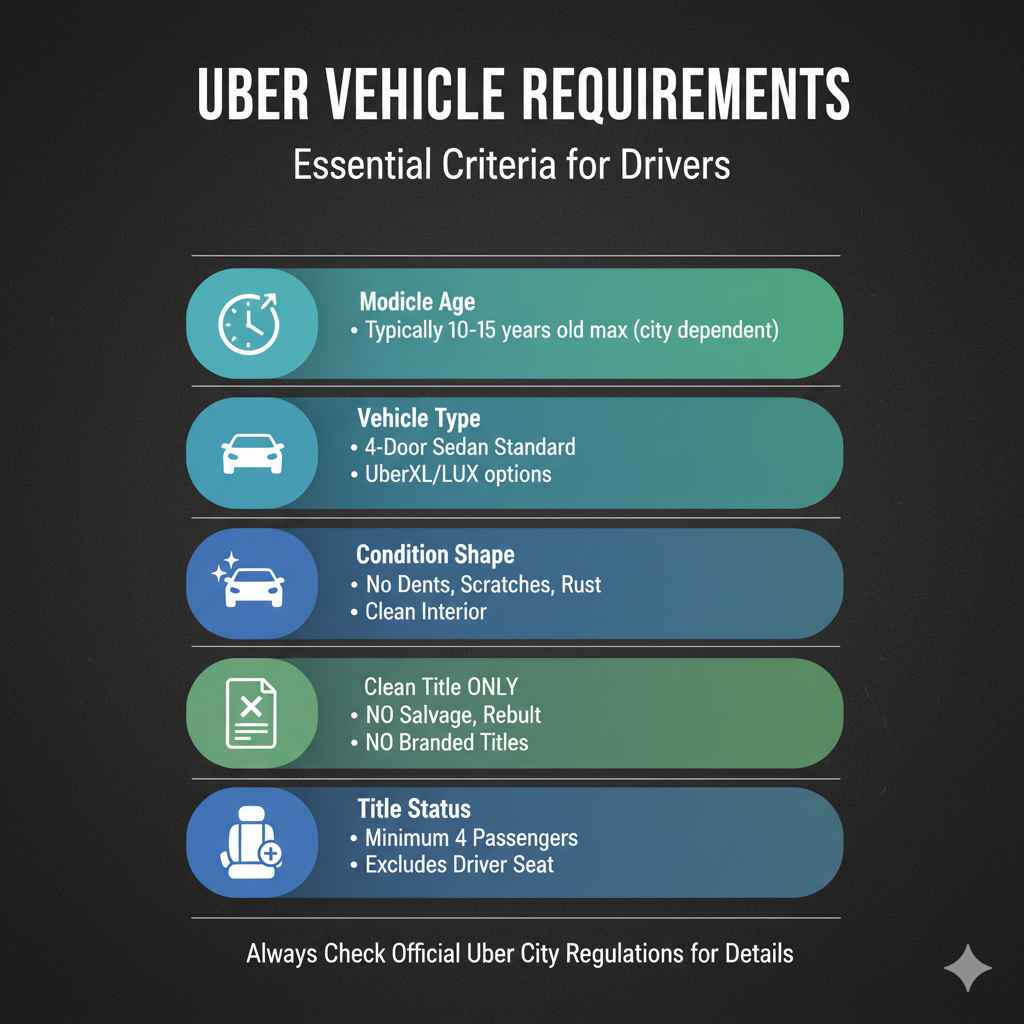
Vehicle Age: Most markets require vehicles to be no older than 10-15 years, depending on the city.
Vehicle Type: Generally, 4-door sedans are the standard. Some cities might have options for larger vehicles (UberXL) or more luxury options.
Condition: The car must be in excellent condition, with no cosmetic damage, rust, or dents, and a clean interior.
No Salvage Titles: Vehicles with salvage, rebuilt, or branded titles are not allowed.
Seating Capacity: Usually, a minimum of 4 passenger seats is required.
For the most precise, up-to-date information tailored to your specific city, always check the official Uber Vehicle Requirements page.
The Core Question: Can I Drive for Uber in Someone Else’s Car?
The short answer is yes, but with specific conditions. Uber allows drivers to use vehicles they don’t own, but this comes with a detailed process and several important stipulations. This method is often referred to as “partnering” with a vehicle owner or driving a leased vehicle.
Key Requirements for Using a Non-Owned Vehicle
Using someone else’s car for Uber involves clear consent from the owner and adherence to Uber’s policies. Here’s what’s essential:
1. Owner’s Permission and Documentation
The most fundamental requirement is that the car’s legal owner must give you explicit permission to use their vehicle for ride-sharing. This isn’t just a verbal agreement; it typically needs to be documented.
Letter of Authorization: Uber may require a signed letter from the car owner stating that you have their permission to use the vehicle for commercial ride-sharing purposes. This letter often needs to include specific details like the owner’s name, driver’s (your) name, vehicle information (make, model, year, VIN), and the period of authorization.
Proof of Ownership: The owner will likely need to provide proof of ownership, such as the car’s title or registration.
2. Insurance: The Most Critical Piece
This is where things get particularly important and sometimes complex. Standard personal auto insurance policies typically do not cover commercial driving activities like ride-sharing.
Commercial Ride-Sharing Insurance: The vehicle must have appropriate commercial insurance that covers ride-sharing. This can be achieved in a few ways:
Owner’s Commercial Policy: If the owner has a commercial insurance policy that specifically covers ride-sharing, this might be used. They would need to inform their insurance provider about the intended use.
Uber’s Insurance: Uber provides its own insurance coverage that kicks in when you are logged into the app and waiting for a trip, or when a trip is in progress. However, this does not eliminate the need for primary insurance on the vehicle.
Leasing or Rental Agreements: Many companies specialize in providing vehicles specifically for Uber drivers. These agreements usually include the necessary insurance and cover most requirements.
Important Note on Insurance: Driving for Uber without proper insurance coverage can have severe legal and financial consequences. Always ensure your insurance situation is crystal clear and covers all possible scenarios. You can learn more about Uber’s insurance policies on their official site.
3. Registration and Inspection
The vehicle must be properly registered with the relevant transportation authority.
Valid Registration: The car’s registration must be current and in the name of the owner, or clearly indicate the authorized driver if permitted by local laws and Uber’s policy.
Local Inspections: Depending on your city or state, the vehicle may need to pass regular safety inspections. Ensure all these are up-to-date.
4. Driver Requirements (Your Side)
Even if you’re using someone else’s car, you still need to meet all of Uber’s standard driver requirements. These include:
- Minimum age (usually 21 years old).
- Valid driver’s license (issued for at least one year).
- Clean driving record (no major traffic violations or at-fault accidents).
- Pass a background check.
- Provide a Social Security number.
- Have a smartphone with a data plan.
Methods for Driving Uber with Someone Else’s Car
There are a few common ways this scenario plays out:
Method 1: Driving a Friend or Family Member’s Car
This is often the most straightforward, provided the owner is willing and understands the implications.
The Agreement: You and the owner should have a clear, written agreement outlining responsibilities, such as who pays for gas, maintenance, insurance deductibles, and how earnings are split.
Paperwork is Key: Ensure all required documentation (permission letter, proof of ownership) is ready for Uber’s review.
Insurance Verification: Double-check that the car’s insurance covers ride-sharing. The owner might need to update their policy or purchase a separate one.
Method 2: Leasing a Vehicle from a Third-Party Company
Many companies partner with Uber to offer vehicles specifically for drivers. This is a popular option because it often bundles insurance, maintenance, and the vehicle itself into a weekly or monthly fee.
How it Works: You sign a lease agreement with the rental company, pay a deposit and a recurring fee, and get a car that’s ready to drive for Uber.
Pros:
Often includes insurance.
Maintenance might be covered.
No long-term ownership commitment.
Vehicles are typically newer and meet Uber’s standards.
Cons:
Can be more expensive in the long run than owning your own car.
Mileage restrictions might apply.
Less flexibility in choosing your vehicle.
You can explore vehicle solutions through the Uber Vehicle Solutions portal, which lists partner rental companies.
Method 3: Driving a Company Car (Less Common for Uber Exclusives)
While less common for Uber-specific driving, some businesses might allow employees to use company vehicles if they have the proper insurance and authorization. This is rare as the business needs to explicitly allow commercial ride-sharing.
The Application Process When Using Someone Else’s Car
When you apply to drive for Uber, you’ll need to indicate that you’re using a vehicle that isn’t registered in your name.
1. Sign Up: Start the Uber driver application process online or via the app.
2. Vehicle Information: When prompted for vehicle details, you’ll need to provide information about the car you intend to use.
3. Documentation Upload: Be prepared to upload documents proving your eligibility and the vehicle’s legitimacy. This often includes:
Your valid driver’s license.
Proof of insurance (detailing ride-sharing coverage).
Vehicle registration.
A Letter of Authorization from the owner (if applicable).
Proof of ownership (if required).
4. Background Check: Complete the required background check.
5. Vehicle Inspection: You might need to get the vehicle inspected at an Uber-approved station to ensure it meets Uber’s safety and condition standards.
Uber’s system will review all submitted documents. Any discrepancies or missing information can delay or prevent your approval.
Pros and Cons of Using Someone Else’s Car for Uber
Like any decision, there are benefits and drawbacks to consider when using a non-owned vehicle for Uber.
Pros:
- Lower Upfront Costs: Avoids the significant expense of purchasing a vehicle.
- Flexibility: Ideal for those who want to try Uber driving without commitment or who don’t have the capital for a car.
- Insurance Included (Often): Leasing options frequently bundle insurance, simplifying things.
- Access to Approved Vehicles: Rental partners provide cars that already meet Uber’s requirements.
- Faster Start: Can potentially get you on the road quicker if you don’t have a suitable car yourself.
Cons:
- Ongoing Costs: Lease payments can add up and reduce your net earnings significantly.
- Less Control: You might have less say over the car’s model, features, or when maintenance is done.
- Complex Agreements: Requires clear agreements with the car owner or a detailed understanding of lease terms.
- Responsibility for Damages: You are still responsible for any damage incurred during your driving shifts, beyond what insurance covers.
- Potential Disputes: Disagreements with the car owner over expenses or usage can arise.
Important Considerations for the Car Owner
If you are the car owner letting someone else use your vehicle, there are significant personal considerations:
Insurance Impact: Your insurance premium will likely increase. You must inform your insurer about the commercial use. Failure to do so can void your entire policy.
Wear and Tear: Ride-sharing adds significant mileage and wear and tear faster than typical personal use.
Liability: While Uber provides some insurance, you could still be liable for certain damages or accidents depending on the circumstances and insurance coverage.
Income Sharing: How will you and the driver split the earnings? This needs to be clearly defined.
Maintenance Responsibility: Who pays for routine maintenance (oil changes, tire rotations) and unexpected repairs?
It’s highly recommended for the owner to consult with their insurance agent and potentially a legal advisor to understand all implications.
Vehicle Inspection: What to Expect
Uber requires vehicles to pass an inspection to ensure they are safe and in good condition. If you’re using someone else’s car, it will need to pass this too.
What they check: Brakes, tires, lights, horn, exterior condition (no major dents or missing parts), interior cleanliness, functioning seatbelts, and window operation.
Where to go: Uber provides a list of approved inspection stations. You might need to book an appointment.
Outcome: If the car passes, you’ll receive an inspection report. If it fails, you’ll need to get the issues fixed and have it re-inspected.
Financial Implications and Earnings Split
If you’re not leasing and instead driving a friend’s car, you’ll need a clear plan for how earnings are handled.
Gross vs. Net Earnings: Remember that Uber earnings are gross. Deduct fuel, potential vehicle maintenance, insurance costs (if applicable), and any agreed-upon amount for the car owner.
Suggested Splits: A common arrangement might be a percentage of net earnings paid to the owner (e.g., 20-40%), or a fixed weekly fee. This varies greatly based on the agreement.
Tracking: Use the Uber app for earnings tracking and consider using a mileage log for expenses.
To get a better idea of potential earnings after expenses, resources like Everlance provide insights into driver income and expense tracking.
Alternatives: Renting vs. Owning
Let’s quickly compare leasing (renting) through an Uber partner versus owning your own car for Uber.
| Feature | Leasing via Uber Partner | Owning Your Own Car |
|---|---|---|
| Upfront Cost | Deposit + first week/month’s payment | Full purchase price or down payment + loan |
| Monthly Cost | Fixed rental fee (insurance + maintenance included) | Loan payments + insurance + maintenance + gas |
| Flexibility | Limited vehicle options, mileage limits possible | Full freedom; no mileage restrictions |
| Maintenance | Usually included by rental company | Driver pays for maintenance/repairs |
| Insurance | Included in rental fee | Driver must buy commercial insurance |
| Long-Term | Costly over long term, no equity | Builds equity; long-term cheaper |
| Getting Started | Very fast—easy to start driving | Requires buying/preparing a car first |
Sample Calculation (Hypothetical Weekly)
Scenario A: Leasing
Weekly Lease Payment: $300 (includes insurance, basic maintenance)
Weekly Gas Cost: $100
Total Weekly Cost: $400
Scenario B: Owning (with loan payment)
Weekly Loan Payment: $150
Weekly Insurance (commercial): $75
Weekly Gas Cost: $100
Weekly Maintenance Fund: $50
Total Weekly Cost: $375
This is a simplified example. Actual costs vary wildly.
Navigating Potential Issues and Solutions
Using someone else’s car isn’t without its potential challenges.
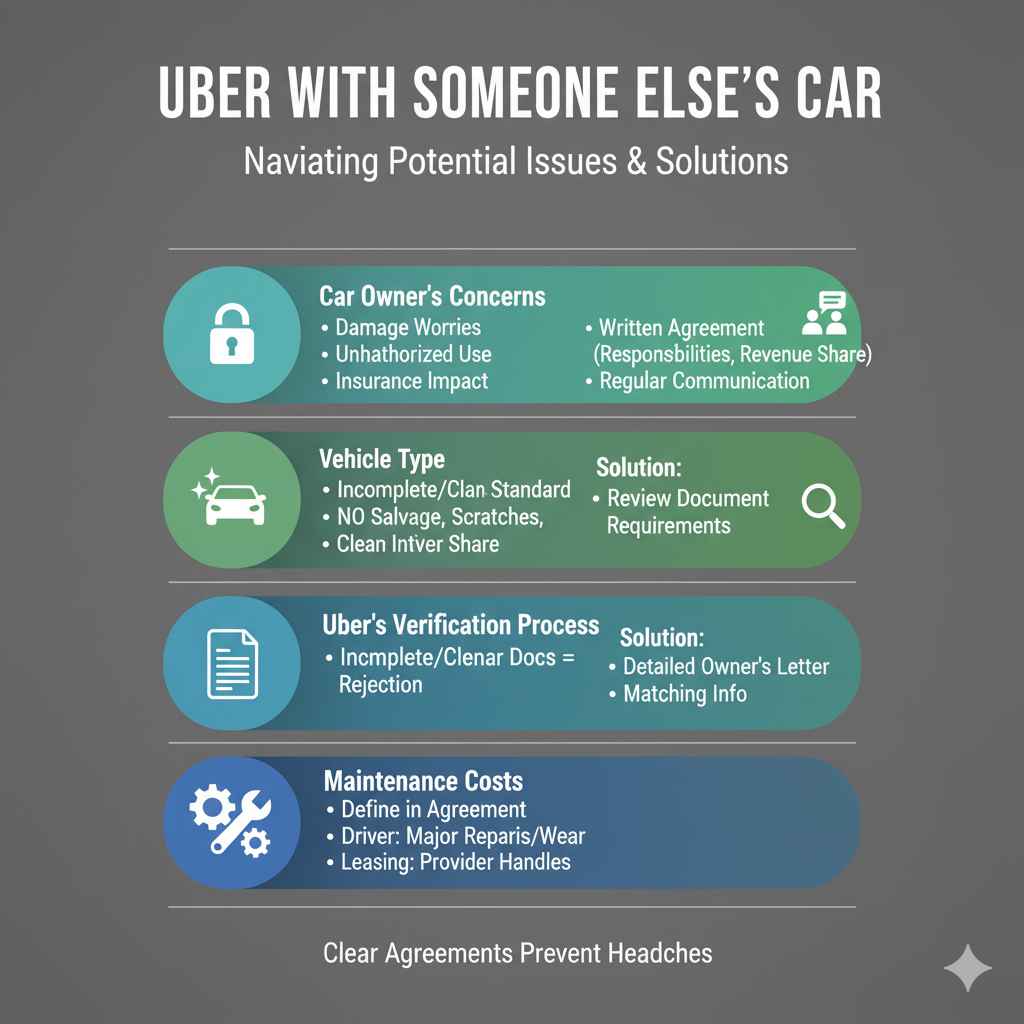
Car Owner’s Concerns: The owner might worry about damage, unauthorized use, or their insurance being affected.
Solution: A clear, written agreement that details responsibilities, insurance coverage, and a revenue-sharing model can alleviate these concerns. Regular communication is key.
Uber’s Verification Process: If documentation is incomplete or unclear, Uber might reject the vehicle.
Solution: Carefully review Uber’s document requirements. Ensure the owner’s letter is detailed and your provided information matches official records precisely.
Maintenance Costs: Who pays for unexpected repairs?
Solution:** The owner-driver agreement should clearly define this. Often, the driver pays for gas and routine maintenance, while the owner covers major repairs or wear-and-tear related to the car itself, but this is negotiable. If leasing, maintenance is typically handled by the provider.
Frequently Asked Questions (FAQ)
Q1: Can I drive Uber with my spouse’s or partner’s car?
A1: Yes, you generally can, provided your spouse or partner gives explicit written permission and the car meets all Uber’s requirements, including proper insurance that covers ride-sharing. You will need to provide documentation as proof.
Q2: What if the car registration is not in my name?
A2: This is common. The car’s legal owner must provide a Letter of Authorization allowing you to use the vehicle for ride-sharing. Uber has specific templates or requirements for this letter.
Q3: Does Uber provide the car if I don’t own one?
A3: No, Uber does not provide the car itself. However, they partner with rental and leasing companies that offer vehicles specifically for Uber drivers. You rent these cars from the partner companies.
Q4: Who is responsible for gas when using a friend’s car for Uber?
A4: This is typically decided in the agreement between you and the car owner. Most commonly, the driver using the car for earnings is responsible for covering the cost of fuel.
Q5: Can I use a car that is leased from a regular car rental company (like Hertz or Avis) for Uber?
A5: Generally, no. Standard car rental agreements explicitly prohibit using their vehicles for commercial ride-sharing. You must use vehicles from specific Uber-approved rental partners or a car you own/have explicit permission for with the correct commercial insurance.
Q6: What happens if the car I’m using is in an accident?
A6: Uber’s insurance typically covers the period when you are logged in and a trip is active or en route. However, the primary insurance on the vehicle (either the owner’s commercial policy or the rental company’s policy) will usually be the first line of coverage. Your agreement with the car owner or lessor should clarify responsibilities for deductibles and any damages beyond insurance coverage.
Q7: How do I prove the car owner gave me permission?
A7: Uber usually requires a signed Letter of Authorization from the car owner. This letter typically needs to include the owner’s name and contact information, your name, the vehicle’s make, model, year