Can Lyft Jump Start My Car? Essential Guide
Yes, Lyft drivers can sometimes jump-start your car, but it’s not a guaranteed service. It depends heavily on the individual driver, their willingness, and whether they have jumper cables. It’s best to have a backup plan as Lyft is primarily a rideshare service, not an emergency roadside assistance provider.
Having your car suddenly refuse to start can be a real headache, especially when you’re in a hurry. That sinking feeling when you turn the key and only hear a click or a feeble whir is something most drivers have unfortunately experienced. It’s often a dead battery, and if you’re not near a friend or a mechanic, you might start wondering about other options. One common thought that pops up is, “Can I just ask my Lyft driver for help?” It’s a fair question when you’re stranded. Let’s break down what you need to know about getting a jump start from your ride-sharing service.
Understanding Ride-Sharing and Roadside Assistance
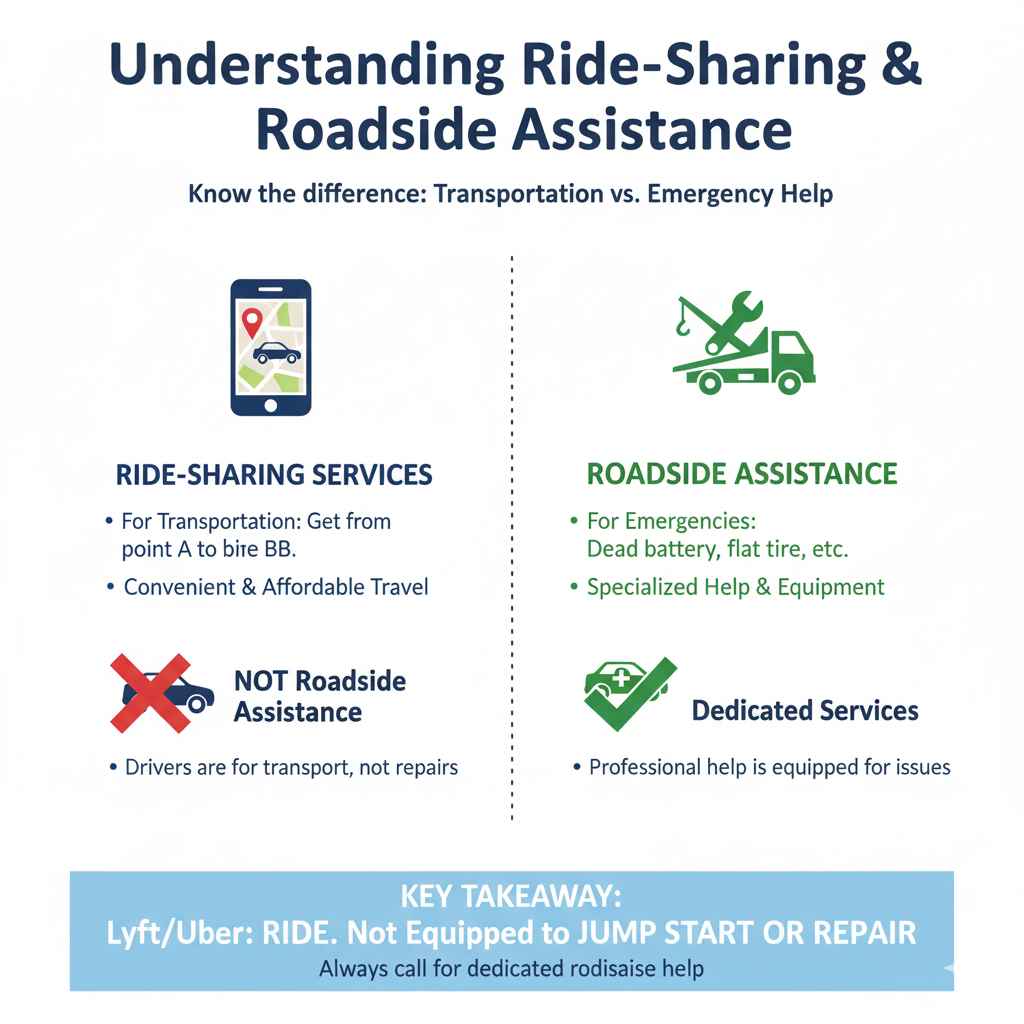
Ride-sharing services like Lyft and Uber are fantastic for getting you from point A to point B. They offer a convenient and often affordable way to travel without owning a car or dealing with parking. However, their core business is transportation, not roadside assistance. While drivers are independent contractors and can choose to help in situations like a dead battery, it’s not a part of their job description, nor is it something Lyft mandates or provides equipment for.
Think of it this way: your Lyft driver is a professional with a vehicle, but they aren’t equipped or obligated to perform car maintenance or repairs. They have their own car to worry about and their own schedule to keep. Asking for a jump start is like asking a taxi driver to change your tire – it’s outside the scope of their professional service.
Can a Lyft Driver Actually Jump-Start Your Car?
The short answer is: sometimes, but don’t count on it.
Here’s why:
The decision to help is entirely up to the individual Lyft driver. Some drivers are mechanically inclined, carry jumper cables in their vehicle, and are happy to assist a fellow driver in need. They might see it as a good deed and a way to help out someone in a tough spot. These drivers often have a lot of experience with cars and understand the urgency of the situation.
On the other hand, many Lyft drivers might not have jumper cables. They might be new to driving or simply not have the necessary equipment. Furthermore, even if they have cables, they might not be comfortable or have the time to perform a jump start. Their priority is typically completing their scheduled rides to earn income. Stopping to help with a car issue could delay them significantly, potentially causing them to miss other fares or violate time-sensitive pick-up requirements.
Lyft’s official stance is that they do not provide roadside assistance. There’s no official mechanism within the app to request a jump start from your driver or any other Lyft vehicle. Any assistance offered is purely on the goodwill and personal initiative of the driver.
Factors Influencing Whether a Lyft Driver Will Help
Several things can influence whether a Lyft driver will be able to or willing to jump-start your car:
- Driver’s Equipment: Does the driver carry jumper cables? This is the most crucial factor.
- Driver’s Comfort Level: Is the driver knowledgeable and comfortable performing a jump start? Some drivers might worry about damaging their own vehicle or yours.
- Time Constraints: Is the driver on a tight schedule with other rides booked back-to-back?
- Location and Safety: Is the location safe for the driver to stop and assist? Certain areas or times of day might make drivers hesitant.
- Your Approach: How you ask for help can also make a difference. A polite and understanding request is more likely to be met with kindness.
What to Do If Your Car Won’t Start and You’ve Booked a Lyft
If you’ve found yourself in a situation where your car needs a jump start, and you’ve already booked a Lyft ride expecting to leave your car behind, here’s a sensible approach:
- Assess the Situation: First, confirm it’s likely a dead battery. Do you hear a rapid clicking sound when you try to start the engine? Do the lights seem dim or flicker? These are common signs of a drained battery.
- Try to Ask Politely (Once They Arrive): When your Lyft driver arrives, you can politely ask if they happen to have jumper cables and if they’d be willing to give you a quick boost. Be prepared for a “no” and don’t be disappointed if that’s the case. Frame it as a hopeful request, not an expectation.
- Have a Backup Plan: This is key! Before you even ask your Lyft driver, you should already have other options in mind.
Backup Plans: What to Do When a Jump Start Isn’t an Option
Since relying on a Lyft driver for a jump start is uncertain, it’s wise to have more reliable solutions ready.
1. Roadside Assistance Services
This is often the most straightforward and reliable option. Many people are unaware that they might already have roadside assistance through:
- Your Car Insurance: Many comprehensive car insurance policies include a roadside assistance add-on. This typically covers services like towing, battery jump-starts, tire changes, and fuel delivery. You can usually find the contact number for your roadside assistance provider on your insurance card.
- Your Auto Club Membership: Organizations like AAA (American Automobile Association) offer various levels of membership that include extensive roadside assistance benefits. Other local auto clubs may also provide similar services.
- Your Credit Card Benefits: Some premium credit cards offer roadside assistance as a perk. It’s worth checking your cardholder agreement to see if this is available to you.
- Newspaper/Magazine Subscriptions: Believe it or not, some auto enthusiast magazines or organizations offer roadside assistance as part of their membership benefits.
To use these services, you’ll typically call a dedicated hotline, provide your membership or policy details, and they will dispatch a service vehicle to your location. The time it takes for them to arrive can vary depending on their current workload and your location.
2. Contacting a Local Towing Service or Mechanic
If you don’t have a roadside assistance plan, you can always call a local towing company or a mobile mechanic. They can come to your location, jump-start your car, or tow it to a nearby repair shop if needed.
A quick search on your phone for “towing near me” or “mobile mechanic near me” will provide you with several options. Be sure to ask about their service call fees and whether they specifically offer jump starts before they dispatch someone.
3. Asking a Neighbor or Passerby
If you’re in a residential area or a place where other vehicles are around, you might consider politely asking a neighbor or another driver if they have jumper cables and are willing to help. Most people are happy to lend a hand in such situations.
Always ensure you are in a safe location before approaching strangers. If accepting help, make sure the person knows how to properly connect jumper cables. You can find great resources on safe jumper cable usage, like this guide from the U.S. Department of Energy on driving and fuel economy that touches on battery health and maintenance, which indirectly relates to the importance of proper jump-starting. While this link isn’t directly about jump-starting, it highlights the importance of understanding your vehicle’s energy systems.
4. Using a Portable Jump Starter (Jump Pack)
For the proactive car owner, a portable jump starter is an excellent investment. These compact, battery-powered devices can bring a dead car battery back to life without the need for another vehicle. They are readily available at auto parts stores and online retailers.
A good jump pack should be part of any beginner’s toolkit for car emergencies. They are relatively inexpensive and straightforward to use, typically involving connecting the clamps to your battery terminals. Many also come with USB ports for charging your devices, which can be a lifesaver when you’re stranded.
How to Properly Jump-Start a Car (If You Have Cables and Assistance)
If you’re lucky enough to have a helpful Lyft driver (or a kind stranger) with jumper cables, or if you’ve decided to learn how to do it yourself, follow these steps carefully to ensure safety for both vehicles.
Important Safety Note: Always consult your car’s owner’s manual for specific instructions related to your vehicle, as some cars have sensitive electronic components that require special procedures.
Tools You’ll Need:
- A set of jumper cables (in good condition, with no frays or damage)
- Safety glasses (recommended)
- Gloves (optional, but recommended)
Step-by-Step Guide to Jump-Starting a Car:
- Position the Vehicles: Park the working car close enough to the car with the dead battery so the jumper cables can reach both batteries. Ensure the vehicles are not touching. Turn off both cars and remove the keys from the ignition. Engage the parking brake on both vehicles.
- Open the Hoods and Locate Batteries: Open the hoods of both cars and locate the batteries. Batteries are usually rectangular boxes with positive (+) and negative (-) terminals. Remove any plastic covers from the battery terminals if present.
- Identify Positive (+) and Negative (-) Terminals: The positive terminal is usually marked with a “+” sign and often has a red cover. The negative terminal is marked with a “-” sign. Make sure you can clearly see and distinguish them.
-
Connect the Jumper Cables (The Crucial Order!):
- Step 1: Connect one red (positive) clamp to the positive terminal (+) of the DEAD battery.
- Step 2: Connect the other red (positive) clamp to the positive terminal (+) of the GOOD (working) battery.
- Step 3: Connect one black (negative) clamp to the negative terminal (-) of the GOOD (working) battery.
- Step 4: Connect the final black (negative) clamp to an UNPAINTED METAL surface on the engine block or chassis of the car with the DEAD battery. This is a crucial safety step to prevent sparks near the potentially gassing battery, which could cause an explosion. Do NOT connect it to the negative terminal of the dead battery. Look for a sturdy, unpainted metal bracket or bolt.
- Start the Working Car: Start the engine of the car with the GOOD battery. Let it run for a few minutes (at least 5-10 minutes) to charge the dead battery slightly. You can rev the engine gently to about 1500-2000 RPM to help with the charging.
- Start the Dead Car: While the working car is running, try to start the car with the DEAD battery. If it starts, let it run for at least 15-30 minutes to allow the battery to charge. If it doesn’t start after a few attempts, let the working car run for another 5-10 minutes and try again. It might take a few tries.
-
Disconnect the Jumper Cables (In Reverse Order!): Once the dead car is running, disconnect the jumper cables in the exact reverse order of connection. This is also a critical safety step to prevent sparks.
- Step 1: Remove the black (negative) clamp from the UNPAINTED METAL surface of the previously dead car.
- Step 2: Remove the black (negative) clamp from the negative terminal (-) of the GOOD battery.
- Step 3: Remove the red (positive) clamp from the positive terminal (+) of the GOOD battery.
- Step 4: Remove the red (positive) clamp from the positive terminal (+) of the previously dead car.
Be careful not to let the clamps touch each other or any metal parts of the car while disconnecting.
- Keep Both Cars Running: Keep both cars running for a few minutes to allow the charging process to continue before shutting them off completely. Ideally, drive the car that had the dead battery for at least 20-30 minutes afterwards without shutting it off to allow the alternator to sufficiently charge the battery.
Why Your Battery Might Be Dead
Understanding why your battery died can help prevent it from happening again. Here are some common culprits:
- Leaving Lights or Accessories On: This is the most frequent cause. Headlights, interior lights, radios, or charging devices left on longer than expected can drain a battery significantly.
- Old Battery: Car batteries have a lifespan, typically 3-5 years. An aging battery may not hold a charge as effectively and could die suddenly.
- Extreme Temperatures: Very cold weather can reduce battery efficiency, while very hot weather can accelerate wear and tear.
- Faulty Alternator: The alternator is responsible for recharging the battery while the engine is running. If it’s not working correctly, the battery won’t get recharged and will eventually die.
- Parasitic Drain: This is when a component in your car is drawing power even when the engine is off. Electrical issues or faulty components can cause this.
- Corroded Battery Terminals: Dirt and corrosion on the battery terminals can prevent a good electrical connection, hindering charging and starting.
A quick check of battery health can save you a lot of trouble down the line. Resources such as the National Highway Traffic Safety Administration (NHTSA) provide valuable information on vehicle maintenance and safety recalls that might be relevant to battery care.
Lyft vs. Traditional Roadside Assistance: A Comparison
To further clarify why it’s wise to have a dedicated service, let’s compare.
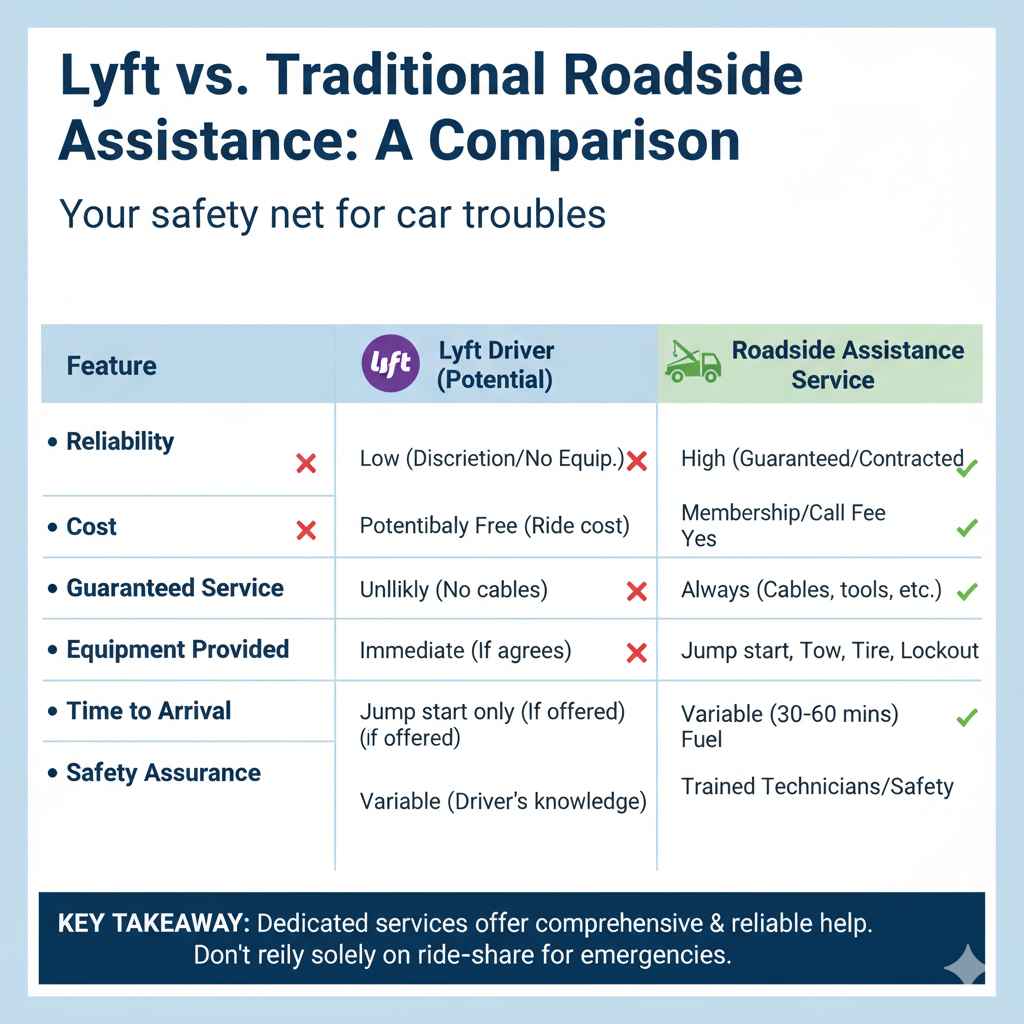
| Feature | Lyft Driver (Potential) | Roadside Assistance Service (e.g., AAA, Insurance) |
|---|---|---|
| Reliability | Low (Relies on driver’s discretion and equipment) | High (Service is contracted and guaranteed) |
| Cost | Potentially Free (if driver agrees) or Cost of Lyft Ride | Membership fee or service call fee (often included in insurance) |
| Guaranteed Service | No | Yes |
| Equipment Provided | Unlikely to have cables | Always has necessary equipment |
| Time to Arrival | Immediate if driver agrees, but might be delayed if they have to drive to you | Variable (depends on dispatch and location, typically 30-60 mins) |
| Scope of Service | Jump start only (if offered) | Jump start, towing, tire change, lockout assistance, fuel delivery |
| Safety Assurance | Variable (depends on driver’s knowledge) | Trained technicians, adherence to safety protocols |
As you can see, while a Lyft driver might offer a quick, out-of-the-blue solution, a dedicated roadside assistance service offers a much more comprehensive and reliable safety net for car troubles.
FAQs About Lyft and Car Jump Starts
Q1: Can I request a Lyft specifically to jump-start my car?
A1: No, there is no feature in the Lyft app to request a car jump start. You can only ask your driver if they are willing and able to assist once they arrive for your ride.
Q2: Is it safe to ask a Lyft driver for a jump start?
A2: It can be safe if the driver knows what they are doing and follows proper procedures. However, since it’s not a service they are trained for or equipped for by Lyft, there’s a higher chance of improper connections or complications.
Q3: What if my Lyft driver says no to helping me jump-start my car?
A3: You should be prepared for this possibility. Your driver is not obligated to help, and you should have a backup plan, like calling a roadside assistance service or a tow truck.
Q4: Does Lyft offer any roadside assistance services?
A4: No, Lyft does not offer roadside assistance. Their service is strictly for providing rides.
Q5: If I use my Lyft ride to get to a mechanic after a jump start, will they wait for me?
A5: Your Lyft driver’s primary job is to complete the ride you booked. They may agree to wait for a short period, but they are not obligated to, and you will continue to be charged for the ride time. It is best to arrange for your car to be towed or repaired quickly if you need to use your Lyft to get to a shop.