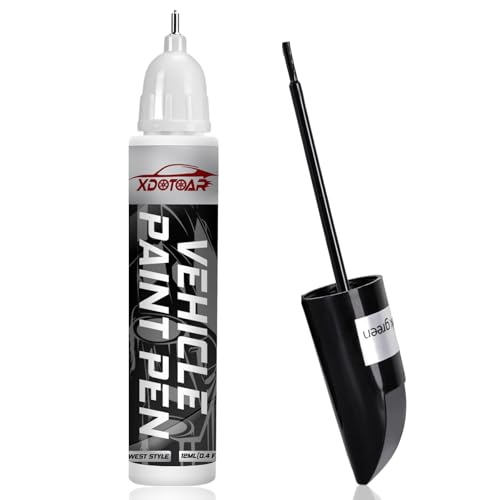
Best Touch-Up Paint Pens for Small Car Scratches
For small chips and scratches under about 1/8 inch wide, a common rule of thumb is to choose a touch-up paint pen that matches the factory paint code and uses a fine-tip or brush applicator suited to the defect size. Use the wrong applicator, or skip prep, and you can trap rust, leave ridges, or make the repair more obvious than the scratch. This guide explains how to choose the right pen, when to use a brush or clear coat, and which repair method fits each scratch size and paint type.
Quick comparison
| Product | Badge | Best for | Price | ||
|---|---|---|---|---|---|
 |
Dupli-Color Scratch Fix All-in-1, Gloss, Universal Black,Dupli-Color | Our pick | .50 fl. oz. · gloss · universal black | $18.33
Price as of 30 Oct 2026
|
View |
 |
TouchUpDirect PW7/GW7 Bright White Compatible with JeepTouchUpDirect | Upgrade pick | Brush kit · bright white · factory match | $40.00
Price as of 30 Oct 2026
|
View |
 |
1K3 Celestite Car Touch Up Paint for Toyota OEM Color MatchSNSIR | Also great | 2-in-1 · Toyota · Celestite | $10.99
Price as of 30 Oct 2026
|
View |
 |
All Cars Magic Pen,Car Scratch Remover Pen,Black Car PaintQifflilk | Budget pick | 2 pcs · black · universal | $11.99
Price as of 30 Oct 2026
|
View |
Match the applicator to the damage first, then match the color. That order matters more than brand loyalty when you are fixing chips, hairline scratches, and small exposed-metal nicks at home.
How we chose
We compared manufacturer specs, listing details, and published buyer feedback. The shortlist focuses on applicator type, paint-code matching, finish type, drying and coat control, and any durability claims stated in the listings.
Dupli-Color Scratch Fix All-in-1: best for mixed damage
This kit can handle more than one scratch type on the same panel. The listing describes it as a 4-in-1 system, and the product details say it includes a pen tip for fine scratches, a brush end for larger chips, and both color and clear coat.
It is priced at $18.33, which is reasonable if you want both applicators in one package instead of buying separate tools. The drawback is that universal black narrows its use case, and black touch-up work still shows overfill or edge mismatch quickly on glossy panels.
For small jobs, the dual-tip setup matters more than the brand name. If a scratch changes from hairline to slightly wider across the same panel, you can switch from the pen tip to the brush end without changing products.
TouchUpDirect PW7/GW7 Bright White: best for exact OEM color match
This is an option when color fidelity matters more than speed, especially on a compatible Jeep white. The listing calls it a factory match and includes colorcoat and clearcoat in one kit, plus wax and grease remover for prep.
It costs $40.00, so it sits on the higher end of this group. The tradeoff is that a brush kit gives less precision than a fine-tip pen on tiny chips, and white repairs still demand careful feathering so the edge does not read as a bright patch.
Use this kind of kit when the paint code matters and the surrounding finish is unforgiving. White can look simple on paper, but panel shade drift and old clear coat can still make a repair stand out.
SNSIR 1K3 Celestite 2-in-1: best for a low-cost OEM match
This is an OEM color-match format for Toyota color matching, uses a 2-in-1 design, and promotes strong adhesion plus anti-rust and waterproof protection.
It is listed at $10.99. That makes it attractive for small chips where you want one tool that can cover both precise placement and a slightly broader touch-up area, but it is still a single-color solution, so you need the right paint code before you buy.
For a small repair, a 2-in-1 design can be the better buy than a plain pen because it gives you a fine applicator and a broader one. That reduces the chance that you overfill a narrow nick or underfill a tiny chip.
Qifflilk All Cars Magic Pen: best for quick black touch-ups
This is a simple option for black cars when a fast cosmetic fix and a spare pen in the box are useful. The listing says it is a 2-piece set for black paint, made for minor scratches, and built in a portable pen format.
It is priced at $11.99, which makes the per-repair cost low for very small blemishes. The obvious drawback is that a universal black pen cannot solve every shade match issue, and the listing’s broad fit language makes it a weaker choice when exact factory color is the priority.
Two pens can stretch the value further if you are only fixing pinhead chips. That said, black is not automatically easy; gloss depth, contamination, and edge buildup can still make the repair visible.
What is the best touch-up paint pen for small car scratches?
The best touch-up paint pen for small scratches is the one that matches the paint code and fits the damage size. For tiny chips and hairline marks, pick a fine-tip applicator. For slightly wider scratches, a brush or 2-in-1 kit usually gives cleaner coverage and less risk of overfilling.
That is why the right answer is not one brand for every car. A pen can be the right tool for one scratch and the wrong tool for the next one on the same panel.
Paint code comes first
Look for the vehicle paint code on the driver-side door jamb, under the hood, or in the glove compartment. OEM-specific touch-up paint is the safer starting point when exact color match matters, and that matters even more on metallic, pearl, and tri-coat finishes.
Black and white are common examples because they are easier to market, not because they are automatically easier to match. A white repair can still miss the factory shade, and black can still show clearcoat mismatch or ridge lines.
Applicator size comes second
A fine-tip applicator is the right fit for tiny chips and hairline scratches where precise placement matters. A brush applicator is better for slightly larger scratches and chips, and many 2-in-1 kits include both in one package.
For a mixed panel, that matters more than a single “universal” claim. If the defect is wider than the tip, you spend less time fighting the tool and more time keeping the repair flat.
How do I match touch-up paint to my car’s paint code?
Start with the paint code and buy to that code, not to the color name alone. The code is usually on the driver-side door jamb, under the hood, or in the glove compartment. That is the cleanest path to OEM color matching, especially when the car has metallic or pearl paint.
If the finish is faded, the match gets harder. The new touch-up color may be correct for the original factory code, but sun fade on the panel can still make the repaired spot look different until the surrounding paint is blended or polished appropriately.
When OEM-specific paint matters most
Use OEM-specific touch-up paint when the repair sits in a visible area, near a body crease, or on a finish with metallic flake or pearl effect. Those paints reflect light differently, so a near match can still look off if the formula is generic.
That is why a cheap universal black pen is not always the smart buy for a black car. The code still matters.
Are touch-up pens better than brush-on scratch repair kits?
Neither one is always better. Touch-up pens are usually better for tiny chips and thin scratches because the tip places paint more precisely, while brush-on kits are better when the damage is slightly wider and needs more paint in one pass. A 2-in-1 kit can be the middle ground.
If the scratch is shallow and narrow, the pen usually wastes less paint and leaves less cleanup. If the area is broader, a brush can lay down a flatter fill with fewer passes.
When a brush wins
A brush applicator becomes the better choice when the scratch is wide enough that a fine tip would take too many passes. It is also useful when the defect is a short chip cluster instead of one thin line.
The risk is overfilling. Too much paint creates a ridge that catches light and can be more obvious than the scratch itself.
When a pen wins
A fine-tip pen is better when the goal is precise placement into a pinhole chip or a hairline scratch. It also helps when you need to stay inside a narrow defect and avoid paint spreading onto surrounding clear coat.
That precision is useful, but it does not fix poor prep. Wax contamination or dust at the edge can keep the repair from bonding cleanly.
Can a touch-up pen fix deep scratches or only surface scratches?
A touch-up pen is meant for surface scratches, chips, and very small exposed-metal nicks, not deep gouges or dented panels. If you can feel a deep trench with a fingernail, or if the scratch has spread rust, a pen is usually a stopgap, not the final repair.
The deeper the damage, the more likely you need filler, sanding, or body-shop work. Touch-up paint can seal a nick, but it cannot rebuild missing metal or flatten a damaged panel edge.
Rust risk and when to stop DIY
Touch-up pens can help prevent rust after a fresh chip by covering bare metal and sealing moisture out. They do not stop rust that has already spread under the paint edge, and they do not repair a rust bubble that has started lifting the coating.
Stop DIY if the chip is deep enough to show corrosion, if the scratch crosses multiple panel layers, or if the paint edge is flaking. At that point, a better repair method matters more than the applicator.
How many coats of touch-up paint should I apply?
Most small repairs work better with thin layers than with one thick coat. Apply just enough paint to fill the defect, let each layer dry, and repeat until the level is close to the surrounding finish. The exact number depends on depth, temperature, humidity, and whether the panel is vertical or horizontal.
A shallow chip may need only one or two passes. A deeper nick can take several thin coats, with a final clear coat if the product includes one.
Drying time and coat control
Fast-drying formulas are useful, but they still need time between layers. Cooler weather, higher humidity, and vertical panels can slow cure time enough that a second coat drags the first one back out of the chip.
Wait longer than you think if the repair is in a shaded or damp area. Thick coats trap solvent and leave a soft surface that is easier to scratch again.
What should I do before using a touch-up paint pen?
Clean the area, degrease it, and make sure the chip is free of wax or road film before any paint goes down. That prep matters as much as the product choice because contamination can keep the paint from sticking and can make the edges lift later.
After cleaning, inspect the defect in daylight. If the scratch is deeper than the clear coat, or if bare metal is visible, plan for primer or a kit that includes more than just color paint.
- Wash the panel and dry it fully.
- Remove wax, oil, and grease from the damaged area.
- Check the paint code before you open the bottle.
- Feather any ragged edge so the repair sits flat.
- Apply thin coats and let each one dry.
Suppose a door edge has a 1/16-inch chip with bare metal in the center. A fine-tip pen can place paint accurately, but only if the area is clean and the first coat is thin enough not to mound above the surrounding finish.
A common first-timer mistake is trying to hide the defect with one heavy pass. That usually leaves a visible ridge and can create a bigger visual issue than the original chip.
Touch-up paint decision matrix
Use this matrix when you are choosing between applicators, not just between brands. The right method depends on damage width, depth, and whether bare metal is exposed.
| Scratch type | Recommended applicator | Prep level | Coat count | Stop DIY and escalate when |
|---|---|---|---|---|
| Chip | Fine-tip pen or 2-in-1 pen tip | Clean, degrease, feather loose edge | 1 to 3 thin coats | The chip is deep, rusted, or keeps spreading |
| Hairline scratch | Fine-tip pen | Clean and degrease | 1 to 2 light coats | The line cuts through the clear coat and base coat across a long span |
| Shallow clearcoat scuff | Fine-tip pen only if color is actually missing; otherwise clear coat or polish route | Clean, inspect under bright light | Usually none for color-only touch-up | The mark is wide, hazy, or too large to hide without blending |
| Exposed-metal nick | 2-in-1 or 4-in-1 system with primer and clear coat | Clean, degrease, feather, and isolate bare metal | Primer plus 1 to 3 color coats plus clear coat if included | Rust is already visible or the nick is part of a larger dent |
Which one should you buy?
Choose by repair need, not by price alone. If you need exact OEM color matching, the TouchUpDirect PW7/GW7 Bright White kit fits that use because it is factory-matched and includes prep materials. If you want a broader repair range, Dupli-Color Scratch Fix All-in-1 combines a pen tip, a brush end, and clear coat in one package.
If your job is a tiny chip and you want to keep costs down, the SNSIR 1K3 Celestite 2-in-1 is the lower-cost route at $10.99, as long as you already have the right Toyota code. For quick black touch-ups, the Qifflilk two-pack is the simplest low-cost option, but it is a universal black solution rather than a code-specific match.
Cost per repair depends on how many chips you can treat before the bottle dries out or runs out. The right system is the one that fits the defect with the least excess paint.
Frequently asked questions
Do touch-up pens prevent rust after a scratch?
Yes, if they cover fresh bare metal before corrosion starts. They are not a cure for rust that has already spread under the paint edge, and they do not replace primer where the scratch has cut through to metal. Clean prep and quick sealing matter more than the label alone.
Products related to this article
Sponsored / affiliate links. As an Amazon Associate I earn from qualifying purchases. I may earn additional commission from eligible campaigns.
 All Cars Magic Pen For Car Scratches,Magic Car Scratch Removal Pen, Quick Fix for Scratches and Paint Damage, Fits All Car Colors,Easy to Use (4 PCS)
 Yellow Touch Up Paint for Cars,Car Paint Touch Up Pen for Deep Scratches,Car Scratch Repair Pen Auto Scratch Remover for Easy to Use and Fix(Magic Orange)