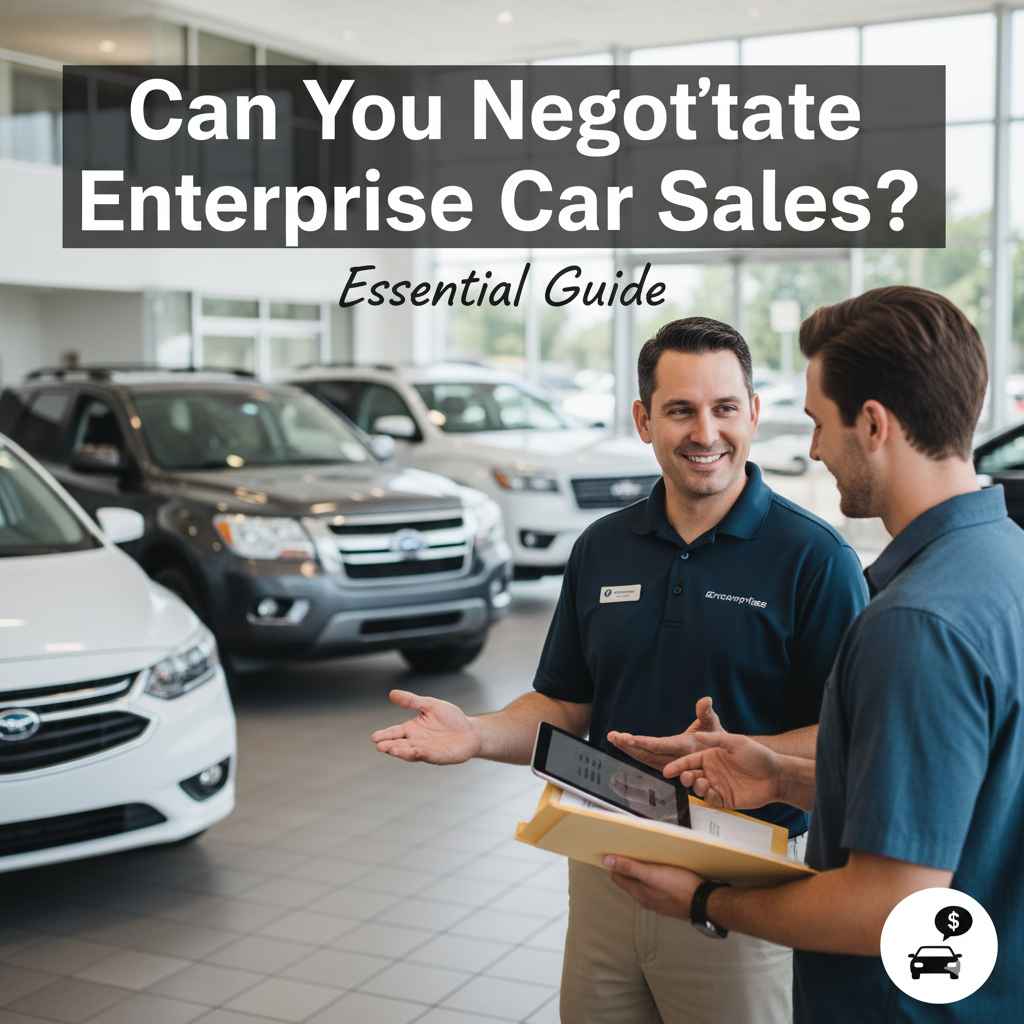
Can You Negotiate Enterprise Car Sales? Essential Guide
Yes, you can absolutely negotiate at Enterprise Car Sales! While they operate with a no-haggle pricing model, there’s still room for negotiation on certain aspects, especially when it comes to financing, add-ons, and potentially even the final price if certain conditions apply. This guide will show you how to approach Enterprise Car Sales with confidence.
Buying a used car can feel a bit like navigating a maze. You want a reliable vehicle without breaking the bank, and you might wonder if you can get the best possible deal. Enterprise Car Sales often comes up because they offer vehicles that have been previously rented, meaning they’ve been regularly maintained and aren’t ancient. A common question many folks have is, “Can you negotiate Enterprise Car Sales prices?” It’s a great question because if you’re used to the back-and-forth of traditional dealerships, you might think it’s impossible.
But don’t worry, navigating Enterprise’s pricing requires a slightly different approach than what you might be used to. We’re here to break it down step-by-step, making sure you feel empowered and confident as you walk onto the lot or look at their inventory online. We’ll cover everything from understanding their pricing to knowing what’s actually negotiable.
Understanding the Enterprise Car Sales Model
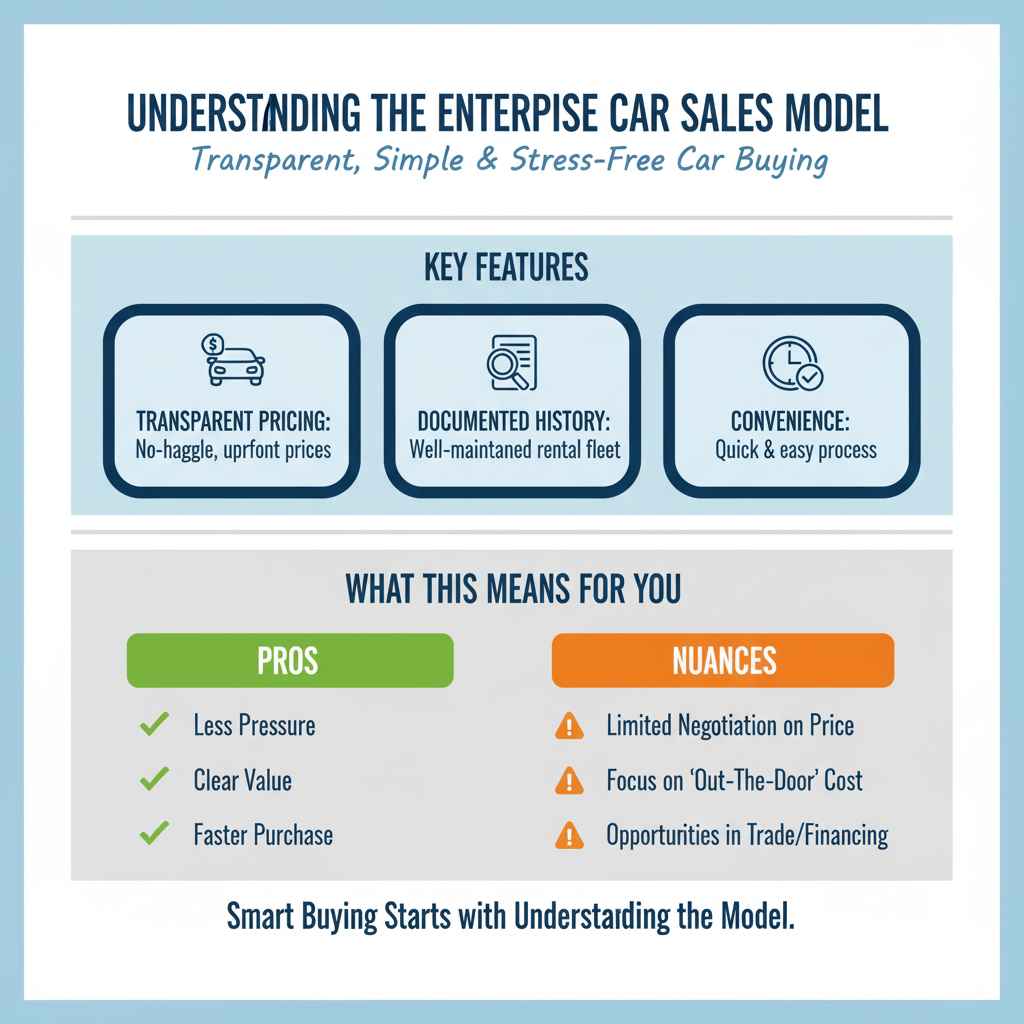
Enterprise Car Sales has a business model that’s a bit different from your typical used car lot or franchised dealership. They focus on selling vehicles that have retired from their rental fleet. This means the cars are generally well-maintained, relatively new, and have a documented service history. Their pricing strategy is typically a “no-haggle” or “no-pressure” system. What does this mean for you as a buyer?
- Transparent Pricing: The price you see on the sticker (or online) is generally the price they advertise. This aims to remove the stress of traditional negotiation tactics where you might feel pressured to pay more than you wanted.
- Focus on Value: Because they’re selling their own retired fleet, they have a good understanding of the car’s value and history. They aim to offer competitive pricing upfront.
- Convenience: The no-haggle approach can make the buying process quicker and less intimidating for many buyers who dislike the negotiation aspect of car buying.
However, “no-haggle” or “no-pressure” doesn’t always mean “no negotiation whatsoever.” Understanding this distinction is key to approaching Enterprise Car Sales effectively. While the sticker price is their starting point and often their final price for the vehicle itself, there are other areas where you can, and should, look for opportunities to improve the deal.
What Exactly Can You Negotiate at Enterprise Car Sales?
So, if the sticker price is mostly set in stone, where does the negotiation room lie? It’s not about chipping away at the car’s listed price in the way you might at other dealerships. Instead, negotiation at Enterprise Car Sales usually centers around the overall deal and the associated costs. Think of it as negotiating the package rather than just the car’s price tag.
Financing Terms
This is often the biggest area where you can negotiate. Enterprise Car Sales works with various lenders, and they will present you with financing options. Don’t just accept the first offer! You can and should negotiate the terms of your loan:
- Interest Rate (APR): This is the most crucial part of your financing. A lower APR means you’ll pay less in interest over the life of the loan.
- Loan Term: This is the length of time you have to repay the loan (e.g., 48 months, 60 months, 72 months). A shorter term means higher monthly payments but less interest paid overall. A longer term means lower monthly payments but more interest paid overall.
- Down Payment: While not strictly a negotiation point, discussing how your down payment affects your monthly payments and the total loan amount can be part of the financial conversation.
Pro Tip: Before you even visit Enterprise Car Sales, get pre-approved for a car loan from your bank or credit union. This gives you a benchmark interest rate to compare against Enterprise’s offers. If their offer is significantly higher, you have strong grounds to ask them to match or beat it. You can learn more about understanding auto loan pre-approval on resources like the Consumer Financial Protection Bureau website.
Extended Warranties and Service Contracts
Enterprise often offers optional extended service contracts (often called warranties). While these can provide peace of mind, they are an additional cost and can be a point of negotiation.
- Price of the Contract: The advertised price of an extended warranty might be negotiable. Ask if there’s any flexibility on the cost of the plan.
- Coverage Details: Make sure you fully understand what the contract covers and what it doesn’t. Sometimes, negotiating for a slightly better plan or a different tier of coverage at a more agreeable price is possible.
- Third-Party Options: Research independent extended warranty providers. Sometimes, you can get comparable or even better coverage for less money from a third party. Compare quotes before agreeing to Enterprise’s offer.
Add-Ons and Accessories
These are extras that can sometimes be bundled into the deal or offered at a reduced price.
- Detailing Services: If you notice a minor imperfection, you might be able to ask for a complimentary detailing or buffing service.
- Floor Mats or Accessories: Occasionally, if a deal is close, they might throw in accessories like all-weather floor mats.
Minor Cosmetic Issues
While you can’t negotiate the car’s core price based on cosmetic flaws, you might be able to leverage them for minor concessions.
- Minor Scratches or Dings: If a car has a small scratch that would cost a hundred dollars to fix, you could potentially ask for that amount to be deducted if they are unwilling to buff it out for you. However, this is less common if the car is already priced competitively.
- Tires and Brakes: While not strictly cosmetic, if tires are significantly worn or brakes are nearing the end of their life, you have a stronger case. Ask if they have factored the cost of immediate replacement into the price. If not, you might be able to discuss a price adjustment that reflects these upcoming expenses. Resources like NHTSA’s tire safety guidelines can help you understand tire condition.
When is Negotiation Possible on the Price Itself?
In most cases, Enterprise Car Sales sticks to its advertised price for the vehicle. However, there are a few very specific scenarios where the price might be slightly negotiable:
- If the Car Has Been on the Lot a Long Time: If a particular vehicle has been sitting unsold for an extended period, the dealership might be more flexible to move it off their inventory. This is harder to gauge as an outsider, but you can sometimes tell by looking at the vehicle’s history or asking how long it’s been available.
- End of the Month/Quarter/Year: Dealerships often have sales quotas. If they are close to meeting their targets, they might be more willing to make a deal to close another sale.
- Significant Mechanical Issues Discovered During Inspection: If during your pre-purchase inspection (which you should absolutely do!), you find a substantial mechanical problem that wasn’t disclosed, you have leverage. This isn’t about haggling; it’s about ensuring the price reflects the true condition of the vehicle.
- Large Fleet Purchases: If you were looking to buy multiple vehicles (which is unusual for most consumers but possible for businesses), then you would certainly be in a negotiating position.
Even in these situations, don’t expect huge price drops. Their “no-haggle” model means they’ve already priced the car competitively. Any negotiation will likely be for a smaller amount.
Preparing to Negotiate at Enterprise Car Sales
Success in any negotiation, even a limited one, comes down to preparation. Treat your visit to Enterprise Car Sales like any other car-buying experience, but with a slightly adjusted strategy.
1. Do Your Homework on the Car
Know the make, model, year, and trim level you’re interested in. Use online resources to understand its typical market value. Websites like Kelley Blue Book (KBB.com) and Edmunds.com are excellent for getting an idea of fair market value for used cars. This helps you confirm if Enterprise’s price is indeed competitive.
2. Get Pre-Approved for Financing
As mentioned earlier, this is huge. Walk in knowing what interest rate and loan terms you can get from your own bank or credit union. This gives you power and a clear comparison point.
3. Know Your Budget
Determine your absolute maximum price, including taxes, fees, and any potential add-ons. Don’t get swayed into spending more than you can afford.
4. Inspect the Vehicle Thoroughly
Don’t just kick the tires. Look for any signs of wear and tear, check for unusual noises, test all features, and bring a trusted mechanic to perform a pre-purchase inspection (PPI). A PPI from an independent mechanic is invaluable for uncovering hidden issues.
5. Understand All Fees
Be aware of all potential fees: documentation fees, title fees, registration fees, etc. Ask for a breakdown of these costs early in the process so there are no surprises. Fee structures can sometimes be a point for discussion if they seem exceptionally high.
Key Negotiation Strategies for Enterprise Car Sales
When you’re ready to talk terms, remember these key strategies:
- Be Polite and Respectful: Even though you’re negotiating, a friendly and respectful demeanor goes a long way. Salespeople are more likely to work with someone they like.
- Focus on the Monthly Payment (for financing): If you’re having trouble with the APR, discussing ways to achieve a comfortable monthly payment through adjustments in the loan term or down payment can be productive.
- Be Prepared to Walk Away: This is your strongest negotiation tool. If you can’t reach an agreement that feels right for you, be willing to explore other options. There are always other cars and other dealerships.
- Ask Specific Questions: Instead of a general “Can you do better?” ask, “Is there any flexibility on the interest rate for this loan?” or “Can you offer a discount on the extended warranty if I purchase it today?”
- Gather Information First: Don’t start negotiating immediately. Take time to look at the car, discuss financing options, and understand all the numbers before you make an offer or counter-offer.
| Area of Negotiation | What to Focus On | Strategy |
|---|---|---|
| Financing Terms | Interest Rate (APR), Loan Term | Get pre-approved elsewhere first. Compare offers. Negotiate APR to be competitive or lower. Discuss loan term for affordability. |
| Extended Warranties/Service Contracts | Price of contract, coverage details | Negotiate the price. Compare third-party quotes. Ensure coverage meets your needs. |
| Add-Ons & Accessories | Price of extras (e.g., floor mats, detailing) | Ask for inclusion at a reduced price or as a complimentary item, especially if the main deal is already tight. |
| Vehicle Condition Clarifications | Significant mechanical issues found in PPI | If a PPI reveals major, undisclosed issues, negotiate a price adjustment reflecting repair costs. |
When Enterprise Car Sales Might Be the Best Option, Even Without Big Price Haggling
Even with the limited price negotiation, Enterprise Car Sales offers significant advantages that can make it a great choice for many buyers, especially beginners.
1. Vehicle History and Maintenance
Because these are former rental vehicles, they have a traceable maintenance history. You can often see service records, and you know they’ve been regularly serviced to meet rental fleet standards. This provides a level of assurance about the car’s condition.
2. Competitive Pricing
Their no-haggle pricing is designed to be competitive from the start. They’ve already factored in the car’s age, mileage, and condition to arrive at a fair market price. This saves you the time and stress of trying to uncover a “deal” at a traditional lot that might be inflated to allow for haggling.
3. No-Pressure Environment
The “no-pressure” sales approach is a significant benefit for many. You can take your time, inspect vehicles, and make a decision without feeling rushed or dealing with high-pressure sales tactics. This can be particularly reassuring for first-time car buyers or those who dislike confrontation.
4. Extended Warranties and Return Policies
Enterprise Car Sales often includes features like a limited warranty and a return policy (usually 7 days or up to 1,000 miles). This offers a safety net that many traditional dealerships do not provide. Be sure to confirm the exact terms of their return policy and warranty, as found on their official website, which can often be found on their “Our Advantage” page.
Navigating the Paperwork Smoothly
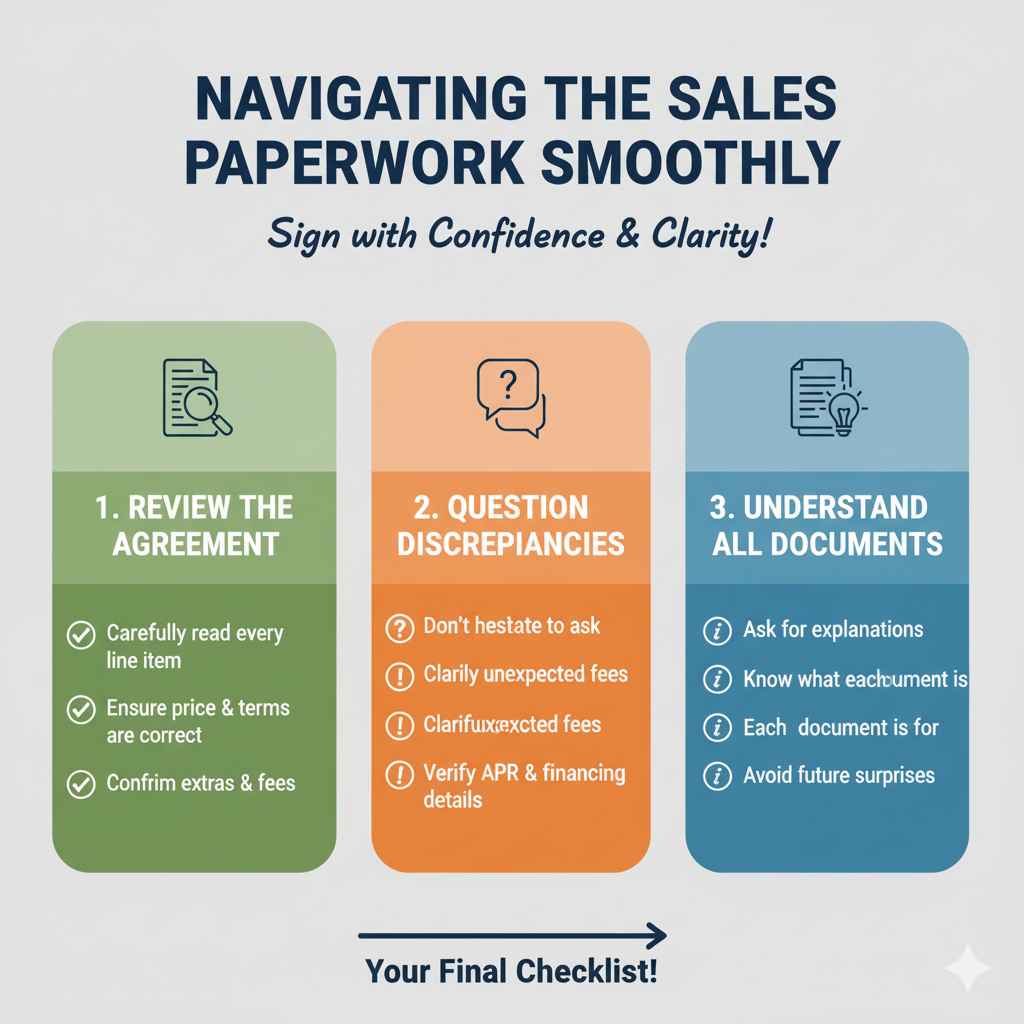
Once you’ve agreed on terms and are happy with the vehicle, the final stage is signing the paperwork. This is where you can do a final check to ensure everything aligns with what you discussed.
- Review the Purchase Agreement: Carefully read every line item. Ensure the agreed-upon price, financing terms, and any included extras are correctly listed.
- Question Any Discrepancies: If you see anything that doesn’t match your understanding, ask for clarification before signing. This could be a fee you didn’t expect or a different APR than discussed.
- Understand All Documents: Don’t hesitate to ask what each document is for. It’s better to understand everything now than to have surprises later.
By approaching the paperwork phase with the same diligence you applied to the negotiation, you ensure a smooth and transparent closing.
Frequently Asked Questions (FAQs)
Q1: Is the price listed at Enterprise Car Sales the final price I will pay?
The listed price is typically the base price for the vehicle. However, you will also have to pay taxes, title transfer fees, license plate fees, and potentially a documentation fee. These are standard additional costs that aren’t usually negotiable.
Q2: Can I negotiate down the price of a car from Enterprise if it has high mileage?
While Enterprise prices are generally firm, if a car has significantly higher mileage than comparable vehicles, you might have a slight opening to discuss the price. However, their pricing usually reflects mileage fairly. Focus more on negotiating financing or add-ons in this scenario if the price seems high for the mileage.
Q3: I found a car I like, but it has some minor cosmetic damage. Can I get a discount?
You can politely point out the cosmetic flaws and ask if they can be buffed out or if a small concession can be made. However, don’t expect a large reduction based on minor issues, as these cars are sold “as-is” in that regard.
Q4: How important is getting pre-approved for a loan before visiting Enterprise Car Sales?
It’s extremely important! Getting pre-approved from your bank or credit union gives you a benchmark interest rate. This allows you to compare Enterprise’s financing offers directly and provides leverage to ask them to match or beat a better rate you’ve already secured.
Q5: Are Enterprise Car Sales vehicles certified pre-owned?
Enterprise vehicles are not typically certified pre-owned (CPO) in the same way a manufacturer-certified pre-owned car is. However, they do undergo rigorous maintenance checks and often come with a limited warranty and a return policy, offering a different kind of assurance.
Q6: What if I discover a problem after buying the car from Enterprise?
Enterprise Car Sales usually offers a 7-day or 1,000-mile return policy. If you discover a significant issue within that window, you can typically return the vehicle. They also often provide a limited warranty alongside the purchase, so check your contract details.
Conclusion
So, can you negotiate Enterprise Car Sales prices? The short answer is: it’s not about haggling the vehicle’s sticker price in the traditional sense. Their “no-haggle” approach means you’re already getting a competitive, transparent price for the car itself. However, this doesn’t mean you have no power! Your negotiation efforts should focus on securing the best possible financing terms, comparing and potentially negotiating the price of extended warranties, and understanding all associated fees. By preparing thoroughly, doing your research, and knowing where