Can You Own a Car on SSI? Vehicle Rules and Resource Limits Explained
Yes, you can own a car while receiving SSI. The Social Security Administration excludes one vehicle from your resource count entirely, no matter what it is worth, as long as you or someone in your household uses it for transportation.
That rule matters because SSI is a means-tested program: to qualify, your countable resources have to stay under $2,000 if you are single or $3,000 if you are married. A car is normally worth thousands of dollars, so without a specific exclusion, owning one could knock most recipients out of eligibility entirely. It does not work that way, and understanding exactly how the exclusion works, and where it stops, keeps you from losing benefits you are entitled to.
Below, we cover what actually counts as a resource under SSI, why your one car’s value is excluded regardless of price, what happens if you own a second vehicle, how to buy a car without jeopardizing your benefits, and the exact reporting steps that keep you out of overpayment trouble.
What Counts as a Resource Under SSI
SSI, or Supplemental Security Income, is a federal program that pays monthly benefits to people who are 65 or older, blind, or disabled and who have limited income and resources. In 2026, the maximum federal benefit is $994 a month for an individual and $1,491 a month for an eligible couple, though your actual payment can be lower depending on your income, living situation, and any state supplement.
To stay eligible, your countable resources must stay below $2,000 if you are single or $3,000 if you are married. These limits have not changed since 1989. A “resource” is anything you own that could be converted to cash and used for food or shelter: cash, bank accounts, stocks, bonds, and most property. But several things you own are excluded from that count entirely, no matter their value, including:
- The home you live in and the land it sits on
- One vehicle, if it is used for transportation by you or a household member
- Household goods and personal effects
- A burial plot for you and your immediate family
- Up to $1,500 in burial funds (per person)
- The first $100,000 in an ABLE account, if you have one
Notice that the vehicle exclusion is on that list right alongside your home. That is not an accident. SSA treats a car the same way it treats housing: as something you need to function day to day, not a luxury asset it expects you to sell off before it will pay benefits.
KEEP YOUR PAPERWORK ORGANIZED
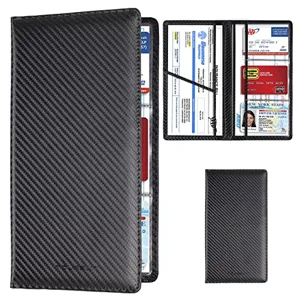 |
TOURSUIT Car Registration & Insurance Card Holder – $7.99 This guide walks through reporting your vehicle and its paperwork to the SSA within 10 days of a change — a slim organizer like this keeps your title, registration, and insurance card together so you are not digging through a glovebox when SSA asks for proof.
|
The One-Vehicle Exclusion: Why Your Car’s Value Does Not Count
Here is the rule in plain terms, straight from SSA policy: one vehicle is completely excluded from your countable resources, regardless of what it is worth, as long as it is used for the transportation of you or a member of your household. There is no dollar cap on this exclusion. A car worth $2,000 is excluded. So is a car worth $40,000. What matters is not the price tag, it is whether the vehicle is actually used for transportation, not just sitting in a driveway as an investment.
You may see older articles or forum posts claiming there is a specific value cap, such as $4,500, on the excluded car. That figure does not apply to SSI’s vehicle exclusion. It appears to come from confusion with unrelated program rules, such as SNAP’s additional-vehicle equity threshold in the small number of states that still run an asset test for food stamps. For SSI specifically, the one-vehicle exclusion has never had a dollar ceiling.
This also means you do not need to buy a cheap, older car just to protect your eligibility. If your one vehicle is the only one you own and you genuinely drive it, its value plays no role in the $2,000 or $3,000 resource test at all.
What Happens If You Own More Than One Car
The exclusion covers exactly one vehicle. If you own a second car, truck, or motorcycle, it is not automatically excluded, and it does count toward your resource limit, but not at its full market value. SSA counts it at equity value: current market value minus anything you still owe on it.
For example, if your second car is worth $6,000 and you still owe $4,500 on the loan, only the $1,500 in equity counts as a resource. If that $1,500, combined with your other countable resources, pushes you over $2,000 (single) or $3,000 (couple), your SSI eligibility is affected for that period.
If you own multiple vehicles, SSA generally lets you choose which one gets the exclusion, so it makes sense to apply it to whichever car has the higher value. Either way, report every vehicle you own to SSA. Trying to keep a second car off the books is a common way people accidentally trigger an overpayment months or years later.
Buying a Car While on SSI
Nothing in SSI rules stops you from buying a car. You can pay cash from savings, take out a car loan, or use dealership financing, the same as anyone else. The part that trips people up is not the purchase itself, it is what happens to your resources right before and after.
If you are paying cash, remember that the money sitting in your bank account counts toward your $2,000 or $3,000 limit until you spend it. Buying the car and converting that cash into an excluded vehicle can actually help you stay under the limit, rather than sitting on savings that push you over it. If you are financing, keep the loan payments realistic against your SSI income, since missing payments risks repossession on top of everything else.
A few practical points worth checking before you buy:
- A used car with a clean maintenance history usually costs less upfront and in insurance than a comparable new one.
- Get pre-approved financing figures before you shop, so a dealership cannot pressure you into a payment you cannot sustain on a fixed SSI income.
- Ask whether the seller or lender reports the purchase anywhere that could affect other benefits you receive, such as Medicaid, which sometimes has its own separate asset rules in some states.
- Keep the bill of sale, title, and loan paperwork together from day one, since you will need them when you report the purchase.

Reporting Your Vehicle to the Social Security Administration
SSI recipients are required to report changes in resources, including buying, selling, or receiving a vehicle. The general deadline is 10 days after the end of the month in which the change happened. So if you buy a car on March 12, you have until April 10 to report it.
You can report a change by calling the SSA at 1-800-772-1213, visiting your local Social Security office, or through your online “my Social Security” account. Have the vehicle’s title, purchase price, and any loan information ready, since SSA will want to confirm the equity value if it is a second vehicle.
Missing that deadline is not a minor paperwork slip. Late or missed reports are how most car-related SSI overpayments happen: SSA eventually discovers the unreported resource during a periodic review, recalculates your eligibility retroactively, and sends a notice demanding repayment for every month you were technically over the limit, sometimes with interest and future benefit withholding until the overpayment is resolved.

Can Someone on SSI Be Gifted a Car?
Yes. A friend or family member can gift you a car while you are on SSI. A gifted vehicle is treated the same way as one you purchased yourself: if it is the only vehicle you own and you use it for transportation, its value is excluded from your resources regardless of what it is worth. If you already have one excluded car and someone gives you a second one, the new vehicle’s equity value counts toward your resource limit just like any other additional car.
One thing to watch: a gifted vehicle still has to be reported within the same 10-day window as a purchase. SSA does not treat “someone gave it to me” as a reason to skip reporting, and unlike ordinary cash gifts, a car does not count as income in the month you receive it, it becomes a resource from that point forward.
Transportation Assistance If You Do Not Have a Car
Not everyone on SSI needs to own a vehicle to stay mobile, and buying one is not the only path to getting around. Many areas have programs specifically built for SSI and SSDI recipients, including:
- Non-emergency medical transportation through Medicaid, for recipients enrolled in that program
- Paratransit services run by local transit authorities for riders with qualifying disabilities
- Volunteer driver programs through Area Agencies on Aging or local disability nonprofits
- Reduced-fare transit passes offered by many city bus and rail systems for disabled or low-income riders
Contacting your local Department of Human Services office or a disability advocacy organization is usually the fastest way to find out what is actually available in your area, since these programs vary a lot by state and county.
Keeping Your SSI Eligible While You Own a Car
A short checklist covers most of what keeps recipients out of trouble:
- Report any new, sold, or gifted vehicle within 10 days after the end of the month it happened.
- Keep only one vehicle if you want the full, value-free exclusion; treat any second vehicle as a resource at its equity value.
- Track your total countable resources monthly if you are close to the $2,000 or $3,000 limit, since cash from a sale can push you over even briefly.
- Respond promptly to SSA’s periodic redetermination reviews with accurate, current information.
- When in doubt about how a specific purchase, loan, or gift will affect your case, call SSA or a local legal aid office before finalizing it, not after.
Legal aid offices, disability rights organizations, and attorneys who specialize in Social Security disability cases can review your specific situation for free or low cost in most areas, and they can flag issues before they become an overpayment rather than after.
Frequently Asked Questions
How much can your car be worth on SSI?
There is no dollar limit on your one excluded vehicle. SSA excludes it from your countable resources regardless of its value, as long as it is used for transportation by you or a household member. A car worth $2,000 or $40,000 is treated the same way under this rule; a second vehicle is a different story, since it counts at equity value once you have already used the exclusion.
Can SSI benefits be used to buy a car?
Yes, there is no rule against using SSI payments toward a car purchase or a loan payment. SSI does not restrict how you spend your monthly benefit day to day. What matters is reporting the resulting vehicle, or any leftover cash, correctly afterward so your resource count stays accurate.
Can someone on SSI be gifted a car?
Yes. A gifted car is treated the same as a purchased one: if it is your only vehicle and you use it for transportation, its value is excluded no matter what. You still need to report it to SSA within 10 days of the month it happened, the same as if you had bought it yourself.
What happens if you own two cars on SSI?
Your first vehicle keeps the full exclusion regardless of value. The second one counts as a resource at its equity value, meaning current market value minus any amount you still owe on it. If that equity, added to your other countable resources, pushes you above $2,000 (single) or $3,000 (couple), your SSI benefits can be reduced or suspended for that period.
How soon do I need to report a new car to the SSA?
Within 10 days after the end of the month in which you bought, sold, or received the vehicle. Reporting late, or not at all, is the most common way SSI recipients end up with an overpayment notice, since SSA can recalculate your eligibility retroactively once it discovers an unreported resource during a review.
Does SSDI have the same car ownership rules as SSI?
No. SSDI (Social Security Disability Insurance) is not means-tested, so there is no resource or asset limit at all, and owning a car, or any number of cars, has no effect on SSDI eligibility. The vehicle-exclusion and resource-limit rules described here apply specifically to SSI (Supplemental Security Income), which is a needs-based program.
Conclusion
Owning a car on SSI is straightforward once you know the actual rule: one vehicle is excluded from your countable resources no matter its value, as long as you use it for transportation. The complications come from a second vehicle, from missing the 10-day reporting window, or from letting cash from a sale sit in the bank longer than it should. Report changes promptly, keep your paperwork organized, and check with SSA or a legal aid office before any purchase you are unsure about.
Products related to this article
Sponsored / affiliate links. As an Amazon Associate I earn from qualifying purchases. I may earn additional commission from eligible campaigns.