Best Sunshades for Windshields for Your Car (2026): We Compared
The best windshield sunshade usually depends on how you park: folding reflective foam for cheap daily use, multi-layer insulated shades for the hottest climates, and custom-fit panels for the tightest seal. Pick poorly and you waste money, leave heat protection on the table, or deal with slips, gaps, and blocked sensors. This guide compares three real sunshade types by fit, storage, mirror and sensor clearance, heat control, and value.
Quick comparison
| Product | Badge | Best for | Price | ||
|---|---|---|---|---|---|
 |
Retractable Car Sunshade for Windshield, Universal Fit SUVKeenso | Our pick | 40x60cm · 4.3 · Universal retractable | $10.05
Price as of 23 Oct 2026
|
View |
 |
Car Windshield Cover Compatible with Toyota Camry 2025-2016NebulalynX | Upgrade pick | Camry 2016-2025 · 4.5 · Magnetic 4-layer cover | $18.99
Price as of 23 Oct 2026
|
View |
Fit matters more than price alone. A shade that is close on width but wrong at the mirror, corners, or sensor cutouts can leave the glass exposed and cut the benefit you expected.
The clearest starting point is EzyShade for drivers who want the fewest fit mistakes, then EcoNour for the cheapest universal daily use, then a thicker bubble-style shade for the hardest sun exposure.
How we chose
Fit accuracy came first. Windshield width, height, mirror clearance, and corner gaps decide whether a shade seals the glass or leaves hot edges exposed.
Heat control came second. Reflective faces help bounce sunlight, while thicker or multi-layer designs add insulation between the glass and the cabin.
Storage and daily convenience came next. A shade that is awkward to fold, roll, or stow often stops getting used.
Sensor and mirror clearance mattered as well. Dashcams, HUDs, rain sensors, and large rearview mirror housings can turn a “universal” pick into a poor fit.
EzyShade windshield sun shade: best for fit-first buyers
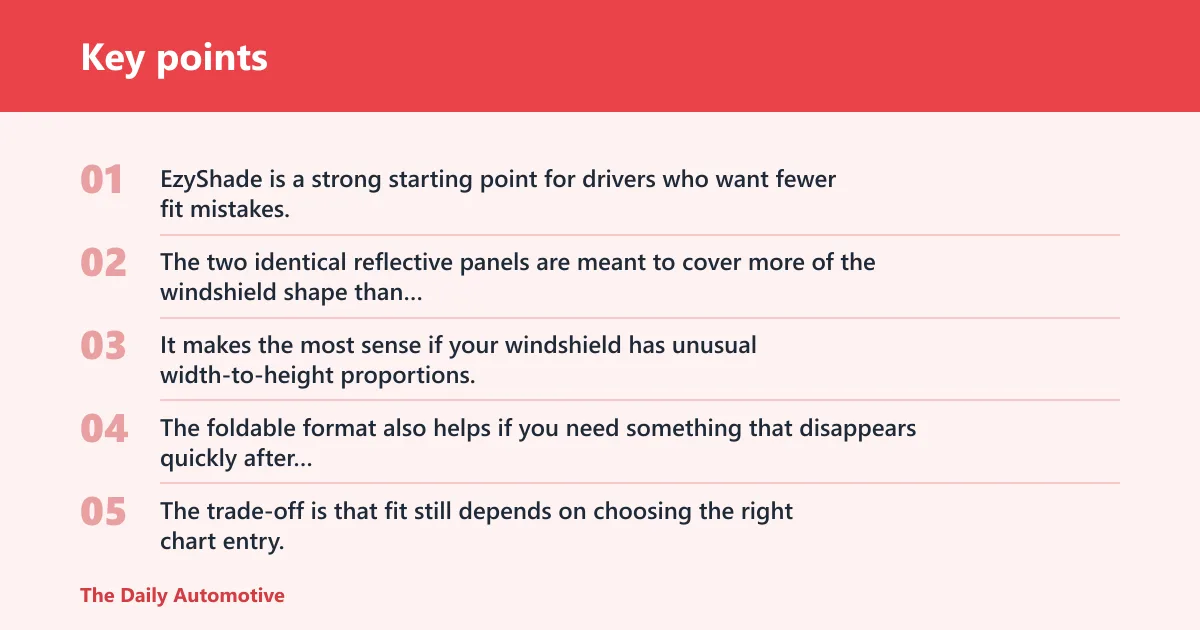
EzyShade is a strong starting point for drivers who want fewer fit mistakes. The two identical reflective panels are meant to cover more of the windshield shape than a single fixed rectangle, and the listed price is $14.99.
It makes the most sense if your windshield has unusual width-to-height proportions, a large mirror housing, or corner curves that defeat one-piece universal shades. The foldable format also helps if you need something that disappears quickly after parking.
The trade-off is that fit still depends on choosing the right chart entry. If you skip the size chart, you can still end up with edge gaps near the A-pillars or around the mirror area.
Two-panel layout and size
The two-panel design is the reason EzyShade stands out. Instead of forcing one rectangle to cover every windshield profile, it gives you a better chance of matching width and height without overhang or slack.
That matters on vehicles with wider glass, tall glass, or a mirror base that sits lower than expected. A good chart reduces guesswork before you buy.
Corner coverage and standard versus larger sizes
Corner coverage is where many shades fail first. If the shade stops short at the top corners or bows away at the sides, sunlight still reaches the dashboard and front seats.
EzyShade’s standard versus larger sizing gives buyers a way to match those corners more closely. That is better than relying on a single universal width that only fits “most” vehicles.
When the reflective finish makes sense
Reflective outer material helps most when the car sits in open sun and the windshield acts like a heat collector. The bright face is useful for daily parking, especially if you want a lighter, foldable shade that is quick to set up.
It is less compelling if your main problem is extreme all-day heat and you need a thicker insulating core instead of mostly reflective coverage.
EcoNour car windshield sunshade: best budget pick
EcoNour is the budget choice for drivers who want a simple universal shade without spending much. The listed sale price is $11.99, and its accordion-style form gives wide coverage with foldable storage for everyday use.
This is the type to buy when your main need is quick sun blocking at work, at the store, or in mild summer weather. The tint-safe backing is a practical detail because it is meant to sit against the glass without adding extra abrasion risk when used correctly.
The drawback is predictability. A universal accordion shade is easier to buy, but it is also easier to misfit on curved windshields, large mirror housings, or vehicles with sensors near the top center of the glass.
Universal accordion-style fit
Accordion shades are simple. They open wide, cover a broad area, and close into a compact stack.
That simplicity is the appeal. The weakness is fit precision, because a universal outline cannot account for every windshield slope, mirror mount, or corner sweep.
Foldability and storage
Storage is a real buying factor, not an afterthought. If the shade is bulky, hard to collapse, or awkward to slide behind a seat, many drivers stop using it.
EcoNour’s foldable format keeps it practical for daily parking. That makes it a stronger value pick than a better-insulating shade that gets left at home.
Tint-safe backing and wide coverage
The tint-safe backing matters because the shade contacts the windshield directly. It should not scrape film, and it should not be forced into sensor areas where it could interfere with camera or rain-sensor function.
Wide coverage is helpful, but only if the windshield shape allows it to sit flat. If the corners flare away, the benefit drops fast.
Windshield Sunshade-Thicken 5-Layer Bubble Block Heat: best for hot climates
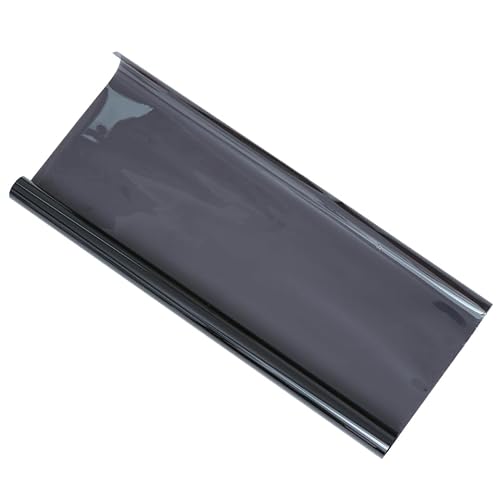
The thickest option here is the better answer for drivers who face intense sun exposure. Its five-layer construction and bubble insulation are aimed at hot-climate parking, where simple reflectivity is often not enough.
This style is designed to slow heat transfer, not just bounce light. In plain terms, a reflective face sends some energy away, while the bubble core adds an insulating break between the glass and the cabin.
The trade-off is bulk. Thicker bubble shades usually take more room to store and can be slower to position cleanly than slim fold-flat designs.
Five-layer construction and bubble insulation
The five-layer build is the key difference. It combines a reflective surface with insulating layers that help resist heat soaking through the windshield.
That matters most when the car sits in open sun for long stretches. In that use case, insulation is more important than saving a little space in the trunk or rear seat.
Why thicker build matters in full-sun parking
All-day parking in direct sun is a different job from a quick stop at the grocery store. In heavier exposure, a thin shade may help, but a thicker design better matches the problem.
It is the right category for very hot climates, especially when the windshield faces morning or afternoon sun with no shade from trees or buildings.
What the heat-reduction claim can and cannot promise
Claims about heat reduction should be read as design-based expectations, not laboratory guarantees for every car and every parking angle.
Which one should you buy?
Start with windshield shape. If you need the tightest fit, go custom or use a charted two-panel option like EzyShade instead of a generic rectangle.
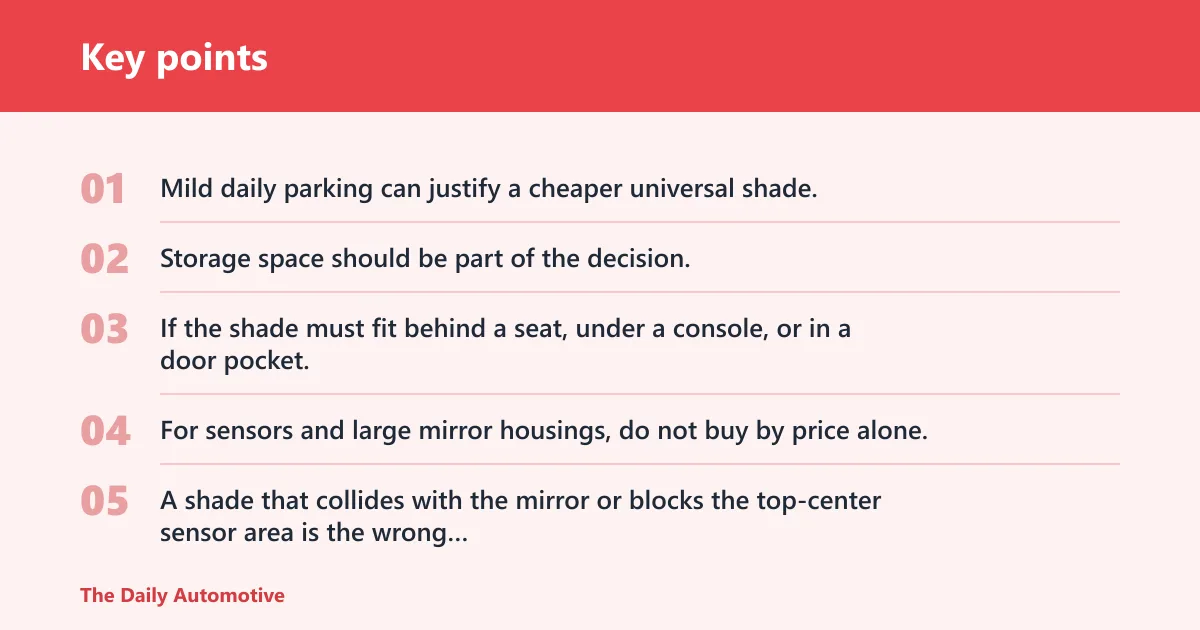
Then think about parking exposure. Mild daily parking can justify a cheaper universal shade, but all-day full-sun exposure points toward thicker insulation or a custom-fit panel.
Storage space should be part of the decision. If the shade must fit behind a seat, under a console, or in a door pocket, slim fold-flat or roll-up designs are easier to live with than bulkier insulated panels.
For sensors and large mirror housings, do not buy by price alone. A shade that collides with the mirror or blocks the top-center sensor area is the wrong choice, even if it is cheap.
Sunshade fit matrix
| Windshield size and shape | Parking exposure | Storage space | Sensor and mirror clearance | Budget | Best shade type |
|---|---|---|---|---|---|
| Wide or oddly shaped windshield | Daily parking in mild to moderate sun | Moderate space, quick fold-up needed | Mirror housing is large but fixed | Mid-range | EzyShade-style two-panel reflective shade |
| Standard windshield with simple geometry | Quick stops, mixed shade and sun | Very limited storage | Few sensor concerns | Lowest price | EcoNour-style universal accordion shade |
| Large windshield, long glass, or full-sun exposure | All-day direct sun in hot climates | More trunk or rear-seat room available | Must avoid camera, HUD, and rain-sensor areas | Higher budget allowed | Thick multi-layer or bubble-insulated shade |
| Vehicle-specific windshield with tight edge match | Hot weather, frequent parking | Will accept a spring-open or custom storage shape | Exact mirror and sensor cutout needed | Premium | Custom-fit shade such as Covercraft UVS100 or WeatherTech TechShade |
Choose EzyShade if… / Choose EcoNour if… / Choose thick bubble insulation if…
Choose EzyShade if your windshield has unusual proportions, you want fewer fit mistakes, or you are willing to use the size chart before buying. Its two-panel layout is the best middle ground for many drivers.
Choose EcoNour if you want the lowest-cost daily shade, need easy fold-up storage, and your windshield is straightforward enough that a universal accordion design will cover it cleanly.
Choose thick bubble insulation if you park in hard sun for long periods, live in a hotter region, or care more about heat blocking than compact storage.
Say your sedan has a wide windshield, a mirror base that sits lower than average, and you park outside during the workday. A two-panel shade with a sizing chart is the safer bet than a generic rectangle, because the chart helps reduce corner gaps before the heat ever gets a chance to build.
Suppose you drive a compact car, keep the shade under the passenger seat, and only need protection during short daytime stops. A cheaper accordion style is usually enough, because storage and speed matter more than premium insulation.
Are custom-fit sunshades better than universal ones?
Custom-fit shades are better when your windshield shape is specific enough that universal coverage leaves gaps, blocks sensor areas, or interferes with the mirror housing. Universal shades are better when budget, simplicity, and fast storage matter more than a near-perfect seal.
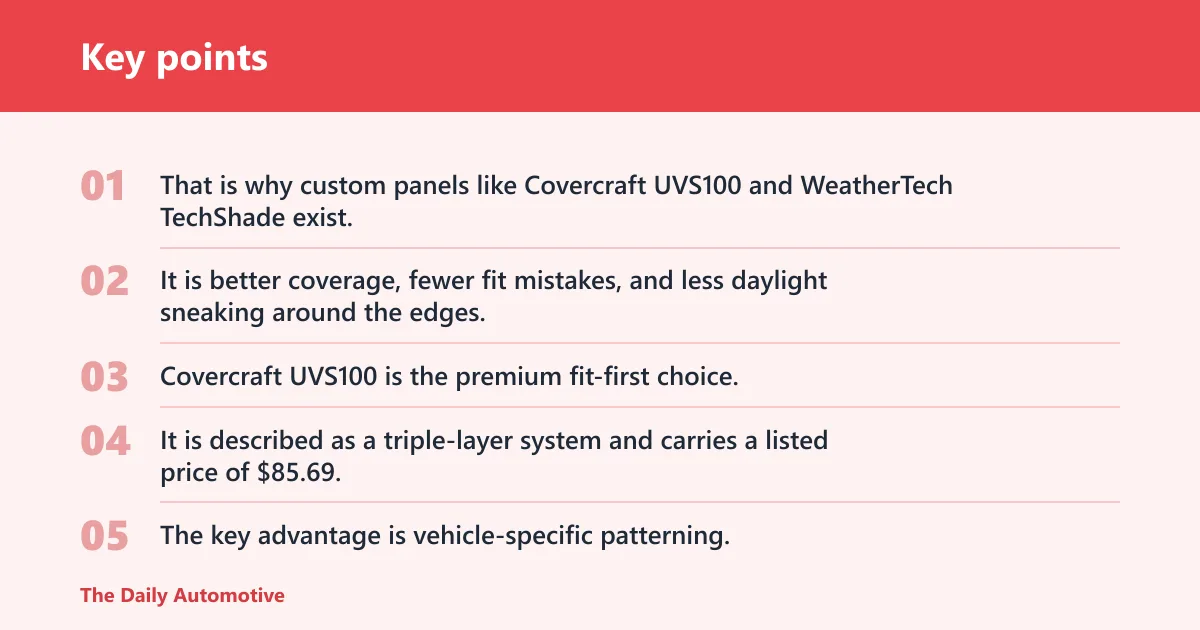
That is why custom panels like Covercraft UVS100 and WeatherTech TechShade exist. The value is not just a cleaner look. It is better coverage, fewer fit mistakes, and less daylight sneaking around the edges.
Covercraft UVS100 custom sunscreen
Covercraft UVS100 is the premium fit-first choice. It is described as a triple-layer system and carries a listed price of $85.69.
The key advantage is vehicle-specific patterning. That gives you a stronger chance of matching mirror cutouts, windshield height, and the top edge shape without guessing.
The drawback is obvious: cost. It is a serious upgrade, so it makes the most sense when the vehicle is kept long enough to justify the price and the fit problem is real.
WeatherTech sunShade and TechShade
WeatherTech TechShade uses a multi-layer reflective accordion design, and Auto Roamer notes that it folds flat to store behind a seat. That combination makes it attractive for drivers who want custom fit without a storage headache.
Compared with universal shades, the fit is the main benefit. Compared with bulkier insulated products, the storage profile is easier to live with.
The limitation is still price and vehicle specificity. If you change cars often, a vehicle-specific shade may not travel with you very well.
When custom-fit is worth the cost
Custom-fit is worth it if your windshield has a large rain sensor, a broad mirror mount, a HUD area that needs clearance, or a shape that causes constant corner gaps. It is also worth it for owners who want the shade to disappear into routine use instead of being a compromise.
If your parking is mild and your windshield is ordinary, a well-chosen universal shade can be enough.
Do umbrella shades work better than folding shades?
Umbrella shades are usually faster to deploy and smaller to store, while folding shades usually offer broader coverage and a more traditional flat seal against the glass. The better choice depends on whether your main problem is setup speed or windshield coverage.
Nmoiss Umbrella Shade is the standout umbrella-style pick, and Car and Driver names it as its best umbrella-style choice. It comes in four size options, which helps with fit, but the umbrella form still has a different contact pattern than a flat panel.
Nmoiss umbrella shade
The advantage of an umbrella design is quick use. It opens fast, packs small, and avoids the awkward fold patterns that frustrate some drivers.
That compact storage is the whole point. The trade-off is that not every windshield likes the umbrella shape, especially if the glass has a strong curve or a large mirror housing at the center.
Setup speed versus packed size
Umbrella shades are often easiest to install and store. They are a good fit for drivers who want one motion in and one motion out.
Folding shades can still win on coverage and price. If your windshield is large or the corners are tricky, a flat-panel or accordion design may seat better against the glass.
Where umbrella designs fit best
Umbrella shades fit best in cars where compact storage matters more than absolute edge-to-edge coverage. They are especially useful for drivers who do not want to wrestle a large folded board every day.
They are less appealing when the car has a complex sensor cluster or a mirror housing that demands a more exact shape.
Frequently asked questions
What is the best sunshade for a car windshield?
The best sunshade is the one that matches your windshield shape and parking conditions.
How do I measure my windshield for a sunshade?
Measure windshield width, height, mirror clearance, and the areas where the corners curve inward. Then compare those numbers with the vehicle-year-make-model chart before buying. If the car has a large mirror housing, rain sensor, or HUD area, treat that as part of the fit, not an afterthought.
Will a sunshade damage tinted glass or sensors?
A sunshade sits against the glass, so it should not scrape tint or press into sensor areas. The safe move is to avoid forcing it across camera, rain-sensor, or HUD zones, and to use a backing that will not abrade film. Fit is the key to safe use.
Which sunshade is easiest to install and store?
Umbrella shades are usually the fastest to deploy and the smallest to store. Folding accordion shades are close behind, especially if you want a flat package that slides behind a seat. Custom-fit shades often win on coverage, but they are not always the easiest to stash.
What sunshade is best for very hot climates?
For very hot climates, choose a thicker insulated shade with a reflective outer layer and an insulating core. That is where the five-layer bubble style makes the most sense.
Products related to this article
Sponsored / affiliate links. As an Amazon Associate I earn from qualifying purchases. I may earn additional commission from eligible campaigns.