
Can You Remove TPMS on Chevy Silverado Truck: Local Guide
Lots of Silverado truck owners wonder about their Tire Pressure Monitoring System, or TPMS. It’s a common question for folks who might be changing their tires or wheels. Figuring out if you can remove TPMS on a Chevy Silverado truck can seem tricky at first, especially if you’re new to car maintenance.
But don’t worry! We’ve got a straightforward way to help you figure this out, step by step. Get ready to learn what you need to know next.
Understanding TPMS on Chevy Silverado Trucks
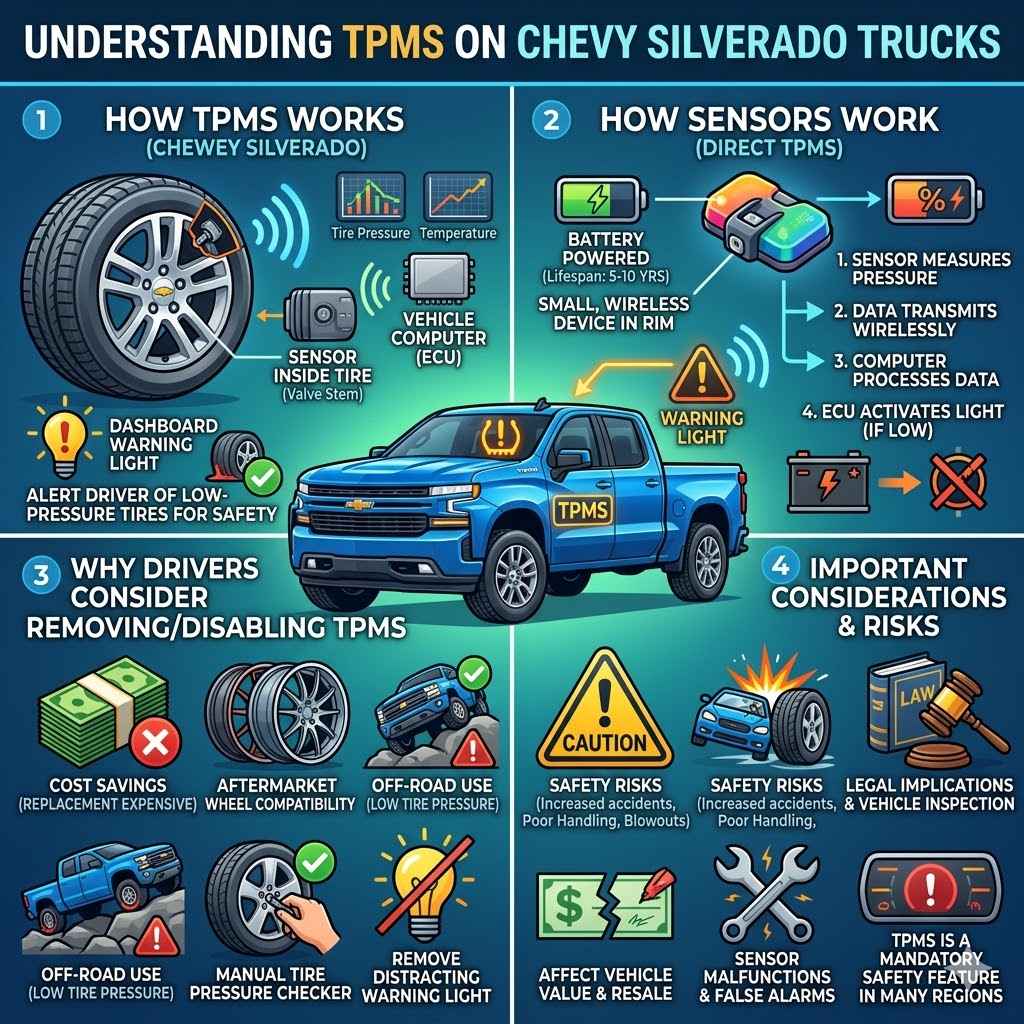
The Tire Pressure Monitoring System, or TPMS, is a safety feature built into many modern vehicles, including the Chevy Silverado. Its main job is to alert the driver when one or more tires are significantly under-inflated, posing a safety risk. This system typically involves sensors inside each tire that communicate wirelessly with the vehicle’s computer.
These sensors measure tire pressure and temperature. If the pressure drops below a safe level, a warning light illuminates on the dashboard. This helps prevent accidents caused by under-inflated tires, which can lead to poor handling, increased tire wear, and blowouts.
Learning about the TPMS is key to maintaining your Silverado safely.
How TPMS Sensors Work
TPMS sensors are small, battery-powered devices installed inside the wheel rim, usually attached to the valve stem. They continuously measure the tire’s internal pressure and often its temperature. This data is then transmitted wirelessly to a central receiver module in the truck.
The receiver processes this information and, if it detects a low-pressure situation, sends a signal to the engine control unit (ECU). The ECU then activates the TPMS warning light on the instrument cluster. The average lifespan of a TPMS sensor battery is about five to ten years.
Once the battery dies, the sensor stops transmitting data, and the TPMS light will typically come on, indicating a sensor malfunction or failure. Modern systems can also identify which specific tire has the low pressure.
The technology behind these sensors has advanced significantly. Older systems often used a “direct” TPMS, where each tire had its own sensor. Newer “indirect” systems, while less common on Silverados for direct pressure reading, use the anti-lock braking system (ABS) wheel speed sensors to infer tire pressure.
If one tire is spinning faster than others, it suggests it’s under-inflated. However, most Chevy Silverado trucks are equipped with direct TPMS for more accurate readings. Understanding how these sensors operate is vital for anyone considering modifications to their wheels or tires.
Why Drivers Consider Removing TPMS
Many drivers consider removing or disabling their TPMS for a variety of reasons, and these are often practical ones. One common scenario is when a driver switches to aftermarket wheels that do not have provisions for TPMS sensors. Some off-road enthusiasts also choose to remove TPMS, especially when using very low tire pressures for better traction on rough terrain.
In these cases, the constant warning light can be annoying and distracting. Another reason is cost; replacing damaged or old TPMS sensors and batteries can be expensive, and some owners might look for a cheaper alternative. For those who are meticulous about checking their tire pressure manually, the TPMS light can feel like an unnecessary nuisance.
Sometimes, drivers might experience issues with their TPMS, such as false alarms or persistent warning lights due to malfunctioning sensors. Rather than investing in costly repairs, they may opt to have the system disabled. This is particularly true if the vehicle is older or if the owner plans to sell the truck soon and sees the TPMS repair as an unnecessary expense.
It’s important to note that in many regions, TPMS is a mandatory safety feature, and disabling it may have legal implications or affect vehicle inspection outcomes. However, the desire for convenience or cost savings drives this common inquiry.
Can You Remove TPMS on Chevy Silverado Truck? Local Guide
The direct answer to Can You Remove TPMS on Chevy Silverado Truck? Local Guide is yes, you can, but it’s not always a simple plug-and-play process, and there are important considerations. For many Silverado models, removing the TPMS sensors involves either reprogramming the vehicle’s computer to ignore them or installing a special bypass module.
Simply removing the sensors from the wheels will almost certainly trigger a persistent warning light on the dashboard. This light can be a distraction and may even prevent the vehicle from performing optimally, depending on the system’s integration. A local guide can help you understand the specific procedures for your Silverado year and model.
When you ask about a local guide, it implies seeking assistance from mechanics or service centers in your area who are familiar with Chevy Silverado trucks. These professionals can offer solutions ranging from reprogramming the ECU to installing simulator devices that trick the system into thinking the sensors are still present and functioning correctly. It’s crucial to consult with a reputable service provider to ensure the modification is done safely and legally.
They can also advise on whether disabling TPMS is advisable for your specific driving habits and local regulations. The process often depends on the Silverado’s model year and the specific TPMS technology used.
Methods for Disabling or Bypassing TPMS
There are a few common methods to address the TPMS warning light if you’ve removed the sensors or are experiencing issues. One popular approach is using TPMS bypass modules. These small electronic devices are installed into the vehicle’s wiring harness, typically near the OBD-II port.
They essentially send a continuous signal to the vehicle’s computer, mimicking the presence of functional TPMS sensors. This effectively tells the car that the tire pressures are normal, thus keeping the warning light off. These modules are often plug-and-play, making them a relatively easy solution for DIY enthusiasts.
Another method involves reprogramming the vehicle’s Engine Control Unit (ECU) or Body Control Module (BCM). This is a more advanced technique that requires specialized diagnostic tools. A mechanic can access the vehicle’s computer and change settings to disable the TPMS system entirely.
This is a permanent solution that doesn’t require any additional hardware to be installed. However, it’s important to ensure that the technician performing the reprogramming is experienced and understands the implications of disabling safety systems. Some manufacturers may also offer factory-level tools that can achieve this through authorized dealerships.
A third, less common, but sometimes effective method for older systems is to use “blank” or “dummy” TPMS sensors. These sensors are programmed to transmit a constant, static pressure reading to the vehicle. They look and function like regular TPMS sensors but don’t actually measure tire pressure.
You would install these in your wheels, and then, in some cases, the vehicle’s computer might need to be relearned to recognize these new sensors. This method can be effective if the goal is to have functional-looking sensors without the active pressure monitoring. Always confirm compatibility with your specific Silverado model.
Legal and Safety Implications
It’s very important to consider the legal and safety implications before you remove TPMS on a Chevy Silverado truck. In many countries and regions, including the United States and Europe, TPMS is a mandated safety feature for vehicles manufactured after a certain date. For example, in the U.S., the TREAD Act made direct or indirect TPMS standard equipment on all new light vehicles weighing under 10,000 pounds starting in 2008.
Disabling or removing this system can be a violation of federal motor vehicle safety standards. This could lead to issues during vehicle inspections, potentially failing your state’s safety or emissions test.
From a safety perspective, TPMS plays a critical role in preventing accidents. Under-inflated tires can be dangerous. They affect vehicle handling, braking distance, and increase the risk of a tire blowout, especially at higher speeds or under heavy loads.
A blowout can cause a driver to lose control of the vehicle, leading to serious accidents. While some drivers may feel they can accurately monitor tire pressure themselves, the TPMS provides a constant, automated check that can alert them to problems they might otherwise miss. It’s a proactive safety net designed to protect drivers and others on the road.
Consider the potential impact on your insurance. If you are involved in an accident and it’s determined that your vehicle’s safety systems, like TPMS, were disabled or not functioning, your insurance company might deny a claim or reduce the payout. This is because operating a vehicle with compromised safety equipment could be seen as negligence.
Always check your local laws and regulations regarding vehicle modifications and safety equipment. Many local guides or automotive repair shops can provide information specific to your area, helping you make an informed decision that keeps you compliant and safe.
Local Resources for TPMS Solutions
When you’re looking for help with Can You Remove TPMS on Chevy Silverado Truck? Local Guide, reaching out to local automotive experts is often the best path. A qualified mechanic specializing in trucks or GM vehicles will have the necessary knowledge and tools to address your TPMS concerns effectively.
They can diagnose whether your issue is with faulty sensors, a need for reprogramming, or if you’re looking for a bypass solution. Using local services ensures that the modifications are done correctly and in line with regional automotive standards and regulations.
Finding a good local shop can save you a lot of hassle. Look for shops that have positive reviews, especially those that mention experience with tire pressure monitoring systems or specific Silverado models. Many tire shops also offer TPMS services, including sensor
Finding a Reputable Truck Mechanic
Locating a reputable truck mechanic is key when dealing with specialized systems like TPMS. Start by asking friends, family, or colleagues who drive similar vehicles for recommendations. Word-of-mouth referrals are often the most reliable.
You can also check online review sites like Google, Yelp, or specialized automotive repair directories. Look for mechanics who have a high rating and consistently positive feedback, particularly regarding honesty, fair pricing, and quality of work. Pay attention to comments specifically mentioning GM or Chevrolet vehicles.
When you find a potential shop, don’t be afraid to call and ask questions. Inquire about their experience with Chevy Silverado TPMS, the types of solutions they offer (repair, replacement, bypass, reprogramming), and their warranty policies on parts and labor. A good mechanic will be transparent about the process, explain your options clearly, and provide an estimate before starting any work.
Visiting the shop beforehand can also give you a sense of its professionalism and organization. A clean, well-equipped facility is usually a good sign.
Tire Shops and Their Role
Tire shops are often the frontline for TPMS-related services, especially when you’re getting new tires or wheels. Most modern tire shops are equipped with TPMS diagnostic tools and programming machines. They can read the unique ID of your existing TPMS sensors,
If you’re buying new wheels that won’t accommodate factory TPMS sensors, tire shops can install aftermarket sensors or discuss bypass options. Some larger tire chains or independent shops may also offer TPMS reprogramming services to disable the system if that’s your preferred route, though this is less common than sensor replacement or programming. Their primary focus is usually on ensuring the TPMS functions as intended by the manufacturer or providing a functional replacement.
They are a great resource for understanding the immediate, tire-related aspects of TPMS.
Dealership vs. Independent Shops
Both dealerships and independent shops can handle TPMS issues on your Chevy Silverado, but they offer different advantages. Dealerships have direct access to manufacturer-specific diagnostic software and training, ensuring they are up-to-date with the latest procedures for your specific Silverado model. They are often the best source for complex reprogramming tasks or if your vehicle is under warranty and you need to maintain that coverage.
However, dealership services can sometimes be more expensive.
Independent shops, on the other hand, can be a more affordable option. Many highly skilled independent mechanics possess extensive knowledge of GM vehicles and can perform most TPMS services efficiently. They may also be more flexible with aftermarket solutions or bypass modules.
When choosing an independent shop, it’s crucial to verify their experience and reputation, as quality can vary more widely than at dealerships. For a local guide to the best option, comparing estimates and services from both types of providers is often wise.
TPMS Aftermarket Solutions Explained
When dealing with TPMS on your Chevy Silverado, especially if you’re opting for aftermarket wheels or looking for simpler solutions, there are various aftermarket products available. These range from replacement sensors to complete bypass systems. Understanding these options can help you make the best choice for your needs and budget.
Many drivers find that aftermarket solutions offer a good balance of functionality and cost-effectiveness, especially for older trucks or when specific factory parts are hard to find or expensive.
It’s important to remember that not all aftermarket TPMS solutions are created equal. Quality can vary significantly between brands. Choosing reputable brands known for reliability and good customer support is crucial.
Always ensure that any aftermarket product you purchase is specifically designed for your Chevy Silverado model year to guarantee compatibility and proper function. Improperly installed or low-quality aftermarket parts can lead to ongoing issues or even damage to your vehicle’s electrical system.
Aftermarket TPMS Sensors
Aftermarket TPMS sensors are designed to be a direct
When purchasing aftermarket sensors, ensure they are compatible with your Chevy Silverado’s year and model. Some sensors are universal, while others are vehicle-specific. The installation process is typically the same as for factory sensors, involving mounting them inside the wheel on the valve stem.
After installation, a relearn procedure is usually required for the vehicle to recognize the new sensors. Many tire shops can perform this relearn process for a fee. It’s a good idea to check reviews of different aftermarket sensor brands to ensure you’re buying a reliable product.
TPMS Bypass Modules and Simulators
TPMS bypass modules, also known as simulators, are electronic devices designed to trick your truck’s computer into thinking that all its TPMS sensors are functioning correctly, even if they are removed or non-existent. These modules are typically wired into the vehicle’s CAN bus system or plugged into the OBD-II port. Once activated, they continuously send a “tire pressure OK” signal to the ECU, preventing the TPMS warning light from illuminating.
This is a popular solution for drivers who have switched to wheels that cannot accommodate TPMS sensors or who prefer not to deal with TPMS maintenance.
These simulators are particularly useful for off-road enthusiasts who may run very low tire pressures that would otherwise trigger the TPMS warning. They offer a permanent solution without needing to constantly check for low pressure warnings. However, it’s critical to understand that using a bypass module means you lose the safety benefit of the TPMS.
You are solely responsible for manually checking your tire pressure regularly to ensure safety. Ensure the module you choose is compatible with your specific Silverado model and consult with a professional installer if you’re unsure.
Programming and Relearning Procedures
Once TPMS sensors are installed, whether they are factory
However, for many modern trucks, including newer Silverados, a specialized diagnostic tool is required by a professional technician. This tool communicates directly with the truck’s ECU and forces it to scan for and register the TPMS sensors. If you’ve had your tires and sensors replaced at a tire shop, they will typically perform this relearn procedure as part of the service.
If you’re doing a DIY installation of sensors or wheels, you might need to visit a shop to have the relearn completed. Understanding this step is crucial for ensuring your new TPMS setup works correctly.
TPMS Removal for Specific Silverado Models
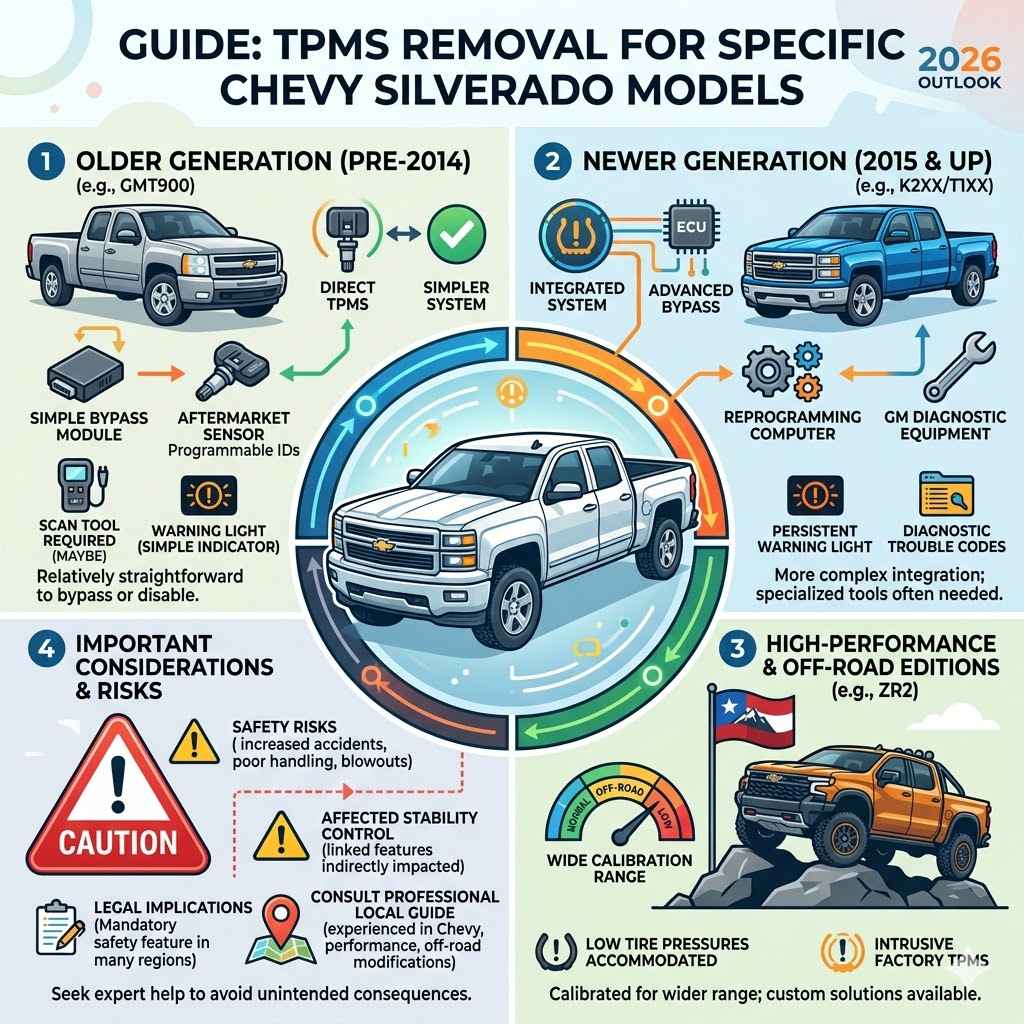
The process and feasibility of removing TPMS on a Chevy Silverado truck can vary slightly depending on the specific model year and trim level. Newer models might have more sophisticated TPMS systems that are more deeply integrated into the vehicle’s electronics, making them potentially harder to bypass without specialized tools. Older models might offer simpler solutions.
Understanding the nuances for your particular Silverado is a key part of the “Can You Remove TPMS on Chevy Silverado Truck? Local Guide” question.
For instance, a Silverado 1500 from the early 2010s might have a different TPMS setup than a brand-new Silverado HD. The type of TPMS (direct vs. indirect, if applicable) and the specific control module used can influence the best approach.
Some trucks may have features that are linked to the TPMS, like stability control, which could be indirectly affected if the system is improperly disabled. Always consult resources specific to your Silverado’s year and model for the most accurate advice.
Older Generation Silverados (Pre-2014)
For older generation Chevy Silverados, generally those manufactured before 2014, TPMS systems were typically less complex. Most used direct TPMS with sensors that transmitted directly to the receiver. In many cases, these systems could be bypassed or disabled with relative ease.
Some models might have allowed for a manual relearn procedure for new sensors, while others might require a scan tool. If you were looking to remove TPMS on these older models, using aftermarket sensors programmed to a specific ID or employing a bypass module was often a straightforward solution.
The warning light on older models was usually a simple indicator without many associated vehicle performance limitations. This made disabling the system a less critical concern for some owners. However, the legal implications of removing safety features still applied.
Mechanics familiar with these older trucks would often have standard procedures for handling TPMS issues, whether it involved replacing sensors or, in some instances, disabling the system upon customer request after explaining the safety risks.
Newer Generation Silverados (2015 and Up)
Newer generation Chevy Silverados, from around 2015 and onwards, often feature more integrated and advanced TPMS systems. These systems may communicate with other vehicle modules in more intricate ways, making a simple bypass more challenging. Reprogramming the vehicle’s computer using advanced diagnostic tools is often the most effective method to disable TPMS on these newer trucks.
The system’s integration means that simply removing sensors without proper electronic intervention will almost certainly lead to a persistent warning light and potentially other diagnostic trouble codes.
Aftermarket solutions for newer models are available, but it’s even more critical to ensure compatibility. TPMS bypass modules designed for newer vehicles are usually more sophisticated. Dealerships or specialized independent shops with up-to-date GM diagnostic equipment are often the best bet for performing the necessary reprogramming or installation of advanced bypass systems.
The increased complexity means that seeking professional help from a local guide familiar with these modern systems is highly recommended to avoid unintended consequences.
High-Performance and Off-Road Editions
Specific editions of the Chevy Silverado, such as high-performance variants or off-road focused models like the ZR2, might have unique TPMS configurations. For instance, an off-road edition might be designed to handle extremely low tire pressures for crawling or desert driving. In such cases, the factory TPMS might be calibrated to a wider range or have specific settings to accommodate these pressures.
Drivers who modify these trucks for extreme off-roading might find the factory TPMS intrusive.
For these specialized Silverados, a local guide with experience in performance and off-road modifications would be invaluable. They would understand how to adjust or bypass the TPMS without negatively impacting other performance systems. Sometimes, there are specific aftermarket sensors or programming options available that are designed for vehicles that operate outside typical driving parameters.
It’s always best to consult with experts in these niche areas to ensure the modifications are done correctly and safely.
Frequently Asked Questions
Question: Can I just remove the TPMS sensors and ignore the light on my Chevy Silverado?
Answer: While you can physically remove the sensors, ignoring the light is not recommended. Removing the sensors will trigger a persistent warning light on your dashboard, which can be a distraction and may indicate a malfunction in a critical safety system. It’s best to address the TPMS by either replacing faulty sensors or using a bypass solution.
Question: Are there any DIY ways to disable TPMS on my Silverado?
Answer: Some older Silverado models might have manual relearn procedures that could be adapted, but for most newer models, disabling TPMS requires specialized tools for reprogramming or installing bypass modules. While some bypass modules are plug-and-play, improper installation can cause issues. Professional help is generally advised for newer vehicles.
Question: Will removing TPMS void my truck’s warranty?
Answer: Yes, tampering with or disabling a mandated safety system like TPMS can potentially void your vehicle’s warranty, especially concerning related components. It’s always best to consult your warranty documentation or dealership before making such modifications.
Question: How much does it cost to remove or bypass TPMS on a Chevy Silverado?
Answer: The cost varies. Replacing faulty sensors and programming can range from $200 to $500 or more. TPMS bypass modules typically cost between $50 and $150, plus installation if you don’t do it yourself.
Reprogramming the ECU by a professional can cost anywhere from $100 to $300.
Question: Is it legal to remove TPMS on my Chevy Silverado?
Answer: In many places, TPMS is a federally mandated safety feature. Removing or disabling it may be illegal and could lead to issues with vehicle inspections or insurance claims. Always check your local laws and regulations regarding vehicle safety equipment.
Wrap Up
So, Can You Remove TPMS on Chevy Silverado Truck? Local Guide is answered with a qualified yes. You can address TPMS issues by replacing sensors or using bypass methods.
Always consider the legal and safety aspects. Consulting local mechanics or tire specialists ensures a proper, safe, and compliant solution for your Silverado.