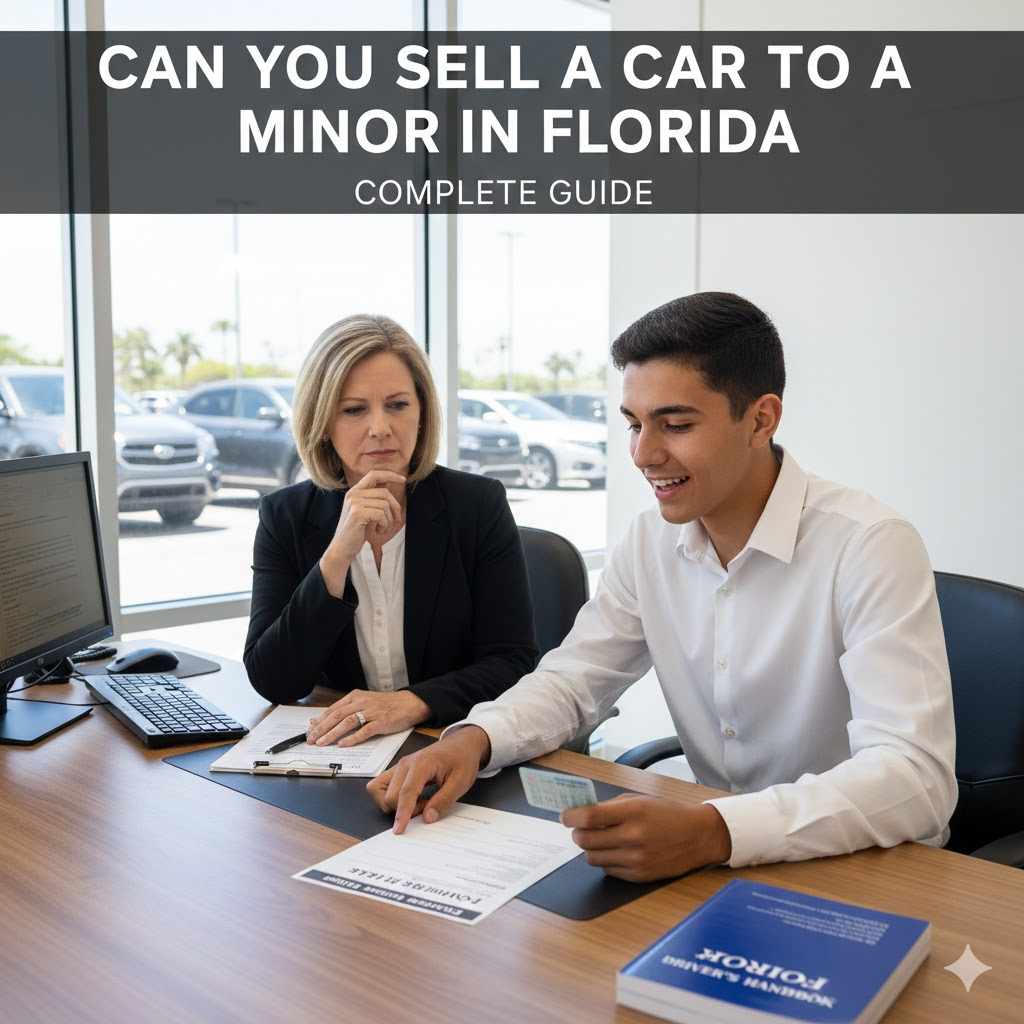
Can You Sell a Car to a Minor in Florida
Figuring out the rules for selling a car can feel tricky. Many people wonder, “Can You Sell a Car to a Minor in Florida? Legal Requirements” This is a common question, especially for folks new to car sales or dealing with younger buyers.
It’s not always clear what paperwork or conditions apply. But don’t worry, we’ll break it down simply. We’ll guide you step-by-step so you know exactly what to do and avoid any problems.
Selling Cars to Young Drivers in Florida
This section explores the laws in Florida that govern selling vehicles to individuals under the age of 18. It covers the fundamental legal framework that sellers must be aware of to ensure a compliant and smooth transaction. Understanding these basic rules is the first step in avoiding potential legal issues.
We will look at the main reasons why selling a car to a minor presents unique considerations compared to selling to an adult.
Understanding Legal Age and Contracts
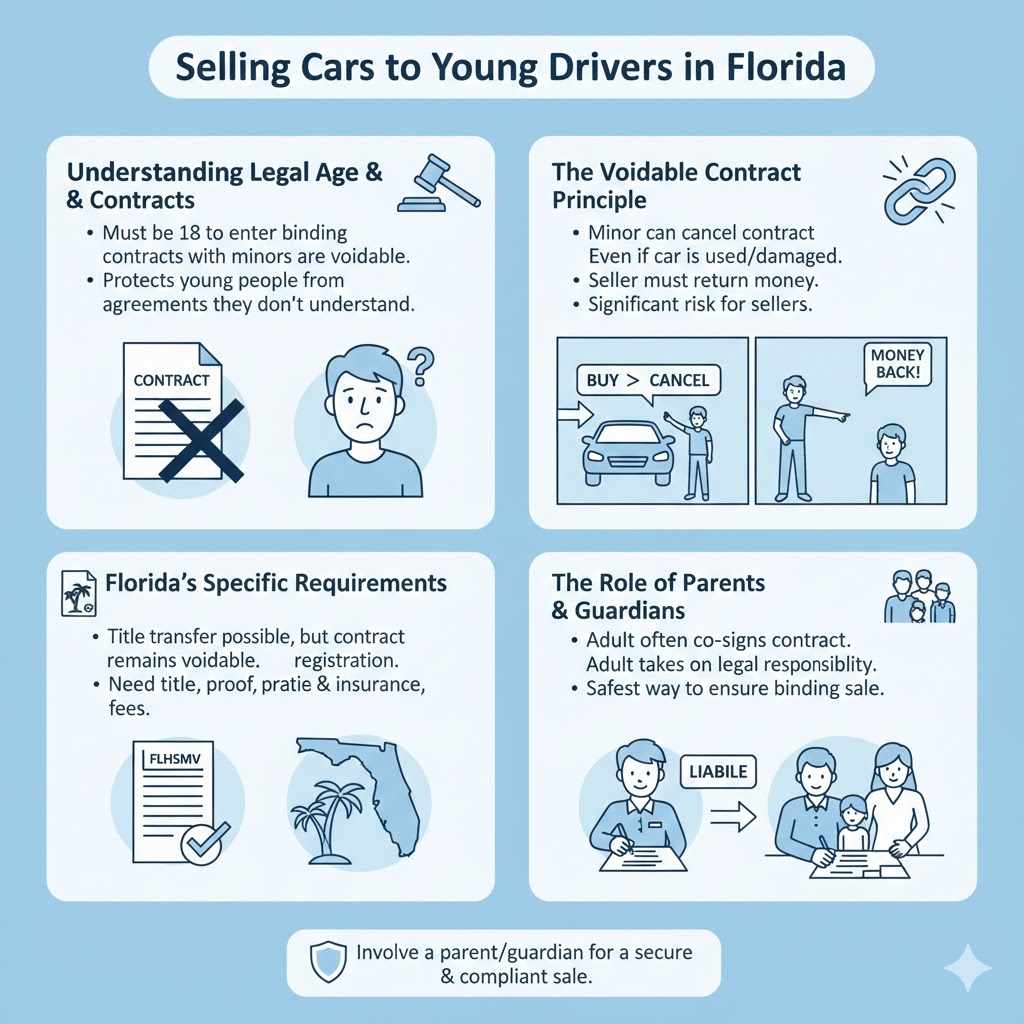
In most cases, a person must be 18 years old to enter into a binding legal contract in Florida. This means that a contract signed by someone under 18 is usually considered voidable. This is a key concept for anyone thinking about selling a car to a minor.
The law is designed to protect young people from entering into agreements they might not fully understand or be able to uphold. This protection extends to significant purchases like a vehicle.
When you sell a car, you are entering into a sales contract. If the buyer is a minor, they can typically back out of the contract even after the sale has happened. This is because the law presumes minors lack the full capacity to understand the obligations of such a contract.
This can leave the seller in a difficult position, having already transferred ownership and possibly the vehicle itself.
The Voidable Contract Principle
A voidable contract is one that one or both parties can choose to cancel. In Florida, contracts with minors are generally voidable at the minor’s option. This means a minor can choose to uphold the contract or disaffirm (cancel) it.
They can do this while they are still a minor or for a reasonable time after they reach the age of majority (18). This is a significant risk for sellers.
For example, a 17-year-old might buy a car with their own money and sign a sales agreement. A few months later, they might decide they don’t want the car anymore, perhaps because they can no longer afford the insurance or repairs. They could then disaffirm the contract, demand their money back, and return the car, even if it has been damaged or driven extensively.
The seller would then be legally obligated to return the payment.
Florida’s Specific Requirements for Car Sales
While the general contract law applies, Florida also has specific rules related to vehicle sales. These often involve title transfers and registration. When a minor is involved, these processes can become more complicated.
The Florida Department of Highway Safety and Motor Vehicles (FLHSMV) oversees these procedures.
Sellers need to ensure that the title is properly signed over to the buyer. If the buyer is a minor, the title transfer itself might still be possible, but the underlying contract remains voidable. This creates a disconnect: the state might allow the title transfer, but the legal agreement for the sale could still be undone by the minor.
This is why understanding the contract aspect is so important before even getting to the paperwork.
Title Transfer Procedures
To transfer ownership of a vehicle in Florida, the seller must complete the vehicle title. This includes signing the title over to the buyer. If the buyer is a minor, their name will appear on the title as the new owner.
However, this does not make the sales contract legally sound if the minor later decides to void it.
The buyer (or their guardian) will also need to register the vehicle with the FLHSMV. This requires proof of ownership (the signed title), proof of insurance, and payment of applicable fees and taxes. If the buyer is a minor, the registration process might require a parent or legal guardian to be involved, especially if they are signing any forms or providing consent for insurance.
The state’s goal is to ensure all vehicles on the road are properly identified and insured, regardless of the owner’s age.
The Role of Parents and Guardians
Because minors cannot typically enter into binding contracts, parents or legal guardians often play a crucial role in transactions involving them. If a minor wishes to purchase a car, a parent or guardian may need to be involved to make the contract legally binding. This usually means the adult co-signs the sales agreement and potentially the loan or financing, if applicable.
When an adult co-signs, they are taking on the legal responsibility for the contract. This means if the minor later tries to disaffirm the contract, the adult remains liable. The adult essentially guarantees the terms of the sale will be met.
This is the most common and safest way to sell a car when the buyer is a minor.
Can You Sell a Car to a Minor in Florida? Legal Requirements Explained
This section delves into the practical and legal steps involved in selling a car to someone under 18 in Florida. It addresses the core question directly and provides actionable advice for sellers. We will clarify the specific conditions and best practices that make such a sale legitimate and secure for all parties involved.
The Direct Answer and Its Nuances
So, can you sell a car to a minor in Florida? Technically, yes, you can transfer ownership of a vehicle to a minor. However, the sale itself is not a fully binding contract from the minor’s perspective unless an adult intervenes.
The primary challenge isn’t the physical act of selling or transferring the title, but the enforceability of the sales agreement with a minor as the sole buyer.
The legal requirement hinges on whether the contract is voidable. If a minor buys a car and the sale is solely between the seller and the minor, the minor can legally return the car and get their money back at any time before or shortly after turning 18. This puts the seller at significant risk of financial loss and hassle.
The Importance of Adult Co-Signers
The most reliable way to ensure a legally sound sale to a minor is to have a parent or legal guardian co-sign the sales contract. When an adult co-signs, they become legally responsible for the terms of the sale. This means they are bound by the contract, even if the minor later wishes to back out.
The adult’s signature validates the transaction and makes it enforceable.
Without an adult co-signer, the seller is essentially selling the car at their own risk. They might receive payment and transfer the title, but that transaction is not secure. The minor could later decide the agreement was a mistake and demand their money back.
This is why most reputable dealers and cautious private sellers will not complete a sale to a minor without parental involvement.
Essential Documentation for Minor Sales
When selling a car to a minor, proper documentation is crucial. This goes beyond the standard bill of sale and title transfer. It includes ensuring that any responsible adult is properly identified and has agreed to take on the legal obligations.
The primary document that needs an adult’s signature is the sales contract itself. This agreement should clearly state the terms of the sale, including the price, payment schedule, and any warranties (or lack thereof). If a minor is the buyer, the parent or guardian must also sign this contract, indicating their agreement and assumption of responsibility.
The Sales Contract
A comprehensive sales contract should be drafted. This document serves as the agreement between the seller and the buyer(s). If a minor is involved, the contract should list both the minor and their parent or legal guardian as the buyer(s).
It should include:
- Full names and addresses of the seller and buyer(s).
- Vehicle details: Make, model, year, Vehicle Identification Number (VIN).
- Purchase price and terms of payment.
- Date of sale.
- Signatures of all parties involved, including the seller and the parent or legal guardian of the minor.
- A statement confirming that the adult is aware of the minor’s age and is co-signing to guarantee the contract.
Having this detailed contract provides legal protection for the seller. It clearly outlines the obligations and ensures that there is an adult party who can be held accountable for the terms. This minimizes the risk of the minor later voiding the agreement and causing financial loss to the seller.
Title and Registration Paperwork
The title transfer process is separate but related. The Florida title must be properly assigned. If the minor is the primary owner, their name will be on the title.
However, the accompanying sales contract should reflect the adult’s co-signature.
When the buyer goes to register the car at the FLHSMV, they will need the properly assigned title and the bill of sale. If the minor is under 18, the registration may also require a parent or guardian’s signature on specific forms. It is always best to confirm the exact requirements with the FLHSMV or a local county tax collector’s office, as procedures can sometimes vary slightly or have specific nuances for minors.
Real-Life Scenarios and Solutions
Let’s look at how these rules play out in practice. Understanding these scenarios can help you prepare and make informed decisions.
Scenario 1: The Enthusiastic Teen Buyer
A 17-year-old, Alex, has saved up money and found a car they love. Alex approaches a private seller, Sarah, who is eager to make the sale. Alex offers to pay in cash and signs the bill of sale and title.
The problem here is that Alex, being a minor, can later decide to return the car and ask for their money back. Sarah risks losing the car and the payment if Alex changes their mind. This is a risky situation for Sarah.
The solution is for Sarah to require Alex’s parent or legal guardian to co-sign the sales contract. The contract should explicitly state that the parent is agreeing to the terms and accepting responsibility for the sale. This makes the agreement legally binding and protects Sarah.
Scenario 2: The Family Purchase
A parent, Maria, wants to buy a car for her 16-year-old son, Ben. Maria handles all the negotiations and paperwork. Ben will be the primary driver, but Maria is the legal owner and contract signatory.
In this case, the sale is straightforward. Maria is 18 or older and can enter into a binding contract. The car will be titled in Maria’s name, or if titled in Ben’s name, Maria must ensure she is listed as a co-owner or has signed all necessary documents as guardian to ensure the contract is valid.
The seller is dealing with an adult buyer, making the transaction secure.
Scenario 3: A Dealer’s Policy
A car dealership has a policy of not selling cars directly to minors. They require a parent or legal guardian to be present, co-sign the financing, and be listed on the sales contract. This is a standard practice for most dealerships.
This policy is in place to protect both the dealership and the consumer. It ensures that the contract is legally enforceable and that there is an adult responsible for the financial obligations. If a minor wants to buy a car from a dealership, they will always need an adult co-signer.
Key Legal Protections for Sellers
When selling a car in Florida, especially to a minor, understanding seller protections is vital. While the law primarily aims to protect minors, there are ways sellers can safeguard themselves.
The most significant protection for a seller is ensuring an adult co-signs the sales agreement. This transforms a potentially voidable transaction into a legally binding one. The adult co-signer assumes the legal liability, ensuring the seller receives the agreed-upon payment and avoids issues with the return of the vehicle.
Another important aspect is clear and accurate documentation. A well-written bill of sale and title transfer minimizes ambiguity. Even with an adult co-signer, having all paperwork in order is essential for a smooth process and as evidence if any disputes arise.
Navigating Florida’s Car Ownership Laws for Minors
This part of our guide focuses on the broader picture of car ownership for those under 18 in Florida. It covers how minors can legally possess and use vehicles, which is closely tied to the sales process discussed earlier.
Who Can Legally Own a Car in Florida
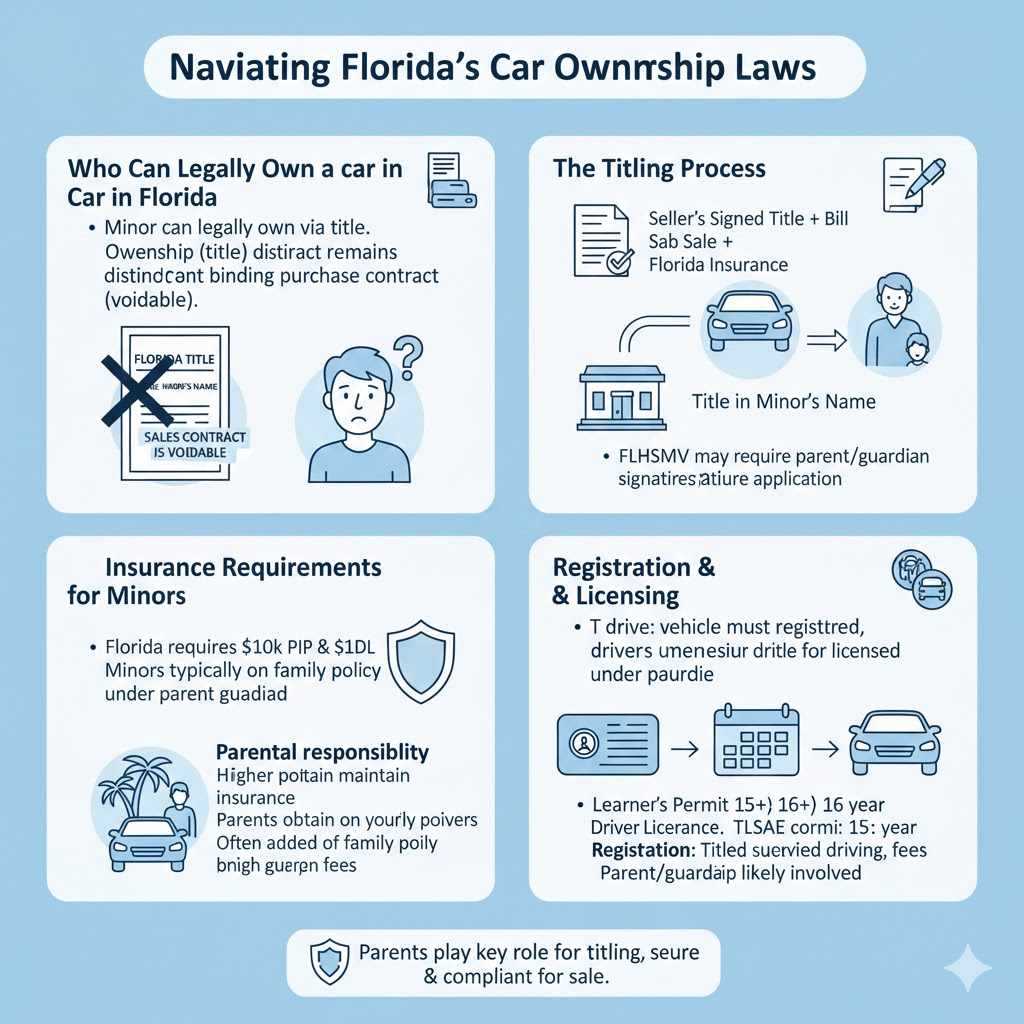
In Florida, a minor can legally own a car. Ownership is established through the process of titling and registering the vehicle. The FLHSMV allows a vehicle to be titled in the name of a minor.
This means the legal title of the car can be held by someone under 18.
However, as we’ve seen, ownership through title alone doesn’t make the underlying sales contract with the minor legally enforceable for the seller. The ability to own a car is distinct from the ability to enter into a binding contract to purchase it. This distinction is at the heart of the issue.
The Titling Process
When a minor is the buyer, the title will be issued in their name. This is generally processed at the county tax collector’s office when the buyer registers the vehicle. The application for title will require the signed title from the seller, a bill of sale, and proof of Florida insurance.
If the minor is under 18, the FLHSMV may require additional documentation or a signature from a parent or guardian for the title application. This is to ensure that someone is overseeing the minor’s property and legal responsibilities associated with vehicle ownership. The specific forms and requirements can be found on the FLHSMV website.
Insurance Requirements for Minors
Operating a vehicle in Florida requires insurance. For minors, this is a critical component of car ownership and is often managed by their parents or guardians.
Florida law requires all drivers to have a minimum of $10,000 in Personal Injury Protection (PIP) and $10,000 in Property Damage Liability (PDL). For minors, it is highly probable that their auto insurance policy will be a family policy under a parent or guardian’s name. Insurers are often hesitant to issue standalone policies to very young drivers due to the higher risk profile.
Parental Responsibility for Insurance
Parents or legal guardians are typically responsible for obtaining and maintaining insurance for a minor’s vehicle. This is not only a legal requirement for driving but also a practical necessity for any vehicle owner.
When a minor purchases a car, the insurance company will assess the risk. A 16-year-old driver will generally face higher insurance premiums than an older, more experienced driver. Parents often add their young drivers to their existing insurance policies, which can sometimes be more cost-effective than obtaining a separate policy.
Registration and Licensing
To legally drive a car on Florida roads, the vehicle must be registered and the driver must be licensed. For minors, these processes involve specific steps and often parental consent or involvement.
A minor will need a learner’s permit or a driver’s license to operate a vehicle. To obtain a learner’s permit, a driver must be at least 15 years old and complete a Traffic Law Substance Abuse Education course. A driver’s license can be obtained at 16 with a learner’s permit for at least one year, having completed 50 hours of supervised driving.
The vehicle registration process, as mentioned, requires a titled vehicle, proof of insurance, and applicable fees. If the minor is the registered owner, a parent or guardian will likely need to be involved in the application process, especially if they are paying the fees or providing consent.
Frequently Asked Questions
Question: Can I sell a car to my 17-year-old child in Florida without their parent co-signing?
Answer: While you can technically transfer ownership to a 17-year-old, the sales contract is voidable by the minor. To make the sale legally binding and protect yourself, you should require the child’s parent or legal guardian to co-sign the sales contract.
Question: What happens if a minor buys a car and then wants to return it in Florida?
Answer: If the sale contract was solely between the seller and the minor, the minor can typically disaffirm the contract and return the car for a refund. This is why adult co-signing is crucial.
Question: Do I need a parent to sign the car title if my child is buying the car?
Answer: The parent or legal guardian needs to co-sign the sales contract, not necessarily the title itself, to make the sale legally binding. However, for registration purposes, a parent may need to be involved or provide consent.
Question: Can a minor get insurance for a car they own in Florida?
Answer: Yes, a minor can be insured, but it is usually done through a parent or legal guardian’s policy or by the parent/guardian obtaining a policy for the minor. Insurers require an adult to be responsible for the policy.
Question: What are the risks for a seller when selling a car to a minor in Florida?
Answer: The main risk is that the minor can void the sales contract, return the car, and demand their money back, even if the car has depreciated or been damaged. This can lead to financial loss for the seller.
Summary
In Florida, you can transfer car ownership to a minor, but the sales contract is generally voidable by the minor. To ensure a legally binding sale and protect yourself as a seller, always have a parent or legal guardian co-sign the sales contract. This secures the transaction and ensures accountability, making the process smooth and compliant with Florida’s requirements.