Does Car Insurance Cover Sinkholes? Yes, With Comprehensive
Comprehensive car insurance covers sinkhole damage to your vehicle, because insurers treat a sinkhole as a natural-disaster peril rather than a collision. You pay your deductible, usually $500 to $1,000, and the insurer covers the repair or the car’s value if it’s a total loss. Liability-only policies and standard homeowners insurance won’t help, since neither one pays to fix or replace your own vehicle. Here’s how to confirm your coverage, what documentation to gather, and how the claims process actually works.
Why Sinkholes Form
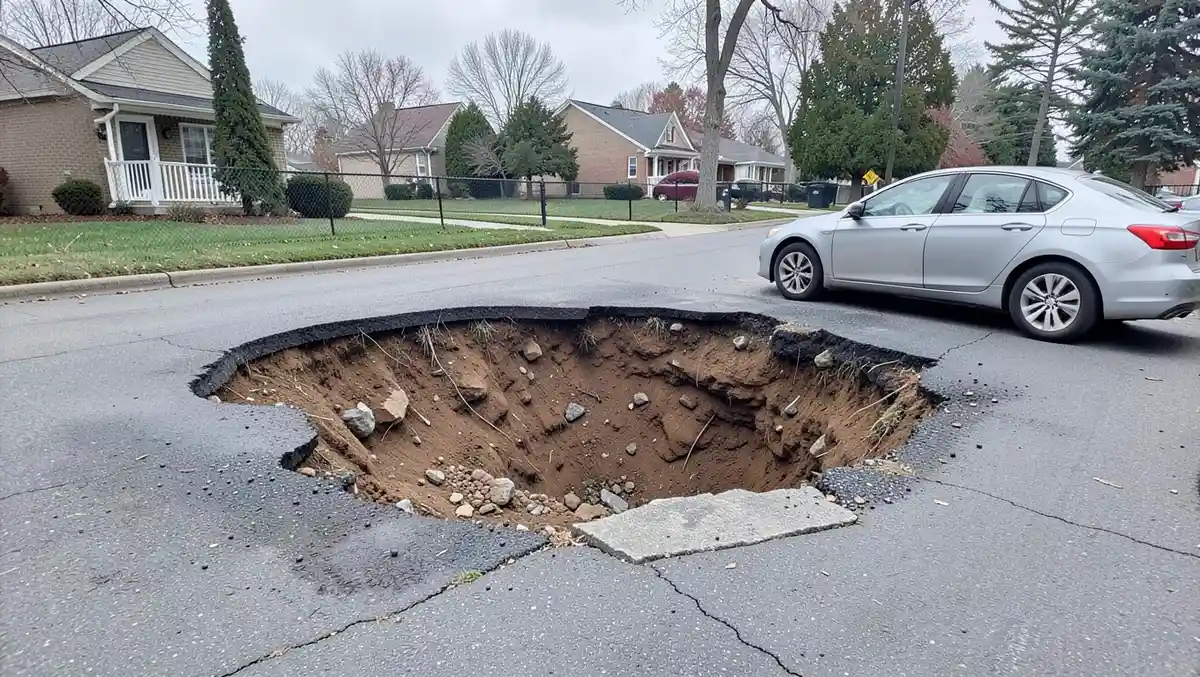
Sinkholes form when water dissolves soft, soluble bedrock — typically limestone, salt, or gypsum — hidden underground, hollowing out a cavity that eventually collapses under the weight of the soil and pavement above it. Heavy rain, drought cycles, and leaking water or sewer lines can all speed the process up. The U.S. Geological Survey estimates that karst terrain (bedrock prone to this kind of erosion) underlies roughly 20% of the United States, with additional areas over salt and gypsum deposits also at risk, which is why sinkholes show up far outside the states most people associate with them.
Does Car Insurance Cover Sinkholes?
Yes — as long as you carry comprehensive car insurance, sinkhole damage is covered. Comprehensive is the coverage that pays for damage that isn’t caused by a collision with another vehicle: theft, vandalism, storms, falling objects, and events like a sinkhole opening under your car. No special sinkhole endorsement is required for auto policies the way it often is for homeowners insurance in states like Florida — comprehensive handles it as a standard part of the coverage. If you only carry liability insurance, though, you won’t have any protection for your own car. Here’s the breakdown.
What Comprehensive Coverage Includes
Comprehensive coverage pays for a wide range of non-collision damage, including:
- A sinkhole opening under or swallowing your vehicle.
- Weather damage, such as hail, wind, or flooding.
- Theft or vandalism.
- Fire, falling objects, and collisions with animals.
Comprehensive isn’t required by law in any state, but most lenders require it while you’re still financing a car, and it’s worth keeping on any vehicle you couldn’t easily afford to replace. Check your declarations page or call your agent to confirm you actually have it — it’s a separate line item from collision coverage, not something bundled in automatically.
What Comprehensive Coverage Won’t Cover
Basic liability insurance only pays for injury or property damage you cause to someone else; it never pays to repair your own car, sinkhole or not — see how liability coverage actually pays out in a lawsuit for what it’s really designed to do. Homeowners insurance is a separate policy entirely and, in most states, won’t pay for a car parked in your driveway or garage, even if a sinkhole damages the house around it. And comprehensive only covers sudden, external damage — it won’t pay for ordinary wear and mechanical failure, the same way a blown engine from normal wear generally isn’t a covered claim either.
How to Check If Your Policy Covers Sinkholes
Confirming your coverage takes a few minutes:
- Pull up your policy: Find your insurance documents or log into your provider’s account online.
- Look for “Comprehensive”: If it isn’t listed as a coverage on your declarations page, you don’t have it and would need to add it.
- Call your agent: Ask directly whether sinkhole damage is included — it’s a quick, specific question.
- Confirm your deductible: Comprehensive deductibles typically run $500 to $1,000, and that’s what you’ll pay out of pocket before coverage kicks in.
Table 1: Liability vs. Comprehensive Coverage
| Coverage Type | Covers Sinkholes? | Other Perks | Typical Monthly Cost |
|---|---|---|---|
| Liability only | No | Covers damage/injury to others | ~$70–$100 |
| Comprehensive (added to liability) | Yes | Theft, weather, fire, sinkholes | ~$140–$190 |
Table notes: figures are nationwide averages for full coverage versus liability-only policies; your actual premium depends on your state, driving record, and vehicle.

How to File a Sinkhole Damage Claim
If a sinkhole damages your car, here’s the process most insurers follow:
- Take photos: Document the sinkhole and the damage to your car, including its size, location, and any visible depth.
- Call your insurer: Report the claim by phone or through the insurer’s app or website — most now support online filing.
- Meet the adjuster: An adjuster inspects the car (or reviews your photos) and estimates the repair cost or actual cash value.
- Sign the proof-of-loss statement: This is the form that authorizes payment once the estimate is finalized.
Simple comprehensive claims are often resolved within one to two weeks once photos and the adjuster’s estimate are in. Total-loss claims can take longer, since the insurer has to determine your car’s actual cash value before issuing payment.
Common Mistakes to Avoid
- Not taking photos: Without documentation of the sinkhole and the damage, a claim can be delayed or denied.
- Waiting too long to report: File promptly — delays can complicate the claim and, in some states, risk missing a filing deadline.
- Assuming basic coverage applies: Liability-only insurance won’t pay for sinkhole damage to your own car, no matter how the sinkhole formed.
Benefits and Drawbacks of Comprehensive Coverage
Comprehensive coverage is broad protection, but it isn’t free or without limits:
Benefits
- Broad protection: Covers sinkholes, severe weather, fire, theft, vandalism, and animal collisions in one policy.
- Caps your out-of-pocket cost: A repair or replacement that could run into the thousands is limited to your deductible.
- Required by most lenders: If you’re financing or leasing, your lender likely already requires it.
Drawbacks
- Higher premiums: Adding comprehensive (and usually collision alongside it) costs more than liability-only coverage.
- Deductibles still apply: You’ll pay $500 or more out of pocket before the insurer covers the rest.
- May not be worth it on an older car: If your car’s actual cash value is low, the payout on a total loss may not be much more than a year or two of premiums.
You can check your area’s general sinkhole risk on the USGS website before deciding whether comprehensive is worth carrying on an older, lower-value vehicle.
Table 2: Sinkhole Risk by State
| State | Sinkhole Risk | Comprehensive Recommended? |
|---|---|---|
| Florida | High | Yes |
| Kentucky | High | Yes |
| Texas | Medium | Yes |
| Pennsylvania | Medium | Yes |
| Arizona | Low | Maybe |
| Ohio | Low | Maybe |
Table notes: risk levels are general, based on known karst and evaporite-rock geology in each state, not a substitute for a local geological or insurance assessment.
Tips for Sinkhole-Related Car Insurance
A few practical steps worth taking before you ever need to file a claim:
- Shop around: Compare comprehensive quotes from a few insurers — carriers like Nationwide and Travelers both let you quote online in a few minutes.
- Bundle policies: Pairing your car and home insurance with the same insurer often lowers both premiums.
- Ask about discounts: Safe-driver, multi-vehicle, and new-car discounts can offset the added cost of comprehensive.
- Check your area’s risk: The Insurance Information Institute publishes general guidance on regional sinkhole and natural-disaster risk.
Sinkhole damage is just one of many “is this covered” questions drivers run into. A blown engine, a lawsuit after an accident, and damage caused by a mechanic’s negligence are each handled under completely different parts of a policy — or, in the case of ordinary wear, not covered at all.
Frequently Asked Questions
Does comprehensive coverage include sinkholes?
Yes, comprehensive coverage generally includes sinkhole damage. It pays for repairs or a total-loss payout, minus your deductible. Confirm the specifics with your policy or agent, since exact terms can vary slightly by insurer.
What if I only have liability insurance?
Liability-only insurance won’t pay for sinkhole damage to your car. It only covers injury or property damage you cause to someone else. You’d need to add comprehensive coverage to protect your own vehicle from sinkholes or other non-collision damage.
Do I need a special sinkhole endorsement for my car?
No. Unlike homeowners insurance in some states, auto comprehensive coverage doesn’t require a separate sinkhole endorsement — sinkhole damage is included as a standard part of comprehensive.
How much does a sinkhole claim cost?
Your out-of-pocket cost is your deductible, typically $500 to $1,000. The total payout is capped at your car’s actual cash value if it’s totaled. Note that widely cited figures like an average sinkhole claim near $140,000 refer to home structural-damage claims in Florida, not vehicle claims — a car payout is far smaller since it’s limited to the vehicle’s value.
Are sinkholes common in my state?
Sinkholes are most common in states with karst or evaporite bedrock, including Florida, Kentucky, Alabama, Texas, and Pennsylvania. Check the USGS website or ask a local insurance agent about risk in your specific area.
Can homeowners insurance cover sinkhole car damage?
No, homeowners insurance doesn’t cover cars damaged by a sinkhole. You need comprehensive auto coverage for that. A homeowners policy may cover the house itself in some states, but that coverage varies and often requires a separate sinkhole endorsement.
How long does a sinkhole claim take?
Simple comprehensive claims are often resolved within one to two weeks after you submit photos and meet the adjuster. Total-loss claims can take longer while the insurer finalizes your car’s actual cash value.
What if my car is totaled by a sinkhole?
If your car is declared a total loss, comprehensive coverage pays its actual cash value, minus your deductible. You can put that payout toward a replacement vehicle. Photograph the damage thoroughly before the car is towed or repaired.
Conclusion
Sinkhole damage sounds like a nightmare scenario, but the coverage question has a clean answer: comprehensive car insurance covers it, minus your deductible, while liability-only and homeowners policies don’t. Confirm you actually carry comprehensive, photograph any damage immediately, and file your claim right away. Comprehensive also covers related risks like flood damage from driving into high water, so it’s worth understanding the full scope of what the coverage protects against, not just sinkholes.
Products related to this article
Sponsored / affiliate links. As an Amazon Associate I earn from qualifying purchases. I may earn additional commission from eligible campaigns.