Can You Sleep in Your Car in Arizona? Legal Rules & Heat Risks
Yes, it is legal to sleep in your car in Arizona. There is no state law against it — but local ordinances, private-property rules, and where you specifically park all still apply, and Arizona’s extreme summer heat makes it riskier than in most other states.
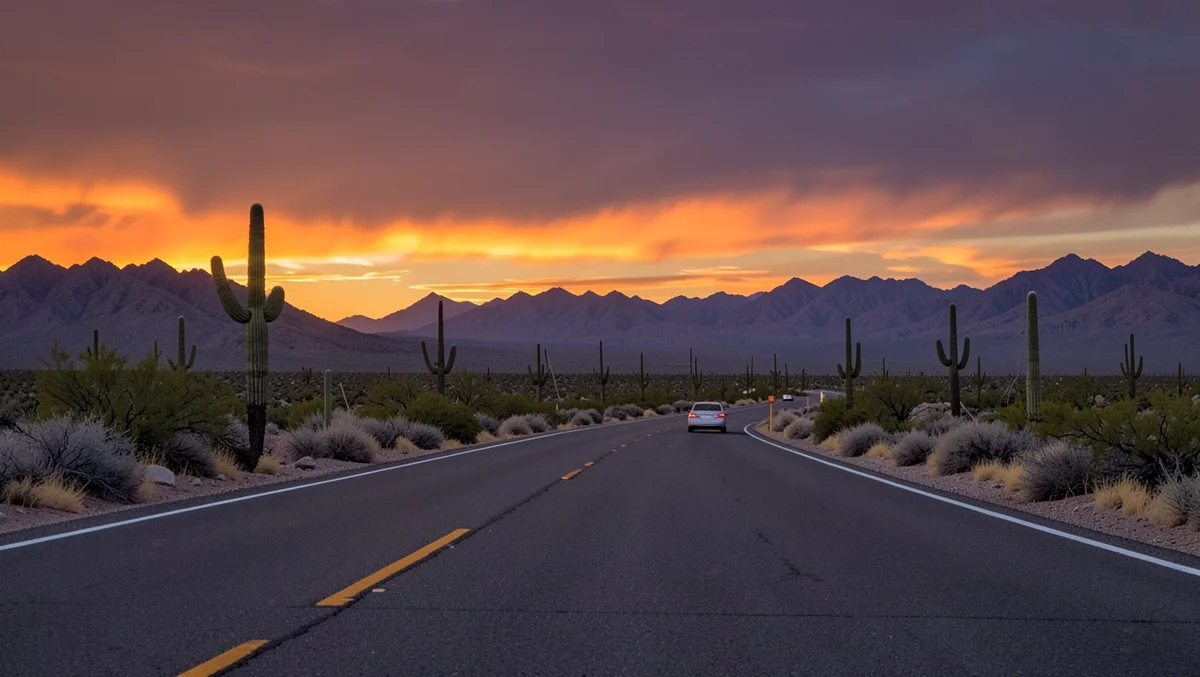
Arizona’s open highways, national forests, and Bureau of Land Management (BLM) desert make it one of the more popular states for road-trippers and van-lifers to rest in their vehicles overnight. But “legal in general” is not the same as “legal everywhere,” and the biggest real risks in Arizona — a DUI charge for simply being in the driver’s seat, or heatstroke from sleeping in a closed-up car in July — rarely show up in generic car-sleeping advice written for other states. Here is what actually applies in Arizona.
Is It Legal to Sleep in Your Car in Arizona?
Arizona has no statewide law that bans sleeping in a parked vehicle. You are generally free to recline your seat and rest, as long as you are not trespassing on private property without permission and you are not setting up an actual campsite (a tent, a cooking fire, furniture outside the car) on land where camping is not allowed. The confusion around this topic almost always comes from two things that are separate from the simple act of sleeping: local parking ordinances, and Arizona’s DUI law.
The DUI Risk Most People Do Not Know About
Arizona’s DUI statute (A.R.S. § 28-1381) makes it illegal to drive or be in “actual physical control” of a vehicle while impaired — and Arizona courts have repeatedly held that you do not have to be driving, or even have the engine running, to meet that standard. If you pull over to sleep off alcohol or drugs, prosecutors and courts weigh a totality-of-the-circumstances test: whether the engine is running, whether the keys are in the ignition, whether you are in the driver’s seat, and how easily you could resume driving if you woke up.
In practice, this means the safest way to sleep off impairment in Arizona is to move to the back seat, turn the engine off completely, and keep the keys out of the ignition (in a pocket or the glovebox, not the cupholder). Falling asleep behind the wheel with the engine running is the scenario most likely to be charged as actual physical control, even if the car never moves an inch.
City and County Rules Vary — Always Check Local Signage
There is no single “Arizona rule” for city streets and municipal lots, and this is where most fines actually come from — not from the state, but from a local ordinance about overnight parking, loitering, or camping on public land.
- Phoenix has no citywide ban on sleeping in a vehicle, but individual streets, garages, and lots can post their own overnight parking restrictions.
- Tucson also has no blanket ban on car sleeping, but the Tucson City Council approved an ordinance in June 2025 that specifically prohibits camping in city washes and parks, on top of existing restrictions on overnight parking in most residential and commercial zones.
- Scottsdale enforces stricter overnight parking limits in its commercial and tourist districts, even though it does not specifically target sleeping in a vehicle.
Because these rules change by neighborhood and even by season, the only reliable way to know if a specific spot is allowed is to read the posted signage and, if none exists, to check that city’s municipal code before you settle in for the night.
Where You Can Legally Park and Sleep in Arizona
A handful of spot types are consistently reliable across the state, though each comes with its own fine print.
ADOT Rest Areas
The Arizona Department of Transportation does not publish a fixed overnight time limit for its rest areas — unlike states such as California (8 hours) or Texas (24 hours). You are allowed to park and rest, but you are expected to move on once you are rested enough to drive safely, and setting up an actual campsite (tents, camp chairs, cooking outside the vehicle) is not permitted. Most rest areas have restrooms and are checked periodically, which is part of why they remain one of the most commonly used overnight stops along Arizona’s interstates.
Walmart and Other Store Parking Lots
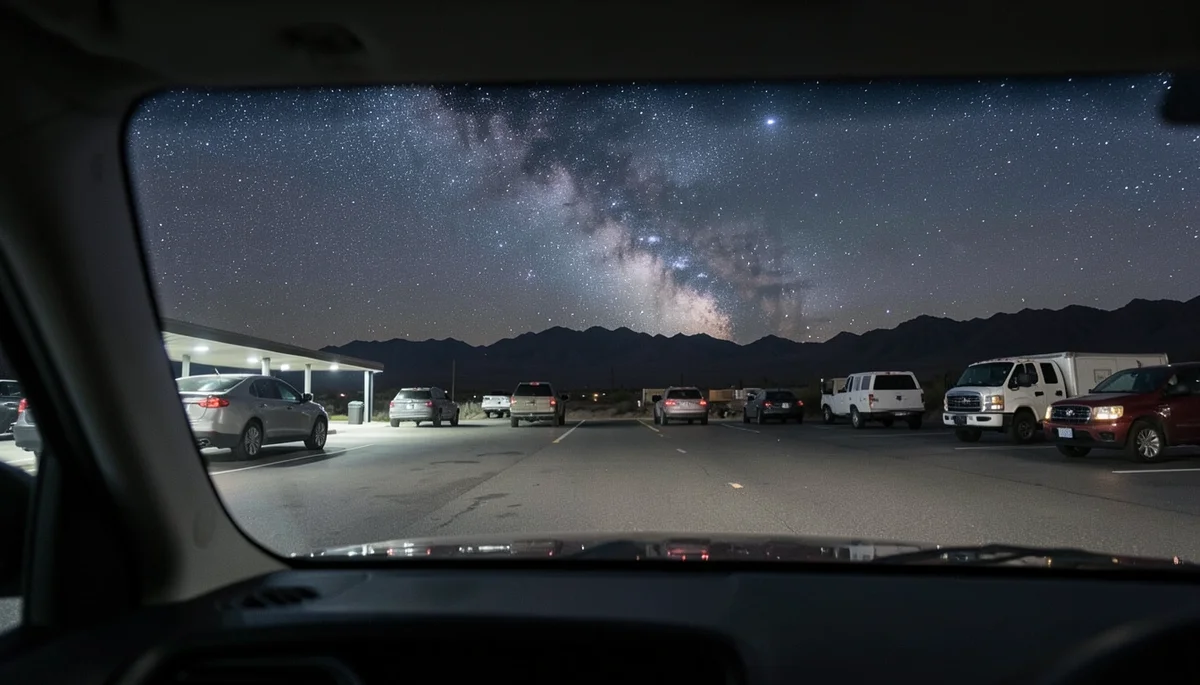
Overnight parking at Walmart is never a guaranteed, company-wide right — it is left entirely to the individual store manager, and it can be overridden by local city ordinances or a specific store’s past problems with long-term parkers. Some Arizona Walmart locations post “no overnight parking” signs outright. The only reliable approach is to check in at the customer service desk when you arrive and ask directly, rather than assuming the lot is open just because a nearby location allowed it last time.
BLM Land and Quartzsite
Arizona has a real advantage here that most car-sleeping guides skip entirely: the Bureau of Land Management manages more than 12 million acres of public land in the state, and dispersed camping (including simply sleeping in your vehicle) is free on most of it for up to 14 days at a stretch. The town of Quartzsite, in western Arizona, has become a well-known winter destination for exactly this reason — thousands of RVers and van-dwellers camp on the surrounding BLM land every year.
Campgrounds
Paid campgrounds remain the most predictable option. Most charge a modest nightly fee, provide a bathroom and sometimes showers, and eliminate the guesswork around local ordinances entirely since sleeping there is the whole point.
Why Arizona’s Heat Makes This Riskier Than in Most States
Even where sleeping in your car is completely legal, Arizona’s desert climate adds a real safety risk that most state-by-state car-sleeping guides never mention: a closed-up vehicle can turn dangerous fast, in both directions.
- Never run the engine or the AC to sleep. A running engine in an enclosed or parked position can leak carbon monoxide into the cabin through a worn exhaust seal, and CO is colorless and odorless — you will not smell a leak before it becomes dangerous. The same risk applies to sitting with the AC running. Sleep with the engine off.
- Daytime heat builds up fast with the engine off, too. On a 100°F day, a closed car’s interior can reach roughly 140°F in about 20 minutes, according to the National Highway Traffic Safety Administration. Cracking a window barely slows this down. Park in the shade, use a reflective sunshade, and avoid sleeping in a parked car during peak Arizona daytime heat.
- Heat is a genuine public health emergency in central Arizona, not just discomfort. Maricopa County confirmed 430 heat-associated deaths in 2025 — down from 608 in 2024, but still a significant number. If you are sleeping in your car anywhere in the Phoenix metro area between May and September, treat heat exposure as seriously as you would treat a storm in another state.
- Desert nights can flip cold, even after a brutal day. Arizona’s dry air means big swings between daytime and nighttime temperatures, especially at higher elevations like Flagstaff. Pack a blanket even if you left home in 100°F heat.
FOR AIRFLOW WITHOUT LOSING PRIVACY
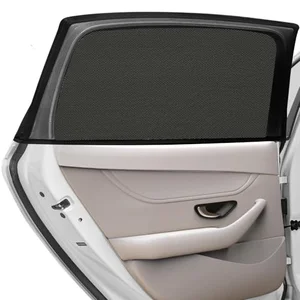 |
Breathable Mesh Car Rear Window Shades, 2-Pack – $13.99 Fits over the door frame so you can crack the window for airflow without losing privacy or letting bugs in — exactly the tradeoff you need for a hot Arizona night.
|
What Happens If You Get a Ticket?
Arizona does not have a law that fines you specifically for “sleeping in a car.” When people do get cited or asked to move on, it is almost always under a different, more specific rule — trespassing on posted private property, violating a local no-overnight-parking ordinance, or a city-level anti-camping rule like Tucson’s wash-and-park ordinance. In rare cases, refusing to leave when an officer asks you to, after being found on restricted or private land, can escalate to an arrest for trespassing rather than for the act of sleeping itself.
The practical takeaway: check for posted signs before you settle in, and if an officer asks you to move along, do it — a polite conversation almost always ends there.
Comfort and Safety Tips for Sleeping in an Arizona Car
- Choose a well-lit, populated spot over an isolated one — a busy rest area or a 24-hour store lot is safer than a quiet dead-end road.
- Lock the doors and keep valuables out of sight.
- Crack a window for airflow, ideally with a mesh screen in place, rather than leaving it wide open.
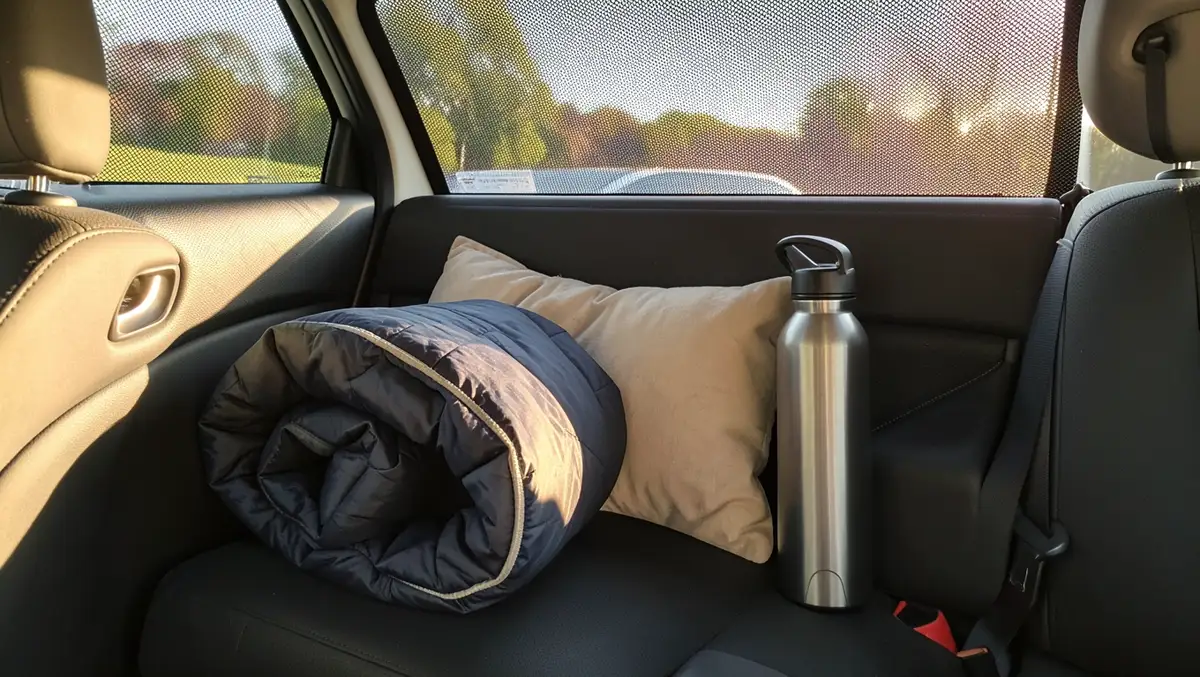
- Bring a sleeping pad or a rolled blanket — car seats are not designed for a full night’s sleep, and a little padding under you goes a long way for your back. If you are doing this regularly, it is worth putting together a proper car camping kitchen setup so food and water are always sorted before you park for the night.
- Keep water, snacks, a phone charger, and a basic first-aid kit within reach.
- Have a plan B. If a spot feels wrong once you arrive, it is always worth driving another ten minutes to find somewhere better.
When a Motel or Campground Makes More Sense
Sleeping in your car saves money, but it is not always the right call. If you are traveling with young kids, need real air conditioning through the night, or are simply exhausted from a long travel day, a budget motel or hostel bed is worth the cost. Both typically include a bathroom, air conditioning, and sometimes Wi-Fi, and booking a day or two ahead usually finds a cheaper rate than a walk-in. Campgrounds split the difference — a small fee gets you a legal, designated spot with a bathroom and often a shower, without the higher cost of a room.
Frequently Asked Questions
Is It Legal to Sleep in Your Car in Arizona?
Yes. Arizona has no state law against sleeping in a parked vehicle. You still need to avoid trespassing on private property, follow any posted local parking signs, and not set up an actual campsite where camping is not allowed.
Can You Get a DUI for Sleeping in Your Car in Arizona?
Yes, if you are impaired and considered in “actual physical control” of the vehicle, even while parked. Arizona courts look at factors like whether the engine is running, whether the keys are in the ignition, and whether you are in the driver’s seat. Sleeping off impairment in the back seat with the engine off and the keys out of the ignition is a meaningfully safer position than dozing behind the wheel with the engine running.
How Long Can You Park Overnight at an Arizona Rest Area?
ADOT does not set a fixed hour limit at its rest areas. You are expected to leave once you have rested enough to resume driving safely, and setting up a campsite (tents, chairs, cooking outside the car) is not allowed.
Can You Sleep Overnight in a Walmart Parking Lot in Arizona?
Sometimes, but it is never guaranteed. Overnight parking at Walmart is decided store by store, based on the manager’s discretion, local ordinances, and the individual location’s policy. Always check with the store’s customer service desk when you arrive rather than assuming a lot is open.
Is It Safe to Run the Engine or AC While Sleeping in a Car?
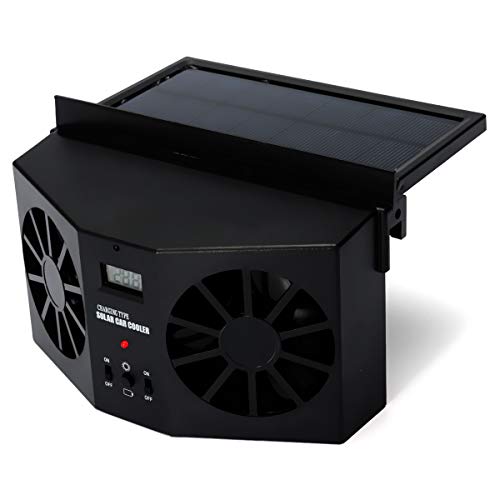
No. A running engine can leak colorless, odorless carbon monoxide into the cabin through a worn exhaust seal, and that risk exists whether you are running the AC or just idling. Turn the engine off before you sleep, and rely on a cracked window, a sunshade, or a battery-powered fan for airflow instead.
Can You Sleep in Your Car for Free on BLM Land in Arizona?
Yes. The Bureau of Land Management allows free dispersed camping, including sleeping in a vehicle, on most of the 12-plus million acres it manages in Arizona, typically for up to 14 days at a stretch. The area around Quartzsite in western Arizona is one of the best-known destinations for this.
The Bottom Line
Sleeping in your car anywhere in Arizona is legal on its own, but three things can turn a free night’s rest into a real problem: parking somewhere with a posted local restriction, being impaired behind the wheel even while parked, and underestimating how fast a closed car heats up in the desert sun. Stick to rest areas, BLM land, checked-in store lots, or a campground, keep the engine off while you sleep, and plan around the heat rather than around the cold, and car sleeping in Arizona is genuinely one of the easier states to do it in.
Products related to this article
Sponsored / affiliate links. As an Amazon Associate I earn from qualifying purchases. I may earn additional commission from eligible campaigns.