Can You Sleep in Your Car? Legal in Most States, Not Every Spot
Most states allow sleeping in a car, but not every spot. If a sign bans overnight parking, a private owner says no, or a local camping ordinance applies, move on. A bad stop can bring tickets, towing, police contact, or a trespass charge. This guide shows how to sort legal, gray, and high-risk places before you park.
Can you sleep in your car?

Yes, in many places you can, but legality turns on the exact spot, the local rules, and how the parking area is managed. There is no federal law that generally bans sleeping in a parked vehicle, yet local anti-camping rules and property restrictions often decide what happens next.
Why the exact parking spot matters
The same driver can be fine in one lot and cited in the next block. A city street, a rest area, a private lot, and a gated facility can all have different rules. Enforcement also changes with posted signs, complaints, repeated stays, and whether the car looks parked for rest or used as housing.
Sleeping, camping, and vehicle habitation are not the same thing in enforcement terms. A short nap in a legal parking spot is one thing. An extended stay with bedding, cooking gear, and window covers can look like camping or habitation, which is where many local ordinances bite.
Federal, state, and local rules
Federal law does not generally prohibit sleeping in a parked vehicle. Most states are also silent on sleep itself, which means the real limits usually come from state rest-area rules, city ordinances, county codes, and the property owner’s terms. That separation matters because a legal state can still have a strict city block.
Where state codes stay silent
Most trouble does not start with a statewide ban on sleep. It starts with local anti-camping ordinances, vehicle-habitation rules, or parking restrictions that turn a normal curb into a ticket risk. More than 100 U.S. cities have ordinances restricting vehicle habitation, so city-by-city differences are normal.
California is a good example of the split. California has no state law banning car sleeping, yet local rules can still limit where and when you stay.
Why city ordinances often control enforcement
Local officers usually act on what the curb says, not on a broad national rule. A posted no overnight parking sign, a complaint from a business, or a vehicle that looks occupied too long can trigger contact.
Picture a driver who pulls into a downtown block with no posted overnight rule, then leaves at sunrise. That may be low risk in one city. Move the same car to a block marked no overnight parking, and the legal picture changes fast.
Rest area rules
Rest areas are often more permissive than streets, but they are not uniform. Some states prohibit overnight stays at certain facilities, so the sign and the state DOT policy matter.
Common time limits and posted signs
Read the posted sign first. If the sign says a limit, that limit controls. Exceeding posted rest-area limits can result in a warning, citation, or removal order. If the area is closed, gated, or marked for daytime use only, do not treat it like an all-night stop.
Florida Statute 338.2278 authorizes DOT rules for rest areas, which is a reminder that facility rules can come from state transportation policy, not a blanket national standard. The posted rule on that site still decides the practical answer.
Closed or gated facilities
Closed gates change the analysis immediately. If a rest area shuts at night, or if a sign says the lot is closed after certain hours, staying put can shift from tolerated rest to trespass or a parking violation. A closed facility is not a gray area you can read past.
Can you sleep on private property?
Yes, but permission is the key. Private property usually requires consent from the owner, manager, or another person with authority to allow it. Without that, trespass becomes the main risk, even if the spot looks empty or the lot is open to customers during the day.
Permission versus trespass
Many drivers assume a retail lot is fair game after hours. Sometimes it is. Sometimes it is not. A store manager can allow an overnight stay and revoke that permission later, and an otherwise quiet lot can become a problem if employees, security, or police decide the stay is not allowed.
Retail lots, truck stops, and some private land can be usable overnight spots, but none of them are universally legal everywhere. Permission matters more than brand name. A lot that welcomes travelers in one town may post no overnight parking in another.
How implied permission can disappear
Implied permission is fragile. Daytime customer use does not equal overnight consent. If the lot closes, a guard patrols it, or the business posts a no overnight parking sign, the implied welcome is gone. Repeated stays can also turn a tolerated stop into a complaint-driven enforcement problem.
Suppose a driver parks behind a grocery store at 10 p.m. because the lot is empty and unposted. If the manager later sees the car, permission can vanish right then. The car may still be parked, but the legal posture has changed.
Parking spot legality checklist
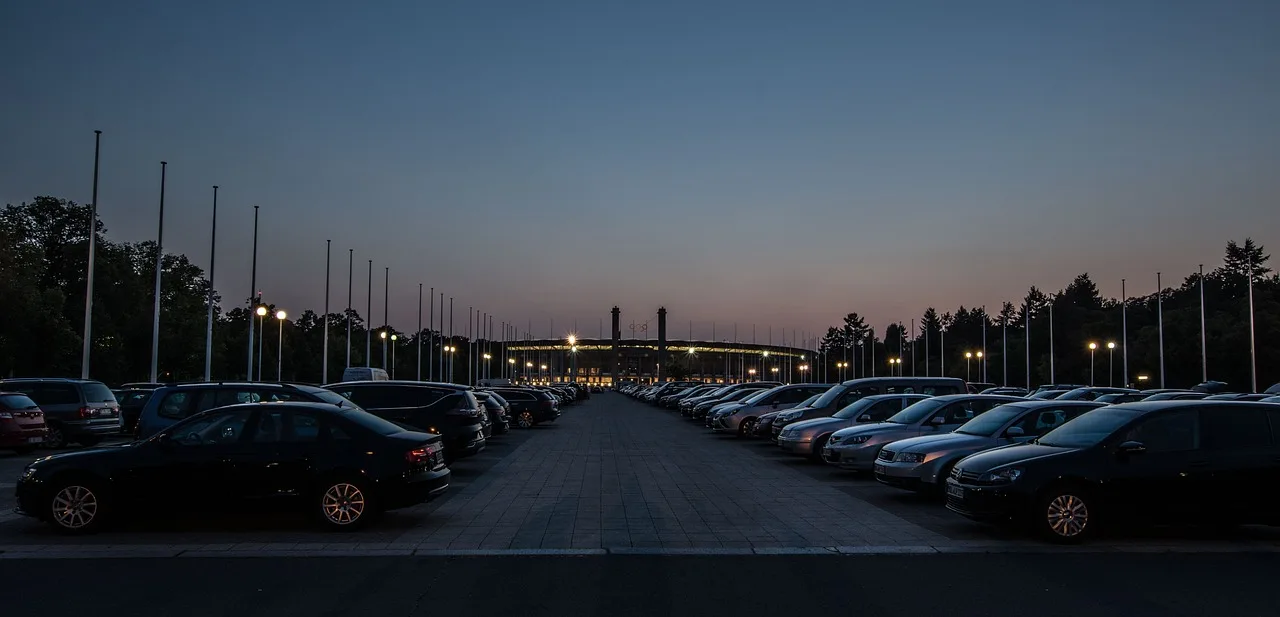
Use this as about a 60-second screen before you shut the door. The question is not “Can a car be slept in?” The question is whether this exact spot is legal likely, caution, or avoid. Start with the signs, then the property, then the local rules.
| Bucket | Check | Yes means |
|---|---|---|
| Legal likely | No posted no overnight parking sign | The spot is not openly restricted |
| Legal likely | Permission was granted by the owner or manager | Private property consent is in place |
| Legal likely | Area is open and not closed or gated | No closure rule is blocking the stay |
| Legal likely | Local ordinance search shows no anti-camping rule for that block | Local enforcement risk is lower |
| Caution | Time limits are posted | You must leave before the limit expires |
| Caution | The property is private but consent is implied, not stated | Permission could disappear quickly |
| Caution | The site is a rest area with a limit | Check state DOT policy and the sign |
| Caution | Sleeping could be read as camping or habitation | Keep the stay brief and low-profile |
| Avoid | Posted no overnight parking sign | Move on |
| Avoid | Area is closed, gated, or marked off-limits at night | Do not stay there |
| Avoid | You are intoxicated and the keys are accessible | DUI exposure rises |
| Avoid | The engine is running while you sleep | Police may treat it as a higher-risk stop |
- Read the posted sign first.
- Identify the property type: public street, rest area, private lot, or designated safe parking zone.
- Check whether the area is open, closed, or gated.
- Search the city or county ordinance for anti-camping or vehicle-habitation rules.
- Confirm any time limit before you settle in.
- Get permission if the land is private.
- If alcohol is involved, do not rely on “parked” as a defense.
Can police ticket you?
Yes. Police can ticket you for the parking violation, the local camping rule, or the trespass issue tied to the spot. The usual triggers are signs, complaints, repeated stays, or a car that looks like it is being used as a home rather than a temporary rest stop.
Signs, complaints, and repeated stays
Enforcement is often complaint-driven. A business owner calls. A neighbor complains. Security notices the same vehicle night after night. That pattern matters more than the fact that the driver is asleep. In some cities, repeated use of the same curb or lot is what turns a low-key stop into action.
Towing and citation triggers
No overnight parking signs can lead to towing, tickets, or police contact. Rest-area limits can do the same. If the rule says 2 to 8 hours and the vehicle stays past the limit, the response can be a warning, a citation, or a removal order depending on the state and the site.
One common mistake is assuming silence means permission. A lot without signs may still be private property with an active no overnight policy, or a city block with a parking code that is enforced only after complaints. Silence is not a reliable yes.
DUI and engine risks
Sleeping while intoxicated can trigger DUI exposure, even if the car is parked. The risk rises if keys are accessible or the engine is running. In practical terms, police often look at control of the vehicle, not just motion, when they assess whether the situation fits a DUI theory.
Why sobriety still matters while parked
If a person is intoxicated and can readily drive away, the parked car may not protect them. A sleeping driver with keys in the ignition, in a front pocket, or within easy reach is at higher risk than someone who is sober and clearly set up to rest. The engine running makes the situation worse.
Keys, ignition, and engine status
Keep the engine off unless a specific law or safety need makes that temporary and lawful. Do not leave keys where they suggest immediate control of the car if alcohol is involved. Even when a place allows parking, the DUI issue can still exist separate from the parking rule.
Where can you legally sleep in your car without getting ticketed?
The safest answer is a place that is open, posted as allowed, and either public with a clear time rule or private with permission. That often includes some rest areas, some truck stops, some retail lots, public lands that allow overnight parking, and designated safe parking zones. None is universal.
Safe parking zones and traveler spots
Some cities create safe parking zones for overnight vehicle parking or for vehicle dwellers. These areas are designed to reduce complaints and make enforcement clearer. Use them when available. They are more predictable than guessing at a curb or hoping a retail lot will stay quiet all night.
How to choose in under 60 seconds
Start with the sign. If it says no overnight parking, leave. If it is private property, get permission or move on. If it is a rest area, check the limit and whether the site is closed. If you are intoxicated, do not sleep there with keys accessible or the engine running.
Can you sleep in your car at a rest stop?
Often yes, but only within the posted and state-specific rules. Some states prohibit overnight stays at certain facilities, so the sign and state policy control the answer.
What states let you sleep in your car overnight?
There is no clean universal list because state DOT policies, rest-area rules, and local ordinances all affect the outcome. Most states do not flatly ban car sleeping, and California has no state law banning car sleeping.
Can you sleep in your car on public streets?
Sometimes, but public streets are not automatically safe or legal overnight parking. Cities may regulate curb use, ban camping-like stays, or set time windows that make sleeping risky after dark. That is not a national rule.
Is it legal to sleep in your car if you’re not drunk?
Being sober lowers DUI risk, but it does not erase parking, trespass, or camping rules. You still need a legal spot, permission if it is private land, and compliance with any posted time limits or closure rules. Sobriety helps, but it is only one part of the analysis.
Can you sleep in your car on private property?
Yes, if the owner or manager allows it. Without permission, the main risk is trespass. Even where a business sometimes tolerates overnight parking, that tolerance can end with a sign, a complaint, or a guard’s instruction to move on. Permission should be clear, not assumed.
Frequently asked questions
Is it legal to sleep in your car?
Usually yes, but only in a lawful spot. There is no federal ban on sleeping in a parked vehicle. The real test is whether state, city, county, or property rules restrict that exact location. A posted sign, a closed lot, or a local anti-camping rule can change the answer immediately.
Can police ticket you for sleeping in your car?
Yes. Police can ticket you for parking past a time limit, violating a no overnight parking sign, breaking a local camping rule, or staying on private property without permission. They can also contact you for trespass or order you to leave if the site is closed or gated.
Where can I legally sleep in my car without getting ticketed?
Look for places with clear permission or clear posted allowance: some rest areas, some truck stops, some retail lots, public lands that permit overnight parking, and designated safe parking zones. The safest spots are the ones with a written rule in your favor, not the ones you hope will be ignored.
Products related to this article
Sponsored / affiliate links. As an Amazon Associate I earn from qualifying purchases. I may earn additional commission from eligible campaigns.