5 Best Plate Covers for Rain (2026): Based on Specs and Reviews
For rain and road debris, pick a clear, legal, open-face or hard polycarbonate license plate cover for snow-belt, salt, and gravel use. In light-rain areas with strict plate-obstruction laws, a simple frame or no cover is the safer choice. Federal-style readability standards and state code language are clear on the core issue: anything that obscures, distorts, or reduces plate legibility can be cited depending on jurisdiction and enforcement. This guide compares materials, shapes, and legal red flags by climate and road exposure.
Quick comparison
| Product | Badge | Best for | Price | ||
|---|---|---|---|---|---|
 |
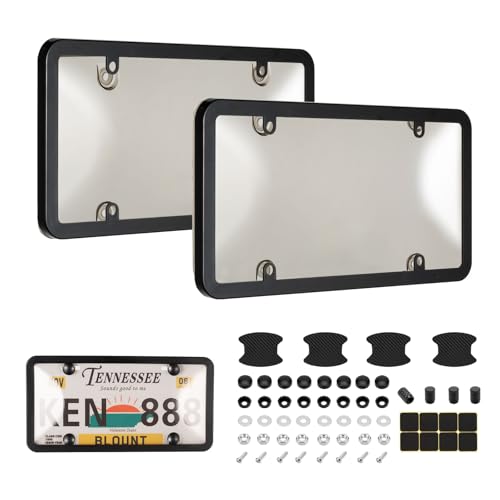
Custom Accessories Unbreakable Domed License Plate Shield,Custom Accessories | Our pick | Standard fit · clear dome · single shield | $8.68
Price as of 28 Oct 2026
|
View |
 |
MotorFi Black Silicone License Plate Frames 2 Pack | ClearMotorFi | Also great | Standard fit · clear cover · 2 pack | $22.99
Price as of 28 Oct 2026
|
View |
 |
Uliche 2 Pack Universal Transparent Car License Plate CoverUliche | Budget pick | Standard US fit · clear combo · 2 pack | $9.90
Price as of 28 Oct 2026
|
View |
 |
2 Pack Transparent License Plate Shield UV Protective TrimA Lots MiLi | Upgrade pick | Standard US fit · clear shield · 2 pack | $12.18
Price as of 28 Oct 2026
|
View |
 |
2 Pack License Plate Covers, 12.2 x 6.3 Inch, TransparentGeneric | Pair with it | Standard US fit · transparent cover · 2 pack | $9.99
Price as of 28 Oct 2026
|
View |
Clear polycarbonate is the safest all-around pick when you want visibility and weather shielding. Bubble designs add impact protection, ABS leans harder into winter durability, silicone helps with rattle and corrosion, and smoked covers carry the highest visibility and compliance risk. Material claims from polymer manufacturers also support this split: polycarbonate is valued for impact resistance and optical clarity, while ABS is commonly used where toughness and weatherability matter.
How we chose
This comparison uses manufacturer specs, listing details, and published buyer feedback only. The filter was simple: fit for a standard plate, drainage or sealing behavior, UV and yellowing claims, mounting hardware, and the visibility risk that matters in front-only versus front-and-rear use. We also prioritized materials with published datasheets that describe UV stability, impact resistance, and outdoor durability.
The key question is not appearance. It is how a cover handles rain, slush, salt spray, wash water, and sun, plus whether it keeps the plate readable from normal viewing distance and through camera systems. That camera-readability concern is not theoretical: plate reflectivity, contrast, and angle matter for LPR/ALPR systems, which are designed around legible characters and consistent retroreflective return under vehicle lighting.
What fits a standard US plate?
A standard US plate listed at 12.2 x 6.3 inches is the starting point, and most buyers want a universal fit around that size. The bigger decision is whether you need front-only protection or front-and-rear protection, since the rear plate usually takes more spray, grime, and camera scrutiny. For sizing, use the plate dimensions and mounting pattern on the vehicle, then check the frame’s clearance so the registration sticker, state name, or characters are not hidden.
Fit basics that matter
Match the cover to the plate, not the trim. If a cover is too tight, edges can crack or pinch dirt; if it is too loose, it can rattle, haze, or let spray work underneath. That is why a “universal” label is less useful than the actual cutout dimensions and hardware layout.
Suppose your car sees winter roads and a rear-camera toll lane every week. A clear cover with clean edges and a snug fit is safer than a tinted lens, because the rear plate needs both legibility and weather control. For a sizing reference, see the site’s standard license plate holder guide.
Front-only versus front-and-rear use
Front plates usually face less road spray than rear plates, but they still deal with sun, rain, and wash chemicals. Rear plates need the stronger weather case, especially in salted states where mist and grit can stain the plate surface fast. In states with front-plate requirements, both plates can be subject to obstruction or frame rules, so the safer design is the one that stays fully readable from normal viewing angles.
Custom Accessories Unbreakable Domed License Plate Shield: best for rain protection
This clear dome is for drivers who want a simple shield that keeps the plate visible while adding a barrier against rain, snow, and wash spray. Based on the listed polycarbonate construction and UV resistance, it fits the use case where clarity matters more than bulk.
The main upside is legibility. A clear dome also gives a finished look without the tint penalties that come with smoked covers. For buyers worried about plate obstruction rules, a transparent shield is the least risky style if it stays flush and does not cover the characters, state name, or registration sticker.
The drawback is that a dome can still trap fine grit at the edges if the install is sloppy, and any hard lens can haze over time if road film is not cleaned off.
Why clear polycarbonate works here
Polycarbonate is the practical middle ground when you want water and snow protection, debris resistance, and preserved plate visibility. One clear cover is described as using polycarbonate with UV coating, and that combination is the right direction for rain-heavy and sun-heavy climates. Polymer datasheets consistently describe polycarbonate as tough, optically clear, and suitable for outdoor use when UV-stabilized.
The failure mode to watch is not usually breakage first. It is haze, trapped grit, or condensation between the lens and the plate after repeated weather cycling. That is where post-rain readability matters most, because a lens can look fine in the driveway and still blur under headlights or camera flash at night.
Where drainage matters
Drainage holes help when water or melt runoff is likely to sit in the frame. If the cover or frame has nowhere for water to go, condensation can linger and dirt can collect at the lower edge, which makes the plate harder to read.
A common first-timer mistake is choosing a clear cover for “protection” and then ignoring the lower edge. That edge is where water films and road salt usually start their work.
A lots MiLi 2 pack Transparent License Plate shield: best for winter salt
This is the better fit for salted roads because the listing calls out a polycarbonate build and UV-resistant coating, which matters when winter grime and sun exposure happen in the same year. The included hardware also makes it easier to replace corroded fasteners instead of reusing old ones.
Use it where snowmelt, slush, and spray are constant. It is a practical choice for drivers who need both legibility and a tougher outer layer.
The main drawback is that hard shields can still crack at the corners if the mounting points are overtightened, and any exposed metal hardware can corrode if it is not rinsed after storms.
Why ABS is worth considering in winter
An ABS protector is described as heavy-duty ABS with UV resistance to prevent yellowing, and some versions add anti-theft hardware. That combination suits winter more than style-first lenses because ABS is built around durability and long-term appearance. Manufacturer datasheets for ABS resins typically emphasize impact strength, processability, and outdoor-compound flexibility, though UV protection still depends on stabilizers and pigmentation.
For salted roads, the value is not only weather resistance. It is also the lower risk of yellowing, which keeps the plate readable longer under dirty, low-angle light.
Anti-theft hardware matters more in winter
Anti-theft mounting hardware helps with tamper deterrence and a snug fit, especially where covers are exposed to parked-car contact, snow brush scraping, or repeated wash cycles. Screws and caps are not glamorous, but they reduce looseness and make casual removal harder.
Check the hardware material if the car lives outside. Fastener corrosion is a real failure mode, and a rusted screw can turn a quick clean-up into a broken bracket problem.
MotorFi Black Silicone License Plate Frames 2 Pack: best for rattle control
This is the pick for drivers who care most about quiet mounting and corrosion resistance. The listing describes it as rust-proof, rattle-proof, and weather-proof, with drainage holes and a no-metal-contact design that helps protect paint. For daily use, that means less buzzing on rough pavement and fewer abrasion points against the bodywork.
It is a better fit for rough commuting than for maximum debris shielding. The silicone frame helps stabilize the plate, but it does not replace a rigid shield when stones and road spray are the main concern.
The honest drawback is coverage. A silicone frame can control movement well, yet it offers less lens-like protection against chips, heavy slush, and direct debris impact.
Why silicone helps with noise and corrosion
Silicone is useful when the complaint is rattle, edge wear, or rusty hardware. The rust-proof and weather-proof claim, plus drainage holes, points to a frame that handles wet climates without trapping water the way some closed designs can. It also avoids the metal-on-metal contact that can squeak, chip paint, or loosen over time.
It also helps where a metal-on-metal frame would buzz over potholes or rough pavement. That matters more than most buyers expect.
Where silicone falls short
The tradeoff is protection depth. A soft frame is not the best answer if you want strong deflection from stones, gravel, or repeated winter sand blasting.
If your road exposure is mostly noise, choose silicone. If your plate gets pelted, choose a hard cover instead.
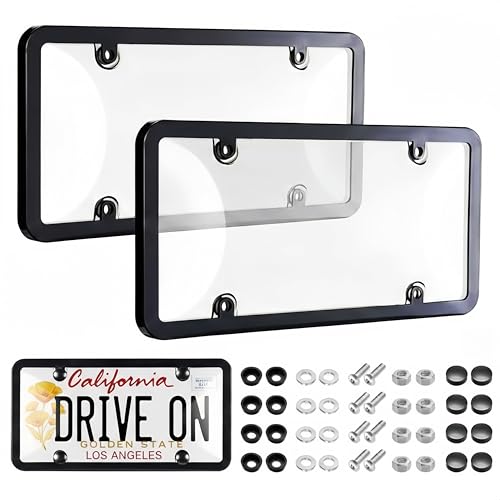
Uliche 2 pack Universal Transparent car License plate cover & frames combo: best for included hardware
This combo is for buyers who want a clear cover plus mounting pieces in one box. The listing says the kit includes screws and caps, and the clear cover is meant to keep plate information visible while adding everyday protection. In practice, that simplifies replacement because you are less likely to reuse worn or corroded fasteners.
That makes it appealing for a quick replacement on a standard plate. It also fits drivers who want a single purchase instead of piecing together brackets and fasteners later.
The drawback is simple: a combo kit is only as good as its fit on your specific car, so you still need to check the manufacturer’s listing for your model and mounting pattern.
Why hardware matters
Anti-theft mounting hardware is not only about security. Snug screws, caps, nuts, and washers also reduce vibration, which cuts rattles and helps keep the cover from walking loose over time. Corrosion-resistant fasteners are especially useful in salted states, where rust can seize a screw and create a maintenance headache later.
That matters most on rear plates, where spray and vibration work together. A loose cover can blur edges, collect grit, and wear paint at the contact points.
Generic 2 Pack License Plate Covers: best for all-around debris protection
This option is aimed at drivers who want a transparent cover that keeps numbers and letters easy to read while shielding against dirt, rain, and road debris. The listing also includes screws, caps, nuts, and washers, which makes the install more complete out of the box.
It is the practical “just protect the plate” pick. That makes sense for daily driving where weather exposure changes by season and route.
The drawback is that transparent does not mean maintenance-free. If grime builds at the edges, clarity falls fast, and that is where washing matters most.
Why a hard clear shield is the all-around choice
Clear shields give the best balance of protection and visibility when the law is strict and the weather is mixed. A polycarbonate license plate cover offers UV protection, water and snow protection, debris resistance, and preserved legibility when the fit is correct. The reason is simple: visibility and impact resistance can coexist better in a clear UV-stabilized resin than in a tinted lens.
For many drivers, that is the safest default because it does not gamble with lens tint. It also does not leave the plate completely exposed.
What can go wrong?
Two failure modes show up again and again: haze on the outer surface and distortion from a lens that flexes or mounts unevenly. If the cover bows, the plate image can look warped in low light or through a camera. This matters more at night because headlights and infrared-assisted plate readers are less forgiving of glare, film, or bent optics.
That is why a snug fit and clean mounting points matter as much as the material itself.
Bubble License Plate Cover: best for impact protection
A bubble cover is the strongest answer when chips and flying grit are the main worry. The listed unbreakable polycarbonate and UV protection make it the most impact-minded design in this group, and the included screws and nuts help complete the install.
Use it where stones are frequent and the plate sits low to the road. It is less about style and more about surviving abuse.
The drawback is optical. A bubble shape can distort the plate image, and any moisture trapped inside the lens can make the distortion worse.
Why the bubble shape changes the tradeoff
The curved lens can help shed direct impacts better than a flat, thin cover. That is useful on gravel roads, winter highways, and parking lots where loose stone is always moving.
But the same curve can change how the plate reads from an angle. If visibility is a priority, that tradeoff needs to be accepted up front.
Drainage and trapped moisture
Bubble designs need careful sealing and drainage. Without a clean escape path, condensation can sit under the lens and make the plate look cloudy after temperature swings.
If your climate alternates between freezing nights and wet afternoons, inspect the perimeter often.
Smoked covers: are they legal?
Smoked license plate covers are the riskiest choice because appearance comes with a direct visibility tradeoff. In some places they may be tolerated only if they do not block legibility, but local compliance risk is real on both front and rear plates, especially in rain or low light. State laws vary, but many prohibit any cover, shield, frame, lens, or coating that obscures or distorts the plate, and enforcement can be subjective.
If you are using a smoked lens, check the vehicle and local rules first. A darker lens can turn a minor readability issue into a citation or camera-read problem.
Why smoked covers are risky
Legibility is the issue. Even a modest tint can reduce contrast, and contrast is what cameras and human readers rely on when the road is wet or the light is poor. SAE-style visibility guidance for imaging systems and plate-reader practice also depends on readable characters and adequate retroreflective return, which a smoked cover can degrade.
The risk is higher on rear plates because they are seen from farther back, through more spray, and often at night.
What failure looks like
Reduced readability is the obvious failure mode, but there is a second one: reflectivity loss. If the lens cuts too much glare or changes how the plate reflects light, the plate may be harder to read from the angle that matters most. That includes toll plazas, parking cameras, and highway ALPR systems.
That is why smoked covers are the wrong default for weather-first buyers.
Weather decision table
This table turns climate into a decision. It separates the material choice from the failure mode and the compliance caution, because a cover that looks good in a dry garage may behave poorly in slush, wash water, or road spray. It also reflects a practical test checklist: clarity after rain, yellowing resistance, rattle control, edge sealing, hardware corrosion, and night readability.
| Weather or use case | Best cover type | Expected failure mode | Compliance caution | Maintenance tip |
|---|---|---|---|---|
| Heavy rain | Clear polycarbonate cover with drainage holes | Water film, trapped grit, or edge haze | Keep the plate fully readable; avoid tint | Rinse the lower edge after storms |
| Slush and salt | ABS protector or clear hard cover with anti-corrosion hardware | Fastener corrosion and yellowing over time | Front-and-rear use may be scrutinized more on the rear plate | Wash off salt before it dries on the hardware |
| Highway debris | Bubble polycarbonate cover | Optical distortion or cracked edges from impact | Do not let the lens obscure plate characters | Inspect for chips after long gravel or construction runs |
| Car-wash exposure | Clear hard cover or silicone frame with snug fit | Water intrusion, loosening, or rattle after repeated sprays | Check local rules on front plate coverings | Recheck screws and caps after every few wash cycles |
| Hot-sun UV | ABS protector or UV-coated polycarbonate | Yellowing, haze, or surface brittleness | Use only if visibility stays clear in bright light | Clean dust before it bakes onto the lens |
| Aesthetic-only use | Clear shield or silicone frame | Style-first choices can ignore drainage or durability | Smoked lenses carry the most legal risk | Choose a style that still keeps the plate readable |
Which one should you buy?
If your driving is mostly rain, road spray, and winter grime, start with a clear polycarbonate cover. It gives the best balance of visibility and weather shielding without taking on the legibility risk of smoke tint.
If salt and winter exposure are the bigger problem, lean toward ABS or another hard clear protector with UV resistance and anti-corrosion hardware. If rattles are the complaint, choose silicone. If stone chips are the threat, use the bubble style and accept the distortion tradeoff.
For strict local enforcement or camera-heavy commuting, avoid smoked covers altogether. They are the most likely to trade appearance for trouble.
Simple buying rules
- Start with your plate size: standard US fit means 12.2 x 6.3 inches.
- Decide front-only or front-and-rear use before you buy.
- Match the material to the climate: polycarbonate for rain and debris, ABS for winter durability, silicone for rattle control.
- Choose drainage holes if water or slush will sit on the plate area.
- Check for UV protection if the car lives outside.
- Prefer included screws, caps, nuts, and washers for a snug fit and tamper deterrence.
- Stay away from smoked lenses if legibility or legality is uncertain.
Maintenance checklist
Say your rear plate collects brown winter film after a week of salted roads. Clean the lower edge first, because that is where grit and moisture usually gather, then check the screws for rust and the lens for haze.
- Wipe the lens and frame with a soft cloth and mild soap.
- Rinse road salt after storms and before it dries hard.
- Check for trapped grit at the lower edge and around drainage holes.
- Confirm screws, caps, nuts, and washers are still snug.
- Look for yellowing, edge cracks, or distortion in sunlight.
- Replace corroded fasteners before they seize.
Frequently asked questions
What are the best license plate covers for rain and road debris?
The best choice is a clear, legal hard cover made from polycarbonate, because it protects against water, snow, and debris while keeping the plate readable. In harsher climates, bubble designs add more impact shielding, but they can distort the view more than a flat clear shield. If your state is strict about obstruction, the safer pick is the simplest clear cover that stays flush and unobtrusive.
Do clear license plate covers keep plates readable in bad weather?
They can, if the lens stays clean and the fit is correct. Clear polycarbonate is the safest route because it preserves contrast better than smoked plastic. The weak points are haze, trapped grit, and condensation, all of which can reduce readability fast. Nighttime readability is the real test, since headlights and cameras are less forgiving than daylight.
Will a license plate cover protect against stone chips and salt spray?
Yes, but not equally across designs. A bubble polycarbonate cover is stronger against stone impact, while a clear hard shield is better for spray and weather exposure. Salt still needs cleaning, because buildup can attack fasteners and cloud the lens over time. If corrosion is your main issue, hardware choice matters as much as the lens itself.
Are smoked license plate covers legal on front and rear plates?
They are the most legally uncertain option because tint can reduce legibility and reflectivity. Some places may allow them only if the plate remains fully readable, but front and rear plates can both be affected. Check local rules before buying one. In practice, any cover, smoked lens, or reflective distortion can be treated as an obstruction if an officer or camera cannot read the plate clearly.
What material is best for a license plate cover in winter weather?
ABS is a strong winter pick because it is described as heavy-duty and UV resistant, which helps with both salted roads and sun exposure. A clear polycarbonate cover is also a good choice if your priority is visibility and you want drainage or debris shielding. Choose based on what fails first in your climate: yellowing, corrosion, or camera readability.
How do I stop my license plate from yellowing or rattling?
Use UV-resistant materials, keep the lens clean, and choose hardware that fits snugly. Silicone frames help with rattling, while ABS and UV-coated polycarbonate help reduce yellowing. Replace rusted screws and recheck fit after wash cycles or hard winter driving. If the cover shifts, it can start making noise and lose clarity at the same time.
Do license plate covers with drainage holes work better in rain?
Usually yes, because drainage holes help water escape instead of pooling at the edge. That can reduce condensation and trapped grit. They are most useful in climates with repeated rain, slush, or wash exposure, where standing moisture causes haze and edge buildup. Drainage is especially valuable on rear plates, which face more spray and road film.
What size license plate cover fits a standard US plate?
A standard US plate listed at 12.2 x 6.3 inches is the size to match. Most universal-fit covers are built around that footprint. Before buying, confirm whether you need front-only protection or a pair for front and rear use. Also make sure the cover does not conceal the state name, registration sticker, or any character edge.
Sources
- State vehicle code and DMV guidance on plate obstruction, legibility, and frame/cover restrictions; jurisdiction-specific enforcement can vary.
- SAE-style license plate visibility and machine-readability guidance used in imaging and ALPR/LPR systems, emphasizing readable characters, contrast, and sufficient retroreflective return.
- Polycarbonate manufacturer datasheets describing high impact resistance, optical clarity, and UV-stabilized outdoor grades.
- ABS manufacturer datasheets describing toughness, weatherability considerations, and suitability for exterior molded parts when properly stabilized.
Products related to this article
Sponsored / affiliate links. As an Amazon Associate I earn from qualifying purchases. I may earn additional commission from eligible campaigns.