Can You Start an Electric Car While Charging
Many folks wonder if it’s okay to start up their electric car while it’s plugged in and getting a charge. This is a super common question for people new to EVs. It might seem a little tricky, but the answer is actually pretty simple.
We’ll walk you through exactly what you need to know, step by step, so you can feel confident. Get ready to learn how it all works and what to expect next.
Can You Start an Electric Car While Charging Safely
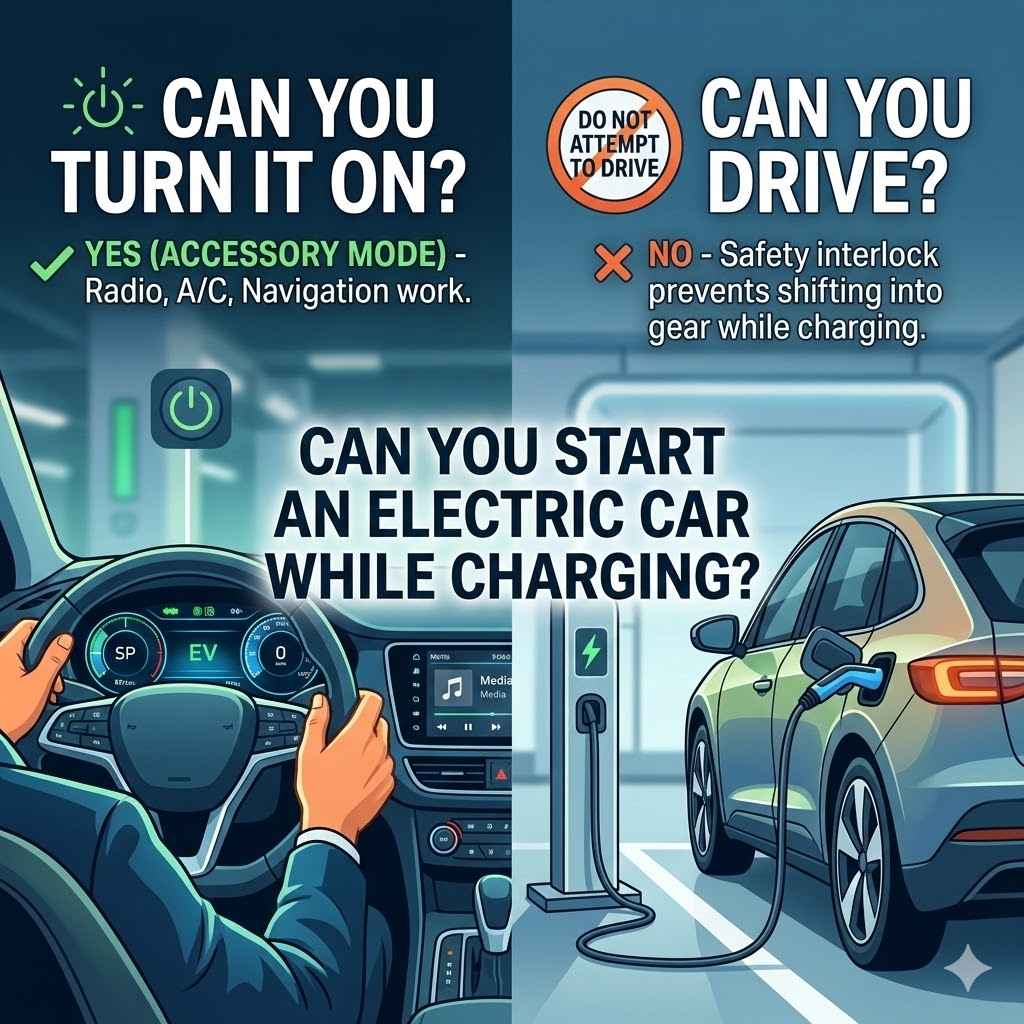
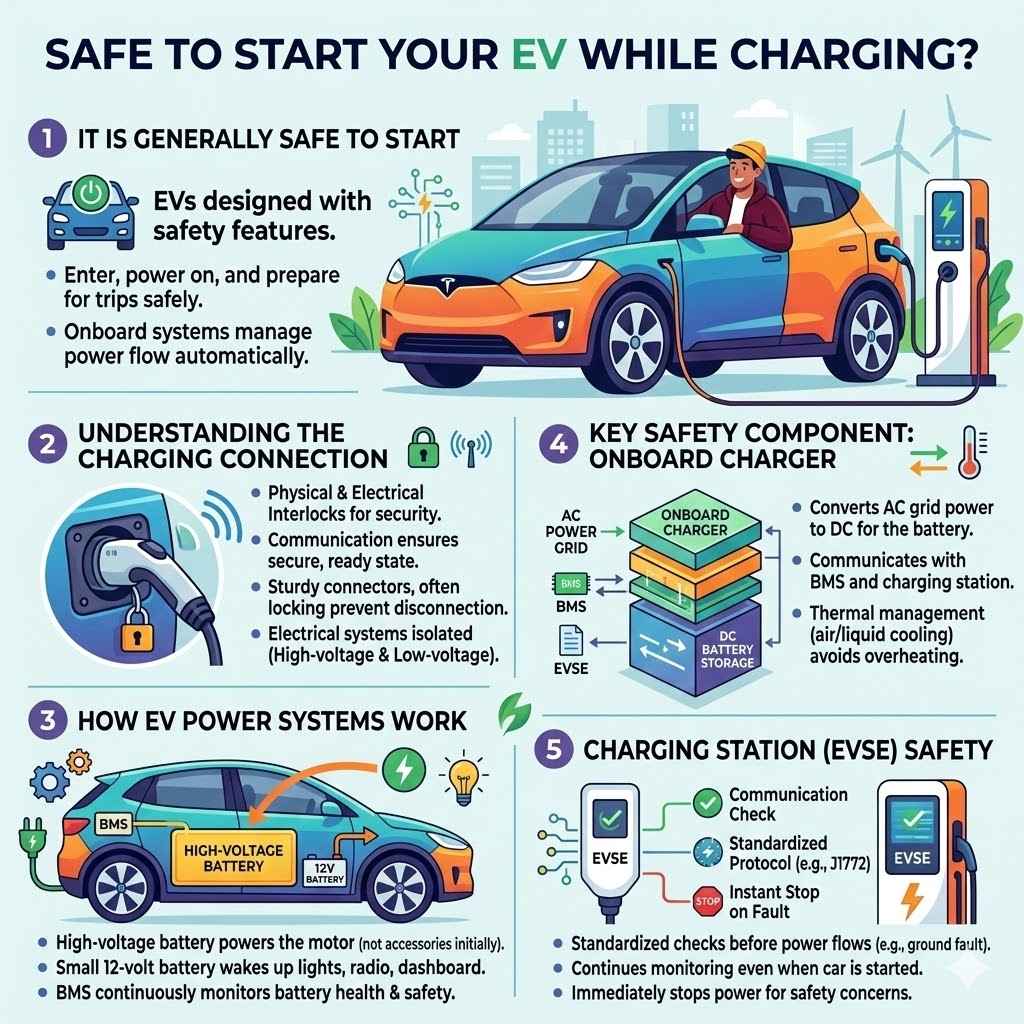
It is generally safe to start an electric car while it is charging. Most electric vehicles are designed with safety features that allow for this. When an EV is plugged in, it’s still safe to enter the vehicle, power it on, and even drive it.
The charging system is engineered to handle this scenario without risk. This capability offers flexibility for drivers, allowing them to prepare the car for a trip while it’s replenishing its battery. The car’s onboard systems manage the power flow, ensuring that both charging and vehicle operation can occur simultaneously without issue.
Understanding the Charging Connection
The charging port on an electric car is designed with safety in mind. It typically has several interlocks and communication systems that ensure power only flows when the connection is secure and the vehicle is ready to accept a charge. When you plug in your EV, the car and the charger communicate to establish a safe charging session.
This communication is a key part of why it’s safe to operate the car while plugged in. The car’s battery management system, or BMS, plays a vital role here. The BMS monitors the battery’s temperature, voltage, and current.
It ensures that the charging process is optimal and that no unsafe conditions arise, even if the car is powered on.
The physical connection itself is robust. Charging cables have strong connectors that need to be properly seated. Once connected, locking mechanisms often engage to prevent accidental disconnection.
This physical security is another layer of safety. Furthermore, the electrical systems are isolated. The high-voltage battery system, which powers the car’s motor, is separate from the low-voltage system that runs the car’s accessories and infotainment.
When charging, the power flows directly to the battery, and starting the car engages the low-voltage system and then, if needed, the powertrain.
How Electric Car Power Systems Work
Electric cars use a high-voltage battery pack to store energy. This energy powers an electric motor that drives the wheels. When you start an electric car, you are essentially waking up the vehicle’s low-voltage system, which powers things like the lights, radio, and dashboard displays.
This low-voltage system is powered by a smaller, separate 12-volt battery, much like in a gasoline car. The 12-volt battery is recharged by the main high-voltage battery through a DC-to-DC converter.
When the car is plugged in, the charging system replenishes the high-voltage battery. The vehicle’s onboard charger converts the AC power from your home outlet or charging station into DC power that the battery can store. This process is managed intelligently.
If you decide to start the car while it’s plugged in, the vehicle’s computer system will prioritize the operation. It can draw power from the grid for both charging and to run the car’s systems, or it might draw from the battery itself depending on the specific charging setup and car model. The key is that the electrical architecture is designed to handle these demands safely.
- Independent Power Systems: The car’s propulsion system and the charging system operate with built-in safeguards. They do not interfere with each other in a way that could cause damage or a safety hazard when the vehicle is on and charging.
- Battery Management System (BMS): This sophisticated computer continuously monitors the battery’s health and charging status. It ensures that both charging and vehicle operation are within safe parameters. It prevents overcharging and manages thermal conditions.
- Safety Interlocks: Physical and electrical interlocks are present at the charging port and within the vehicle to ensure that charging only occurs when the connection is secure and safe. These also prevent accidental power surges when starting the car.
The Role of the Onboard Charger
The onboard charger is a critical component in an electric vehicle. It’s responsible for converting the alternating current (AC) from the power grid into direct current (DC) that the car’s battery can store. When you plug in your EV, the onboard charger acts as the intermediary.
Its design is integral to the safety of charging, especially when the car is also being powered on.
The onboard charger communicates with the charging station (EVSE) and the car’s battery management system (BMS). This communication ensures that the correct amount of power is delivered at the right voltage and current. It also monitors for any anomalies.
If the car is started while charging, the onboard charger continues its job, ensuring that power from the grid is efficiently directed to the battery. The car’s internal systems can manage whether to use grid power for accessories or rely on the battery, but the charging process itself is designed to be uninterrupted and safe.
Many onboard chargers are air-cooled or liquid-cooled to manage heat generated during the charging process. This thermal management is crucial for maintaining battery health and preventing safety issues. The fact that these systems are robust enough to handle simultaneous charging and vehicle operation underscores the engineering prowess behind electric vehicles.
How Charging Stations (EVSE) Contribute to Safety
Electric Vehicle Supply Equipment, or EVSE, commonly known as charging stations, are more than just wall sockets. They are sophisticated devices designed to deliver electricity safely to your EV. They incorporate numerous safety features that work in conjunction with the car’s systems.
When you plug in your EVSE, it performs a series of checks before delivering power.
The EVSE communicates with the car to determine the vehicle’s charging needs and its capacity. It ensures that the electrical circuit is functioning correctly and that there are no ground faults. If any issue is detected, the EVSE will not initiate charging.
This communication protocol is standardized (like the J1772 standard in North America) and ensures interoperability and safety across different EV models and charging equipment.
When you start an EV while it’s plugged into an EVSE, the EVSE continues to monitor the connection. It can detect if the car is suddenly disconnected or if there’s a fault. The EVSE will immediately stop supplying power if a safety concern arises.
This intelligent interaction between the EVSE and the car is a cornerstone of safe EV charging, allowing for the vehicle to be started and operated even when connected to the grid.
Reasons People Ask Can You Start an Electric Car While Charging
The question “Can You Start an Electric Car While Charging?” pops up frequently because electric vehicles are a newer technology for many drivers. Unlike gasoline cars where starting the engine while refueling is a definite no-no, EVs operate on different principles. This novelty can lead to uncertainty about what is safe and what is not.
People are accustomed to the strict rules of fueling with gasoline, and the idea of combining charging with operating the vehicle seems unusual.
Some may worry about electrical safety, thinking that introducing power into the system while it’s active could lead to shocks or damage. Others might be concerned about the battery’s health, wondering if such usage could put extra strain on it. The lack of familiar engine noises and exhaust fumes also makes the internal workings of an EV feel more mysterious.
This lack of direct sensory feedback can fuel apprehension. Thankfully, the engineering behind EVs addresses these concerns directly, making it a straightforward process.
Common Misconceptions About EV Charging
One common misconception is that charging an EV is like charging a laptop or phone, where you typically unplug it before use. While there are some similarities in the concept of energy replenishment, the internal power systems of a car are far more complex and designed with much higher safety standards. Another belief might be that charging draws a massive, uncontrolled surge of power that could be dangerous if the car is active.
In reality, EV charging is a highly controlled process managed by sophisticated electronics.
People also sometimes assume that using the car while charging will somehow slow down the charging process significantly. While there might be a slight reduction in charging speed if the car’s systems are drawing a lot of power, the primary goal of charging is still met. The vehicle is designed to balance these demands.
The perception that it’s “all or nothing” – either charging or driving – is simply not how EVs are engineered.
Understanding the Difference from Gasoline Cars
Gasoline cars have an internal combustion engine that produces heat and exhaust fumes. Refueling a gasoline car involves highly flammable liquid fuel. The risk of sparks or ignition sources near the fuel pump makes it imperative to turn off the engine.
Charging an electric car, on the other hand, involves electricity, which is managed with advanced insulation and safety protocols. The battery is a sealed unit, and the charging process is electronic, not chemical in a way that creates immediate combustion risks.
The energy transfer in an EV is also more deliberate. When you plug in an EV, a communication handshake happens between the car and the charger. Power is delivered only after a safe connection is established.
This is unlike gasoline pumps, which simply dispense fuel when activated. The electronic nature of EV charging is a key differentiator that allows for simultaneous operation and charging.
The Simplicity of EV Operation While Plugged In
EVs are designed for convenience. Many owners like to start their cars to pre-condition the cabin (heating or cooling) using the grid power while the car is charging. This is a common and intended use case.
It means you can hop into a comfortable car, ready to go, without draining the battery excessively. The car’s systems intelligently manage power draw, ensuring that both charging and cabin climate control can happen simultaneously. This feature highlights the user-friendly design of modern EVs.
The vehicle prioritizes battery charging while still allowing for passenger comfort and basic operation.
How to Start Your Electric Car While Charging
Starting an electric car while it’s plugged in is generally a straightforward process, very similar to starting it when it’s not charging. The exact steps might vary slightly between different car manufacturers and models, but the core principle remains the same. The vehicle’s design accommodates this operation seamlessly.
You don’t need to do anything special or out of the ordinary. Just follow your usual routine for starting the car.
The key is that the car’s safety systems are already engaged when it’s plugged in and charging. The charging connection itself doesn’t prevent you from operating the vehicle. Once you’ve confirmed the car is plugged in securely and charging has commenced, you can proceed to start it up.
This allows you to, for instance, set the climate control or get your navigation ready while the battery gains more energy.
The Step-by-Step Process
Here’s a typical sequence of events when starting your electric car while it is charging. First, ensure the charging cable is securely plugged into both the car and the charging station. You should see an indicator light on the car or the charging station confirming that charging has begun.
Next, get into the driver’s seat. Most EVs have a “start” button, similar to gasoline cars, or they might start automatically when you press the brake pedal.
Press the brake pedal. This is a universal safety step for most modern vehicles. If your car has a start button, press it now.
The dashboard will illuminate, and the car’s systems will power on. You might hear a gentle hum or whirring sound, indicating that the car is ready. You can then shift into drive or reverse, just as you normally would.
The car is now operational and can be driven away from the charging point if needed, or you can continue using its systems while it remains plugged in.
- Ensure the charging cable is securely connected to both the car and the power source. Confirm charging is active via indicator lights.
- Enter the driver’s seat.
- Press and hold the brake pedal.
- Press the vehicle’s “Start” button (if applicable) or wait for the car to power on automatically after pressing the brake.
- The dashboard and infotainment system should activate, indicating the car is ready.
- Shift the gear selector into “Drive” or “Reverse” to operate the vehicle.
What Indicators Mean
When your electric car is charging, various lights and symbols on the dashboard and the charging port will indicate its status. These indicators are crucial for understanding what’s happening. Typically, a light on the charging port will glow or flash to show that a connection has been made and power is flowing.
This is often a solid green or blue light, or a pulsing pattern.
On the dashboard, you might see a charging icon, often resembling a lightning bolt or a plug, indicating that the car is actively charging. Sometimes, this icon will also display the current charging speed or the estimated time remaining until the battery is full. When you start the car while charging, these charging indicators usually remain active, often alongside the readiness indicator for driving.
It’s a visual confirmation that all systems are functioning correctly and that the car is both charging and ready for use.
- Charging Port Lights: These lights directly on the car’s charging port usually provide immediate visual feedback on the charging status. A steady light often means charging is normal, while a flashing light might indicate an issue or that charging is paused.
- Dashboard Symbols: The car’s digital display will show icons related to charging. These can include a battery symbol with a plug, a lightning bolt icon, or specific text messages about charging status and speed.
- Infotainment Screen: Many EVs provide more detailed information on the central infotainment screen, showing battery percentage, estimated time to full charge, and energy flow. This screen often confirms that the car is drawing power and can be operated.
What to Do If Charging Stops
If your car stops charging when you start it, don’t panic. This is usually due to a safety protocol or a minor hiccup. First, check the charging cable connections.
Ensure they are still firmly seated in both the car and the power source. Sometimes, a slight nudge can re-establish a loose connection. Look for any error messages on your car’s dashboard or the charging station itself.
These messages often provide clues as to why charging paused.
If the issue persists, try unplugging the charging cable from the car, waiting a few seconds, and then plugging it back in. This “reboot” of the charging connection can resolve many temporary glitches. If you are using a Level 2 charger at home, you might also try resetting the charger itself by turning off the circuit breaker for a minute and then turning it back on.
If problems continue, consult your car’s owner’s manual or contact customer support for assistance.
Benefits of Starting an Electric Car While Charging
The ability to start an electric car while it’s plugged in and charging offers several practical advantages for EV owners. It enhances convenience and can even contribute to more efficient use of your vehicle and its energy resources. This feature is designed to fit into your daily life, making EV ownership smoother and more user-friendly.
It’s one of those small conveniences that really adds up.
Think about preparing for a long drive or a busy morning. You can start your car, turn on the climate control to warm up or cool down the cabin, and get your navigation ready while the battery is still gaining power from the grid. This means less drain on the battery when you finally disconnect and drive off, potentially extending your range.
It also means you get to start your journey in comfort, regardless of the outside temperature, without compromising your immediate driving power.
Pre-Conditioning the Cabin
One of the most significant benefits is the ability to pre-condition the cabin. This means heating or cooling the interior of the car to your desired temperature before you even get in. When your EV is plugged in, it can use electricity directly from the grid to run the climate control system.
This is much more energy-efficient than using the battery’s stored power. Using battery power for climate control, especially in extreme weather, can reduce your driving range by several miles.
By pre-conditioning while charging, you ensure a comfortable driving experience from the moment you start moving. This is particularly valuable in very hot or very cold climates. For example, on a chilly winter morning, you can have a warm car waiting for you without using precious battery energy.
Similarly, on a sweltering summer day, the cabin can be cooled down using grid power. This feature maximizes your comfort and preserves battery range for actual driving.
This capability is often managed through a smartphone app connected to your EV. You can schedule pre-conditioning times or activate it remotely. When the car is charging, the energy drawn for climate control is separate from the energy being fed into the battery.
The car’s system intelligently manages these two power flows to ensure both tasks are performed effectively.
Maximizing Range and Efficiency
Starting your car while it’s plugged in and charging can indirectly help maximize your driving range. As mentioned, pre-conditioning the cabin using grid power instead of battery power conserves battery energy. This preserved energy translates directly into more miles of range when you disconnect and drive.
It’s a smart way to leverage the charging process for added efficiency.
Furthermore, some EVs have systems that can heat or cool the battery pack itself while charging, if needed. A battery operating at its optimal temperature performs better and charges more efficiently. By allowing the car to manage its own thermal conditions using grid power during charging, you ensure that the battery is in the best possible state for driving.
This attention to battery health and optimal operating temperature contributes to overall vehicle efficiency and longevity.
- Battery Temperature Management: If the battery is too cold or too hot, its performance and charging speed can be affected. Using grid power to bring the battery to its ideal operating temperature before driving means it will perform more efficiently from the start.
- Reduced Battery Strain: By not immediately demanding power from the battery for climate control or system startup when unplugged, you are reducing the initial load. This gradual power usage can be better for battery health over the long term.
- Optimized Energy Usage: This feature allows for a more strategic use of available energy. You’re not just charging; you’re also preparing the car’s systems and comfort levels using the most efficient power source available at that moment, which is typically the grid.
Convenience and Time Savings
The convenience factor cannot be overstated. Imagine waking up to a fully charged car that is also at your preferred temperature, with your navigation set for the day. This seamless preparation saves time and reduces the stress of last-minute rushing.
You can leisurely get ready while your car takes care of itself. This is a significant lifestyle improvement for many EV owners.
This convenience is especially noticeable during morning commutes or when heading out for errands. Instead of spending minutes clearing frost from windows or waiting for the AC to kick in, you simply get in and go. The time saved might seem small on a daily basis, but it adds up, making your overall experience with electric mobility much more pleasant.
It transforms the routine of “getting ready to go” into a more streamlined and enjoyable process.
For families, this can mean getting children ready and out the door with less fuss. A comfortable environment from the start can make the journey much smoother for everyone. This simple act of starting the car while charging contributes to a less hurried and more pleasant departure.
Potential Issues and Considerations
While starting an electric car while charging is generally safe and beneficial, there are a few potential issues and considerations to keep in mind. These are typically minor and relate to how different charging setups might interact or how best to manage energy usage. Understanding these can help you get the most out of your EV experience.
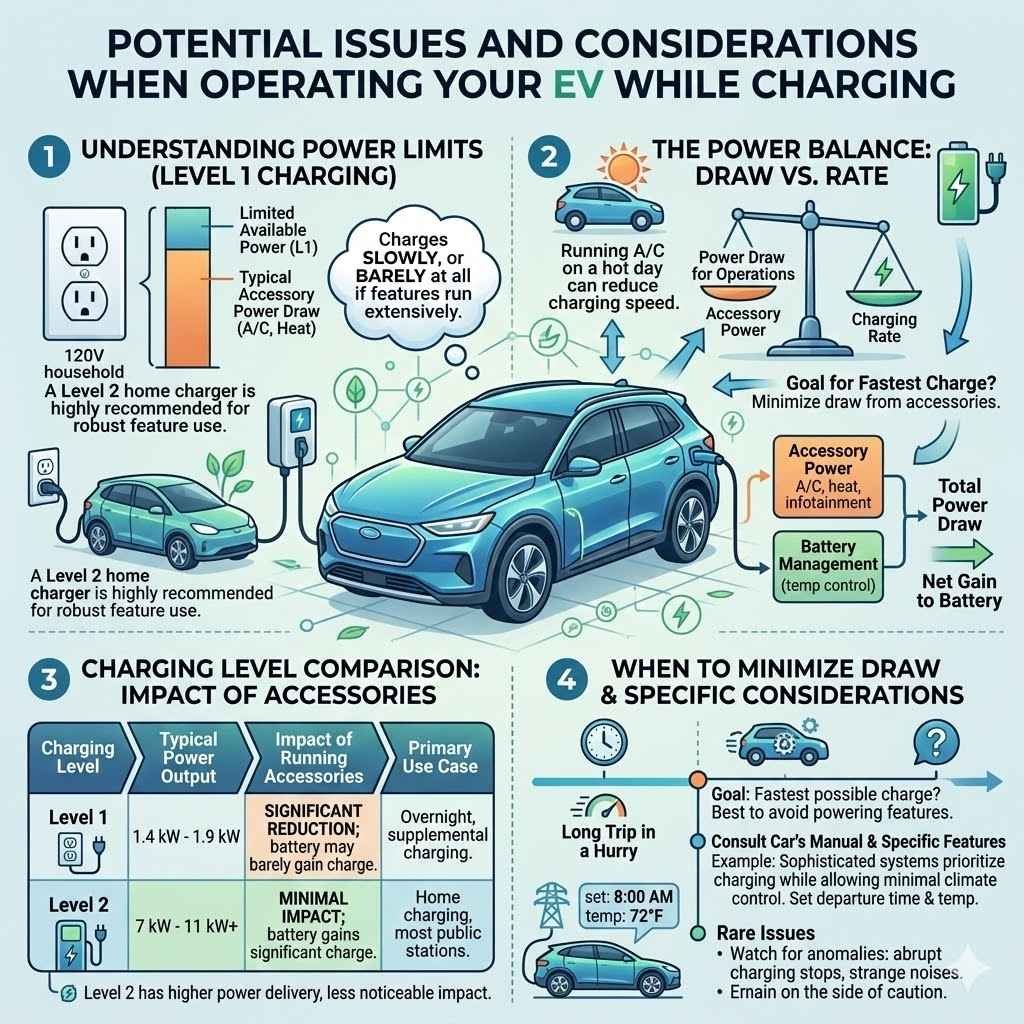
One key aspect is understanding the power limits of your charging setup. If you are using a standard home outlet (Level 1 charging), the power available is limited. Using the car’s systems extensively while charging at Level 1 might mean the battery charges much slower, or barely at all.
For more robust use of features while charging, a Level 2 charger at home is highly recommended.
Power Draw vs. Charging Rate
The main consideration when operating your EV while it’s plugged in is the balance between the power the car is drawing for its operations and the rate at which the charger is supplying power to the battery. If the car’s systems (like climate control, entertainment, or even battery conditioning) draw a significant amount of power, it can reduce the amount of energy going into the battery.
For example, running the air conditioning on a very hot day while charging on a Level 1 (120V) charger might mean that the car uses almost as much power as the charger is supplying. In such a scenario, the battery might charge very slowly, or in some cases, might not gain much charge at all. This is not a safety issue but an efficiency one.
If your goal is to charge the battery as quickly as possible, it’s best to minimize the power draw from accessories while charging.
Power Draw Explained:
- Accessory Power: This includes lights, radio, infotainment system, and cabin climate control (heating/cooling).
- Battery Management: Systems that manage battery temperature or state of health can also draw power.
- Charging Rate: This is the speed at which energy is supplied to the battery by the EVSE and onboard charger.
Scenario: Level 1 Charging with AC On
Imagine you’re charging your EV using a standard household outlet (Level 1). This typically provides about 1.4 kW to 1.9 kW of power. If you turn on the climate control to cool the cabin and it draws 1 kW of power, only about 0.4 kW to 0.9 kW is left for charging the battery.
This means charging could take significantly longer than if the AC were off.
Impact on Charging Speed
Using the car’s systems while charging can indeed impact the charging speed, particularly with Level 1 charging. Level 1 chargers are the slowest type of EV charger. They plug into a standard wall outlet and provide a modest amount of power.
If the car is drawing a substantial portion of this power for its own functions, the net gain in battery charge will be minimal.
With Level 2 charging, which is common for home installations and many public charging stations, the power delivery is much higher (typically 7 kW to 11 kW or more). At these higher rates, running accessories usually has a less noticeable impact on the overall charging time. The battery will still gain a significant charge even if the climate control is running.
However, for maximum charging speed, it’s always best to have the car in a “sleep” or “idle” state when plugged in.
| Charging Level | Typical Power Output | Impact of Running Accessories | Primary Use Case |
|---|---|---|---|
| Level 1 | 1.4 kW – 1.9 kW | Significant reduction in net charging rate; may barely increase charge. | Overnight charging, supplemental charging. |
| Level 2 | 7 kW – 11 kW+ | Minimal impact on net charging rate; battery gains charge relatively quickly. | Home charging, most public charging. |
Understanding Your Car’s Specific Features
Every electric car model has its own unique power management system and features. Some EVs are designed with more advanced power-sharing capabilities than others. For instance, some vehicles have sophisticated systems that can prioritize battery charging while still providing essential functions like minimal climate control without drastically slowing down the charge.
Others might have simpler systems where accessory power draw directly subtracts from charging input.
It is beneficial to consult your car’s owner’s manual or the manufacturer’s website to understand how your specific EV handles simultaneous charging and operation. Knowing whether your car can intelligently manage power draw for comfort features while still ensuring efficient charging will help you optimize its use. This knowledge empowers you to make informed decisions about when and how to use these features.
For example, some vehicles allow you to set a departure time and temperature preference. The car’s computer will then ensure that the battery is charged by the departure time and that the cabin is at the desired temperature, using grid power as much as possible. This intelligent scheduling is a key aspect of modern EV technology.
When to Avoid Starting While Charging
While it is safe to start your electric car while charging, there might be specific situations where it’s not the most practical or efficient choice. The primary reason to avoid it is if your goal is to achieve the fastest possible charging speed. If you’re in a hurry to get a full charge before a long trip and you’re using a slower charging method like Level 1, powering up accessories might not be the best use of available energy.
Another consideration is if you notice any unusual behavior from the car or the charging equipment when you try to start it. If the charging stops abruptly, or if you hear any strange noises, it’s best to err on the side of caution. Disconnect the charger and consult your owner’s manual or a service center.
These are rare occurrences, but it’s always wise to be aware of them. The safety systems are robust, but immediate attention to any anomalies is recommended.
Frequently Asked Questions
Question: Can I drive my electric car while it’s plugged in?
Answer: Yes, you can typically drive your electric car while it is plugged in. The vehicle’s safety systems are designed to disconnect power automatically and safely if you attempt to drive away with the charging cable still connected. This is a protective measure to prevent damage to the car, the charger, and the cable.
Question: Will starting my EV while charging damage the battery?
Answer: No, starting your EV while charging will not damage the battery. The vehicle’s battery management system is designed to handle both charging and operational power demands safely. The electrical architecture is engineered to prevent any harmful interactions between these two processes.
Question: Does starting the car while charging use more electricity?
Answer: Yes, starting the car and using its systems will draw power. This power draw is in addition to the power going into the battery for charging. However, if you are using grid power for cabin pre-conditioning, this draw is from the external source rather than solely from the battery, which is more efficient.
Question: Is it safe to use fast chargers (DC fast chargers) while the car is on?
Answer: While technically possible with some vehicles, it is generally not recommended to operate systems or start your car extensively while connected to a DC fast charger. These chargers deliver very high power, and while the car is designed for safety, minimizing additional power draws during ultra-fast charging is usually best for optimal charging speed and battery health.
Question: What happens if I unplug my EV while it’s running and charging?
Answer: If you unplug your EV while it is running and charging, the charging process will stop immediately. The car will continue to run on its battery power. The vehicle’s systems are designed to handle this disconnection safely without any negative consequences.
Summary
You can confidently start your electric car while it is charging. The advanced safety features and intelligent power management systems in modern EVs allow for simultaneous operation and charging. This capability offers significant convenience, especially for pre-conditioning the cabin.
While high accessory power draw might slightly reduce charging speed on slower chargers, it poses no safety risk to the vehicle or its battery.