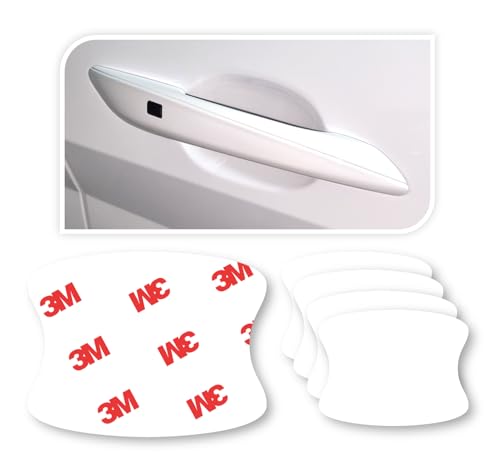
Best Car Door Handle Protectors (3 Real Picks Compared)
The best car door handle protector for most drivers is a clear 3M PPF kit; choose budget TPU for simple handles, and step up to a thicker Pro Series film for deep or curved cups. Scratched paint around the handle can spread fast and cost more to correct than the film itself. This guide compares three clear protection tiers by fit, thickness, visibility, and install difficulty so you can pick the right one for your handle shape.
Quick comparison
| Product | Badge | Best for | Price | ||
|---|---|---|---|---|---|
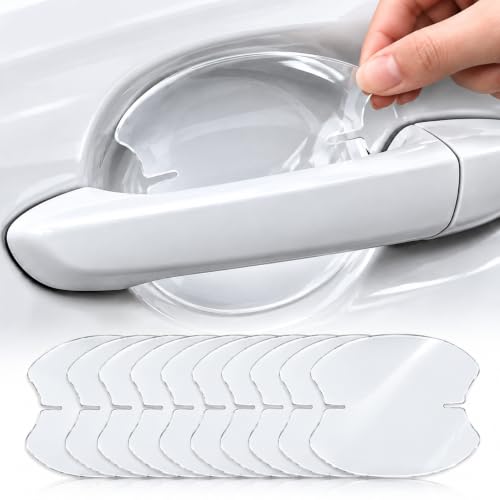 |
10 Pack Clear Car Door Handle Scratch Protector, TPU DoorQimevoya | Our pick | 10 Pack · TPU Film · Pre-Cut | $6.99
Price as of 19 Oct 2026
|
View |
 |
[3M]-5pcs(Pro) Customized Car Door Handle Cup ProtectorQLim | Upgrade pick | 5pcs · 3M PPF · Pro Series | $15.99
Price as of 19 Oct 2026
|
View |
Use the budget TPU tier for simple, shallow handle cups when low cost matters more than long-term wear. Choose standard 3M PPF when you want the best balance of clarity, scratch defense, and easier fit across more vehicles; choose Pro Series when the handle cup is deeper, more curved, or more exposed to repeated scuffs.
How we chose
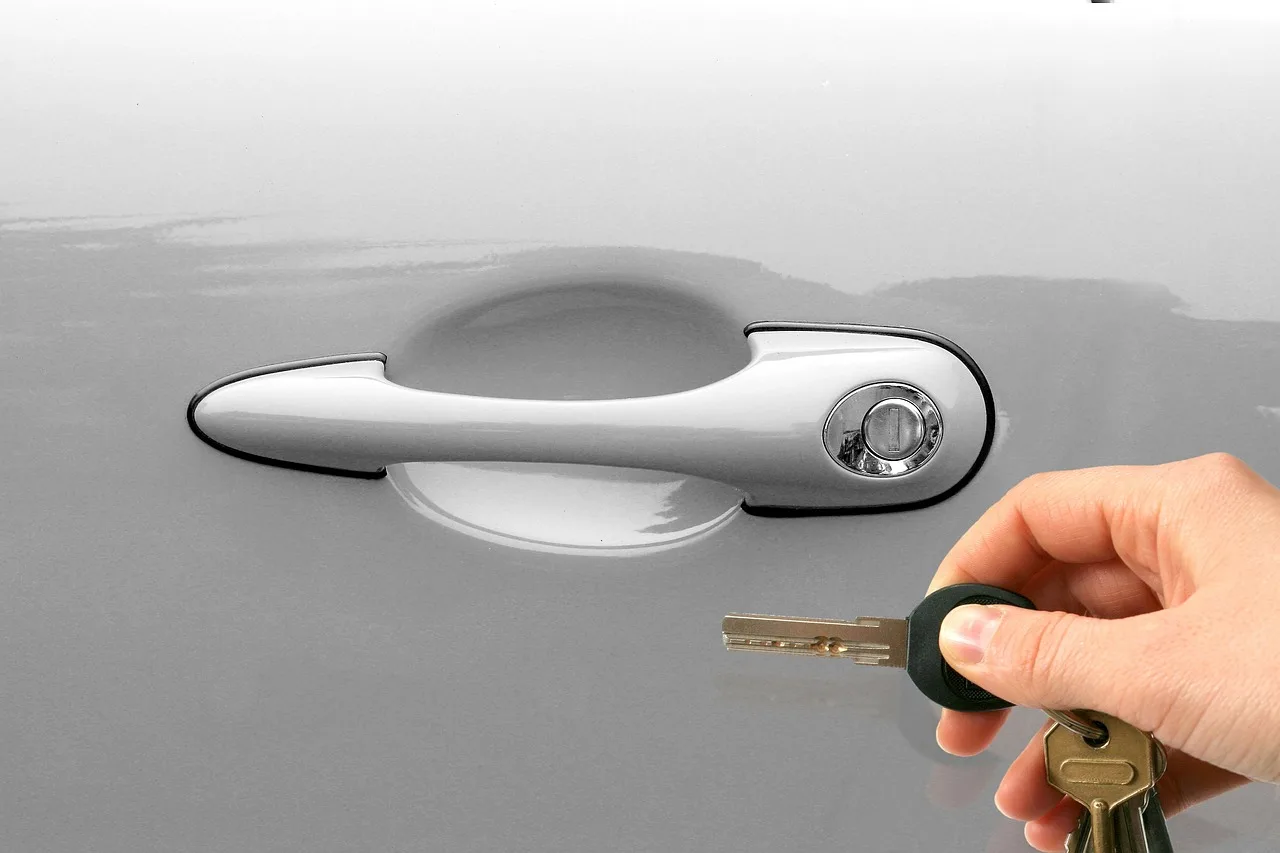
We compared the products on visibility, scratch defense, install difficulty, fit flexibility, residue risk, and replacement value. We also separated flat overlays from cup-style protectors, because the wrong shape can lift at the edge or leave part of the scratch zone uncovered.
Thickness matters, but only in context. A thicker film can handle more abrasion in the handle pocket, yet a poor fit can fail sooner than a thinner kit that sits flat and fully covers the contact area.
Installation also changes the result. Surface prep, alignment, and air-pocket control matter more on curved cups and near sensors, where a universal fit can be worse than a model-specific kit.
Car door handle protector decision matrix
| Buyer factor | Budget TPU | Standard 3M PPF | 3M Pro Series |
|---|---|---|---|
| Visibility | Clear finish, but edges can show more on dark paint. | Very low visibility when aligned well. | Low visibility, though thicker edges can be easier to spot at close range. |
| Scratch defense | Good for fingernail and key scuffs in light use. | Better balance for repeated scuffs in the cup. | Best for heavier wear and deeper cups. |
| Install difficulty | Easiest, because pre-cut TPU kits are usually more forgiving. | Moderate; alignment still matters, especially on curved handles. | Hardest; more careful placement is worth it only on demanding shapes. |
| Fit flexibility | Good for common handle shapes, less ideal for odd contours. | Universal fit helps on more vehicles. | Universal fit, but the thicker film is less forgiving around tight curves. |
| Residue risk | Usually low if removed within its intended life, but adhesive quality varies. | Low when removed cleanly from painted surfaces. | Low, though aged adhesive can be harder to lift if left on too long. |
| Longevity | Shorter replacement cycle for budget buyers. | Middle ground for most owners. | Longest wear window of the three tiers. |
| Value | Best upfront price. | Best balance of cost and protection. | Best only when the handle shape justifies the premium. |
One-line recommendation for each factor: choose TPU if visibility and price matter most; choose standard 3M PPF for balanced scratch defense; choose Pro Series if install time is acceptable and the handle pocket is hard on film.
Best-for summary: budget TPU suits light use and simple cups, standard 3M PPF suits most daily drivers, and Pro Series suits deep or curved handle pockets that see repeated nail and key contact.
TPU clear door handle protector: best for budget buyers
Qimevoya’s 10-piece clear TPU kit sits toward the low-cost end of the market. It is a self-adhesive, pre-cut design with a clear finish, built for daily scratch prevention from fingernails and keys.
For a simple handle cup, that is enough for many drivers. The clear TPU film is easier to live with on a budget because you can cover all four doors without spending much, and the pre-cut layout cuts down the chance of trimming mistakes.
The drawback is fit tolerance. TPU kits can show their limits on sharply curved handle cups, and a budget adhesive can be less forgiving if you need to reposition the film several times during install. Replacement frequency also matters here; cheaper kits make sense when you are willing to swap them sooner.
This is the right choice for a low-cost clear kit on a sedan or SUV with a straightforward handle pocket. It is less compelling if your car has a deep recess, a strong contour, or a surface that traps air at the edges.
3M PPF door handle protector: best for most drivers
The standard 3M handle cup protector sits in the middle of the pack because it gives you the best balance of clarity, scratch defense, and fit flexibility. It is described as 7.5 mil thick, uses a clear transparent finish, and is repeatedly presented as a universal fit.
That thickness is a practical step up from thin budget film. In a handle cup, the difference is less about dramatic armor and more about holding up better against repeated nail taps, ring contact, and the small friction that happens every time the door is opened.
Its strength is also its weakness. Universal fit makes it easier to recommend across more vehicles, but it also means you need to inspect curved edges, sensor zones, and the exact shape of the cup before install. If the film bridges a bend instead of laying flat, edge lift can show up later.
The 5-piece customized kit format is useful because it gives enough pieces for a typical vehicle and usually keeps the layout simple. Some listings also include a practice film or extra piece, which matters if you are new to wet or semi-wet placement and want one spare chance to get alignment right.
For most drivers, this is the tier to start with. It is strong enough for daily use, visible only when you look for it, and less likely than a no-name kit to feel flimsy on the door.
3M PPF Pro Series: is it worth it?
QLim’s Pro Series kit sits at the premium end of this comparison. It is a 5-piece kit made with 3M Paint Protection Film Pro Series and is described as about 7.9 mil thick, aimed at buyers looking for a more durable clear option in this group.
That extra 0.4 mil does not make the film invincible, but it can make the product better suited to heavier-duty use in the handle pocket. The tradeoff is installation. A thicker film is less forgiving around tight curves, so alignment needs to be cleaner and the surface prep needs to be better.
This is the better call when the handle recess is deep, the edges are sharply curved, or the car sees frequent passenger use. The premium price makes sense if you want more headroom before wear shows, and if you are willing to spend more time getting the film seated correctly.
The drawback is simple: you pay more and install more carefully. If your handle cups are shallow and easy to cover, the standard 3M option usually makes more financial sense.
Which handle shape needs a model-specific protector?
Model-specific kits make the most sense when the handle shape leaves little room for a generic overlay to sit cleanly. A Tesla Model Y/YL or Model 3 Highland kit is designed for those vehicles and is meant to deliver a near-factory look with around-handle coverage that follows the contour more closely than a loose universal sheet.
That tighter fit matters when the scratch zone wraps around the cup or when the panel surface changes angle quickly. A model-specific protector can cut edge lift because it starts with a shape that already matches the handle pocket more closely.
Universal kits still work on many cars, and the standard 3M protector is explicitly presented that way. But universal fit becomes the weaker choice when the cup is deep, the curve is tight, or the sensor area leaves little extra margin. In those cases, a model-specific kit beats a generic one because it covers more of the actual contact zone.
Suppose a Tesla Model 3 Highland owner wants the least visible result on a dark paint color. A model-specific transparent PPF wrap is the safer bet than a flat overlay cut slightly too large, because the tighter outline is less likely to show at the edge.
By contrast, a common first-timer mistake is choosing a universal kit for a door handle with a pronounced lip and then stretching it across the bend. The film may look fine for a day, then start lifting where the curve changes fastest.
Do decorative rhinestone protectors make sense?
Decorative rhinestone protectors make sense if style comes first and protection comes second. The silver rhinestone stickers are a clear example: they add visual pop, use adhesive backing, and offer only light protection compared with film-based options.
That means they are better treated as trim than armor. They can help with small marks, but they are not the right answer if the goal is serious scratch prevention from keys, rings, or repeated nail contact.
The maintenance tradeoff is the main catch. Decorative pieces are more visible, can collect dirt around the edges, and are more likely to look out of place on a car that relies on a clean factory-style finish. If you wash the vehicle often, the edges may need more attention than clear film.
Choose this path only when appearance matters more than hiding the protector. For daily scratch defense, clear TPU or 3M PPF remains the better call.
Choose budget TPU if… / Choose 3M PPF if… / Choose Pro Series if…
Choose budget TPU if your handle cups are simple, you want the lowest upfront cost, and you are willing to replace the film sooner. It is also the better call if you want a clear kit that is easy to apply on a car with ordinary, shallow recesses.
Choose standard 3M PPF if you want the best balance of clarity, cost, and scratch defense. This is the safest choice for most drivers because the 7.5 mil film has enough thickness for daily abuse without making the install overly difficult.
Choose Pro Series if your handles are deeply curved, the scratch zone gets hit often, or you want the longest wear window and are willing to pay more for it. The 7.9 mil film makes the most sense when the shape justifies the extra effort.
A good rule: if you are unsure, start with the standard 3M tier. Move up only when the handle shape or usage pattern clearly calls for it.
- Clean the handle cup with microfiber first, then remove dust and skin oils.
- Dry-fit the protector and check how the edges land around the curve.
- Align one edge before pressing the rest down, especially on deep cups.
- Work out air pockets from the center toward the edge with steady pressure.
- Inspect the corners after installation, since lift usually starts there.
What are the best car door handle protectors for scratches?
A clear 3M PPF kit is a common practical default for scratch prevention on many vehicles, with standard 7.5 mil film often used as the baseline. Budget TPU works for lighter use and simple handles, while Pro Series is better when the cup is deeper or gets more repeated contact from nails and rings.
Should I choose TPU or 3M PPF for door handle protection?
Choose TPU if price and simplicity matter more than long-term wear. Choose 3M PPF if you want better thickness, better durability, and a clearer path to a cleaner fit on more vehicles. For most drivers, the 3M option is the stronger pick unless the budget is tight.
How thick should a door handle protector be?
Thickness should be enough to handle repeated abrasion without making the film hard to place. In this comparison, 7.5 mil is the standard 3M level and 7.9 mil is the Pro Series level. That extra thickness helps most when the handle pocket is deep or gets frequent contact.
Do clear door handle protectors leave residue when removed?
Clear protectors usually do not leave much residue when removed properly, but adhesive age matters. Newer film and clean paint are less likely to leave a mess than film that has been baked by sun and wash cycles for a long time. Slow removal helps cut residue risk.
Are model-specific handle protectors better than universal ones?
Model-specific protectors are better when the handle shape is unusual, the cup is tight, or you want the cleanest factory-like look. Universal kits are more flexible and easier to stock, but they can struggle on curved edges and may leave part of the scratch zone less covered.
Will a door handle protector work with keyless entry?
Usually yes, if the protector does not interfere with the sensor area or the moving parts around the handle. The key point is fit. If the film overlaps a sensor edge or sits too thick at a contact point, it can create fit problems even if the material itself is clear.
How hard is it to install door handle protectors without bubbles?
It is moderate, not hard, if you prep the surface and align the film before full contact. The main bubble risk comes from dust, rushed placement, and curved cups that trap air at the edges. Microfiber cleaning and careful centering make the biggest difference.
What is the difference between a standard and Pro Series 3M handle protector?
The standard 3M handle protector is listed as 7.5 mil thick and is positioned as the universal-fit option for most cars. The Pro Series is listed at 7.9 mil and is aimed at buyers who want more durability and do not mind a more careful install.
Products related to this article
Sponsored / affiliate links. As an Amazon Associate I earn from qualifying purchases. I may earn additional commission from eligible campaigns.