Car Seat Covers for 2017 Hyundai Elantra: Top 3 Picks
For a 2017 Hyundai Elantra, the top pick is a full set with model-year-matched cutouts and rear-bench split coverage, because it focuses on the fit details most likely to affect day-to-day use. A poor fit can slide on the seat or need constant readjustment. This guide ranks three seat-cover types by 2017 Elantra fit risk, feature compatibility, and daily-use tradeoffs.
Top picks at a glance



The safest ranking starts with a trim-matched full set, then a waterproof faux-leather full set, then front-seat-only coverage if rear-seat access matters more than total coverage. That order puts fit risk first, then material choice, then how much daily friction the cover adds.
- Best overall: Conjie full set for Hyundai Elantra 2017-2025, because it is sold as a full set, uses premium leather, and is described as waterproof and breathable.
- Best value-style full set: FaiFani full set, because CarAwareness lists it for Hyundai Elantra 2000-2026, gives it a 4.8 rating, and says it is breathable and waterproof faux leather.
- Best low-coverage buy: Front-seat-only covers, if rear-seat use is rare and you want less install work, easier cleaning, and less chance of mismatch around the rear bench.
FaiFani is the backup if you want waterproof faux leather and full access without paying for a more specific premium-style set. Front-only covers are the least ambitious choice, so they make sense when the rear seat does not need daily protection.
2017 Elantra fitment checklist
Buy only after checking the 2017 Elantra seat layout, because this model year can differ by trim in headrest style, rear split-bench setup, and armrest access. The right cover should match your exact seat architecture, not just the badge on the trunk.
Confirm seat layout and trim before you order
This article does not confirm a single rear-seat configuration for every 2017 Elantra trim, so verify your own car’s split-bench and armrest layout before ordering. That keeps broad fit claims from hiding a mismatch.
Check three details first: front-seat shape, rear bench split, and headrest count. If the car has a rear center armrest, fold-down pass-through, or a split bench, the cover must leave those functions reachable, not buried under fabric.
Check rear bench split, headrests, and armrest access
The rear bench is where many universal sets fail. A 1/2-1/2 split often needs different paneling than a 1/3-2/3 split, and a whole-bench cover should not block folding or armrest use. Headrest shape matters too, because some covers depend on individual headrest sleeves while others assume a fixed row.
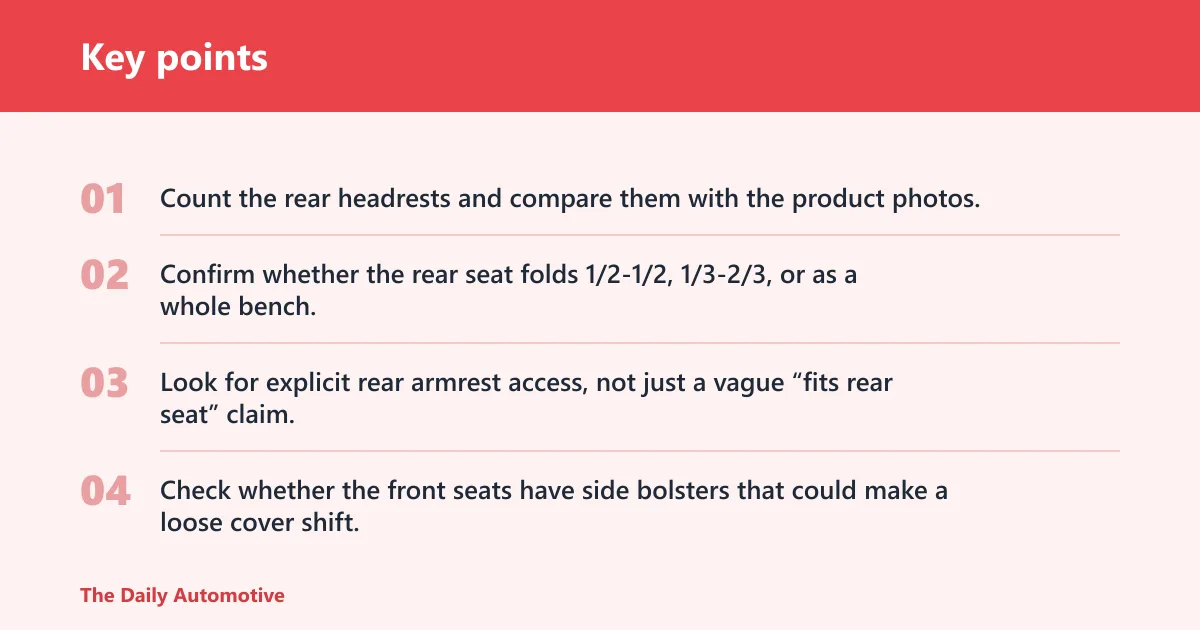
- Count the rear headrests and compare them with the product photos.
- Confirm whether the rear seat folds 1/2-1/2, 1/3-2/3, or as a whole bench.
- Look for explicit rear armrest access, not just a vague “fits rear seat” claim.
- Check whether the front seats have side bolsters that could make a loose cover shift.
Say your Elantra has a fold-down rear armrest and you buy a whole-bench cover without a center opening. The cover may install, but the armrest becomes harder to use, which is a common return-risk problem that does not show up in glossy photos.
Verify side-airbag openings and seat-heater compatibility
Side airbags need proper openings and an unobstructed deployment path. A cover that drapes over the outboard seat seam, bunches at the shoulder, or uses the wrong stitching can interfere with deployment. Seat heaters also matter, because thicker material can slow warm-up and cut heat transfer.
Look for airbag-compatible openings in the product photos and text, not only a generic safety claim. The cover should preserve airbags, armrests, and seat adjustments, which is why the exact cut pattern matters more than the finish color.
Seat-cover decision table
This table ranks the three picks by fit risk first, then feature compatibility, then ownership tradeoff. It is built for a 2017 Hyundai Elantra, so the questions are model-specific: rear bench split, airbag cutouts, armrest access, seat-heater friendliness, install complexity, and cleaning effort.
| Pick | Fit risk | Feature compatibility | Ownership tradeoff |
|---|---|---|---|
| Conjie full set | Lowest if your 2017 layout matches the listed model-year range and the rear split matches the cover pattern. | Claims airbag, armrest, and seat-adjustment compatibility; straps and hooks; no-tools install. | Best fit confidence, but full-set install takes more time and cleanup touches more pieces. |
| FaiFani full set | Low to moderate, because the listing is broad and the fit still depends on rear split, headrests, and trim details. | Breathable, waterproof faux leather; full access to seat adjustments and airbags; full-set coverage. | Good spill protection and easier wipe-downs, with a material feel that trades some airflow for cleaning convenience. |
| Front-seat-only covers | Lowest for rear mismatch risk, but only if the fronts are shaped for the Elantra’s side bolsters and seat controls. | Better access to rear bench functions because nothing is covering them; easier to keep belt and armrest access open. | Less install effort and lower cost, but no rear-seat protection and less complete interior coverage. |
Best full set seat covers
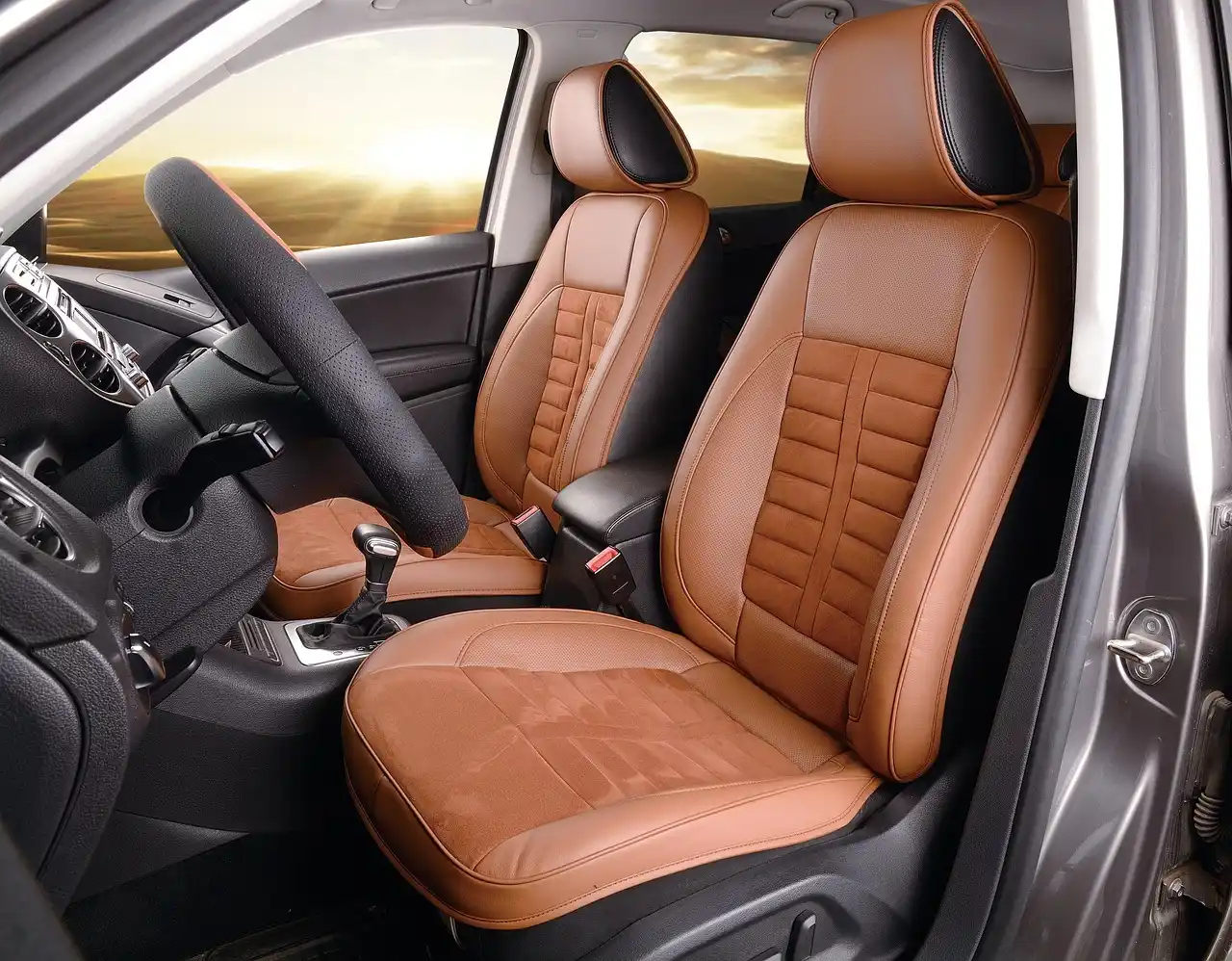
A full set makes sense when the Elantra carries passengers often or when you want the front and rear seats to age at the same pace. The upside is 5-seat coverage; the downside is a longer install and more chances for a split-bench or armrest mismatch.
Why a full 5-seat set makes sense
The main appeal is coverage. A full set can help protect both rows from spills, pet hair, UV wear, and scuffs, and it is often the better choice when the rear bench gets regular use. It also gives the cabin a matched look instead of a patched-together front-only setup.
Conjie is the strongest full-set choice in this group because the guide names it the best all-around full-set upgrade, says it is a full set for Hyundai Elantra 2017-2025, and describes it as waterproof, breathable, and all-black. Those details matter because they line up with the common buyer goal: broad protection without giving up function.
Install effort and rear-seat coverage
Full sets usually mean more straps, more hooks, and more time at the rear bench. That is normal. The cover should fit around the seat base, seatback, headrests, belt openings, and any fold-down features without blocking movement.
Conjie is listed as installed with straps and hooks, with no tools needed. That lowers the barrier, but it does not remove the need to verify the rear split and armrest layout before buying.
When a full set is too much
Choose something smaller if the rear seat is rarely used, if you need fast access to child-seat anchors, or if you do not want to remove and refit the back row every time the cabin needs a deep clean. In those cases, a front-only set can be the smarter cost and labor choice.
Best waterproof faux leather covers
Waterproof faux leather is worth considering on a 2017 Elantra if spills, coffee, kids, or pets are part of the routine. The tradeoff is breathability: wipe-clean surfaces are easy to live with, but they can feel warmer than mesh and may move seat heat differently.
Spill resistance and wipe-clean care
Faux leather is the easy-clean option. It sheds spills, wipes off fast, and usually keeps stains from soaking into the seat fabric underneath. That makes it practical for daily use, especially if the car sees fast food, gym bags, or wet umbrellas.
CarAwareness lists FaiFani as breathable and waterproof faux leather, and the listing also says it allows full access to seat adjustments and airbags. That combination is useful for buyers who want a practical surface without giving up too much function.
Breathability and seat-heater tradeoffs
Waterproof does not mean ideal for every climate. Thicker faux leather can feel less airy in summer, and seat heaters may feel slower to come through the material. If the Elantra has heated seats, look for a design that does not add extra padding over the heating zones.
Say the car lives in a hot climate and the front seats already run warm. A waterproof faux-leather cover may still be the right pick for spill protection, but the buyer should expect more heat retention than with a mesh-style cover.
Pet hair and daily wear protection
Faux leather is usually easier to keep free of pet hair than woven cloth or knit mesh. Hair tends to sit on the surface instead of working into the fibers, which cuts cleaning time. It also stands up well against shoe scuffs and repeated sliding in and out.
Best front seat covers
Front-only covers are the smarter buy when the rear bench is mostly cargo space, the back seat rarely carries passengers, or you want to keep the install simple. They cut the chance of a rear split mismatch and can preserve easier access to rear-seat belt buckles and armrests.
When front-only coverage is the smarter buy
Front-only coverage works best for commuters who care about the driver and passenger seats more than the back row. It is also a better choice if the rear seat folds often, if the center armrest gets used a lot, or if you want a lower-cost way to clean up the cabin without a full interior refresh.
Access to controls, belts, and armrests
Front-only sets keep rear access open by default, which helps with belt access, folding seats, and cargo loading. They also reduce the chance of blocking side seat controls or seat-mounted hardware up front, as long as the cover is shaped for the Elantra’s seat contours.
The tradeoff is obvious: less coverage. A front-only set leaves the rear bench exposed to wear, pet hair, and spills, so it is not the best answer if passengers ride there often.
Lower install complexity
Fewer pieces mean fewer straps and fewer chances for a bad tuck. For a first-time buyer, that can be the difference between a quick install and an afternoon of refitting corners that do not want to stay put.
Will seat covers fit side airbags?
They can, but only if the cover is built with airbag-compatible openings and a deployment path that stays clear. A generic cover that blocks the outboard seat seam or sits too tightly over the shoulder bolster can interfere with safety equipment, which is why the cutout pattern matters as much as the material.
What airbag-compatible openings need to do
The opening should sit where the airbag deploys, not just where the seat looks narrowest. It should not be sewn shut by tension, and it should not be buried under extra layers. The goal is an unobstructed path when the airbag activates.
Conjie is described as preserving airbags, armrests, and seat adjustments. FaiFani is also described as allowing full access to seat adjustments and airbags. Those claims are useful only if the buyer matches them to the 2017 Elantra’s actual seat shape.
What to verify in product photos and specs
Check for a visible side seam opening, clearly marked airbag compatibility, and a fit pattern that follows the seatback shape instead of wrapping over it loosely. If the listing avoids showing the seat side or hides the seam area, treat that as a warning sign.
One guide specifically says to check model year, rear-seat layout, headrest style, and airbag openings before ordering. That is the right order of operations for the 2017 Elantra, because it filters out the covers that only look universal.
How do you choose the right set?
Choose by seat layout first, then by material, then by how often you need to clean the car. If the rear seat matters, start with a full set. If rear use is light, front-only coverage lowers install effort and mismatch risk. Leather-style covers clean faster; mesh usually breathes better.
Full set or front-only
Pick a full set if you want 5-seat coverage, expect regular rear passengers, or want the cabin to age evenly. Pick front-only if you need simpler install work, care more about the driver area, or want to leave rear seat access open for folding and loading.
Leather-style or mesh
Leather-style or faux-leather covers win on spill cleanup and pet hair resistance. Mesh wins on airflow. For a 2017 Elantra with seat heaters, one common choice is breathable faux leather because it gives wipe-clean care without feeling as sealed off as dense vinyl.
What to expect from straps, hooks, and cleaning
Most better-fitting sets use straps and hooks rather than tools. That keeps installation simple, but it also means the final fit depends on how well the straps are routed and tightened. Cleaning should be simple too: wipe the surface, remove debris from seams, and check corners where dirt collects.
A common first-timer mistake is buying for color before checking the rear bench split. On a 2017 Elantra, that can turn a seemingly good full set into a cover that blocks a fold-down armrest or leaves loose fabric on one side of the bench.
Frequently asked questions
What are the best car seat covers for a 2017 Hyundai Elantra?
The best choice is a trim-matched full set that covers the front seats and rear bench without blocking airbags, armrests, or seat controls. Conjie is the strongest full-set pick here, while FaiFani is a good waterproof faux-leather alternative. Front-only covers make sense only when rear-seat use is light.
Will seat covers fit a 2017 Hyundai Elantra with side airbags?
Yes, if the covers have proper airbag-compatible openings and a clear deployment path. Do not rely on a generic universal claim. Check the side seam area in the photos and confirm the listing explicitly says it preserves airbags, because a poor fit can interfere with safety hardware.
Are waterproof seat covers worth it for a Hyundai Elantra?
Yes, if spills, pets, or wet gear are common. Waterproof faux leather is easier to wipe clean and usually protects the original upholstery better than cloth, but it can be warmer and less airy. That tradeoff is usually worth it for daily drivers that need easy maintenance.
How do I choose between full set and front seat covers for my Elantra?
Choose a full set if the rear bench gets regular use or you want complete cabin protection. Choose front-only covers if you want lower install complexity, less cost, and easier access to the rear bench, armrest, and cargo space. The right choice depends on how often the back seat is used.
Can I use universal seat covers on a 2017 Hyundai Elantra?
You can, but the fit risk is higher. Universal covers often miss the Elantra’s rear split, headrest count, or side-airbag openings. If you go universal, check the exact model-year fit, the seat layout, and whether the cover leaves belt buckles and armrests reachable without stretching or blocking anything.
How hard is it to install seat covers on a Hyundai Elantra?
Most strap-and-hook sets are moderate in difficulty rather than hard, but a full set takes more time than a front-only kit. Installation gets easier when the product is designed for the 2017 Elantra and when you confirm the rear split, headrest style, and airbag cutouts before starting.
Products related to this article
Sponsored / affiliate links. As an Amazon Associate I earn from qualifying purchases. I may earn additional commission from eligible campaigns.
 Huidasource Universal Car Seat Covers, Waterproof Faux Leather, Airbag Friendly, Easy Installation, Unobstructed Cup Holders, Scratch Resistant for Family Trips, Black & Blue
 Teuaktty Car Seat Covers Universal Car Protective Front Seat Covers Washable Non-Slip Seat Protectors for Gym Workouts,Waterproof and Sweatproof Towel Seat Covers for Cars,Trucks, Jeeps (2 Pack Grey)