Cost of Paint for Car: Affordable Solutions That Last
Car paint materials are often reported to cost about $100 to $500 for a DIY job. A proper full repaint can run $1,000 to $5,000+, and the final number depends on prep quality, paint system, and whether you need a small touch-up or a full respray. Cheap shortcuts often leave peeling, color mismatch, and clear-coat failure that can hurt resale value. This guide breaks down what paint costs, what you should pay for, and where saving money turns into a bad finish.
Typical cost range


A full paint job usually falls into three broad tiers. Basic paint jobs range from $500 to $1,000, mid-range paint jobs range from $1,000 to $5,000, and high-end paint jobs range from $5,000 to $10,000. Average professional car paint cost is about $2,500, but the final bill depends on prep, surface damage, and finish choice.
What those price bands usually include
A basic job often uses single-stage paint and only light prep. That works for cheap cosmetic fixes, but it is not built to last like a factory finish. A mid-range job usually adds fuller prep, multiple coats, and a clear coat that resists chips better.
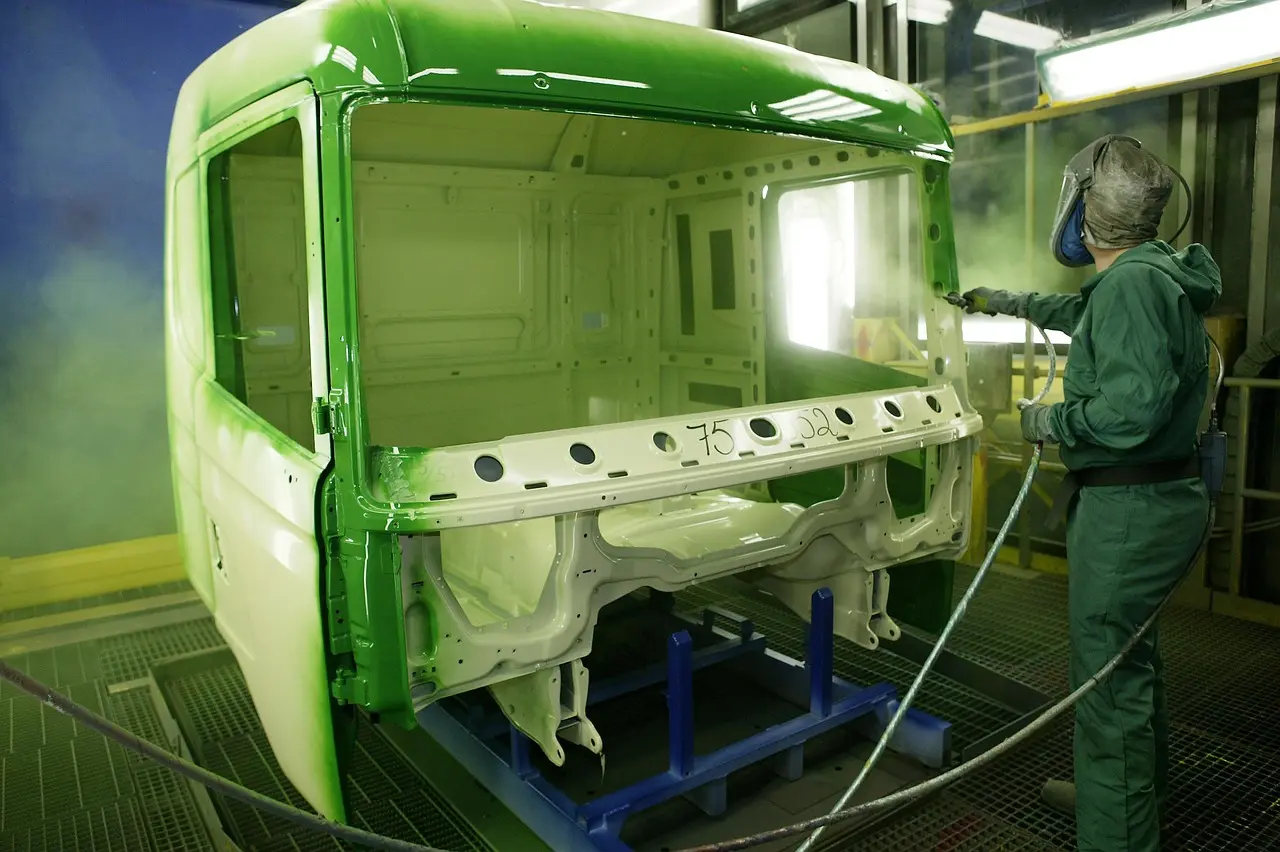
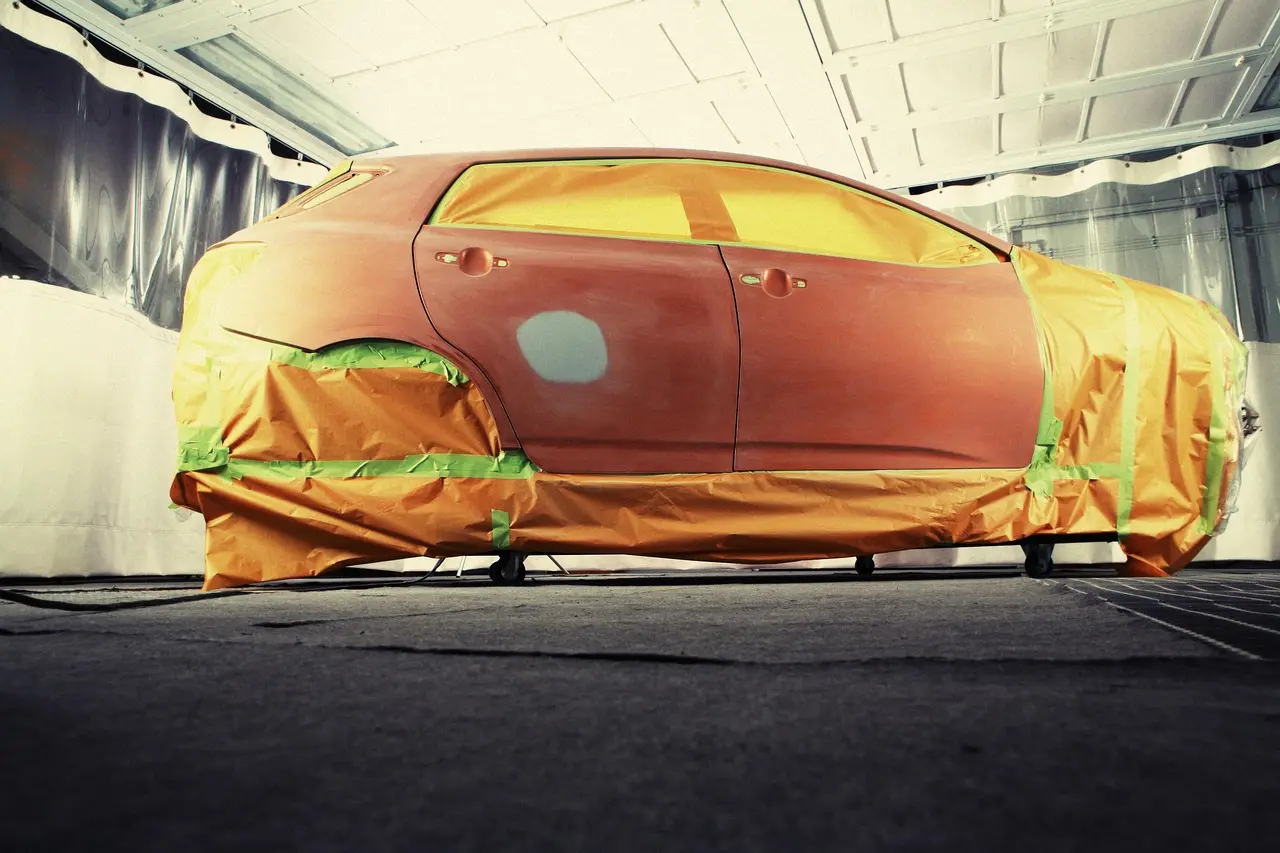
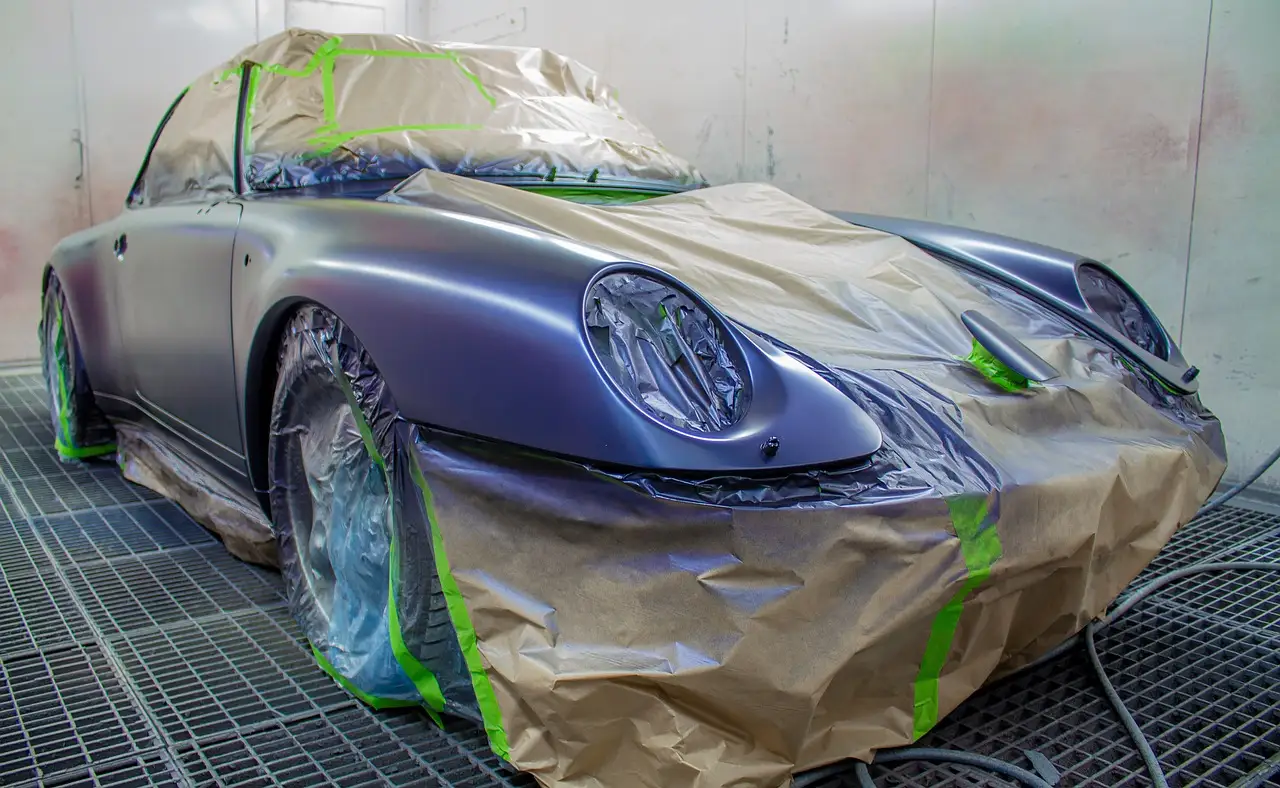
High-end work goes further. It includes extensive prep, premium-grade paint, and custom finishes that take more labor and more booth time. The higher price is not only about the paint can itself. It pays for sanding, masking, cleaning, disassembly, and correction of body flaws before color goes on.
When a quote is too low to trust
If a quote looks far below the ranges above, ask what was left out. Missing body repair, minimal masking, skipped disassembly, or rushed booth time can create overspray, orange peel, or poor color match. A low number is not a bargain if the finish starts failing early.
What changes the price most?
The biggest cost drivers are vehicle size, prep work, paint system, finish type, and shop quality. Rust, dents, deep scratches, and panel replacement raise the bill because the shop has to repair the surface before spraying color. Larger vehicles also cost more because they have more area to cover and need more labor and materials.
Vehicle size and surface area
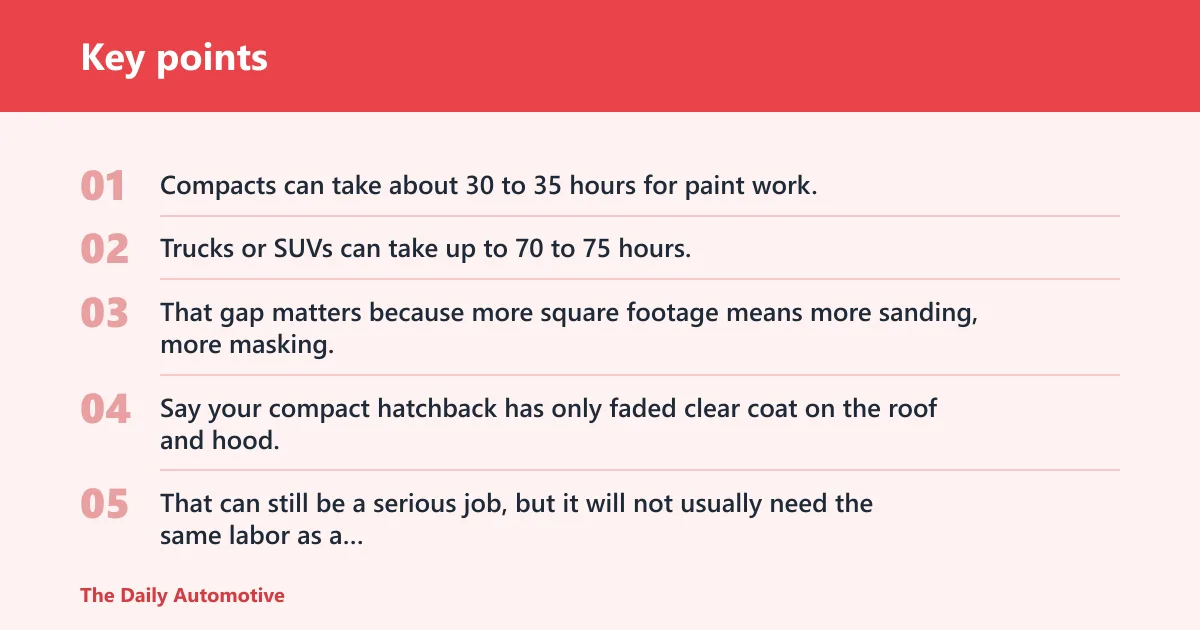
Compacts can take about 30 to 35 hours for paint work. Trucks or SUVs can take up to 70 to 75 hours. That gap matters because more square footage means more sanding, more masking, more paint, and more booth time.
Say your compact hatchback has only faded clear coat on the roof and hood. That can still be a serious job, but it will not usually need the same labor as a full-size SUV with the same issue across twice the body surface.
Prep work, body repairs, and disassembly
Prep work includes sanding, masking, cleaning, disassembly, and body repairs. TheHowMuch says prep is 70-80% of total cost, which fits how paint jobs are priced in practice. The paint itself matters, but surface preparation usually drives the labor bill.
Rust removal, filler work, dent repair, and trim removal all add time. If a shop has to remove doors, handles, emblems, lights, or bumpers for a cleaner edge, the estimate should list that work instead of hiding it in one total price.
Paint type and finish choice
Paint choices change both material cost and labor. Common automotive paint types include acrylic lacquer, urethane, acrylic urethane, and acrylic enamel. Maaco says a basic service uses synthetic enamel paint, while urethane and acrylic urethane are common choices where durability and appearance matter more.
Finish choice also changes the quote. Matte, gloss, semi-gloss, metallic, and pearlescent finishes all alter the work required. Metallic and pearl finishes are harder to match, and matte needs careful handling because polishing mistakes can leave visible patches.
Shop quality and booth time
A reputable shop usually spends more time on estimate detail, prep, and controlled spraying. A low-end shop may cut hours out of the estimate, but that can mean thin coverage, rushed masking, or poor curing. Booth time matters because a better spray environment helps reduce dust nibs and contamination.
The same source says a car should be painted every five years, but that is only a broad service-life statement. The better question is whether the estimate covers the prep and coating steps your car needs right now. A cheap quote with vague line items is often where bad results start.
Basic paint job cost
A basic paint job usually costs $500 to $1,000 and is best for small cosmetic repairs. It often uses single-stage paint and light prep. That can work on an older vehicle where appearance matters more than long-term durability, but it is not the right answer for rust, dents, or a high-value car.
What single-stage paint usually covers
Single-stage paint combines color and gloss in one coating. It lowers labor compared with a basecoat-and-clear-coat system, which is why basic jobs stay cheaper. Maaco’s basic service uses synthetic enamel paint, which fits this lower-cost approach.
When a basic job makes sense
A basic job makes sense when the goal is a cleaner look for less money, not a showroom finish. It is a better fit for an older daily driver, a trade-in prep, or a car that needs cosmetic improvement without major body work.
Picture an older sedan with dull paint on flat panels but no rust bubbles, dents, or mismatched doors. A basic service may be enough if the owner wants a better-looking car for a few more years and accepts that the finish may not match a higher-end repaint.
Mid-range paint job cost
A mid-range paint job usually costs $1,000 to $5,000 and sits in the middle for most owners. It adds more prep, multiple coats, and a clear coat that improves chip resistance. This tier is where many shoppers should start if they want a durable, cleaner-looking result.
Why more prep raises the bill
Prep takes time because the shop must sand the old surface, clean contamination, mask openings, and handle trim removal where needed. If rust, scratches, or panel damage are present, labor grows fast. The paint job may look expensive, but the visible finish depends on work nobody sees before spraying starts.
What buyers should expect in the finish
A mid-range job should look more even, with better gloss and less risk of early peeling than a basic spray. Buyers should expect better edge coverage, more consistent color, and a clear coat that helps with chip resistance. It should not look like a quick respray.
The same source says a basic single-stage repaint costs $1,000-$1,500. That sits near the lower end of this tier and helps explain why some mid-range quotes are only slightly higher when a shop adds stronger prep or a clearer coat system.
High-end paint job cost
A high-end paint job usually costs $5,000 to $10,000, and high-end paint jobs can cost $5,000 to $10,000 or more. This tier is for extensive prep, premium-grade paint, and custom finishes. The bill rises because the shop is building a finish, not simply spraying color.
Extensive prep and bodywork
High-end work usually includes deeper sanding, more disassembly, and body repairs that must be corrected before color. If the car has rust repairs, filler work, or panel replacement, the quote should reflect that. A premium finish on a flawed panel still looks flawed.
Premium paint and custom finishes
Custom finishes, tri-coat systems, metallics, pearlescents, and color-change work all add labor and material cost. These finishes are less forgiving. Color match, spray pattern, and curing all matter more, so even small mistakes can stand out.
A common first-timer mistake is choosing a pearl finish because it looks similar to the factory color in a sunlit lot. Once the car leaves the booth, a poor pearl match can shift under shade and make the repair easy to spot from several feet away.
When the extra cost is justified
The extra cost is justified on newer vehicles, classics, collector cars, or anything where resale value depends on appearance. It can also make sense when the current finish is badly faded and the owner wants a long-lasting result instead of a quick cosmetic reset.
Car paint quote decoder
Use this table to separate a real estimate from a cheap-looking shortcut. The point is not to choose the lowest total. It is to see whether the quote includes enough labor, prep, materials, booth time, and finish work to produce a durable result.
| Quote line item | What a fair estimate may include | Acceptable savings or red flag? |
|---|---|---|
| Labor hours | Enough time for sanding, masking, spray work, and reassembly; compacts often land near 30 to 35 hours, while trucks or SUVs can reach 70 to 75 hours | Fair savings: fewer hours only if the car has little damage. Red flag: unrealistically short labor on a full repaint |
| Prep scope | Sanding, cleaning, masking, disassembly where needed, and repair of rust, dents, or deep scratches | Fair savings: limited prep on a straight, clean panel. Red flag: skipping prep on a car with visible flaws |
| Materials | Single-stage, enamel, urethane, or acrylic urethane products matched to the finish requested | Fair savings: simpler paint on a basic job. Red flag: vague “paint and materials” with no product type listed |
| Booth time | Controlled spray time, drying, and cure time that fit the coating system | Fair savings: standard booth time on a low-complexity job. Red flag: no booth time or suspiciously rushed cure cycle |
| Finish type | Gloss, semi-gloss, matte, metallic, or pearlescent as specified in writing | Fair savings: plain gloss for a budget repaint. Red flag: a finish upgrade quoted as a minor add-on when it should change labor and materials |
| Bodywork | Rust removal, dent repair, smoothing, and panel repair if needed | Fair savings: none if the body is already straight. Red flag: missing bodywork on a car that clearly needs it |
Should you repaint or touch up?
Touch-up, paint correction, or panel repair can be enough when the damage is small and the original finish is still sound. A full repaint makes more sense when the clear coat is failing, rust is spreading, color match is poor, or multiple panels need work. The best choice depends on the damage, not the urge to respray everything.
When paint correction is enough
Paint correction helps when the problem is oxidation, light haze, swirl marks, or surface staining. If the clear coat is intact and the color still matches, polishing may recover enough appearance to postpone repainting. That is usually cheaper than a full respray.
When panel repair beats repainting
If one panel has a dent, scratch, or localized rust spot, repairing that panel can make more sense than repainting the whole car. This is especially true when the rest of the finish still looks uniform. One repaired panel is often easier to match than a full-body color change.
When a full repaint is the better call
A full repaint is the better call when the finish is failing across multiple panels, when rust is widespread, or when the color change is too obvious for patchwork. It also makes sense if a cheap previous repaint is peeling or if overspray and uneven texture are already visible.
Suppose a midsize sedan has a faded hood, a scratched bumper, and one rear door with chipped paint. If the rest of the panels still hold gloss, spot repair may be smarter than a full repaint. If the clear coat is flaking on three sides, repainting becomes the cleaner fix.
Frequently asked questions
How much does it cost to paint a car?
Most car paint jobs fall into a wide band because the vehicle, finish, and prep work vary so much. Average professional car paint cost is about $2,500.
What affects the cost of painting a car?
Vehicle size, surface damage, prep work, paint type, finish choice, and shop quality drive the price. Rust, dents, scratches, and panel replacement raise labor. Metallic, pearl, matte, and custom finishes also cost more because they need more careful spraying and matching.
Is a basic paint job worth it?
A basic paint job can be worth it for an older car, a trade-in, or a vehicle that only needs cosmetic improvement. It is less suitable if you need durability, strong chip resistance, or a factory-like finish. Single-stage paint and minimal prep keep the bill down, but they also limit longevity.
How much does a mid-range car paint job cost?
A mid-range car paint job usually costs $1,000 to $5,000. This level typically includes thorough preparation, multiple coats, and a clear coat for better chip resistance. For many owners, it is the best balance between cost and finish quality.
How long does a car paint job take?
Time depends on size and prep. Compacts can take about 30 to 35 hours for paint work, while trucks or SUVs can take up to 70 to 75 hours. Body repair, drying, and reassembly can add more time, especially on higher-end jobs.
Is DIY car painting cheaper than hiring a shop?
DIY materials can cost about $100 to $500, so the upfront cost is often lower. But a shop usually delivers better prep, better spray control, and better durability. DIY can be cheaper only if you accept a less refined finish and already have the tools, space, and patience needed to do the work correctly.
Products related to this article
Sponsored / affiliate links. As an Amazon Associate I earn from qualifying purchases. I may earn additional commission from eligible campaigns.