Car Seat Back Organizer Cost / Price / How Much
A car seat back organizer often costs about $10 to $35; a common middle range is about $15 to $25 for a better fit, stronger stitching, and more useful pockets, and the cheapest options may be less durable. Cheap organizers sag, rip, or block legroom, and that small purchase can turn into a replacement and a mess. This guide breaks down price by pocket count, coverage size, material quality, and failure risk so you can judge value before buying.
Three price tiers: budget, mid-range, and premium
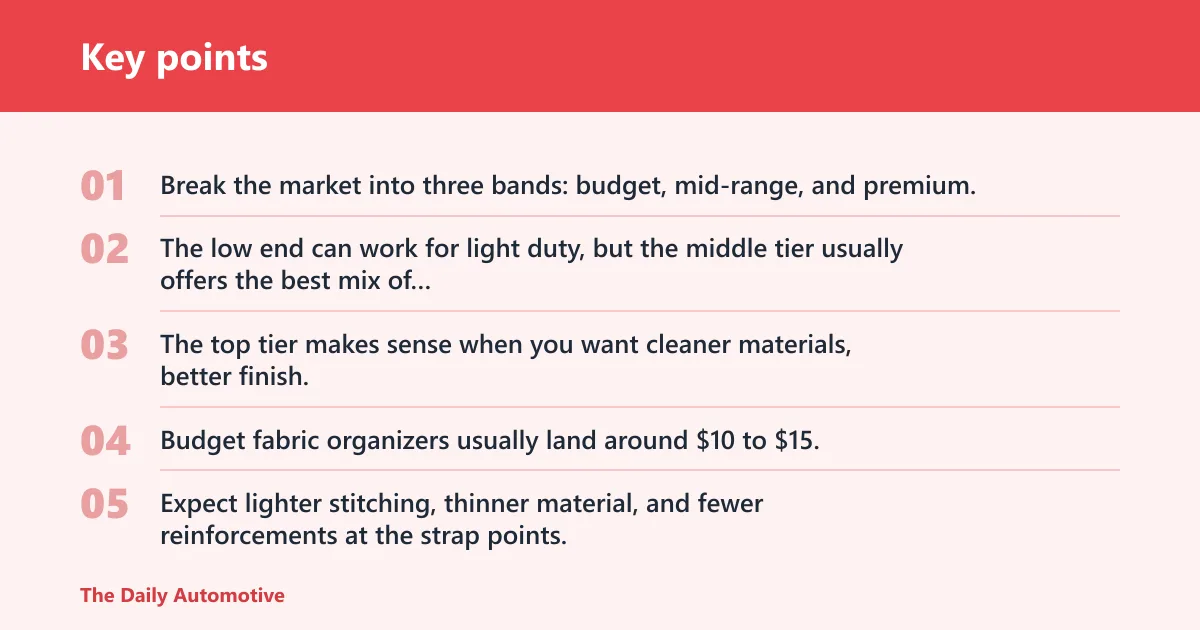


Break the market into three bands: budget, mid-range, and premium. The low end can work for light duty, but the middle tier usually offers the best mix of pocket layout, seatback coverage, and strap stability for the money. The top tier makes sense when you want cleaner materials, better finish, or larger coverage.
Budget tier: what you usually get
Budget fabric organizers usually land around $10 to $15. Expect lighter stitching, thinner material, and fewer reinforcements at the strap points. They can be fine for napkins, a tablet, and a few small items, but they are the first to fail when pockets are loaded heavily or when the seatback shape forces the panel to hang with slack.
A common first-timer mistake is buying the lowest price and filling every pocket on day one. A thin panel that looks fine empty can start sagging once books, wipes, bottles, and charging cables go in, especially if the lower anchor points are weak.
Mid-range tier: the value sweet spot
A common value range is about $15 to $25. That range more often buys better stitching, a more stable attachment system, and a layout that matches real storage needs instead of adding pockets for the sake of count. For most drivers, this is where price and function meet.
If you want a car back seat storage bag for kids, commuting, or everyday errands, this tier usually gives the best balance of pocket count, fit, and replacement risk. It is also the range where you are more likely to get a cleaner finish without paying for decorative extras you will never use.
Premium tier: when the higher price makes sense
Premium organizers often start above about $25 and can rise much higher when the panel uses PU leather, stronger hardware, or a larger full-coverage layout. That price only makes sense if you want better wipe-down care, a neater look, or a heavier-duty build for frequent use. Pay for the features you will notice every day.
Walmart lists car organizers with a price starting at $7.88 on the category page, shows a car organizers item at $24.96, and lists a dashboard and windshield car mount at $37.88. A tablet mount listing is priced at $138.72. Those figures show how quickly price rises when the product moves from simple storage to more specialized hardware.
What makes one organizer worth more?
Price climbs when the organizer gives you more usable storage, better fit, and less chance of early failure. Pocket count matters only if the pockets are sized for real items. Coverage size matters because a larger panel can protect more of the seatback and hold shape better. Attachment design matters because a loose panel becomes annoying fast.
Pocket count versus usable storage
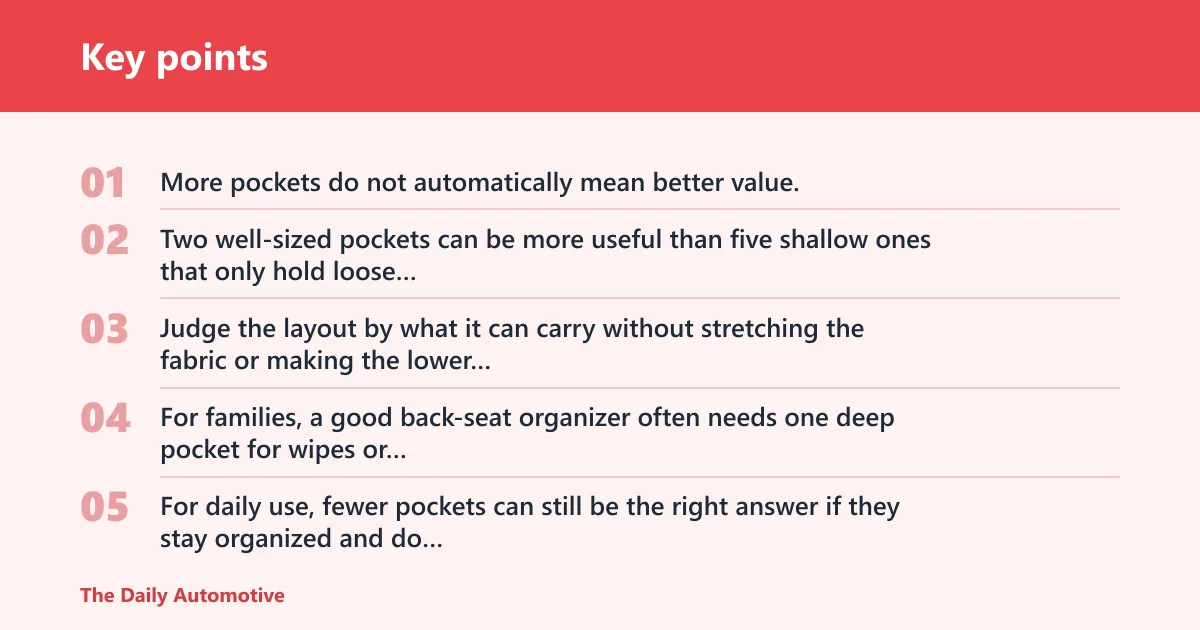
More pockets do not automatically mean better value. Two well-sized pockets can be more useful than five shallow ones that only hold loose receipts. Judge the layout by what it can carry without stretching the fabric or making the lower pockets hard to reach from the rear seat.
For families, a good back-seat organizer often needs one deep pocket for wipes or tissues, one flat pocket for books or tablets, and one easy-access pocket for snacks or chargers. For daily use, fewer pockets can still be the right answer if they stay organized and do not bulge into passenger space.
Coverage size and seatback fit
Coverage size changes value because a larger organizer can protect more of the seatback and spread load across a wider area. Smaller panels are easier to mount and can fit tighter seatbacks, but they may leave open gaps around the edges. That matters when you want less kick damage and less visible clutter.
The back-of-seat organizer page identifies the product as a car organizer item, and the listed size is 56 x 41 cm, or 22.05 x 16.14 inch. That is a compact-to-medium format that should suit many standard vehicle seatbacks without taking over the whole rear of the seat.
Attachment style and stability
Strap and hook design is a bigger price driver than many shoppers expect. A panel with secure headrest loops, a stable lower anchor, and a tighter seatback wrap usually costs more because it is less likely to slip. If the panel shifts every time a rear passenger moves, the cheaper sticker price stops mattering.
Follow the vehicle and product manual. Child restraints and aftermarket seat accessories must be allowed by both the car-seat and the vehicle manual.
Material quality and cleaning effort
Fabric organizers are usually the lower-cost choice. They are light, simple, and good for everyday storage. PU leather organizers cost more because the surface is easier to wipe clean and often looks more finished, but that does not make them real leather. Treat them as a synthetic surface with a premium look.
Car seat back organizer value matrix
This matrix compares price to real utility, not sticker price alone. Use it to judge whether the organizer gives you enough coverage, pocket utility, and attachment stability for the money. It also shows where shipping or replacement risk can change the total cost.
| Tier | Typical material | Pocket count | Coverage size | Attachment style | Likely failure points | Total ownership cost |
|---|---|---|---|---|---|---|
| Low-cost fabric | Thin fabric | Few to moderate | Compact panel | Simple straps or loops | Sagging, strap slip, pocket stretch, weak stitching | Low upfront cost, higher chance of replacement |
| Mid-price mixed-material | Fabric with reinforced trim | Moderate to high | Medium coverage | Headrest loops plus lower anchor points | Edge wear, strap creep, zipper or seam stress | Better balance of purchase price and lifespan |
| Premium PU leather | PU leather surface | Moderate | Fuller coverage | More structured mounting | Surface scuffs, stitching fatigue, corner curl | Higher upfront cost, lower cleaning effort |
Use price per pocket only as a rough check. A cheap organizer with six shallow pockets can be worse value than a mid-range organizer with four useful pockets and stronger mounting. Coverage size matters too. A larger panel may cost more, but it can also replace two smaller storage add-ons.
How much space do you really need?
Choose size by seatback shape, not by a universal-fit label alone. A compact organizer can work in a car with tight rear legroom, while a wider panel makes more sense when you need broader seatback coverage. The right size is the one that stays flat, reaches the anchor points cleanly, and leaves legroom intact.
56 x 41 cm fit
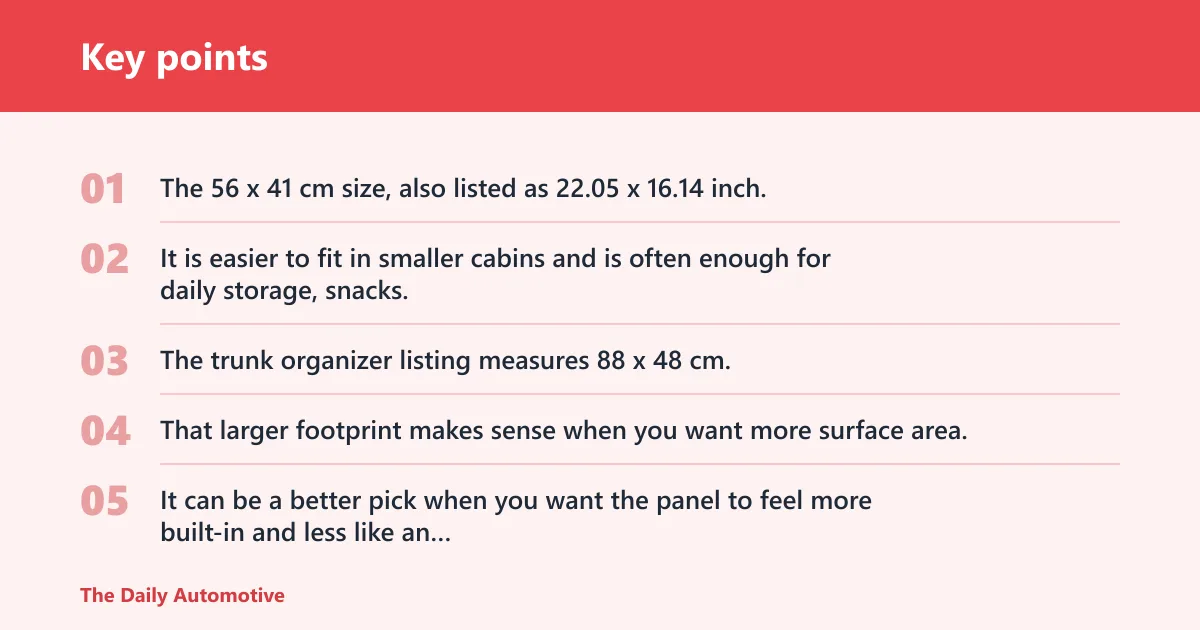
The 56 x 41 cm size, also listed as 22.05 x 16.14 inch, is a practical choice for standard vehicle seatbacks when you want a moderate panel without extra bulk. It is easier to fit in smaller cabins and is often enough for daily storage, snacks, tissue packs, and a slim tablet sleeve.
88 x 48 cm fit
The trunk organizer listing measures 88 x 48 cm. That larger footprint makes sense when you want more surface area, more room for divided storage, or a cleaner full-coverage look. It can be a better pick when you want the panel to feel more built-in and less like an add-on.
Universal fit on SUVs and trucks
Do car seat back organizers work in SUVs and trucks? Often yes, but the seatback shape and headrest layout still decide the fit. Taller seatbacks may welcome a larger panel, while some truck seats have anchor points or spacing that make short straps awkward. Check the manual and measure before you buy.
Say your SUV has a tall rear seatback and a wide headrest gap. A compact 56 x 41 cm organizer may hang correctly, but a larger panel can use the space better and reduce exposed seatback. The same panel may feel oversized in a compact sedan.
Compact versus full-coverage layouts
Compact layouts are easier to install and usually cost less. Full-coverage designs cost more because they use more material and often give you more room for pockets or a neater fit across the seatback. If you only need light storage, compact is enough. If passengers kick the seat, fuller coverage often makes more sense.
Are leather organizers worth the price?
PU leather organizers are usually more expensive than fabric models because they bring a smoother surface, easier wipe-down care, and a more finished look. They are worth the premium when you care about appearance or want a surface that resists spills better than plain cloth. They are not automatically more durable in every way.
PU leather versus fabric
PU leather is a synthetic material, not real leather. It can look cleaner in the cabin and usually wipes down faster after spills or muddy shoes. Fabric is lighter, often cheaper, and more forgiving on budget, but it can show wear sooner and may hold dust or crumbs more easily.
Walmart’s trunk organizer listing uses high-grade PU leather, measures 88 x 48 cm, includes one piece, and offers free shipping and free returns. The store also promises a 60-day money back guarantee. Those terms can lower the total cost if the size or finish is not right.
Water resistance and wipe-down care
PU leather has an advantage when you want a water-resistant surface that cleans with a quick wipe. That matters in the rear seat, where drinks, sticky hands, and snack crumbs are common. Fabric may be cheaper, but repeated spot cleaning can erase that savings if the panel stains or frays early.
Premium look versus practical durability
Premium look is worth paying for only if the organizer still solves the storage problem. A good-looking panel with poor strap retention is bad value. A mid-price fabric organizer with better seams can outlast a cheap PU leather panel that looks nicer on day one but starts to curl or stretch.
Who should buy each price tier?
The right price tier depends on use, not status. Parents usually need stronger pockets and easier access. Daily commuters may want a slim, tidy panel with minimal bulk. Road-trippers often need more space and better coverage because the organizer gets used constantly. First-time buyers should start with the middle tier.
- Parents and kid gear: Choose mid-range or premium if you want deeper pockets, better seatback coverage, and less sag under heavier items.
- Rideshare and daily commuting: Choose mid-range fabric or PU leather if you want a neat rear cabin and easy cleanup between trips.
- Road trips and rear-seat storage: Choose a larger panel if you need more storage for bottles, tablets, books, or snacks across long drives.
- Budget buyers and first-time shoppers: Choose the least expensive model only if your load is light and you are fine replacing it sooner.
Picture a commuter who only needs one flat pocket for a notebook, charging cable, and sunglasses. A low-cost fabric organizer may be enough. Now picture a family of four with rear-seat snacks, wipes, kids’ tablets, and water bottles. That buyer usually gets better value from a sturdier mid-range organizer with more useful pocket depth.
Shipping and returns that change the final price
Free shipping, free returns, worldwide shipping, and a 60-day money back guarantee all affect total ownership cost. A cheaper listing can become expensive if you pay to ship it back or replace it after a bad fit. Return terms matter most when the organizer size is close to the edge of your seatback dimensions.
Free shipping
Free shipping lowers the real purchase price, especially on lower-cost organizers where shipping can otherwise eat a large share of the order total. It also makes comparison shopping easier because the sticker price is closer to the final cost.
Free returns
Free returns matter when fit is uncertain. If the organizer sags, blocks legroom, or does not match the seatback shape, a no-cost return keeps the mistake from becoming a full loss. That is especially useful on universal-fit products.
Worldwide shipping
Worldwide shipping matters for buyers who cannot find local stock or who want a specific size or finish. It can also add time and return friction, so check whether the seller covers return shipping before you assume the low price is the best value.
60-day money-back guarantee
A 60-day money back guarantee gives more room to confirm fit and real-world usefulness. It does not make a weak organizer strong, but it does reduce the risk of getting stuck with the wrong size or layout. That protection is worth more when the listing is close to your budget ceiling.
Frequently asked questions
How much does a car seat back organizer cost?
Most car seat back organizers cost about $10 to $35. Budget fabric models sit at the low end, while better-built mid-range options usually cost $15 to $25. Premium PU leather or larger coverage designs can cost more, especially when shipping, returns, or replacement risk are part of the total.
What is a fair price for a back seat organizer for a car?
A fair price is usually $15 to $25 if you want a useful pocket layout, decent stitching, and an attachment system that stays put. Below that range, check the seams and straps closely. Above it, make sure the extra cost buys better material, larger coverage, or easier cleaning.
Are leather car seat back organizers more expensive?
Yes, PU leather organizers are usually more expensive than fabric ones. The higher price reflects the synthetic leather-look surface, easier wipe-down care, and often a cleaner appearance. Do not treat PU leather as real leather, though. The premium is about finish and convenience, not a guarantee of stronger construction.
What size car seat back organizer do I need?
Start with your seatback measurements and headrest spacing. A 56 x 41 cm organizer, also listed as 22.05 x 16.14 inch, suits many standard seatbacks. A larger 88 x 48 cm layout gives more coverage. If the panel cannot sit flat, the wrong size is the wrong value.
Do car seat back organizers work in SUVs and trucks?
Often yes, but fit depends on the seatback shape, headrest layout, and strap length. SUVs may accept larger panels better than small cars. Trucks can be trickier if the seat geometry is short or angled. Check the vehicle manual and measure the seatback before you buy.
Are cheap car seat back organizers any good?
Some are, if you keep the load light. Cheap organizers can work for tissues, cables, or a thin tablet sleeve. They become poor value when they sag, stretch, or rip at the seams. If you need frequent use or heavier pockets, spending a little more is usually the smarter buy.
Products related to this article
Sponsored / affiliate links. As an Amazon Associate I earn from qualifying purchases. I may earn additional commission from eligible campaigns.
 Seat Belt Covers for Kids, 2 in 1 Car Seat Strap Covers & Auto Seatbelt Pillow for Kids nap, Car Travel Pillow & Strap Pads Cushion for headrest, Neck/Shoulder Support, fit Child, Adult, Grey;
 PartsTo Adjustable Kids Travel Car Seat Headrest Pillow with Lean Support Cushion Sleeping Travel Neck Safeguard Cushion Suitable for Kids Children Teenagers and Adults