Chevy Silverado Wheel Drive Switch Explained
Many drivers find figuring out their Chevy Silverado’s wheel drive switch a bit confusing at first. It’s not always clear what each setting does or when to use them. This can be a bit tricky, especially if you’re new to trucks or four-wheel drive systems.
But don’t worry! This guide is here to make the Chevy Silverado Wheel Drive Switch Explained in a simple, step-by-step way. We’ll break down everything you need to know so you can feel confident using your truck’s four-wheel drive.
Understanding Your Chevy Silverado Wheel Drive System
This section will give you a clear picture of how your Chevy Silverado’s four-wheel drive system works. We’ll cover the basics of what four-wheel drive is and why it’s useful. You’ll learn about the different modes available and what they mean for your driving. Understanding these basics is the first step to using your truck safely and effectively in various conditions.
What Is Four-Wheel Drive
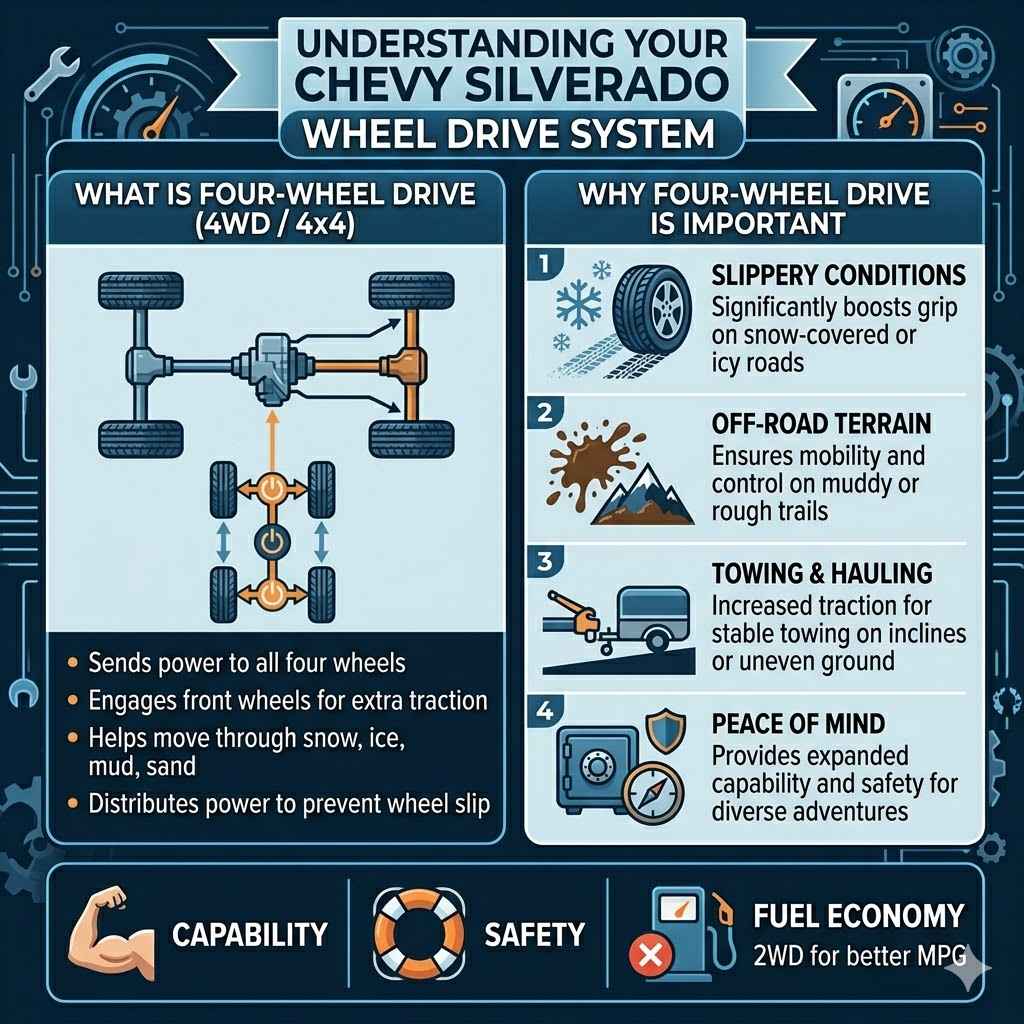
Four-wheel drive, often called 4WD or 4×4, means your truck can send power to all four wheels at once. Most of the time, your Silverado runs in two-wheel drive, usually powering only the rear wheels. This is great for everyday driving on paved roads because it saves fuel. When you switch to 4WD, the truck engages the front wheels as well. This gives you much better traction and control when the road gets slippery or rough.
Four-wheel drive systems are designed to help your vehicle move through challenging terrain. This includes things like snow, ice, mud, sand, or steep inclines. By distributing power to all four tires, it prevents wheels from spinning freely. This makes it easier to get moving and maintain control when normal two-wheel drive wouldn’t be enough. It’s a key feature for many truck owners who need their vehicle to perform in tough situations.
Why Four-Wheel Drive Is Important
Having four-wheel drive on your Chevy Silverado is important for safety and capability. It significantly boosts your truck’s ability to handle slippery surfaces. Think about driving in a snowstorm or on a muddy trail. Without 4WD, your rear wheels might spin, causing you to lose control. With 4WD engaged, power goes to all four wheels, helping you grip the road or terrain better. This can prevent accidents and help you get to your destination safely.
It also helps when you need to tow heavy loads or haul significant weight. Increased traction from 4WD means your truck can manage these tasks with more stability. This is especially true when starting from a stop on an incline or in less-than-ideal conditions. Many truck owners rely on 4WD for work or recreational activities that take them off the beaten path. It provides peace of mind and expands the types of adventures you can take.
Chevy Silverado Wheel Drive Switch Explained Modes
Let’s get into the specifics of the different modes you’ll find on your Chevy Silverado’s wheel drive selector. Knowing what each setting does is crucial for using your truck properly. We’ll explain each mode in detail so you can confidently choose the right one for your driving situation. This part is key to the Chevy Silverado Wheel Drive Switch Explained.
Auto Mode
Auto mode is a very convenient setting for many drivers. In this mode, your truck’s computer decides when to engage four-wheel drive. It primarily runs in two-wheel drive, but if it senses any slippage from the rear wheels, it will automatically send power to the front wheels. This happens seamlessly and quickly, so you might not even notice it’s happening. It’s like having an extra set of eyes and hands helping you maintain traction.
This mode is perfect for those days when the weather can change unexpectedly, or when you drive through mixed conditions. You might start your day on dry pavement and then encounter patches of wet leaves, light snow, or gravel. Auto mode will handle these transitions without you having to do anything. It offers a great balance between fuel efficiency and readiness for changing road surfaces.
2H Mode
The 2H mode, or Two-Wheel Drive High, is your Silverado’s standard driving mode. In this setting, power is sent only to the rear wheels. This is what your truck uses most of the time on dry, paved roads. It’s the most fuel-efficient setting because fewer parts are working, and there’s less friction. You’ll use 2H for your daily commute, highway driving, and any situation where you don’t need extra traction.
Using 2H on dry pavement is important for tire wear. When you use 4WD on dry surfaces, it can cause the tires to wear unevenly. This is because the front and rear wheels are turning at different rates, and the drivetrain is working harder than it needs to. So, always remember to switch back to 2H when you’re on good roads to save your tires and improve gas mileage.
4H Mode
The 4H mode, or Four-Wheel Drive High, is a critical setting for tackling challenging conditions. When you engage 4H, power is sent to all four wheels. This provides much better traction than 2H. It’s ideal for driving on snow, ice, sand, gravel, or slippery wet roads. This mode locks the front and rear driveshafts together, meaning they turn at the same speed. This ensures maximum grip when you need it most.
However, it is important to note that 4H is not meant for dry, paved surfaces. Driving in 4H on dry pavement can cause damage to your truck’s drivetrain. This is because the wheels need to turn at slightly different speeds when you go around corners. In 4H, the system tries to force them to turn at the same speed, which puts a lot of stress on the gears and shafts. Always disengage 4H when you return to normal road conditions.
4L Mode
The 4L mode, or Four-Wheel Drive Low, is your truck’s most powerful setting. This mode also sends power to all four wheels, but it uses a lower gear ratio. This means your engine will turn faster while the wheels turn slower, providing significantly more torque. Torque is that pulling or twisting power that helps you get moving from a standstill or climb steep hills. You’ll use 4L for very demanding situations like crawling over rocks, pulling a stuck vehicle out, or navigating extremely steep or slippery inclines.
Because 4L uses a very low gear, it’s not suitable for high speeds. You should only use 4L at very low speeds, typically under 10-15 miles per hour. Trying to drive fast in 4L can damage your drivetrain and is unsafe. It’s a specialized mode for maximum control and power when you absolutely need it. Always remember to shift back to 4H or 2H once you are out of the difficult terrain.
How to Operate Your Silverado’s Wheel Drive Switch
Knowing how to switch between these modes is essential for proper operation. This guide will walk you through the steps of engaging and disengaging 4WD on your Chevy Silverado. Following these simple steps will help you use your truck’s capabilities safely and effectively. This is a key part of the Chevy Silverado Wheel Drive Switch Explained.
Shifting Procedures
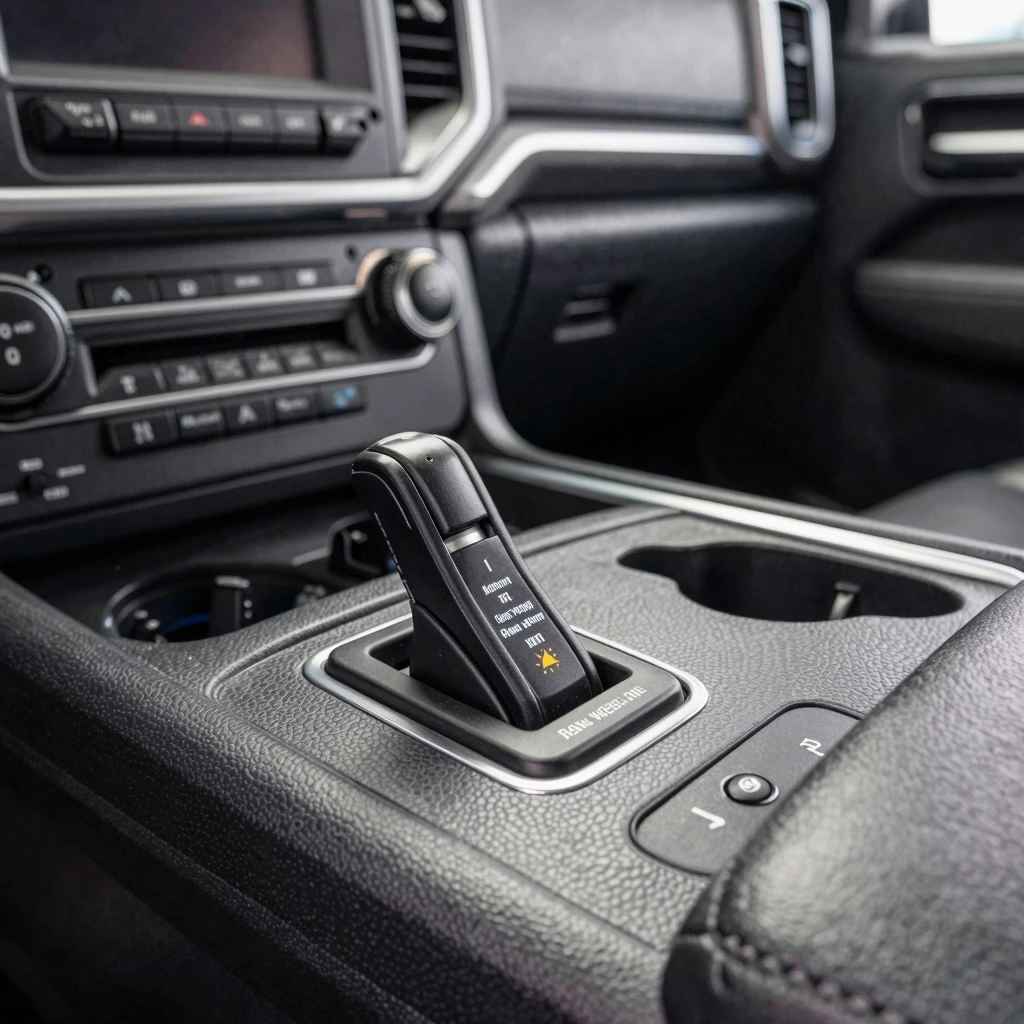
Most Chevy Silverado models use a rotary dial or buttons on the dashboard to control the 4WD system. To shift between modes, you typically need to follow specific procedures to avoid damaging the system. For example, to engage 4H from 2H, you usually need to be stopped or moving very slowly. For some systems, you might need to be in neutral with your foot on the brake. For 4L, you almost always need to be completely stopped.
Always consult your owner’s manual for the exact shifting procedures for your specific Silverado model. Different years and trim levels might have slightly different requirements. Generally, shifting into 4H is straightforward, but shifting into 4L requires a complete stop. Disengaging 4WD is usually as simple as turning the dial or pressing the button back to 2H.
When to Use Each Mode
Deciding which mode to use depends entirely on the driving conditions. For everyday driving on dry pavement, always use 2H. This saves fuel and reduces wear on your tires and drivetrain. If you encounter light snow, ice, or gravel, and the conditions are not severe, Auto mode is a great option. It provides extra traction when needed without you having to think about it.
For heavier snow, ice, mud, or sand, switch to 4H. This mode gives you robust traction for slippery or loose surfaces at normal driving speeds. When you’re facing extreme off-road challenges, steep inclines, or need maximum pulling power at very low speeds, use 4L. This is for the toughest situations. Always remember to shift back to 2H or Auto when you return to normal driving conditions.
Common Mistakes to Avoid
One of the most common mistakes is leaving your truck in 4H or 4L on dry, paved roads. This can cause serious damage to your drivetrain components, leading to expensive repairs. Another mistake is trying to shift into 4L while driving at speed. Always come to a complete stop before engaging 4L. Some drivers also forget to check their owner’s manual, leading to confusion about the correct shifting procedures.
Another error is not understanding the difference between 4H and 4L. Using 4L when 4H would suffice can be less fuel-efficient and put unnecessary wear on components. Conversely, using 4H when 4L is needed might not provide enough torque, potentially leaving you stuck. Pay attention to the road and conditions to make the right choice.
Troubleshooting Common 4WD Issues
Even with the best systems, sometimes things don’t work as expected. This section will help you understand some common problems you might encounter with your Chevy Silverado’s 4WD system and how to address them. Knowing these common issues can save you time and money. It’s part of a complete Chevy Silverado Wheel Drive Switch Explained.
Indicator Lights and Messages
Your Silverado has indicator lights on the dashboard to show which 4WD mode is engaged. You’ll also see messages on your information display. If you see a blinking light or a message like “Service 4WD System,” it means there’s an issue. A blinking light often indicates that the system is trying to engage or disengage but can’t. A solid warning light usually means a fault has been detected.
If you get a “Service 4WD” message, it’s best to pull over when it’s safe and check your owner’s manual. It could be a simple sensor issue or something more serious. Do not try to force the system to change modes if a warning light is on. It’s usually a sign that something needs attention from a mechanic.
When 4WD Won’t Engage
There are several reasons why your 4WD might not engage. One common cause is if the vehicle is not moving or moving too fast when you try to engage a specific mode. For example, you must be stopped to engage 4L. If you’re trying to engage 4H, ensure you’re moving at a very slow speed, usually under 15 mph, and with your foot on the brake.
Another reason could be a faulty sensor or actuator. These electronic components tell the system when to engage. If they’re not working correctly, the 4WD won’t engage. Low transmission fluid levels can also sometimes prevent 4WD engagement. Always check your owner’s manual for specific troubleshooting steps or consult a qualified technician.
Slipping or Grinding Noises
If you hear slipping or grinding noises when you use 4WD, it’s a serious sign of trouble. Slipping usually means that the system isn’t getting enough traction or that the gears are not meshing properly. Grinding noises typically indicate that metal parts are rubbing together, which can happen if a component is worn or damaged. These noises often occur when you turn, especially in 4H mode on dry surfaces.
These sounds mean you should stop using 4WD immediately and have your truck inspected. Continuing to drive with these noises can lead to catastrophic damage to your transfer case, front or rear differentials, or driveshafts. A professional inspection is crucial to identify the exact cause and prevent further damage.
Benefits of Proper Maintenance
Regular maintenance is key to preventing most 4WD issues. This includes checking and changing your transfer case fluid and differential fluids according to your owner’s manual’s schedule. These fluids lubricate the moving parts and keep them from overheating or wearing down. Dirty or low fluid levels are a common cause of 4WD problems.
Also, ensure that any tires you replace are of the same size and type on all four wheels. Mismatched tires can cause the 4WD system to bind up and suffer damage, especially in 4H and 4L modes. Following the recommended maintenance schedule will help ensure your 4WD system performs reliably for years to come.
Chevy Silverado Wheel Drive Switch Explained Beyond Basic Use
Once you’ve mastered the basics of the Chevy Silverado Wheel Drive Switch Explained, you can explore how this system enhances your driving experience in various situations. This section touches on how 4WD can improve safety and capability beyond just getting unstuck.
Off-Road Adventures
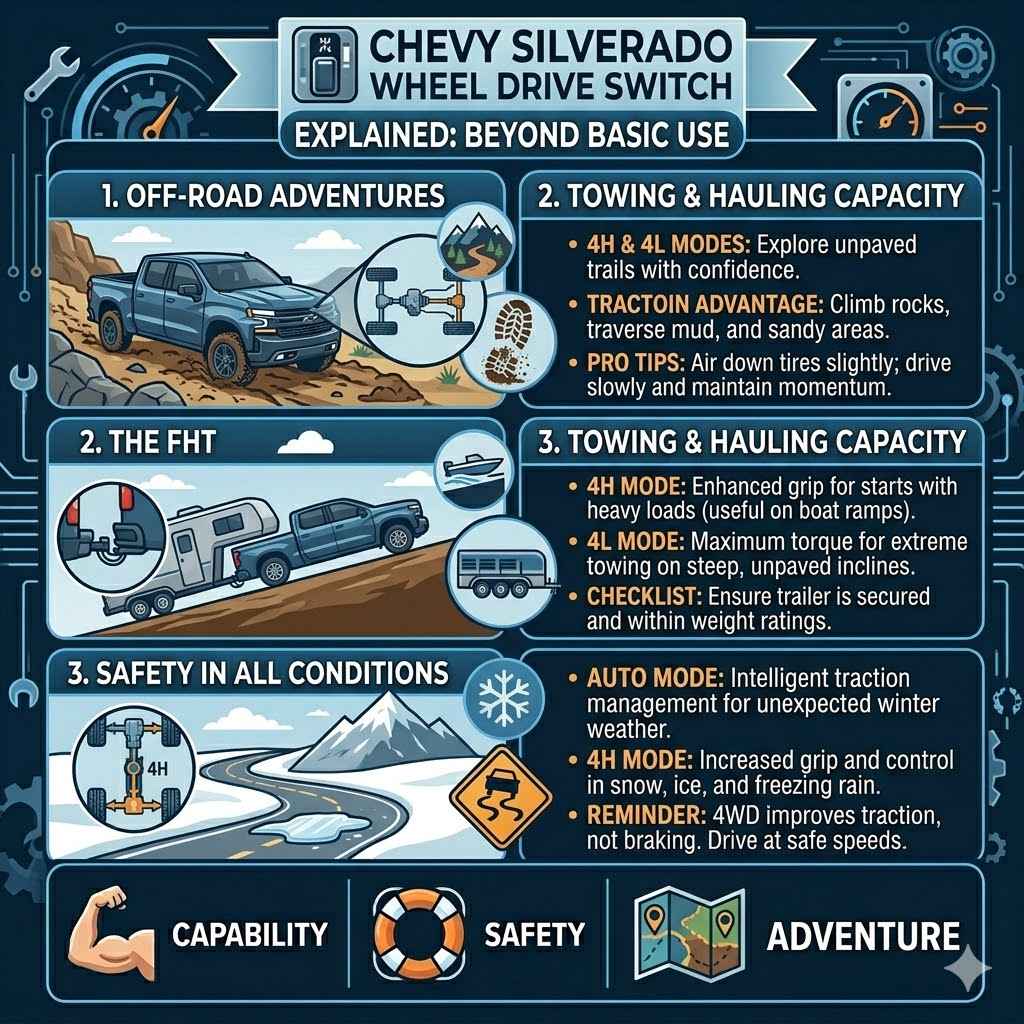
Your Chevy Silverado is built for more than just city streets. The 4WD system, especially in 4H and 4L modes, allows you to explore off-road trails with confidence. Whether you’re heading to a campsite, a fishing spot, or just want to enjoy some scenic routes, 4WD provides the necessary traction. It helps you climb over rocks, navigate muddy paths, and traverse sandy areas that would stop a two-wheel-drive vehicle in its tracks.
When venturing off-road, remember to air down your tires slightly. This increases the tire’s contact patch with the ground, providing even more grip. Also, drive slowly and steadily, using momentum wisely. Always be aware of your surroundings, looking for potential hazards like sharp rocks or deep ruts.
Towing and Hauling Capacity
Towing a trailer or hauling a heavy load can be challenging, especially on inclines or slippery surfaces. Your Silverado’s 4WD system significantly enhances its towing and hauling capabilities. In 4H mode, you get better grip when starting from a stop with a heavy load. This is particularly useful if you’re backing a trailer into a tight spot or need to pull away on a wet boat ramp.
For extreme towing situations, like pulling a heavy trailer up a steep, unpaved incline, 4L can be invaluable. It provides the maximum torque needed to move heavy loads without excessive wheel slip. Always ensure your trailer is properly loaded and secured, and that your Silverado is rated for the weight you are towing.
Safety in All Conditions
The most significant benefit of understanding your Silverado’s 4WD system is enhanced safety. Even if you don’t plan on going off-roading, 4WD can be a lifesaver in unexpected winter weather. Driving in snow, ice, or freezing rain can be dangerous. Having the ability to switch to 4H or rely on Auto mode can make the difference between staying in control and sliding off the road.
Remember that 4WD provides better traction, but it does not improve your braking or steering. Your tires are still the only contact with the road. So, even in 4WD, you must drive at a safe speed and maintain a good following distance. Always be prepared for changing conditions and use your 4WD system wisely.
Frequently Asked Questions
Question: What is the easiest way to know if my Silverado is in 4WD
Answer: Your Chevy Silverado will have a dashboard indicator light that illuminates when 4WD is engaged. You will typically see a symbol showing a vehicle with all four wheels highlighted, or it will state “4H” or “4L”.
Question: Can I leave my Silverado in Auto mode all the time
Answer: Yes, Auto mode is designed for everyday driving and can be left engaged most of the time. It automatically switches between 2WD and 4WD as needed, balancing efficiency and traction.
Question: Does using 4WD use more gas
Answer: Yes, generally using 4WD modes (4H and 4L) will consume more fuel than 2H because more parts of the drivetrain are engaged and working.
Question: What happens if I forget to switch back to 2H from 4H
Answer: Driving in 4H on dry pavement can cause premature wear on your tires and drivetrain components, such as the transfer case and axles, due to the differential in wheel speeds.
Question: Is it safe to switch from 2H to 4H while driving
Answer: Most Chevy Silverado models allow you to shift from 2H to 4H while driving at speeds up to about 15 mph. For 4L, you must be stopped.
Summary
Understanding your Chevy Silverado’s wheel drive switch is crucial for safe and effective driving. We’ve explained the differences between 2H, Auto, 4H, and 4L modes. Knowing when to use each setting helps maximize traction, conserve fuel, and protect your truck’s drivetrain.
Always follow the correct shifting procedures and refer to your owner’s manual for specific details. Enjoy your Silverado’s capabilities with confidence.