Best Car A/C Cleaner For Fresh Air Fast
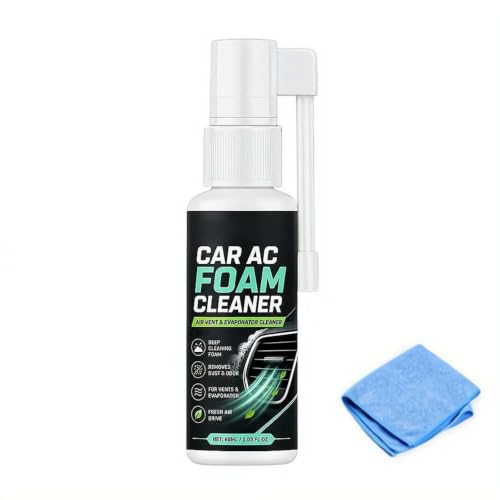
The best car A/C cleaner matches the odor source. Use a cabin spray for surface smells, a vent cleaner for dust and mildew in ducts, and an evaporator foam cleaner for stubborn musty odor. Pick the wrong one, and you waste money while the smell returns fast or stays trapped in the HVAC system. This guide shows how to identify the source fast and choose the right cleaner without guessing.
Quick comparison
| Product | Badge | Best for | Price | ||
|---|---|---|---|---|---|
 |
nextzett Klima Cleaner Pro Automotive AC Odor Eliminatornextzett | Our pick | 10 fl oz · odor eliminator · 2-foot hose | $18.95
Price as of 6 Nov 2026
|
View |
 |
Smilyeez Listing for BG Frigi-Fresh Automotive AirSmilyeez | Pair with it | 5.5 oz · odor eliminator · 6 cans | $99.95
Price as of 6 Nov 2026
|
View |
The right fix depends on where the smell starts, not how strong the fragrance is. If the odor starts in the evaporator or drain path, a spray may only cover it for a short time.
How we chose
We compared manufacturer specs, listing details, and published buyer feedback, then matched each product to a specific odor source. The main criteria were evaporator cleaning, vent and duct use, filtration type, fitment limits, and whether the product removes odor at the source or only masks it.
Source matching matters because car cabin air quality changes for specific reasons. Smoke leaves sticky residue. Pollen rides the airflow and loads the filter. Mildew grows where moisture lingers. Stale airflow and trapped residue need different tools, and the wrong one often fixes only the symptom.
Car air quality decision table
| Problem | Right solution | Expected time to improvement | When DIY stops working |
|---|---|---|---|
| Musty startup smell | Car A/C evaporator cleaner for odor-causing buildup | Often after one cleaning cycle, with airflow improvement as residue clears | If the smell returns quickly, inspect the drain and HVAC housing |
| Smoke odor | Activated carbon cabin filter plus a portable purifier; use an odor spray only as a short-term step | Filter changes can help immediately, while purifier benefits show during driving | If smoke residue is in fabric, headliner, or ductwork, deeper cleaning is needed |
| Pollen or allergy season | Activated carbon cabin filter with pleated media, plus a purifier for breathing-zone support | Within a drive or two after filter replacement | If airflow is weak or dust returns fast, check fitment and replace the filter again sooner |
| Damp vents | Vent and duct cleaner for circulation paths | Usually right away for surface odor control | If the evaporator still smells wet or moldy, move to deep HVAC cleaning |
| Stale cabin smell | Vent cleaner, cabin filter, and occasional odor elimination spray | Minutes to a day, depending on buildup | If stale air keeps coming back, the source is likely deeper than the vents |
| Recurring odor after sprays | Evaporator cleaner and drain inspection | Longer than a spray, but more durable if the source is in the HVAC system | If repeated treatment fails, the issue may need professional HVAC service |
What causes a car A/C to smell musty?
A musty A/C smell is commonly linked to moisture and organic buildup inside the HVAC system, often around the evaporator core or in damp ducts. Smoke residue, pollen, and dirty cabin filters can add to it, but a recurring mildew smell after the A/C runs often points to the evaporator or drain path.
Evaporator buildup and drain issues
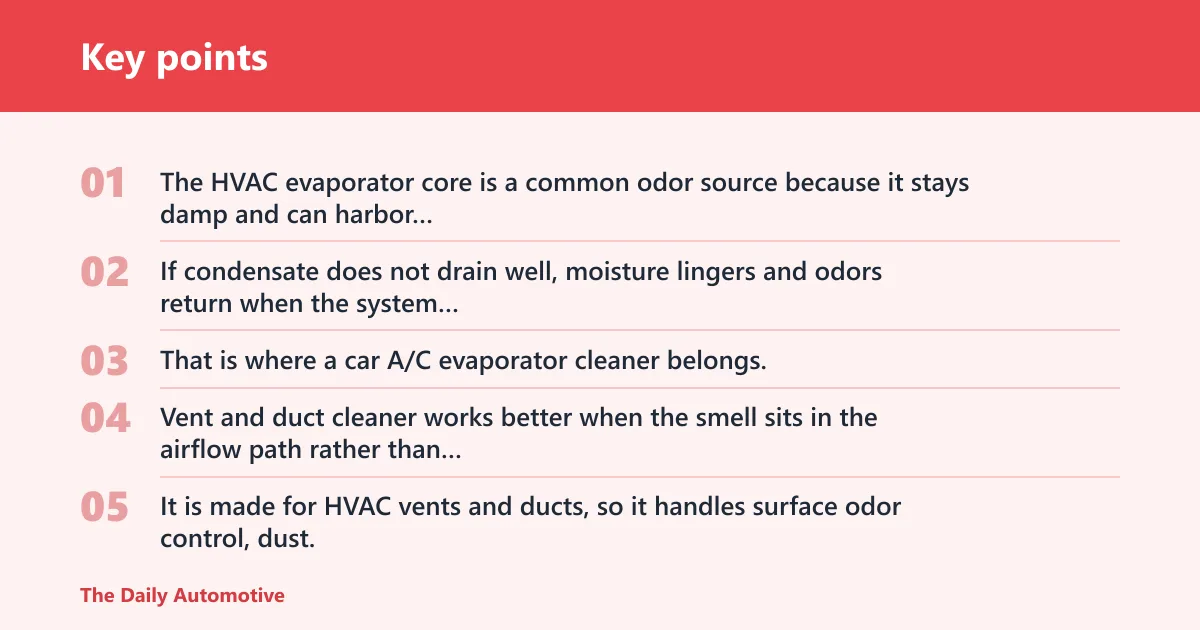
The HVAC evaporator core is a common odor source because it stays damp and can harbor organic buildup. If condensate does not drain well, moisture lingers and odors return when the system starts up. That is where a car A/C evaporator cleaner belongs, because it targets the area where the smell forms.
Damp vents and trapped residue
Vent and duct cleaner works better when the smell sits in the airflow path rather than deep in the evaporator. It is made for HVAC vents and ducts, so it handles surface odor control, dust, and stale residue on reachable circulation paths.
Smoke, pollen, and stale cabin air
Smoke and pollen affect cabin air quality in different ways. Smoke leaves sticky residue and gases. Pollen and dust move through the airflow and settle on filters and vents. Activated carbon cabin filters help with odors and gases, while HEPA, H13, or hyperHEPA filtration helps capture fine particles in the breathing zone.
Nextzett Klima Cleaner Pro: best for persistent musty odor
This is the cleaner to start with when the smell tracks back to the evaporator and keeps returning after the fan has been on for a few minutes. Based on the listing details, nextzett Klima Cleaner Pro targets the HVAC evaporator area to remove odor-causing deposits, and it includes a flexible two-foot application hose for directed use.
It fits drivers dealing with persistent mold or mildew smells, especially when a vent spray only gives short relief. The hose matters because it sends cleaner where the deposits are, rather than only treating the cabin air.
The drawback is simple: it is aimed at deep HVAC cleaning, so it is not the fastest fix for a surface odor on seats, dash plastics, or a dusty vent grille. If the source is not the evaporator, the result can be limited.
Smilyeez BG Frigi-Fresh: best for vent odors
This is the more direct fit when the smell sits in vents and ducts rather than the evaporator core. The listing says it targets odors caused by mold, mildew, stale air, and smoke, and that it is designed to spray into the air intake vent with the A/C running.
That makes it a practical DIY option for surface-level smell control in the circulation path. It is a better match for stale vents, light mildew, or smoke that has settled into the HVAC airflow, especially when you want a quick step before deeper cleaning.
The drawback is that a vent cleaner will not cure a moldy evaporator or a drainage problem. If the odor comes back after a day or two, the deeper source is still in the system.
Activated carbon cabin filter: best for odor and dust control
An activated carbon cabin filter helps when you want cleaner intake air, less dust, and fewer odors from outside traffic or the cabin itself. Puroma’s cabin filter uses activated carbon to reduce odors, smoke, and pollutants, and its pleated media blocks pollen and dust. Fitment still varies by vehicle, so you need the correct size and shape for your model.
This is the right move when the problem is stale intake air, pollen season, or odor control that depends on filtration rather than chemical cleaning. It also matters when the cabin smells worse only with the blower on, since a weak or dirty filter can make airflow feel stale.
The limit is that a filter cannot clean residue already built up on the evaporator or in ducts. If the smell returns right after replacement, the source is probably deeper than the filter slot.
Replacement timing and fitment
Replacement interval depends on pollution, dust load, and how much you drive in traffic or on unpaved roads. In heavy pollen or smoke conditions, the filter may need attention sooner than the standard service interval listed for your vehicle. Always check the manufacturer’s listing for your model.
Portable car air purifier: best for smoke and allergens
A portable car air purifier helps when you need breathing-zone support for smoke, pollen, or general cabin air quality. The Philips GoPure GP5212 is a compact 12V car air cleaner, removes more than 100 pollutants, and uses a SelectFilter Plus with a three-layer filtration system. Its HESA layer neutralizes gases such as VOCs, formaldehyde, and toluene, and it can refresh a typical car in under 10 minutes.
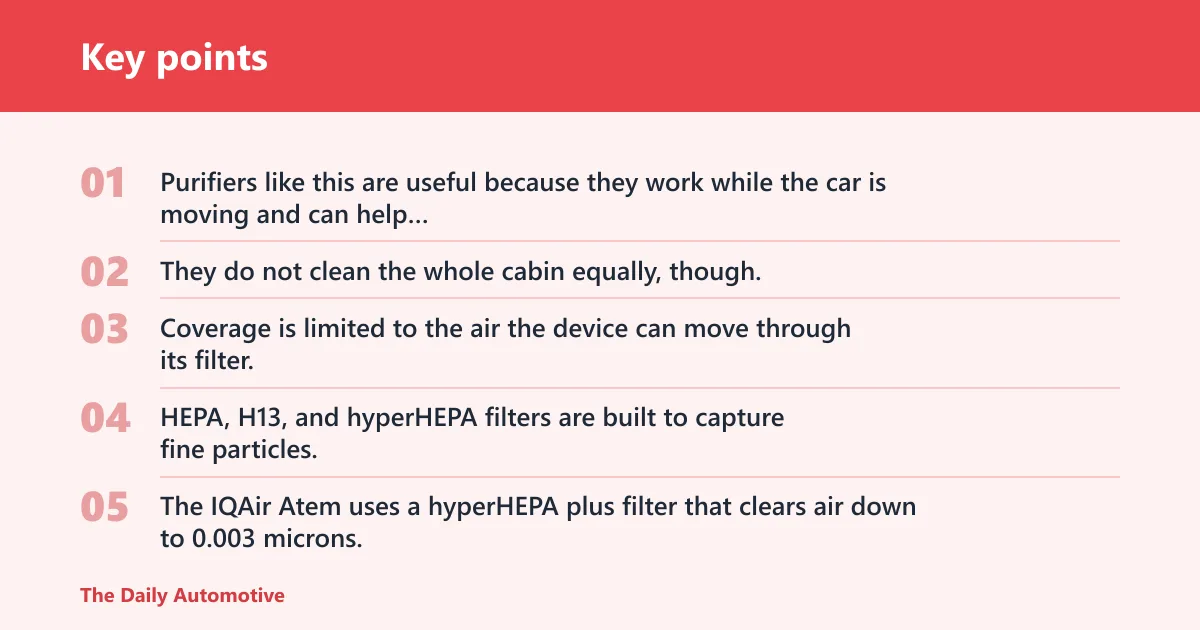
Purifiers like this are useful because they work while the car is moving and can help where a filter change alone is not enough. They do not clean the whole cabin equally, though. Coverage is limited to the air the device can move through its filter, so treat it as breathing-zone support, not a replacement for HVAC service.
HEPA, H13, and hyperHEPA filtration
HEPA, H13, and hyperHEPA filters are built to capture fine particles, which is why they matter for smoke and allergens. The IQAir Atem uses a hyperHEPA plus filter that clears air down to 0.003 microns, and its low fan speed is 20 decibels. That kind of filtration can help when particle control matters more than fragrance.
Size and airflow still matter. A stronger filter on a very small device cannot treat the whole cabin at once, and a small purifier placed in the wrong spot may not help the driver as much as expected.
12V and USB power options
Most portable car purifiers use either 12V or USB power. That makes them easy to place in the cabin, but the tradeoff is simple: a compact unit usually focuses on nearby air rather than the entire interior. If you want better smoke control, choose filtration first and fan placement second.
How do I clean my car A/C system safely?
Start with the cabin filter and vents, then move to evaporator cleaning only if the odor source points deeper into the HVAC system. Follow the vehicle manual and the product manual, keep the car in a ventilated area, and do not use a deep cleaner as a shortcut when the drain or evaporator needs inspection.
Follow the vehicle and product manual
Use the procedure listed for your vehicle, and match the product to the application path it was made for. Never use a cleaner where the manual does not allow it, and do not assume all vents, intakes, or evaporator access points are the same.
Start with the cabin filter and vents
If the cabin smells stale but not deeply moldy, replace the cabin filter first and clean the vents with a vent cleaner. That sequence handles the most common surface-level causes and keeps you from opening the HVAC system before you need to.
Escalate to evaporator cleaning only when needed
Move to an evaporator cleaner when the odor returns after ventilation, filter replacement, or a vent treatment. A common first-timer mistake is spraying fragrance into the cabin and calling it fixed. That only covers the smell while the buildup keeps sitting in the HVAC core.
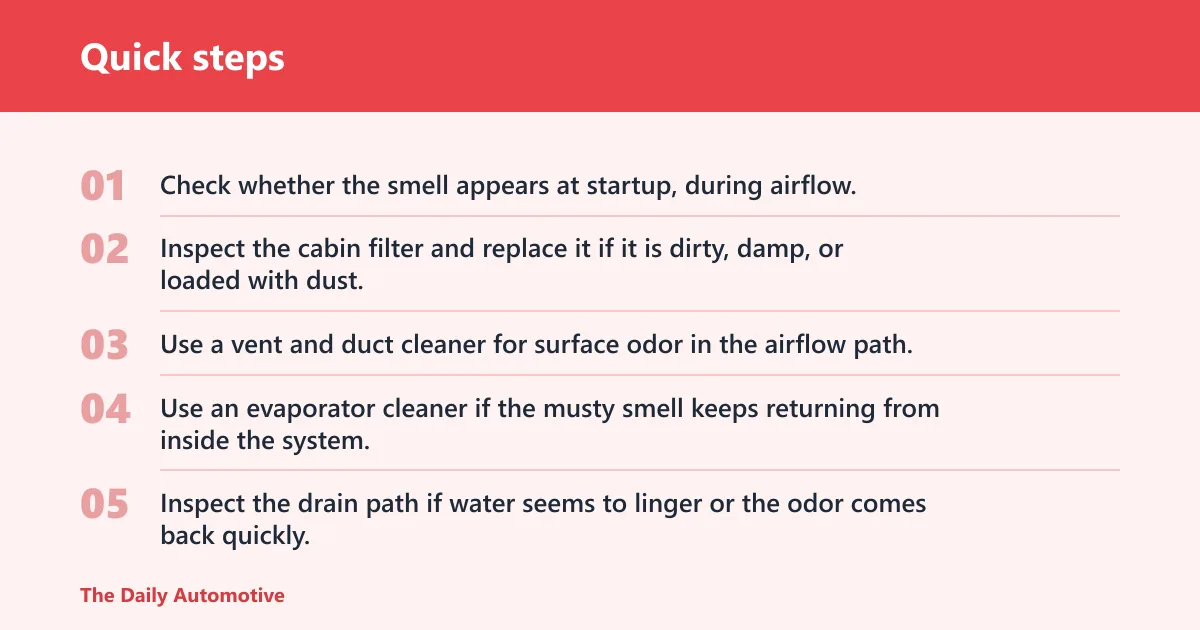
- Check whether the smell appears at startup, during airflow, or only after rain or humidity.
- Inspect the cabin filter and replace it if it is dirty, damp, or loaded with dust.
- Use a vent and duct cleaner for surface odor in the airflow path.
- Use an evaporator cleaner if the musty smell keeps returning from inside the system.
- Inspect the drain path if water seems to linger or the odor comes back quickly.
Which one should you buy?
Pick by odor source first, then by how much maintenance you want to do. If the smell is sharpest at startup and fades after a few minutes, start with an evaporator cleaner. If the odor is mostly in the vents, use a vent cleaner. If dust, pollen, or smoke is the main issue, replace the cabin filter or add a purifier.
For the fastest temporary refresh, an odor elimination spray can help, but it is supplemental rather than permanent. Armor All Car Odor Eliminator Spray is meant for fast odor control, so it makes sense for minor smells on a clean interior, not for mildew in the HVAC core.
Say your sedan smells musty for 30 seconds after the A/C starts, then clears. That pattern points to moisture or residue inside the evaporator area, so a deep cleaner is the better first purchase. Suppose your crossover smells stale only when the fan is on high and the filter is overdue; a filter swap and vent cleaning are the better fit.
Budget matters too. A vent cleaner is usually the simplest DIY step, while an evaporator cleaner is the better buy when the odor keeps coming back. A purifier is worth it when smoke or allergens are the daily issue, but it will not fix a clogged drain or a moldy core.
Frequently asked questions
What is the best car A/C cleaner for fresh air fast?
The best fast fix is the one that matches where the smell comes from. For surface odors, use a vent cleaner or odor spray. For persistent musty odor, use an evaporator cleaner. If smoke or pollen is the main problem, a cabin filter or portable purifier is usually the better first step.
How do I clean car air conditioner vents and ducts?
Use a vent and duct cleaner made for automotive HVAC paths, then run the fan so the product reaches the circulation channels. That works best for light mildew, stale air, and dust on accessible airflow surfaces. If the smell returns soon after, the evaporator may still be the real source.
How do I choose between an A/C cleaner spray and a cabin air purifier?
Choose a spray when you want short-term odor control and the smell is light or surface-level. Choose a purifier when smoke, pollen, or fine particles are the main complaint and you want cleaner breathing-zone air while driving. A spray masks or reduces odor, a purifier filters what is in the air.
What causes a car A/C to smell musty or moldy?
Musty and moldy smells usually come from moisture on the evaporator core, damp ducts, or a clogged drain path. Dirty cabin filters, smoke residue, and trapped organic buildup can add to the problem. If the odor is strongest when the A/C first starts, the evaporator is often the first place to inspect.
How often should I clean the car cabin air filter?
There is no single interval for every vehicle, because replacement depends on pollution, dust, pollen, and driving conditions. In heavy smoke or allergy season, the filter may need replacement sooner. If airflow weakens or odors return quickly, check the filter before buying a stronger cleaner.
Does an evaporator cleaner work better than a vent cleaner?
Yes, when the odor source is inside the HVAC core or drain path. A vent cleaner is better for surface-level odor control in the ducts and air passages. If the smell keeps returning after a vent treatment, the evaporator cleaner is usually the more direct fix.
What should I use for smoke, mildew, or stale A/C smells?
For smoke, start with activated carbon filtration and consider a purifier with HEPA, H13, or hyperHEPA filtration. For mildew, use an evaporator cleaner if the smell is persistent and a vent cleaner if it is limited to ducts. For stale A/C smells, a cabin filter swap plus vent cleaning is often the fastest path.
What is the best car air freshener?
The best car air freshener is the one that fits the problem, not just the scent. If you want a quick cabin reset, an odor elimination spray works for minor smells. If the odor source is deeper, especially in the evaporator or drain path, use cleaning and filtration first or the smell will come back.
How to clean car ac
Clean car A/C by checking the filter, cleaning the vents, and then treating the evaporator if the odor remains. Keep the work aligned with the vehicle manual, and watch for signs of a clogged drain or lingering moisture. If airflow improves but the smell does not, the source is still inside the system.
Products related to this article
Sponsored / affiliate links. As an Amazon Associate I earn from qualifying purchases. I may earn additional commission from eligible campaigns.