Clay Cloth for Cars: What It Is and How to Use It
A clay cloth for cars is a microfiber towel infused with a fine synthetic clay compound that lifts bonded contaminants, like overspray, rail dust, and tree sap residue, off your paint without the scratching risk of a traditional clay bar.
Even a car that looks clean right after a wash can still feel rough or gritty when you run a hand over the hood. That texture is usually bonded contamination sitting on top of the clear coat, not dirt a sponge or wash mitt can lift off. A clay cloth (also sold as a “clay towel”) is built to solve exactly that problem, and it does it faster and with less mess than a block of traditional detailing clay.
What Is a Clay Cloth for Cars?
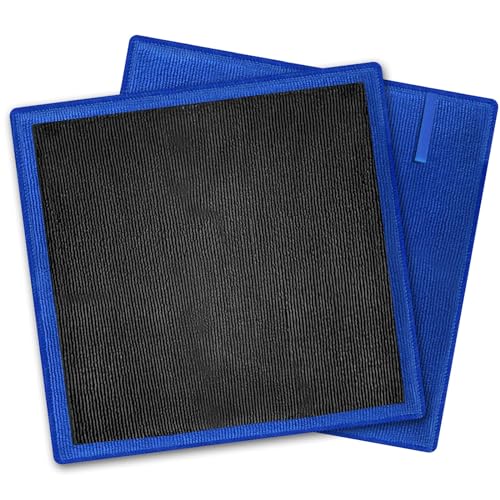
OUR PICK: CLAY TOWEL 2-PACK
 |
TOLDATLI Clay Towel 2-Pack – $17.99 A fine-grade microfiber clay towel that pulls bonded grime off your paint without the kneading and folding a traditional clay bar requires.
|
A clay cloth is a two-layer microfiber towel: one side is a normal soft microfiber weave, and the other is coated with a thin layer of synthetic detailing clay bonded directly into the fabric. When you wipe that clay-coated side across wet, lubricated paint, the clay grabs onto contaminants that are physically stuck to the clear coat, things like paint overspray, industrial fallout, brake dust film, and dried tree sap, and pulls them away instead of just pushing them around.
It is functionally the same decontamination process as a traditional clay bar, just built into a flat towel instead of a hand-molded lump of clay. That makes it easier to grip, easier to fold to a clean section, and easier to store between uses.
Clay Towel vs. Clay Bar: What Is the Real Difference?
Both tools use the same synthetic clay technology and both require a lubricant to work safely. The difference is in the format, and that changes how each one fits into your routine.
| What You Care About | Clay Towel | Clay Bar |
|---|---|---|
| Speed on a full car | Faster, larger surface contacts paint at once | Slower, smaller contact patch |
| Learning curve | Easy to grip and control from the first use | Takes practice to knead and fold correctly |
| Reusability | Rinses clean with water, reusable many times | Must be kneaded/folded to a clean face, eventually discarded |
| Risk if dropped | Rinse and keep using | Must be discarded if it touches the ground |
| Best for | Light to moderate contamination, maintenance claying | Heavy contamination, first-time deep decontamination |
If your car has years of built-up rail dust or heavy industrial fallout, a dedicated clay bar kit will still cut through more material per pass. For routine maintenance claying every few months, a clay towel gets the job done with far less effort.
How to Use a Clay Towel on Your Car
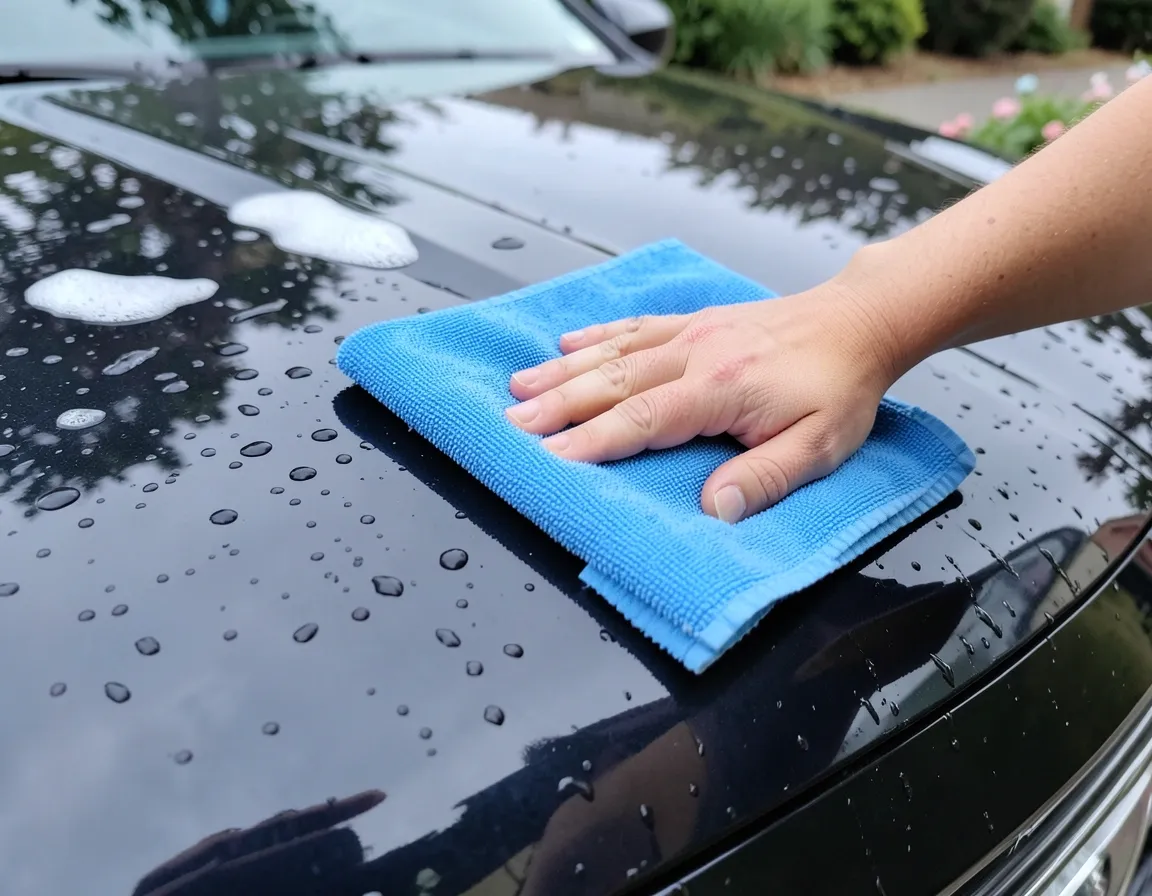
- Wash and rinse the car first. Claying over dirt or grit will grind that grit into the paint.
- Spray a generous amount of quick detailer or a diluted car wash solution onto a small section, about two feet square. This lubricant is not optional; using a clay towel dry can mar the clear coat.
- Fold the towel so the clay-coated side is exposed, then wipe it back and forth in straight lines across the wet section, using light pressure.
- Fold to a clean part of the towel once a section feels smooth, then move to the next section.
- Wipe the section dry with a separate clean microfiber towel before moving on, so the lubricant does not dry into water spots.
- Run a plastic sandwich bag over the paint before and after claying a panel. If it still catches or drags, that section needs another pass.
When You Still Need a Full Clay Bar Kit
A clay towel is not the right tool for every situation. If a car has not been decontaminated in a year or more, sits under trees that drop heavy sap, or was parked near a rail line or industrial site, the contamination layer can be thick enough that a towel loses its grab after a panel or two. In that case, a full clay bar kit with a fresh lubricant and an iron remover or tar remover pre-treatment will cut through more material before you switch to a towel for maintenance claying afterward.
How to Clean and Store a Clay Towel
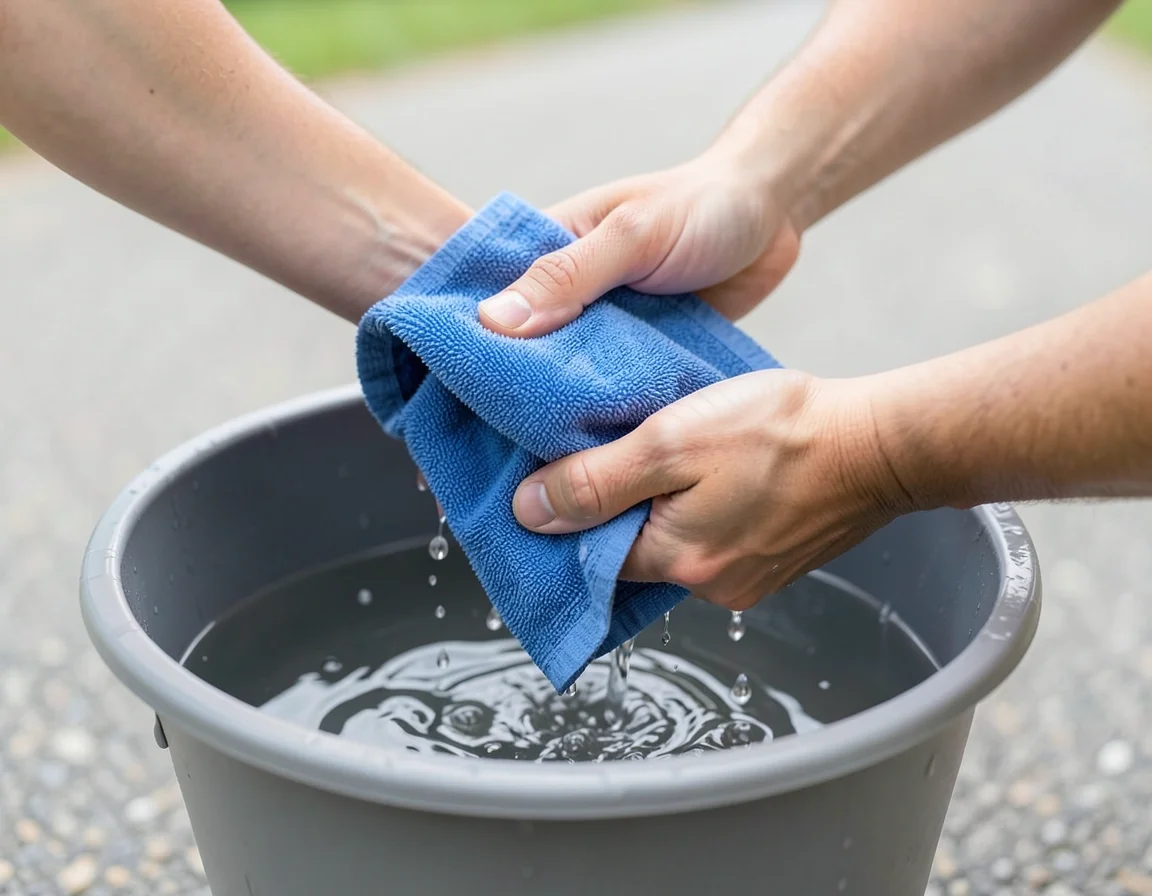
Rinse the towel under running water right after each use until the water runs clear, then let it air dry fully before folding it away. Do not machine wash a clay towel with fabric softener, and do not toss it in with regular laundry, since lint and fibers from other fabrics can embed in the clay coating and scratch paint on the next use. Once the clay side feels hard, cracked, or stays gritty no matter how much you rinse it, it has picked up more than it can shed and it is time to replace it.
Frequently Asked Questions
What Is a Clay Cloth for Cars?
A clay cloth for cars is a microfiber towel with a synthetic clay compound bonded into one side. It works like a traditional clay bar, lifting bonded contaminants such as overspray, rail dust, and tree sap off the clear coat, but in a flat towel format that is easier to grip and reuse.
How Does a Clay Towel Compare to a Clay Bar?
Both use the same clay technology and both need a lubricant. A clay towel covers more surface per pass and rinses clean for reuse, making it faster for routine maintenance claying. A clay bar has a smaller contact patch but can be kneaded to a fully fresh face, which makes it better suited to a heavily contaminated car getting decontaminated for the first time.
Can a Clay Towel Scratch Car Paint?
Used correctly, a clay towel is safe on clear coat. The risk comes from skipping the lubricant or using the towel on dry paint, which lets trapped grit drag across the surface. Always keep the section wet with a detailing spray or diluted soap solution while claying, and switch to a clean part of the towel as soon as it stops gliding smoothly.
How Often Should You Clay Your Car?
Most vehicles benefit from claying every three to six months. Cars parked near industrial areas, railroads, or under trees that drop sap should be clayed closer to every two to three months, since bonded contaminants build up faster in those conditions.
Can You Clean and Reuse a Clay Towel?
Yes. Rinse the clay side under running water right after each use until the water runs clear, then air dry it before storing. A clay towel handled this way can typically be reused dozens of times before it needs replacing.
Do You Need a Lubricant With a Clay Towel?
Yes, always. A dedicated quick detailer spray or a heavily diluted car wash soap solution keeps the surface slick enough for the towel to glide instead of drag. Claying on a dry or under-lubricated panel is the most common cause of clay-related marring.
The Bottom Line
A clay cloth gives you most of the benefit of a traditional clay bar with less setup and less mess. For routine maintenance claying every few months, it is the faster, easier choice; for a car with heavy, long-neglected contamination, start with a full clay bar kit and switch to a towel to keep the paint smooth between deeper treatments.
Products related to this article
Sponsored / affiliate links. As an Amazon Associate I earn from qualifying purchases. I may earn additional commission from eligible campaigns.