Clutch Fans for Cars: How They Work, Bad Signs & Best Picks
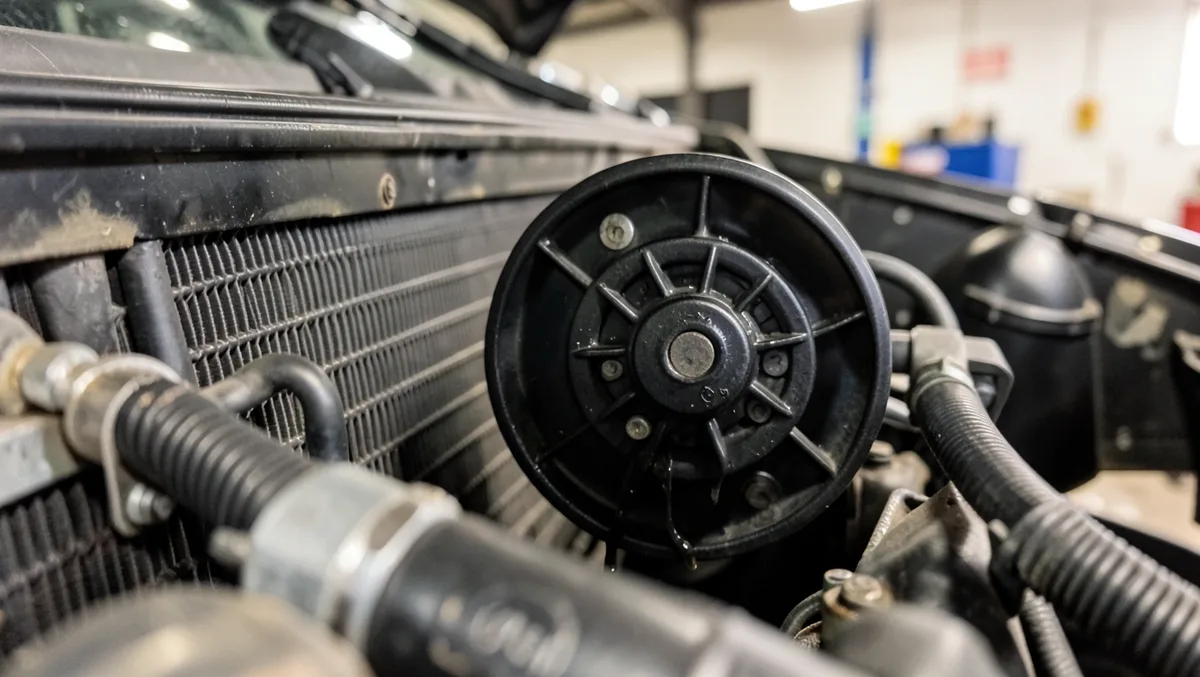
A clutch fan is a thermostatically-controlled cooling fan that spins fast only when the engine actually needs the airflow, then freewheels once it cools back down — unlike a fixed-speed fan that runs at one speed all the time.
That design saves engine power and cuts down on fan noise, but it also means a clutch fan can fail in two different ways: stuck disengaged (the engine overheats because the fan never speeds up) or stuck engaged (the fan roars constantly and never slows down). Jeep Cherokee, Wrangler, Comanche, and Wagoneer owners from 1987-2004, along with Ford Crown Victoria, Lincoln Town Car, and Mercury Grand Marquis owners from 1992-2006 with the 4.6L V8, are two of the most common groups searching for a direct OEM-spec replacement. Below is how the clutch actually works, how to test yours in under a minute, and three in-stock replacement parts matched to those exact vehicles.
How a Clutch Fan Works: Thermal vs. Non-Thermal
Most clutch fans built since the 1980s are thermal clutches: a bimetallic coil spring sits on the front face of the unit, and as hot air blowing back off the radiator heats that spring, it twists open internal valve ports that let silicone fluid flow between the clutch’s inner and outer chambers. That fluid coupling is what makes the fan spin at close to engine speed. Once the engine cools, the spring relaxes, the ports close, and the fan slows to a slow idle-spin that uses almost no engine power.
Non-thermal (torque-limiting) clutches skip the thermostatic spring entirely and rely on centrifugal pressure between the housing and the hydraulic coupling instead, so they respond to engine RPM rather than underhood temperature. They’re cheaper and tend to outlast a thermal unit, but they’re strictly RPM-sensitive and a poor fit for hot climates or heavy towing, since they can’t ramp up airflow just because the engine is running hot at a low idle. If your vehicle came with a thermal clutch from the factory, stick with a thermal replacement rather than downgrading to save a few dollars.
A worn serpentine belt or a slipping belt tensioner puts extra load on whatever clutch fan you install, so it’s worth checking belt condition at the same time — our serpentine belt brand comparison covers which brands hold up best under that kind of underhood heat.
Signs Your Fan Clutch Is Failing (And a 30-Second DIY Test)
The clearest sign of a bad fan clutch is engine overheating that shows up specifically at idle or in stop-and-go traffic, then improves once you’re moving and ram air is hitting the radiator directly. If your temperature gauge climbs whenever you’re sitting at a light but drops back down as soon as you start rolling, the clutch likely isn’t engaging the fan when it should — a symptom we cover in more depth in why your car heats up when idling. A clutch stuck in the opposite failure mode does the reverse: the fan roars at full volume constantly, even on a cold start or a highway cruise, because the coupling never disengages.
You can check yours in under a minute with the engine off and fully cooled: reach in and try spinning the fan blades by hand. A healthy clutch offers noticeable resistance and stops within a turn or two; a fan that spins freely for several rotations with almost no drag has a clutch that’s lost its silicone fluid, usually from a failed internal seal (oily residue on the clutch face is the giveaway). A fan that won’t turn at all, or feels gritty and seized, has failed the other way and needs replacing before it causes an overheat. A second quick check: start the engine cold and listen for the fan to roar briefly, then quiet down within a minute or two as the clutch disengages — if the roar never stops, the clutch is stuck engaged.
Professional fan clutch replacement typically runs $300–$530 once labor is included, since the radiator shroud and sometimes the fan blade itself have to come off to reach it. Doing it yourself cuts that down to the cost of the part alone — each of the three clutches below runs under $50.
A-premium Engine Cooling Fan Clutch
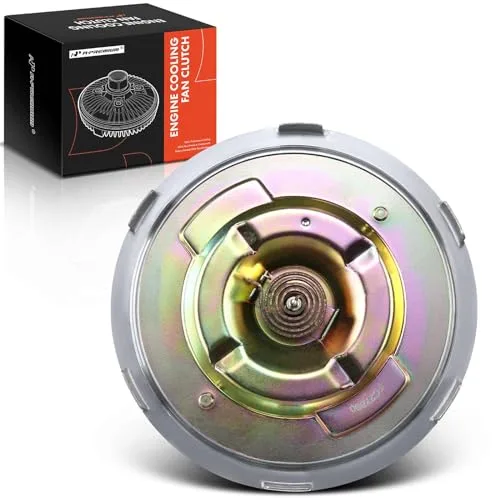
This is a direct-fit thermal clutch for older Jeep 2.4L, 2.5L, and 4.0L four- and six-cylinder engines — the Cherokee (1987–2001), Wrangler (1997–2004), Comanche (1987–1992), and Wagoneer (1987–1990). It cross-references to OEM part numbers 52003205 and 53001168, so you can confirm fitment against your old unit before ordering rather than guessing from the model year alone.
Pros:
- Cross-references directly to OEM numbers 52003205 and 53001168, so fitment is easy to verify.
- Covers four different Jeep model lines across a nearly 15-year production span.
- Made by PremiumpartsWhosale, a brand that specializes in this exact category of cooling parts.
Cons:
- Only fits the specific Jeep engines listed — won’t cross over to a later 4.0L High Output variant.
- Like most fan clutches, it sits behind the radiator shroud, so budget an hour or two for the swap rather than a five-minute bolt-on.
Because it matches the factory thermal design rather than a cheaper non-thermal substitute, this clutch still ramps the fan up during slow off-road crawling or a hot idle in traffic — exactly the conditions where an aging Jeep is most likely to run hot. Swapping it out before the old one fails completely is the more forgiving repair; waiting until the engine actually overheats risks a blown head gasket on top of the fan clutch cost.
To buy this product, click here.
Anxingo A06-26631-000 Car Fan Clutch High Temperature Solenoid Air Valve
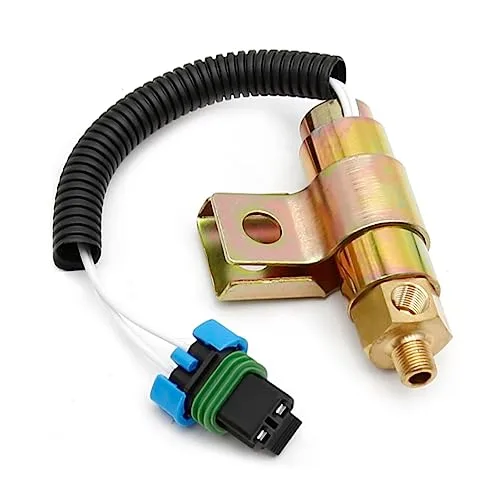
This one isn’t the fan clutch itself — it’s the high-temperature solenoid air valve that controls it on medium- and heavy-duty fan clutch systems (the kind found on many diesel pickups and commercial trucks). Anxingo lists it as a cross-reference for A06-26631-000, 740420, S-18706, F224904, and several other common OEM and aftermarket part numbers, which makes it useful for tracking down the right valve when your old one is corroded past reading its label.
Pros:
- Cross-references nine separate OEM and aftermarket part numbers, covering a wide range of medium/heavy-duty applications.
- Compact 2.0-inch housing fits the same mounting footprint as the factory valve on most applications.
- Rated for sustained high-temperature underhood service.
Cons:
- Available in gold finish only — purely cosmetic, but worth knowing before you order.
- Confirm your specific part number against the listing first; solenoid valves are less forgiving of a near-miss fit than a fan clutch itself.
A failed solenoid valve produces symptoms that look a lot like a bad fan clutch — a fan that won’t engage under load, or one that stays on constantly — because the valve is what actually routes air pressure to engage the clutch pack in these heavier-duty systems. If you’ve already ruled out the clutch itself with the spin test above and the fan still won’t behave correctly, the valve is the next place to look.
To buy this product, click here.
A-premium Engine Cooling Fan Clutch
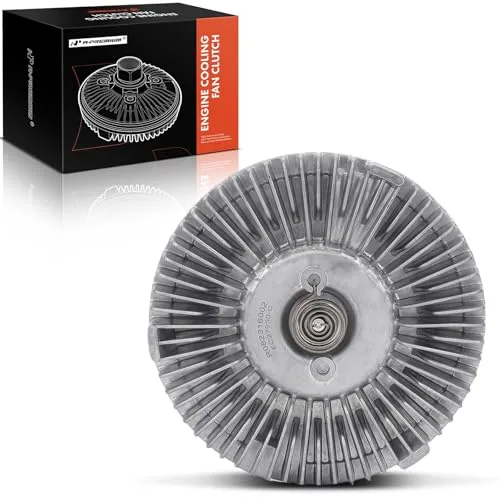
Panther-platform owners — the Ford Crown Victoria (1992–2006), Lincoln Town Car (1993–2003), and Mercury Grand Marquis (1992–2006), all with the 4.6L V8 — share this same thermal clutch across all three badges, since the platform used a common cooling system through most of its production run. It cross-references to OEM part number F6AZ8A616AA and aftermarket number 2795.
Pros:
- One part covers three different nameplates built on the shared Panther platform.
- Matches factory part F6AZ8A616AA, so fitment is a known quantity rather than a guess.
- Thermal design, not a downgraded non-thermal substitute.
Cons:
- Only fits the 4.6L V8; check your engine badge if you’re unsure which V8 your Panther-platform car has.
- Reaching the mounting bolts usually means pulling the fan shroud first — plan for a full driveway session, not a quick swap.
These full-size sedans see a lot of highway-cruiser and taxi/police-fleet duty, both of which mean long idling stretches at drive-throughs, in dispatch queues, or waiting at a scene — exactly the low-airflow conditions where a failing clutch shows itself first. Replacing it proactively once you notice the idle-overheat pattern described above is far cheaper than a tow after the temp gauge pegs on the highway.
To buy this product, click here.
Frequently Asked Questions
What Does A Fan Clutch Do In A Car?
A fan clutch regulates the engine’s cooling by controlling the fan’s speed. It engages when the engine heats up and disengages when it cools down. This improves fuel efficiency and reduces engine wear by maintaining optimal operating temperatures.
How To Know If Fan Clutch Is Bad?
With the engine off and cool, spin the fan blades by hand — a healthy clutch offers resistance and stops within a turn or two, while one that spins freely for several rotations has lost its silicone fluid. You can also start the engine cold and listen: the fan should roar briefly, then quiet down within a minute or two. Overheating that appears only at idle, or a fan that never stops roaring, are both signs the clutch has failed.
Can I Drive With A Bad Fan Clutch?
Driving with a bad fan clutch is not advisable. It can lead to engine overheating, causing severe damage. This can result in costly repairs. Always address fan clutch issues promptly to ensure vehicle safety and performance.
How Long Does A Fan Clutch Last?
A fan clutch typically lasts between 70,000 and 100,000 miles. Its lifespan depends on driving conditions and maintenance. Regular inspections can help extend its life. Replacing it when necessary ensures optimal cooling and engine performance.
Why Choose A-premium Fan Clutch For Jeep?
The A-Premium fan clutch offers reliable performance and compatibility with various Jeep models. It ensures efficient cooling, enhancing engine longevity. Its design meets OEM specifications for a perfect fit. This makes it a dependable choice for Jeep owners.
Conclusion
A clutch fan only has to work when the engine actually needs the extra airflow, which is exactly why a failed one is easy to miss until the temperature gauge starts climbing at idle. The spin test and cold-start listen test above take under a minute and will tell you which failure mode you’re dealing with before you spend a dime.
For older Jeep 2.4L/2.5L/4.0L models, the A-Premium clutch above is a direct cross-reference to OEM part numbers 52003205 and 53001168. Panther-platform owners — Crown Victoria, Town Car, and Grand Marquis 4.6L V8 — get the same coverage from the second A-Premium listing, matched to factory part F6AZ8A616AA. And if you’ve already replaced the clutch itself but the fan still isn’t behaving, the Anxingo solenoid valve is the next component worth checking on heavy-duty systems.
Regular inspections and timely replacements can prevent costly repairs down the road. Catching a failing clutch early keeps the rest of your cooling system — radiator, water pump, and belt included — from taking on extra strain, and if the temperature gauge is already creeping up before you get to it, turning the cabin heater on can buy you a few extra minutes on the way to a safe place to pull over.
Products related to this article
Sponsored / affiliate links. As an Amazon Associate I earn from qualifying purchases. I may earn additional commission from eligible campaigns.