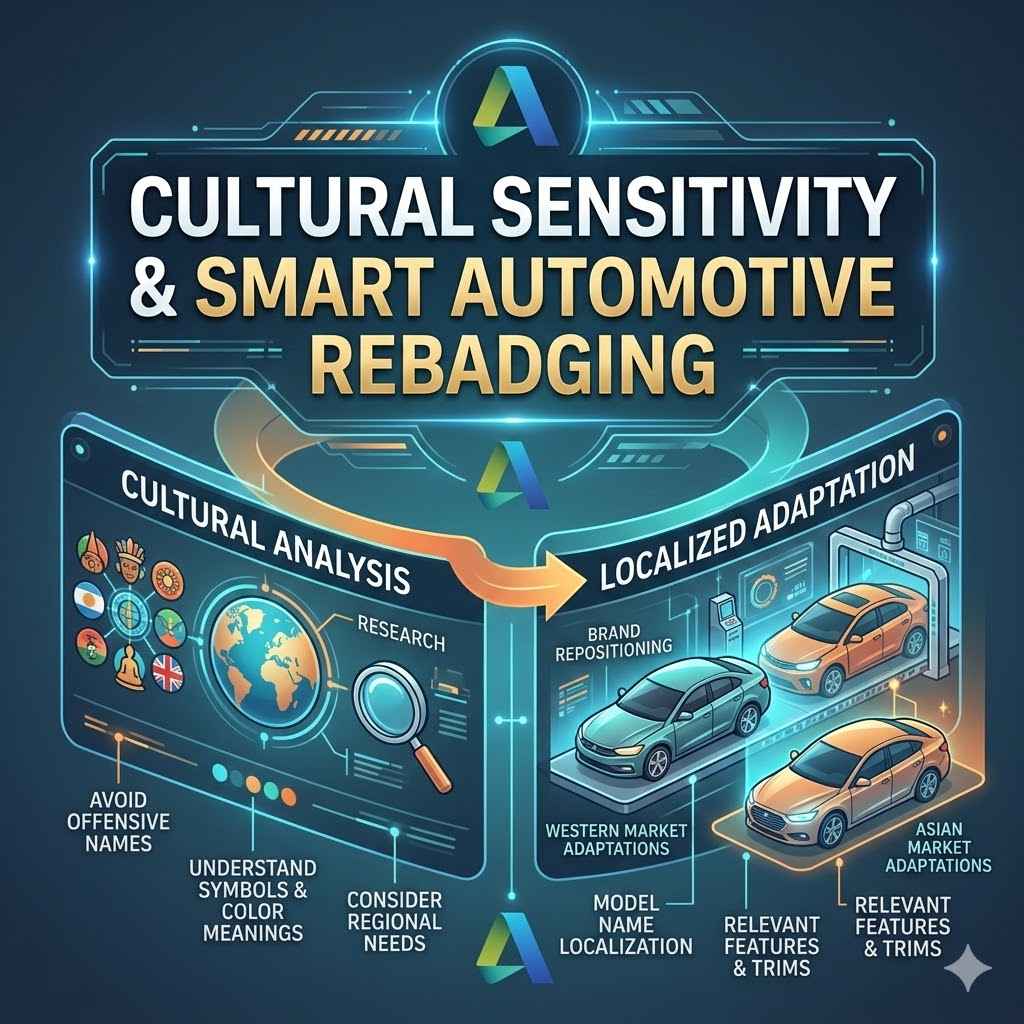
Cultural Sensitivity & Smart Automotive Rebadging
Getting Cultural Sensitivity & Smart Automotive Rebadging right can feel tricky at first. Many people wonder how car companies decide to change a car’s name or look for different places. It’s like learning a new game where the rules aren’t always clear.
This guide will make it easy. We will walk through it step-by-step so you can see how it works. Let’s explore how cars connect with people around the world.
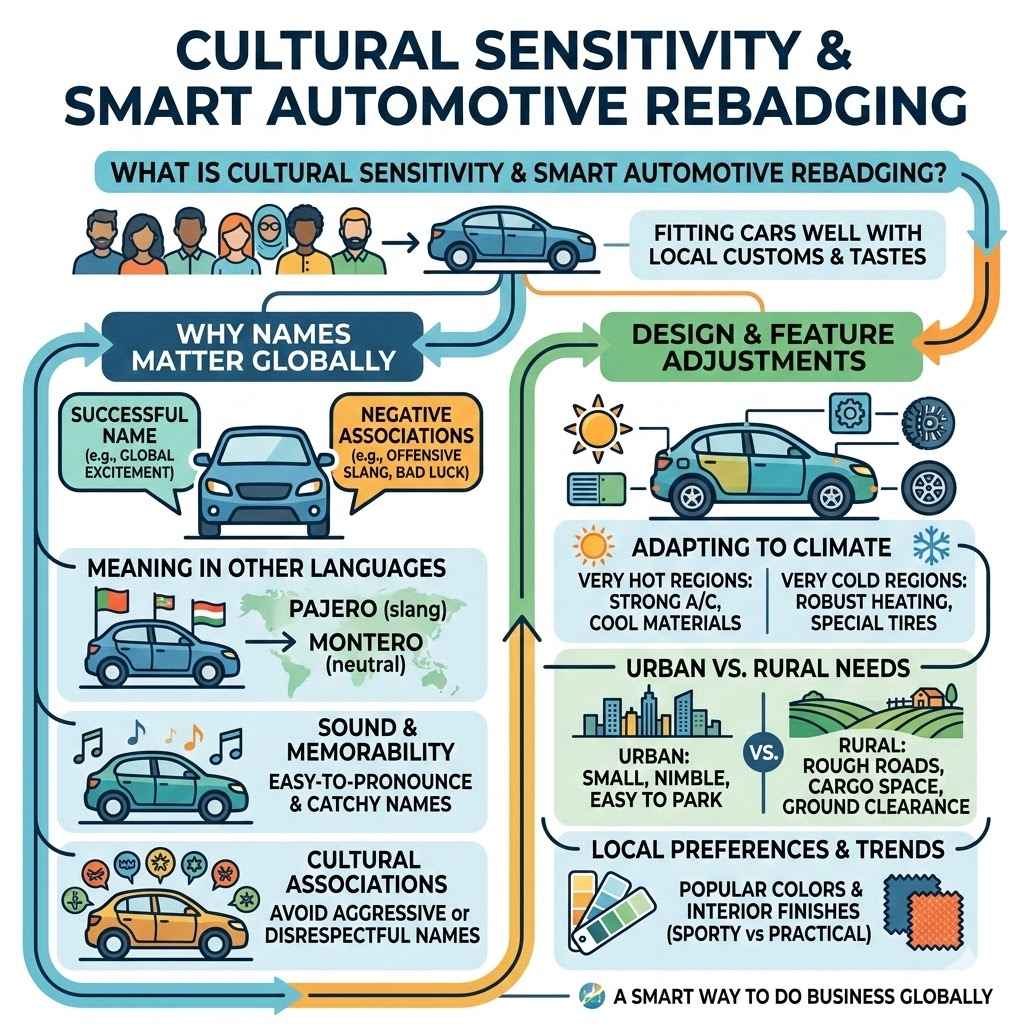
What Is Cultural Sensitivity & Smart Automotive Rebadging
Cultural sensitivity and smart automotive rebadging are about making sure cars fit well with the people who will buy them in different countries. It means looking at how a car’s name, design, or features might be seen by people from various backgrounds. Sometimes, a name that sounds good in one language might mean something funny or even bad in another.
Or, a car feature that’s popular in one place might not be needed or liked somewhere else. Companies do this to show they care about local customs and tastes. This helps them sell more cars and build good relationships with customers.
It’s a smart way to do business globally.
Why Names Matter Globally
A car’s name is like its first handshake with a new customer. If a name sounds exciting and strong in one country, it might sound silly or even offensive in another. This isn’t just about language; it’s about what words bring to mind for people.
For example, a name associated with bad luck or a negative idea will make people shy away from buying that car. Car makers spend a lot of time and money researching names.
They check for unintended meanings in many languages. They also look at how the name sounds when spoken aloud. Does it roll off the tongue?
Is it easy to remember? A good name helps a car become popular. A bad one can cause problems before the car even hits the showroom.
Meaning in Other Languages
A word used for a car name in English might have a completely different and unwelcome meaning in Spanish, French, or Japanese. For instance, the Mitsubishi Pajero had to be renamed the Mitsubishi Montero in Spanish-speaking markets because “pajero” is a slang term for a person who abuses themselves. This shows how vital it is to check translations carefully.
Sound and Memorability
Some names are just hard to say or remember. A catchy, easy-to-pronounce name is more likely to stick in people’s minds. Think of popular car names that are short and sound good.
They are often chosen because they are simple and impactful across different groups.
Cultural Associations
Words can carry strong feelings or ideas based on a culture’s history or beliefs. A name that sounds powerful and exciting to one group might be seen as aggressive or disrespectful by another. Companies must avoid names that could accidentally offend or alienate potential buyers by linking to unwanted historical events or social issues.
Design and Feature Adjustments
Beyond just names, car makers also change the car’s look and the features it has. What people like in a car can be very different from one place to another. Think about the weather.
In hot places, a strong air conditioning system is a must. In snowy places, cars might need features for driving in snow and ice.
The size of a car can also matter. In crowded cities, smaller, more nimble cars are often preferred. In countries with lots of space, larger vehicles might be more popular.
The way people use cars can also shape what they want. Families might need more space for children. Business people might want a car that looks more formal.
Adapting to Climate
Different climates require different car setups. Cars sold in very hot regions might have enhanced cooling systems and materials that don’t get too hot to touch. In places with extreme cold, cars need robust heating, special tires for ice and snow, and features that help start the engine in freezing temperatures.
Battery performance in electric vehicles, for example, is heavily impacted by cold weather.
Urban vs. Rural Needs
City dwellers often need cars that are easy to park and maneuver through tight streets. This often means smaller cars. People in rural areas might need vehicles that can handle rough roads, carry more cargo, or tow trailers.
The need for ground clearance and four-wheel drive can be much higher in non-urban environments.
Local Preferences and Trends
Fashion and trends play a role too. What colors are popular? What interior finishes do people prefer?
Some cultures might prefer cars that are very sporty and sleek, while others might want something more practical and understated. Car makers study these trends to make sure their cars appeal to local tastes.
Smart Automotive Rebadging Strategies
Smart automotive rebadging is a technique where a car is sold under a different brand or name in various markets, even if it’s essentially the same vehicle underneath. This isn’t just about slapping a new badge on; it involves careful planning to meet local needs and preferences. It’s a way for car manufacturers to use their existing vehicle designs more efficiently while also adapting them for different customers.
This strategy leverages shared platforms and manufacturing processes. It allows companies to reduce development costs and speed up the introduction of new models in diverse regions. The goal is to present a car that feels perfectly suited to its target audience, even if it shares its DNA with a car sold elsewhere.
Leveraging Shared Platforms
Car companies often build many different models using the same basic structure, called a platform. This is like using the same foundation to build several types of houses. It saves a lot of money and time in designing and building cars.
When a company wants to sell a car in a new country, they can take a platform they already use and build a car on it that fits the new market.
This means they don’t have to start from scratch. They can adapt the styling, features, and even the brand name to suit the local tastes. This approach allows for a wider variety of vehicles to be offered globally without the massive expense of developing entirely new cars for each market.
Cost Reduction
Developing a new car from the ground up is incredibly expensive. By using a shared platform, manufacturers can spread the cost of research, design, and engineering across many different models and markets. This makes it financially viable to offer vehicles that might otherwise be too costly to produce for smaller markets.
Faster Market Entry
When a platform is already developed and tested, introducing a new model based on it is much quicker. This allows car companies to respond faster to market demands and competitive pressures. They can bring new or adapted vehicles to customers in a shorter timeframe than if they were designing everything from scratch.
Manufacturing Efficiency
Using the same platform across multiple models simplifies the manufacturing process. Factories can be tooled to produce various vehicles on the same assembly line. This leads to better utilization of factory resources, reduced training needs for workers, and improved overall production efficiency.
Brand Perception and Market Entry
Sometimes, a car company might have a strong reputation in one part of the world but is less known in another. Rebadging a car to be sold under a different, more established brand in that region can help it gain traction. It’s like introducing a new product through a trusted store rather than trying to build a new store from scratch.
This strategy can be particularly useful when a company is expanding into new territories. It allows them to offer a familiar product under a familiar name, reducing the risk associated with launching an unknown brand. It’s a way to ease into a new market with a proven vehicle.
Building Trust with New Customers
In markets where a manufacturer’s brand isn’t well-known, launching a car under an existing, trusted local brand can significantly boost consumer confidence. Buyers are more likely to purchase a vehicle from a brand they recognize and trust, even if the underlying car is from a foreign manufacturer.
Accessing Established Dealership Networks
Established brands usually have extensive dealership and service networks. By rebadging a car, the new model can gain access to these networks. This means easier access to sales, maintenance, and spare parts for customers, which is a major factor in purchasing decisions.
Avoiding Negative Brand Associations
If a parent company has had negative experiences or perceptions in a particular market, rebadging can help distance the new vehicle from those issues. It allows the car to be presented with a fresh image, free from any historical baggage that might affect sales.
Cultural Sensitivity & Smart Automotive Rebadging in Practice
Looking at real examples helps show how Cultural Sensitivity & Smart Automotive Rebadging works in the automotive world. Car makers don’t just guess; they do a lot of research to make sure their cars are a good fit for everyone. This involves understanding local tastes, rules, and how people use cars in their daily lives.
From changing a car’s name to tweaking its features, every step is taken to make sure the car is welcomed and successful. It’s about building a connection with the driver and showing respect for their culture. Let’s see some specific ways this has happened.
Case Study The Chevrolet Trailblazer
The Chevrolet Trailblazer is an interesting example of how a single model can be adapted for different markets. In North America, the Trailblazer was originally a larger SUV. However, in other regions, like Southeast Asia and South America, Chevrolet introduced a smaller, more urban-focused version of the Trailblazer.
This smaller version was designed with different priorities in mind.
It often featured more fuel-efficient engines and a design better suited for crowded city streets. The name was kept to leverage brand recognition, but the vehicle itself was significantly altered to meet the specific needs and preferences of those local markets. This shows a smart rebadging and adaptation strategy.
Market Specific Design
The smaller Trailblazer in markets like Thailand or Brazil was designed to be more compact, making it easier to drive and park in busy urban environments. Its styling often featured a more modern and youthful appeal, resonating with the target demographic in those regions.
Fuel Efficiency Focus
Given varying fuel prices and economic conditions in different countries, the smaller Trailblazer often came with smaller, more fuel-efficient engines. This was a key consideration for many buyers who prioritized running costs.
Local Feature Integration
Chevrolet also integrated features that were particularly valued in these specific markets. This might include enhanced infotainment systems catering to local preferences or specific durability improvements for roads that are not always in perfect condition.
Case Study The Nissan Sentra vs. Sylphy
The Nissan Sentra is a compact car sold in many parts of the world. However, in some markets, most notably China and parts of Southeast Asia, a very similar car is sold under the name Nissan Sylphy. While they share the same underlying platform and many core components, the Sentra and Sylphy often have distinct styling cues and feature packages.
This rebadging strategy allows Nissan to cater to different design preferences and market demands. The Sylphy, for example, might be styled to appear more luxurious or upscale, aligning with the preferences of buyers in its target markets. The name change itself helps to create a distinct identity for the vehicle in those regions.
Differentiating Design Elements
Visually, the Sylphy often features a different front grille, headlights, and taillights compared to the Sentra. These changes are made to appeal to specific aesthetic tastes prevalent in markets like China, where a more premium or elegant appearance can be highly valued.
Targeting Different Market Segments
By using different names and slight design tweaks, Nissan can position the Sentra and Sylphy to appeal to slightly different customer segments within the broader compact car market. This allows them to capture a wider audience without developing entirely new vehicles.
Adapting to Local Production Needs
In some cases, the rebadged versions might be produced in local plants. This can involve adapting the vehicle to use locally sourced components or to meet specific local manufacturing regulations and standards, further integrating the car into the regional automotive ecosystem.
Sample Scenarios for Cultural Sensitivity & Smart Automotive Rebadging
Imagine a car company wants to sell a new electric SUV in India and Germany. In India, where traffic can be slow and bumpy, and people might be concerned about range anxiety with electric cars, they might offer a version with a slightly larger battery for extended range and reinforced suspension. They might also use a name that suggests toughness and reliability.
In Germany, where charging infrastructure is very developed and drivers often enjoy performance, the focus would be on fast charging capabilities and perhaps a sportier driving profile. The name might emphasize innovation and German engineering. These are two very different approaches to the same basic vehicle, showing smart rebadging.
Scenario 1: Indian Market Adaptation
A car manufacturer is planning to launch a new compact sedan in a country where most people prefer smaller, fuel-efficient cars for daily commuting. The company notices that a popular local song uses a word that sounds very similar to a potential car name, but the word in the song has a negative or humorous connotation. To avoid this, they change the car’s name to something completely different that is easy to pronounce and has positive associations with progress and reliability in the local language.
Scenario 2: German Market Adaptation
A sports car brand is looking to enter a market where luxury and performance are highly valued, but also where environmental concerns are growing. Instead of just offering a gasoline-powered version, they decide to heavily promote a hybrid or electric variant of their sports car. They might also offer customization options that focus on sustainable interior materials and advanced driver-assistance systems that appeal to a tech-savvy and environmentally conscious luxury buyer.
Scenario 3: Brazilian Market Adaptation
A popular pickup truck model known for its ruggedness in North America is being considered for the Brazilian market. However, Brazilian consumers often prefer vehicles that are more versatile and can also serve as family cars. The company decides to adapt the pickup by offering a crew-cab version with more comfortable rear seating, a refined interior, and a suspension tuned for a smoother ride, while still retaining its off-road capabilities.
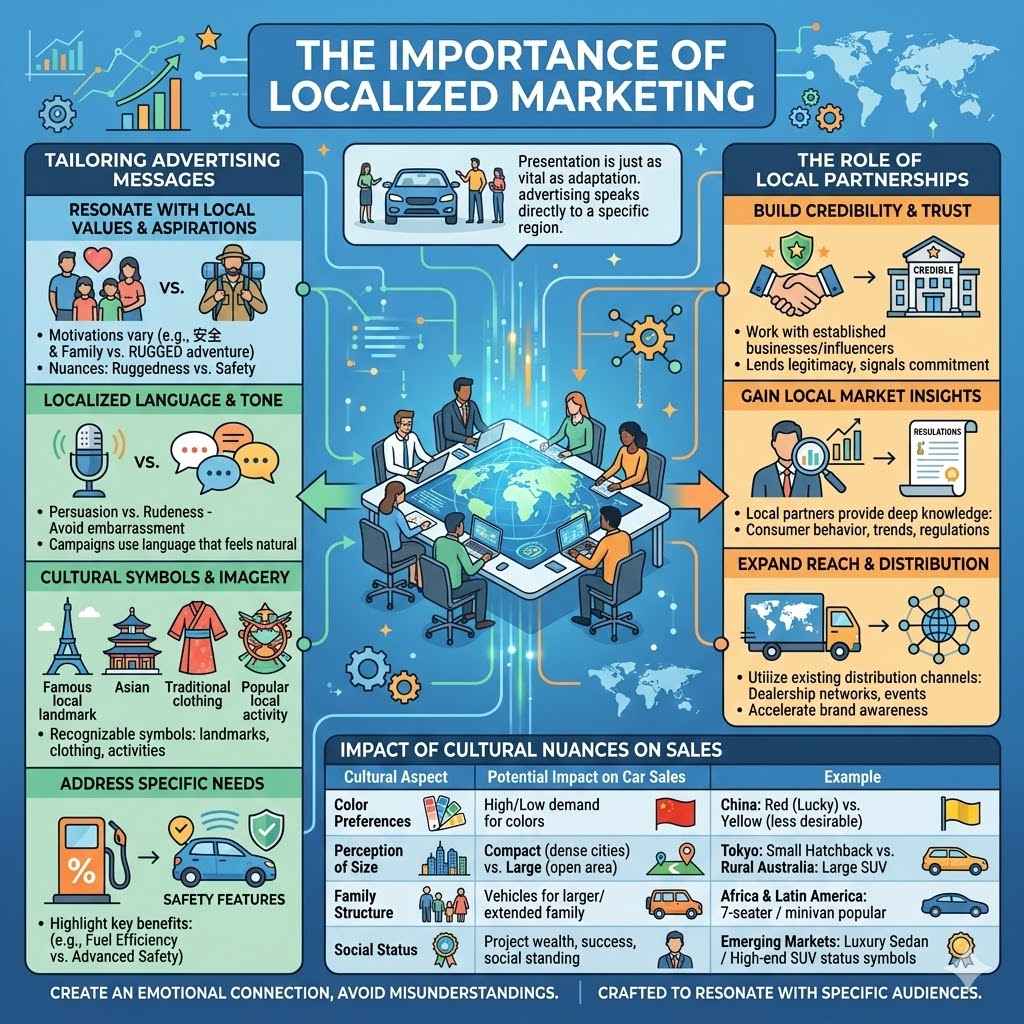
The Importance of Localized Marketing
Once a car is adapted, how it’s presented to people is just as important. Localized marketing means using advertising, commercials, and promotions that speak directly to the people in a specific region. It’s not enough to just have a car that fits; people need to see it and understand why it’s a good choice for them.
This involves using local celebrities, showing the car in familiar settings, and communicating in the local language and cultural context. The goal is to create an emotional connection between the car and the potential buyer. Marketing campaigns are carefully crafted to avoid misunderstandings and to highlight the benefits that matter most to that particular audience.
Tailoring Advertising Messages
Advertising messages need to be carefully crafted to resonate with local values and aspirations. What motivates a buyer in one country might be very different from another. For example, an ad that emphasizes ruggedness and adventure might work well in a country with vast open landscapes, while an ad focusing on safety and family practicality might be more effective in a densely populated urban area.
Companies use local advertising agencies that understand the nuances of the culture. They ensure that the language, imagery, and tone of the advertisements are appropriate and appealing. This avoids potentially embarrassing or ineffective campaigns that could alienate customers.
Language and Tone
Translating ads directly often doesn’t work. The tone, humor, and style of communication can vary greatly. What is considered polite or persuasive in one culture might be seen as rude or aggressive in another.
Localized campaigns use language that feels natural and respectful.
Cultural Symbols and Imagery
Using imagery that is relevant and recognizable to the local population is key. This could include famous landmarks, traditional clothing, or popular local activities. When people see themselves and their environment reflected in advertising, they feel a stronger connection to the product.
Addressing Specific Needs
Marketing messages should highlight the features and benefits that are most important to the local market. If a car’s fuel efficiency is a major selling point, the ads should emphasize this. If its advanced safety features are crucial, those should be brought to the forefront.
The Role of Local Partnerships
Working with local partners can be a smart move for car companies. This could mean collaborating with local businesses, influencers, or even government bodies. These partnerships help build credibility and trust in a new market.
They also provide valuable insights into local consumer behavior and preferences.
When a company partners with a well-respected local entity, it signals to consumers that the company is serious about its commitment to that market. It’s a way of saying, “We are here to stay and we want to be a part of your community.”
Building Credibility and Trust
Partnering with established local businesses or organizations lends an air of legitimacy to the car company’s presence. It suggests that the company has done its homework and is committed to operating responsibly within the local context.
Gaining Local Market Insights
Local partners often have deep knowledge of consumer behavior, market trends, and regulatory landscapes. This information is invaluable for refining product offerings and marketing strategies to better suit the local audience.
Expanding Reach and Distribution
Local partners can help car companies expand their reach through existing distribution channels, dealership networks, or promotional events. This can significantly accelerate market penetration and brand awareness.
Impact of Cultural Nuances on Sales
Failing to consider cultural nuances can have a direct negative impact on sales. A car that is technically excellent but culturally inappropriate in its branding, features, or marketing is unlikely to succeed. Conversely, a car that is perceived as understanding and respecting local culture can build strong customer loyalty.
For instance, in some cultures, bright, bold colors are highly desirable for cars, while in others, more muted, sophisticated tones are preferred. Ignoring these preferences can lead to lower sales figures. Similarly, understanding the importance of family size or social status in purchasing decisions can greatly influence a car’s success.
| Cultural Aspect | Potential Impact on Car Sales | Example |
|---|---|---|
| Color Preferences | High demand for certain colors, low demand for others. | In China, red is often seen as lucky and popular for cars, while certain shades of yellow might be less desirable. |
| Perception of Size | Preference for compact cars in dense cities, larger vehicles in open areas. | Small hatchbacks are popular in Tokyo, while large SUVs are common in rural Australia. |
| Family Structure | Need for vehicles that accommodate larger families or multiple generations. | In many parts of Africa and Latin America, 7-seater vehicles or minivans are very popular due to extended family living. |
| Social Status | Desire for cars that project wealth, success, or specific social standing. | Luxury sedans and high-end SUVs are often status symbols in many emerging markets. |
Frequently Asked Questions
Question: Why do car companies rebadge cars?
Answer: Car companies rebadge cars to adapt them for different markets, reduce costs by sharing platforms, and enter new regions with established brands or to avoid negative brand perceptions.
Question: Is rebadging the same as designing a new car?
Answer: No, rebadging involves selling an existing car model under a different brand or name, often with minor styling or feature changes, while designing a new car means creating a vehicle from scratch.
Question: How do car companies ensure cultural sensitivity?
Answer: They research local languages for offensive meanings, adapt features to local needs and climate, and create marketing campaigns that respect local values and customs.
Question: What is an example of smart automotive rebadging?
Answer: Selling a car like the Nissan Sentra as the Nissan Sylphy in different markets with slight styling and feature differences to appeal to local preferences is an example.
Question: Does rebadging always involve changing the car’s name?
Answer: Not always, sometimes a car is rebadged by simply changing the brand logo, but often the name is also changed to better suit the target market’s language or culture.
Summary
Cultural Sensitivity & Smart Automotive Rebadging means making cars fit everywhere they are sold. It involves changing names, designs, and features to match what people in different places like and need. By doing this research and adapting cars carefully, companies can connect better with drivers.
This helps them sell more cars and build good relationships with people all around the world.