Best Detailing Brushes for Cars (2026): We Compared
The best detailing brushes for cars are a soft boar-hair or synthetic all-rounder for most interior panels and trim, a dense multi-pack for price and coverage, and a very soft specialist brush for piano black, badges, and tight trim. Use the wrong bristles and you can scratch plastics, haze glossy trim, or leave dirt packed into vents and seams. This guide compares those three brush types by surface fit, bristle stiffness, size, and value.
Quick comparison
| Product | Badge | Best for | Price | ||
|---|---|---|---|---|---|
 |
Car Detailing Brush Set 3-pc, Car Detailing Kit Interior byDetail Dudes | Our pick | 3-pc · Boar hair · Interior/Exterior | $15.99
Price as of 25 Oct 2026
|
View |
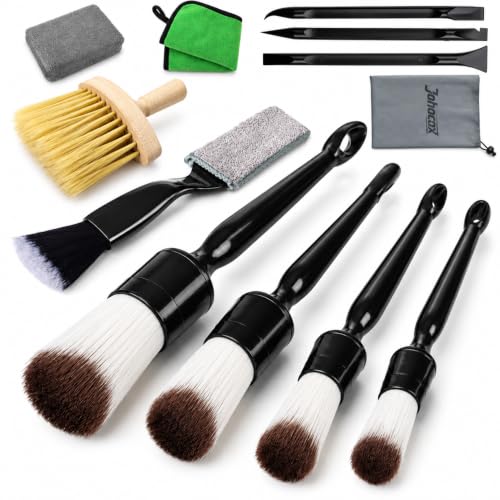 |
12PCS Car Detailing Brush Set, Interior Cleaning Kit withJohocox | Budget pick | 12-piece · Soft bristle · Interior kit | $9.99
Price as of 25 Oct 2026
|
View |
The main trade-off is simple: softer brushes are safer on sensitive surfaces, while denser or stiffer brushes clear grittier trim faster. Size count matters too, because a small brush that fits a vent is not the same tool you want on a wider badge recess or a deep seat seam.
How we chose
These picks were compared on four practical points: bristle type and surface safety, size coverage for tight gaps and wider trim, handle and ferrule construction, and value for the set size. The goal was to separate safe-cleaning tools from stronger agitation tools, because those jobs are not the same.
Soft synthetic detailing brushes are often considered a safer choice for interiors, vents, seams, badges, trim, emblems, and screens. Boar’s-hair detailing brushes are the natural-bristle option, and they make sense when you need a little more bite on delicate exterior trim or interior details, though new boar hair may shed a little.
Set size matters more than many buyers expect. A 3-piece or 4-item set usually covers the most common gaps. A 5-pack or 10-piece kit adds reach, but only if the smaller and larger heads are actually useful for your car’s vents, panel gaps, and trim shapes.
Handle comfort matters too. Look for a grip that stays secure when damp, and a ferrule or handle design that keeps metal from touching paint, screens, or glossy trim. That detail is easy to miss until a hard edge marks a bezel.
Detailing brushes decision table
| Job | Bristle type | Ideal brush size | Risk level | When to avoid it |
|---|---|---|---|---|
| Vents | Soft synthetic or soft boar hair | Small head, slim profile | Low if the brush is clean and soft | Avoid stiff bristles that catch slats or push dust deeper |
| Seat seams | Soft synthetic | Small to medium head | Low to moderate | Avoid if the seam is packed with grit and needs vacuum first |
| Screens | Very soft synthetic | Smallest brush in the set | High if the ferrule is exposed or the bristles are coarse | Avoid boar hair or any brush with a hard metal edge near the display |
| Piano black trim | Very soft synthetic | Small, controlled tip | High if the brush is too stiff or dirty | Avoid brushes used on dirty exterior trim or emblems |
| Emblems | Soft synthetic or boar hair | Small to medium head | Moderate | Avoid if the badge edges are sharp or the surface is already scratched |
| Textured plastic | Soft synthetic or boar hair | Medium head | Low to moderate | Avoid very soft brushes if the texture holds heavy grime |
Car Detailing Brush Set 3-pc, Car Detailing Kit Interior by Detail Dudes: best for safest all-round use
Based on the published details and buyer feedback, this 3-piece set is the safest all-rounder for buyers who want one brush family that can move between interiors and delicate exterior trim. Detail Dudes positions it as soft boar hair, and the 2-inch slim bristles are aimed at vents, lug nuts, cup holders, wheels, leather, trim, and badges.
The strongest reason to choose it is fit. A 3-piece set is small enough to keep the sizes practical, but broad enough to cover the places most DIY owners clean first: air vents, seat seams, emblems, and panel gaps. It also works wet or dry with degreasers and all-purpose cleaners, which helps if you want a single kit for regular upkeep.
The drawback is also the reason it stays an all-rounder rather than a specialist. Boar hair can be a little more aggressive than a very soft synthetic brush on piano black trim or screens, and the set does not give you the oversized spread of a larger kit for wide textured panels. If your car has a lot of glossy interior trim, a softer dedicated brush still deserves a place next to it.
Use this set when you want one brush to handle badges, trim, and most interior crevices without carrying a bulky kit. It fits the middle ground well, especially for owners who care more about safe cleaning than heavy agitation.
12PCS Car Detailing Brush Set, Interior Cleaning Kit with Air Vent Brush: best for value coverage
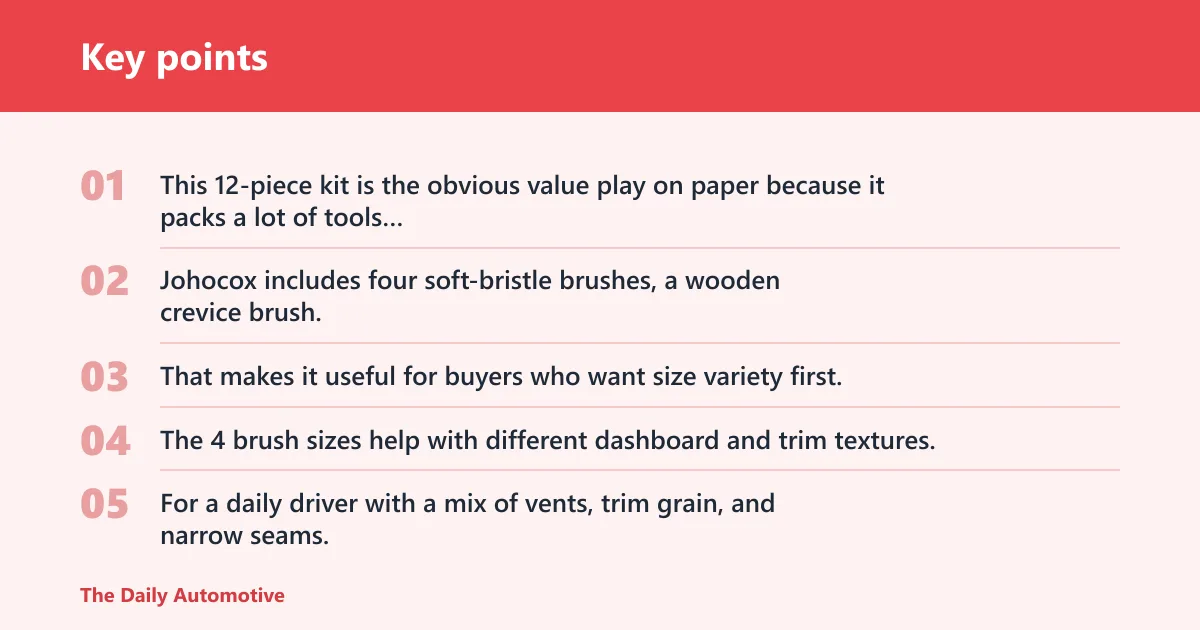
This 12-piece kit is the obvious value play on paper because it packs a lot of tools into a low price point, and the layout favors coverage over purity. Johocox includes four soft-bristle brushes, a wooden crevice brush, three detailing picks, a microfiber pad and towel, a dual-ended vent tool, and a storage bag, so you get more than brushes alone.
That makes it useful for buyers who want size variety first. The 4 brush sizes help with different dashboard and trim textures, and the dual-ended vent brush is specifically aimed at slats and tight console gaps. For a daily driver with a mix of vents, trim grain, and narrow seams, that spread can be more useful than a single premium brush.
The trade-off is that a bigger kit often mixes tools with different risk levels. Picks and a wooden crevice tool can help on stubborn grime, but they are not the right choice for screens or piano black trim. The safe move is to treat the brush heads as the main items and reserve the harder tools for gaps where plastic edges will not be marked.
For a buyer who wants the most hardware per dollar and does not want to buy a second kit right away, this set is easy to justify. Just keep the softest brush for delicate surfaces and skip the more aggressive tools anywhere glossy.
Which one should you buy?
Buy the safest all-rounder if your car has piano black trim, glossy bezels, badges, or a lot of delicate interior plastics. That is where the soft boar-hair 3-piece set fits best, because the smaller selection keeps the job simple and the bristles are meant for light cleaning rather than harsh agitation.
Buy the value multi-pack if you want more sizes for less money and you clean a mix of vents, seams, emblems, and textured plastic. A 10-piece or 12-piece layout is useful when you need different heads for different gaps, but only if you are willing to sort the soft tools from the more aggressive ones.
Buy the interior-first set if dust, hair, and light dirt are your main tasks. That is the cleaner fit for a premium interior kit like Adam’s Polishes 4-item brush set, which is aimed at dust, dirt, and hair on interior surfaces rather than exterior trim work.
Say your dash has narrow vents, a gloss black center stack, and a few badge recesses around the shifter. A small soft brush should handle the screen edge, while a slightly firmer brush can do the emblems and seam lines. One brush can cover the whole job only if the surfaces are already lightly soiled.
Suppose a wheel cap or fuel-door badge is packed with road film. That is where a soft brush may feel too weak, and a denser boar-hair option makes more sense because it adds agitation without jumping straight to a stiff scrub brush.
Frequently asked questions
What are the best detailing brushes for cars?
The best detailing brushes are the ones that match the surface, not the ones with the biggest parts count. A soft synthetic brush is usually safest for interiors and glossy trim, boar hair helps on delicate exterior trim, and a multi-size kit is best when you need one brush for vents, another for seams, and another for badges.
Should I buy boars hair or synthetic detailing brushes?
Buy synthetic if your priority is the safest cleaning on screens, piano black trim, and other sensitive interior surfaces. Buy boar hair if you want a natural-bristle option with a little more bite for delicate exterior trim and interior details. Boar hair may shed a little when new, so that matters if residue is a concern.
How many detailing brush sizes do I need?
Most DIY owners get by with three to four sizes, because that covers the most common jobs without a lot of overlap. A small brush reaches vents and seams, a medium one handles emblems and trim grain, and a slightly larger one helps on broader textured plastic. Ten-piece kits are useful only if the sizes are genuinely different.
Which detailing brush is safest for piano black trim and screens?
A very soft synthetic brush is the safest choice for piano black trim and screens because it reduces the chance of haze and edge marks. Keep the ferrule covered or protected, avoid dirty brushes, and do not use boar hair if the brush feels too firm for a glossy bezel. Cleanliness matters as much as softness.
Can I use the same detailing brush on interior and exterior surfaces?
You can, but it is better to separate them. A brush used on exterior badges, wheels, or fuel doors can carry grit back into vents, seat seams, and screens. If you must share one, clean it thoroughly, dry it fully, and use it only on similar-risk surfaces so debris does not transfer.
What should I look for to avoid scratching with detailing brushes?
Look for soft bristles, a size that fits the gap without forcing the head, and a handle or ferrule that will not touch the surface. A comfortable grip helps control pressure, but the bigger issue is grit. If a brush is loaded with debris, even soft bristles can leave marks on delicate trim.
Are cheap detailing brush kits worth it?
Cheap kits can be worth it if they give you the right size mix and at least one genuinely soft brush head. They are weaker when the set is padded with filler tools you should not use on delicate surfaces. The low price is useful, but only if the brushes stay usable after the first few cleanings.
Which detailing brush works best for vents and seams?
A small soft synthetic brush is usually the best fit for vents and seat seams because it reaches narrow channels without forcing bristles into the plastic. Boar hair can work too, especially on slightly dirtier trim, but it is better reserved for jobs where a little more agitation helps remove dust from textured edges.
Choose car detailing brush Set 3-pc, car detailing kit interior by Detail Dudes if…
Choose the Detail Dudes 3-piece set if you want one brush family that can handle interiors and delicate exterior trim with the least fuss. It is the better choice if your car has a lot of vents, seams, badges, and narrow trim edges, and you value a simple set over a crowded kit.
Choose the Johocox kit if your priority is coverage per dollar and you want more sizes in one purchase. It makes more sense if you are cleaning multiple surfaces, want a vent tool plus brushes, and are willing to keep the soft heads separate from the harder picks.
If your main concern is piano black trim or screens, start with the softest brush you can find and keep it clean. If your main concern is dirt packed into emblems or textured plastic, a more assertive boar-hair brush is the better fit.
Frequently asked questions
Products related to this article
Sponsored / affiliate links. As an Amazon Associate I earn from qualifying purchases. I may earn additional commission from eligible campaigns.
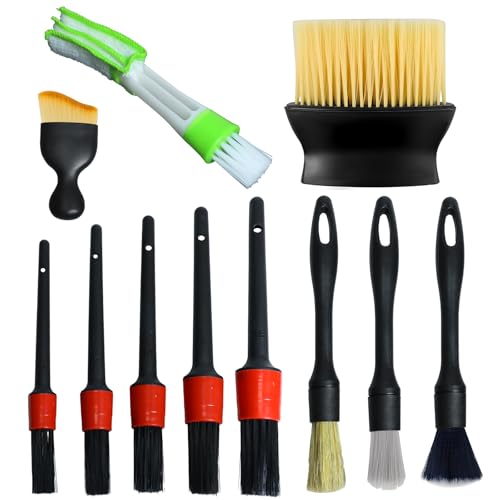 11 Pcs Car Interior Detailing Brush Set, Car Interior Soft Cleaning Brush for Interior Automotive Air Vent, Dashboard, Leather, Wheel, Air-Conditioning Outlet Cleaning
 Hulex Supplies 11pcs Car Detailing Brushes Kit, Auto Tire Cleaning Tools Set with Microfiber Towel, Long Wheel Brush for Rims Tires Interior Exterior Dashboard Seat Window