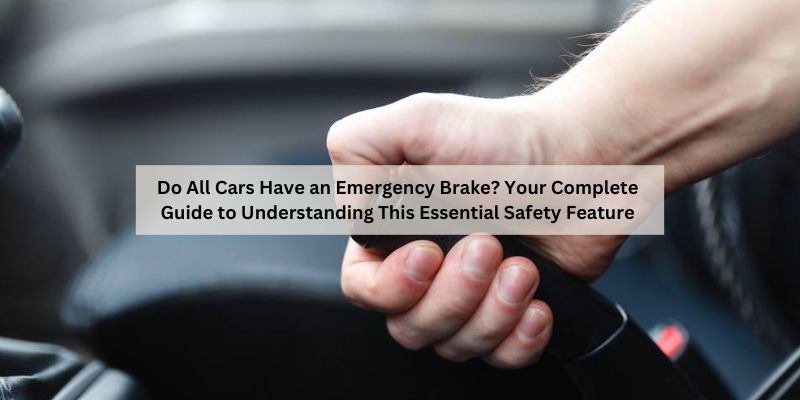
Do All Cars Have an Emergency Brake? Your Complete Guide to Understanding This Essential Safety Feature
Hey there, friend! If you’ve ever wondered about that lever or pedal in your car that you rarely touch, you’re not alone. The emergency brake—sometimes called the parking brake—has sparked curiosity in many drivers, including me. A while back, a buddy asked me, “Do all cars have an emergency brake?” It’s a great question, and it got me thinking about my own experiences with this often-misunderstood feature.
Over the years, I’ve driven all sorts of cars, from beat-up old pickups to shiny new SUVs, and I’ve learned a ton about emergency brakes—what they do, how they work, and whether every car has one. In this guide, I’m going to share everything I’ve figured out, breaking it down in simple terms so you can feel confident about this safety feature. Whether you’re a new driver or a car enthusiast, let’s dive into the world of emergency brakes and get all your questions answered!
What Is an Emergency Brake?
Let’s start with the basics. The emergency brake, or parking brake, is a system in your car designed to keep it stationary when you’re not driving. It’s like a backup plan to make sure your car doesn’t roll away, especially on hills. I remember the first time I parked on a steep street in San Francisco—my heart was racing, but that emergency brake saved the day!
Unlike your regular brakes, which use hydraulic pressure to stop the car while driving, the emergency brake is a mechanical system. It typically works by locking the rear wheels (or sometimes all four) using a cable, lever, or pedal. It’s called an “emergency” brake because it can also stop your car if the main brakes fail, though I hope you never have to test that feature. In my old sedan, the emergency brake was a hand lever between the front seats, and I used it every time I parked on a slope.
Do All Cars Have an Emergency Brake?
Here’s the big question: do all cars have an emergency brake? The short answer is yes, almost all cars have some form of emergency or parking brake. It’s a standard safety feature required by U.S. regulations for most vehicles. But the type and design can vary a lot, and there are rare exceptions. When I was driving my cousin’s vintage car from the 1960s, I noticed it didn’t have a traditional emergency brake, but it still had a way to lock the wheels manually. Let me explain what I’ve learned about this.
Since the 1960s, U.S. federal safety standards have required vehicles to have a secondary braking system, which is usually the emergency brake. This means that any car sold in the U.S. today—whether it’s a compact sedan, a pickup truck, or a luxury SUV—will have one. However, some very old cars, specialty vehicles, or custom builds might not have a standard emergency brake. For example, I once checked out a friend’s kit car, and it had a non-traditional setup that required a bit of tinkering to secure the vehicle.
Types of Emergency Brakes
Not all emergency brakes are the same, and I’ve come across a few different types while working on my cars. Here’s a breakdown of the most common ones:
| Type | Description | Common In |
|---|---|---|
| Hand Lever (Handbrake) | Sedans, hatchbacks, and older cars. | Pickup trucks, SUVs, and some older models. |
| Foot Pedal | A small pedal near the driver’s footwell you press to engage. | Pickup trucks, SUVs, some older models. |
| Electronic Parking Brake | A button or switch that activates the brake electronically. | Newer cars, luxury vehicles, EVs. |
| Center Console Button | A button on the console that engages the brake, often paired with auto-hold. | A lever between the front seats, you pull up to engage. |
I’ve driven cars with all these types. My old truck had a foot pedal, which took some getting used to, while my current SUV has a fancy electronic button. The electronic ones are super convenient, but I miss the satisfying click of a handbrake sometimes!
Why Emergency Brakes Are Important
You might be thinking, “Why do I need an emergency brake if I have regular brakes?” Trust me, I wondered the same thing when I was a new driver. But after a few close calls, I’ve learned why this feature is a lifesaver. Here are the main reasons I always use my emergency brake:
- Prevents Rolling: On hills, your car’s transmission alone might not hold it in place. I learned this the hard way when my car rolled a few inches before I started using the handbrake religiously.
- Backup for Brake Failure: If your main brakes fail (super rare, but possible), the emergency brake can slow or stop the car. I’ve never had to use it this way, but it’s reassuring to know it’s there.
- Protects Your Transmission: Relying only on your transmission’s “park” gear puts stress on it. Using the emergency brake takes the load off, especially on slopes. My mechanic friend swears this saved his transmission from early wear.
- Safety in Emergencies: If you need to leave your car on a busy street or in a tricky spot, the emergency brake adds an extra layer of security.
I make it a habit to engage the emergency brake every time I park, even on flat ground. It’s a small step that gives me peace of mind.
How Emergency Brakes Work
Let’s get a bit technical, but I’ll keep it simple. The emergency brake works differently from your regular brakes. Your main brakes use hydraulic fluid to press brake pads against the wheels. The emergency brake, on the other hand, is usually a mechanical system. In most cars, it uses a cable to pull on the rear brake pads or shoes, locking the wheels in place.
In my old car, I could feel the handbrake tighten the cable when I pulled it up. Electronic parking brakes, which I have in my newer car, use motors to apply the brake instead of a cable. They’re fancier, but the idea is the same—keep the car from moving. Some high-end cars even have an auto-hold feature, where the brake engages automatically when you stop. I was skeptical at first, but it’s a game-changer in stop-and-go traffic.
Do Electric and Hybrid Cars Have Emergency Brakes?
With electric vehicles (EVs) and hybrids becoming more common, I’ve had a lot of questions about whether they have emergency brakes. The answer is yes! Every EV and hybrid I’ve driven, from Teslas to Priuses, has an emergency brake. But they’re often electronic, not mechanical. For example, my friend’s Tesla has a button on the center console that activates the parking brake. It’s sleek and modern, but it does the same job as the old-school handbrake in my first car.
Some EVs also have regenerative braking, which slows the car using the electric motor. But that’s not the same as an emergency brake—it’s more like a fuel-saving feature. The parking brake is still there for safety, usually as an electronic system tied to the rear brakes.
How to Use Your Emergency Brake Properly
Using the emergency brake is easy, but there are a few tricks I’ve picked up to do it right. Here’s how I use each type:
- Hand Lever: Pull it up firmly until you feel resistance. To release, press the button on the lever and lower it. I always make sure it’s fully down to avoid dragging the brake.
- Foot Pedal: Press the pedal down until it clicks. To release, pull a small lever (usually above the pedal) or press it again. My old truck’s pedal was stiff, so I had to push hard!
- Electronic Brake: Press the button or switch to engage. It’ll usually light up on your dashboard to confirm. To release, press it again or step on the gas gently (in some cars, it releases automatically).
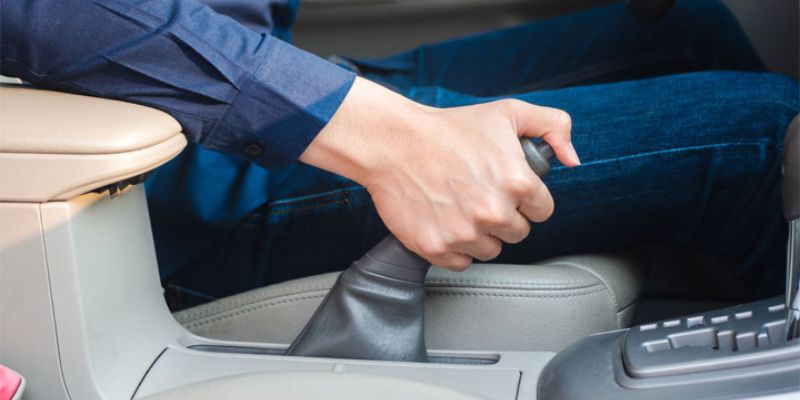
One tip: always engage the emergency brake before putting your car in park. This takes pressure off the transmission. I learned this from a mechanic after I noticed my car’s gearshift was getting sticky.
Common Issues with Emergency Brakes
Like any car part, emergency brakes can have problems. I’ve run into a few issues over the years, and here’s what I’ve learned:
- Sticking Brake: If the brake doesn’t release fully, it can drag and wear out your brakes. I had this happen when my handbrake cable got rusty. A quick lube fixed it.
- Weak Hold: If the brake doesn’t hold your car on a hill, it might need adjustment. I took my car to a shop for this, and they tightened the cable in 20 minutes.
- Dashboard Warning Light: If your brake light stays on, it could mean the emergency brake is engaged or there’s a sensor issue. I once forgot to release my handbrake and drove a mile before noticing!
- Electronic Malfunctions: In newer cars, electronic brakes can fail if there’s an electrical issue. This happened to a friend’s SUV, and a software update fixed it.
If your emergency brake isn’t working right, don’t ignore it. A quick check by a mechanic can save you from bigger headaches.
How to Maintain Your Emergency Brake
Keeping your emergency brake in good shape is easy and doesn’t take much time. Here’s what I do:
- Use It Regularly: Engaging the brake often prevents cables from seizing up. I use mine every time I park, even on flat ground.
- Check for Wear: If you have a mechanical brake, peek under the car (or ask a mechanic) to check the cable for rust or fraying. I do this once a year.
- Lubricate Moving Parts: For hand or foot brakes, a bit of lubricant on the cable or pivot points keeps things smooth. I learned this after my handbrake started sticking.
- Test It: Every few months, I park on a slight incline and engage the brake to make sure it holds. If it doesn’t, I get it checked.
For electronic brakes, there’s less maintenance, but I still keep an eye on the dashboard for warning lights. If something seems off, a trip to the shop is worth it.
Can You Drive Without an Emergency Brake?
Technically, you can drive without using your emergency brake, but I wouldn’t recommend skipping it. If it’s broken or disabled, your car might roll on hills, and you’re putting extra strain on your transmission. I once forgot to engage my brake on a slight slope, and my car rolled into a curb—thankfully, no damage, but it was a wake-up call.
If your emergency brake isn’t working, get it fixed ASAP. In the meantime, park on flat ground and avoid hills. I’ve also heard of people using wheel chocks as a temporary fix, but that’s not a substitute for a proper repair.
Emergency Brake vs. Parking Brake: What’s the Difference?
You might hear the terms “emergency brake” and “parking brake” used interchangeably, and I used to wonder if they were the same thing. Here’s the deal: they’re usually the same system, just called different names. “Parking brake” is more accurate because it’s mostly used to keep the car stationary when parked. “Emergency brake” refers to its secondary role as a backup if your main brakes fail.
I prefer calling it a parking brake because that’s how I use it most. But whatever you call it, it’s a critical safety feature, and knowing how to use it properly is key.
Do Motorcycles or Other Vehicles Have Emergency Brakes?
This is a fun one! Motorcycles don’t typically have emergency brakes like cars do. Instead, they rely on their regular brakes and a parking technique (like leaving the bike in gear on a hill). I’ve ridden a few motorcycles, and I always make sure to park on flat ground or use a wheel chock for extra security.
Other vehicles, like RVs or heavy trucks, usually have parking brakes, but they might work differently. For example, some big trucks use air brakes with a parking brake valve. It’s fascinating how the same idea applies across different vehicles, just with unique twists.
When to Call a Professional
Most emergency brake issues are easy to spot and fix, but some need a pro’s touch. If your brake won’t hold, makes weird noises, or shows a warning light that won’t go away, take it to a mechanic. I had to do this when my electronic parking brake started acting up—it was a sensor issue, and the shop fixed it in an hour. It’s worth the cost to know your car is safe.
Tips for Using Your Emergency Brake Like a Pro
Here are a few tricks I’ve picked up to make the most of your emergency brake:
- Practice on a Hill: Find a quiet, sloped street and practice engaging and releasing the brake. It helped me get comfortable with my manual car.
- Don’t Overdo It: Pull or press just enough to engage the brake—yanking too hard can strain the system.
- Check Before Driving: Always make sure the brake is fully released to avoid wear. I’ve driven with a partially engaged brake before, and it’s not good for your car.
- Use It in Traffic: If you’re stuck in heavy traffic, an electronic brake with auto-hold can save your foot from pedal fatigue.
Conclusion: Stay Safe with Your Emergency Brake
After years of driving and tinkering with cars, I’ve come to see the emergency brake as one of those unsung heroes of car safety. Whether it’s a hand lever, foot pedal, or fancy electronic button, it’s there to keep you and your car secure. Knowing whether your car has one, how it works, and how to use it properly can make all the difference, whether you’re parking on a steep hill or just making sure your transmission lasts longer. I hope this guide has answered all your questions and given you the confidence to use your emergency brake like a pro. So next time you park, give that brake a little love—it’s got your back! Drive safe, and enjoy the peace of mind that comes with a well-maintained car.
FAQs
Do all cars have an emergency brake?
Almost all cars sold in the U.S. have an emergency brake, as it’s required by safety regulations. Some very old or custom vehicles might not have a standard one.
What’s the difference between an emergency brake and a parking brake?
They’re usually the same thing. “Parking brake” refers to its main use (keeping the car still when parked), while “emergency brake” highlights its backup role.
Can I drive without using my emergency brake?
Yes, but it’s not a good idea. Without it, your car could roll on hills, and your transmission takes extra stress. I always use mine for safety.
How do I know if my emergency brake is working?
Park on a slight hill and engage the brake. If the car doesn’t roll, it’s working. If it feels weak or doesn’t hold, get it checked.
What should I do if my emergency brake is stuck?
Try gently wiggling the lever or pedal while releasing it. If it won’t budge, don’t force it—take it to a mechanic to avoid damage.
Are electronic parking brakes better than manual ones?
They’re more convenient and often have features like auto-hold, but both types work well. I like electronic ones for ease, but manual ones feel more hands-on.
How often should I use my emergency brake?
Use it every time you park, especially on hills. Regular use keeps the system from seizing up and protects your transmission.
Can I replace or fix my emergency brake myself?
Simple fixes, like lubricating a cable, are DIY-friendly. But for major issues, like a broken cable or electronic fault, I’d recommend a professional.