VW Kit Car Bodies: Dune Buggy and Replica Body Guide
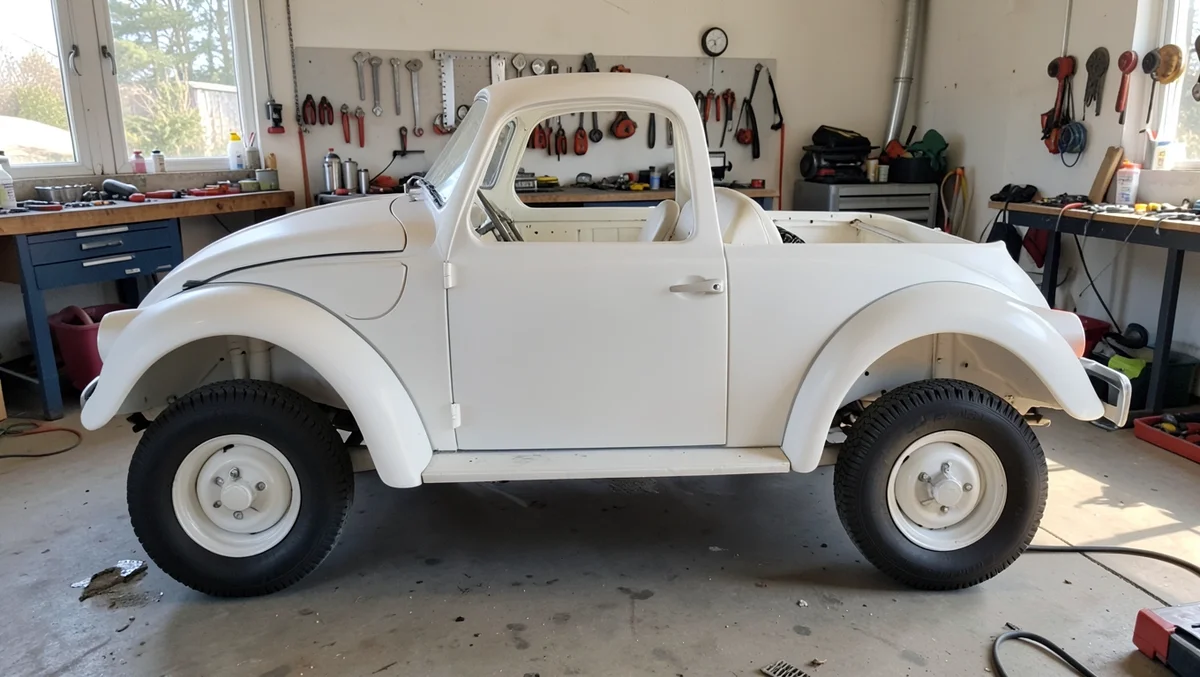
A “kit car body for VW” is a fiberglass (or composite) replica body shell that bolts onto a Volkswagen Beetle floor pan and drivetrain, turning a stock or stripped-down Bug into a dune buggy or a replica sports car. The idea started with the 1964 Meyers Manx and is still sold today by companies like Meyers Manx Ltd, alongside dozens of other pan-based buggy and replica bodies.
The VW Beetle’s simple, boxy steel pan turned out to be a near-perfect platform for aftermarket bodies: the floor pan carries the suspension, engine, and running gear on its own, so a builder can unbolt the entire steel body and drop on almost any shape of fiberglass shell instead. That single fact created an entire cottage industry of kit car bodies built specifically for VW pans.
Where VW Kit Car Bodies Came From
Boat builder and surfer Bruce Meyers built the first Meyers Manx in 1964 by mounting a fiberglass monocoque shell onto a shortened VW Beetle pan. A complete early kit — body shell, decklid, dashboard, windshield, headlight housings, and hardware — sold for around $600, on top of a donor (often wrecked) VW. Within a few years, competitors like Fiberfab, EMPI, Bradley GT, and Sterling were selling their own pan-based fiberglass bodies, ranging from open-top dune buggies to replica sports cars styled after cars like the Porsche 356 Speedster.
Build & Repair Essential
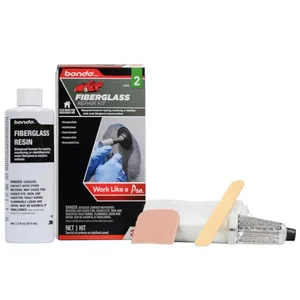 |
Bondo Fiberglass Resin Repair Kit – $21.99 Almost every kit car body needs a little trimming, seam filling, or stress-crack repair during fitting — this kit has the resin, hardener, cloth, and tools to handle it.
|
The Main Types of VW-Based Kit Car Bodies
Not every VW kit car body is a dune buggy. The category splits into a few distinct styles, and knowing which one you’re looking at matters for how much pan work is involved.
| Body Style | Pan Needed | What It Looks Like |
|---|---|---|
| Meyers Manx-style dune buggy | Shortened pan (typically 14”–18” removed from the center) | Open-top, short-wheelbase beach buggy with big fender flares |
| Baja-style fender/body kit | Full-length, stock pan | Stock-length Beetle with flared fiberglass fenders and a raised off-road stance |
| Replica sports car body | Full-length pan, sometimes stretched or modified | Fiberglass shell styled after cars like the Porsche 356 Speedster |
| Sand rail / tube-chassis buggy | Pan components used, but the pan itself is usually not retained as a structural chassis | Exposed tube frame with a partial fiberglass nose/body panel |
What’s Actually Involved in Fitting One
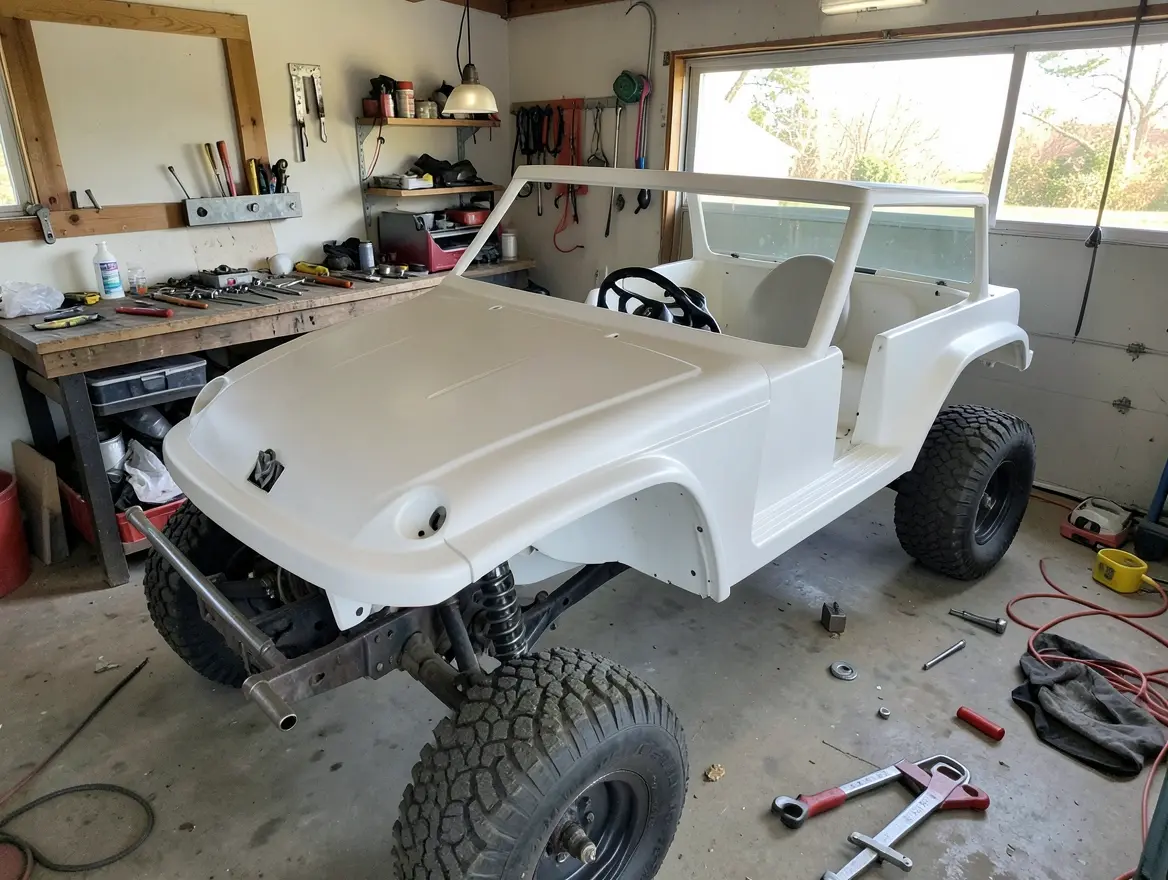
Bolting a kit car body onto a VW pan is straightforward in concept but involves real fabrication work in practice. A typical build touches these steps:
- Pan preparation: stripping the original sheet-metal body, checking the pan for rust, and (for short-wheelbase buggies) cutting and welding the pan shorter per the kit maker’s template.
- Body mounting: the fiberglass shell bolts to existing pan mounting points using body bushings and brackets, similar to how the stock steel body was attached.
- Wiring and gauges: most kits assume you’ll reuse or rewire the VW harness and mount gauges into a new fiberglass dash.
- Glass and hardware: a windshield, hinges, latches, and weatherstripping have to be sourced separately or included depending on which kit you buy.
- Finishing: seams, mounting holes, and any shipping stress cracks in the fiberglass typically need resin, sanding, and paint before the body looks finished.
What Kits Cost Today
Data point: the original 1964 Meyers Manx kit sold for roughly $600 plus a donor VW. The modern Meyers Manx Ltd. “Remastered” kit — a more precise fiberglass body with a removable dash panel and a locking trunk — costs $5,995 for the body kit alone, while its larger Manxter 2+2 kit runs about $17,000. In both cases you still need to supply your own VW donor pan, suspension, and engine, so the final build cost depends heavily on what chassis and drivetrain you start with. Smaller suppliers selling individual Manx-style fiberglass panels and buggy parts, such as Dan’s Performance Parts and Moore Parts, typically price components well below a full turn-key kit.
Frequently Asked Questions
What Is A Kit Car Body For A VW?
It’s an aftermarket fiberglass or composite body shell designed to bolt onto a Volkswagen Beetle floor pan in place of the stock steel body. It turns the pan and running gear into a dune buggy or a replica sports car instead of a sedan.
Do You Need To Shorten The Pan For Every Kit?
No. Short-wheelbase dune buggy bodies, like the original Meyers Manx style, need the center of the pan cut and welded shorter. Baja-style fender kits and most full-length replica bodies bolt onto a stock-length pan with no shortening required.
Is The Meyers Manx Still Available To Buy?
Yes. Meyers Manx Ltd. revived the original body molds and currently sells a “Remastered” kit as well as larger Manxter models. Older original and clone bodies also circulate through classic-buggy parts suppliers and enthusiast forums.
Are Kit Car Bodies Legal To Register And Drive?
In most U.S. states, yes — a VW-based kit car typically keeps the donor VW’s title, VIN, and drivetrain, so it’s registered as a modified vehicle rather than a new one. Rules on inspections, emissions, and required equipment (lights, seatbelts, windshield) vary by state, so it’s worth checking with your local DMV before finishing a build.
What’s The Difference Between A Kit Car Body And A Regular Body Kit?
A regular body kit adds bolt-on pieces, like bumpers or fender flares, to an otherwise stock car that keeps its factory body. A kit car body replaces the entire body shell, so the finished vehicle looks like a completely different car from the one it started as.
Conclusion
VW kit car bodies are the reason the dune buggy exists as a category: a simple, affordable pan chassis paired with a fiberglass shell that can be shaped into almost anything. Whether you’re chasing the original Meyers Manx look, a Baja-style off-roader, or a replica sports car, the build comes down to the same basics — a sound pan, the right mounting hardware, and some patience with resin and sandpaper for the finishing work.
Products related to this article
Sponsored / affiliate links. As an Amazon Associate I earn from qualifying purchases. I may earn additional commission from eligible campaigns.