Do Car Sun Shades Really Work? Exploring Effectiveness & Benefits
Yes. A well-fit reflective windshield sun shade can cut parked-car cabin temperatures by roughly 10–20°F, with the largest drop in direct sun. Without one, seats, steering wheel, and trim can get hot enough to delay departure and raise heat-stress risk for kids and pets. Here’s how shade type, fit, vehicle shape, and parking conditions change the payoff, so you can decide if one is worth it.
Do car sun shades really work?
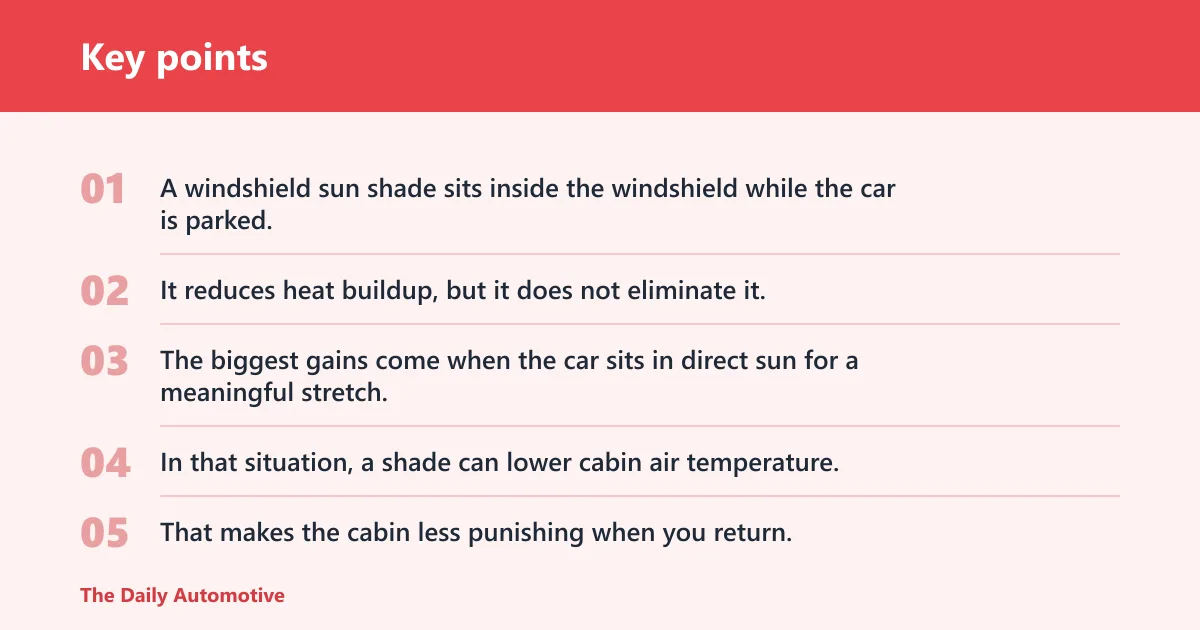


Yes, but only within limits. A windshield sun shade sits inside the windshield while the car is parked, and it works by blocking incoming sunlight before that energy heats the dash, seats, and cabin air. It reduces heat buildup, but it does not eliminate it.
What a windshield sun shade can actually change
The biggest gains come when the car sits in direct sun for a meaningful stretch. In that situation, a shade can lower cabin air temperature, reduce dashboard surface heat, and slow the rate at which the interior absorbs solar energy. That makes the cabin less punishing when you return.
Shades also help with long-term interior protection. By cutting direct sunlight and UV exposure, they can slow fading, cracking, and heat-related wear on dash material, seats, and trim.
What it cannot fix on its own
A sun shade cannot make a parked car safe for children or pets. It also cannot fully solve heat in cars with large roof glass, poorly fitting shades, or very long parking times. If the windshield is the main heat source, a shade helps a lot. If side glass and a panoramic roof are adding major heat, the gain is smaller unless you cover more glass.
Results depend on vehicle, outdoor temperature, sunlight intensity, shade design, and parking time. That is why one car may feel much cooler while another sees only a modest improvement.
How much cooler does a windshield shade make a car?
Reported test results point to a real but limited drop. Florida Solar Energy Center testing found a conventional cardboard windshield shade reduced average interior air temperature by around 15 degrees Fahrenheit and dashboard temperature by approximately 40 degrees Fahrenheit. Radiant-barrier shades reduced average cabin air temperatures by an additional three to five degrees Fahrenheit.
Cabin air cooling versus dashboard cooling
These are different benefits. Cabin air reduction tells you how much less oppressive the air feels when you open the door. Dashboard reduction matters for touch, material stress, and interior aging. A dash can stay extremely hot even when the cabin air drop sounds modest.
That split matters because a hotter dash also radiates heat back into the cabin after you open the car. So a shade that cuts dashboard temperature can improve the first few minutes inside the vehicle even more than the air number suggests.
Why direct sun and parking time change the result
Parked-car heat builds fast in direct sun. The longer the vehicle sits, the more heat soaks into surfaces and trapped air. A car parked for about 90 minutes in mid-day sun is a very different case from a five-minute stop in partial shade. The same shade will not perform the same way in both settings.
Some interiors can rise to 120 degrees after an hour. That is why a shade should be judged as a heat-reduction tool, not a comfort guarantee.
Sun shade setup comparison
The best setup depends on how much heat you need to block, how often you will install it, and how much storage hassle you can tolerate. More coverage usually beats a fancier material if the fancier shade leaves gaps or slips out of place.
| Setup | Typical use case | Likely heat-reduction strength | Fit sensitivity | Storage hassle | Best vehicle type |
|---|---|---|---|---|---|
| Basic cardboard | Cheap daily parking with a simple rectangular windshield | Moderate; a useful baseline | Medium | Low | Sedans and compact cars |
| Reflective accordion | General-purpose shade for frequent daytime parking | Moderate to strong | Medium to high | Low to medium | Sedans, hatchbacks, small SUVs |
| Radiant-barrier | Hot climates where every degree matters | Strong; about 3 to 5°F better than conventional shades in reported tests | High | Low to medium | Any vehicle with a close windshield match |
| Custom-fit | Vehicles with odd windshield shapes or large dashboards | Strongest when coverage is near full | Low | Medium | Trucks, minivans, SUVs, classic cars |
| Whole-car cover | Extended parking, intense sun, or large glass area | Very strong; shades more glass than a windshield-only shade and can deliver greater heat reduction | Very high | High | Pickup trucks, SUVs, classic cars, vehicles with roof glass |
Cardboard versus reflective accordion
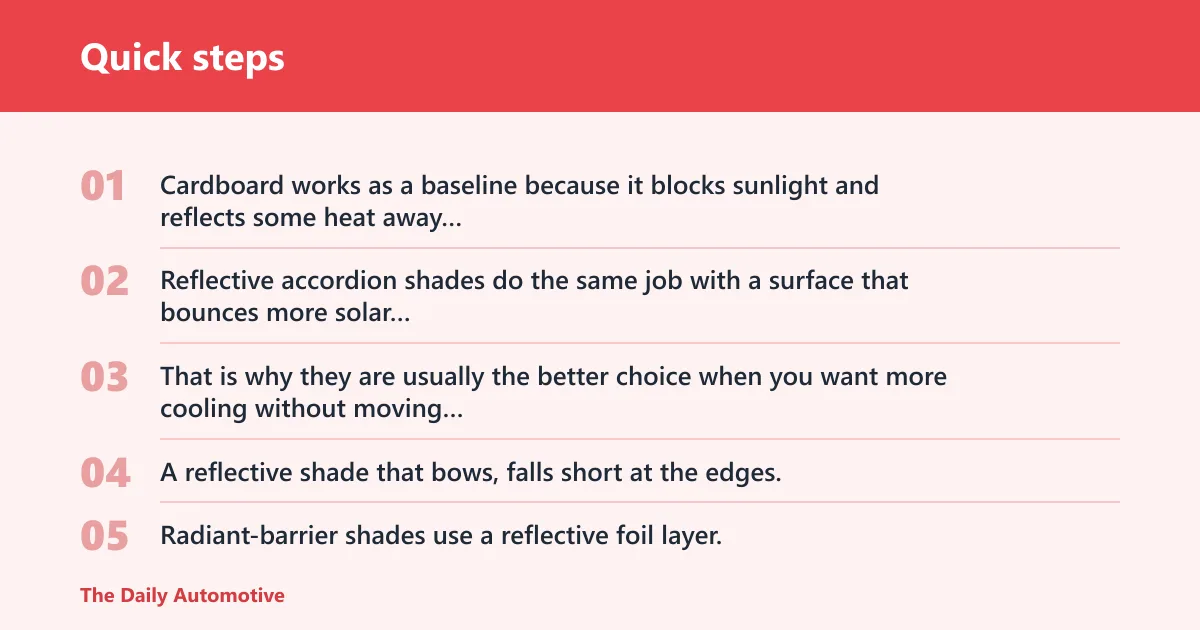
Cardboard works as a baseline because it blocks sunlight and reflects some heat away from the windshield area. Reflective accordion shades do the same job with a surface that bounces more solar radiation back through the glass. That is why they are usually the better choice when you want more cooling without moving to a custom-made product.
But there is a catch. A reflective shade that bows, falls short at the edges, or slips behind the mirror can sometimes underperform a cheaper panel that fits better. Fit can matter as much as material.
Radiant-barrier and custom-fit shades
Radiant-barrier shades use a reflective foil layer, often paired with an insulating foam layer. The foil reflects sunlight; the foam helps trap residual heat in air pockets and slows heat transfer after the shade warms up. In reported tests, radiant-barrier shades improved cabin cooling by about 3 to 5°F over conventional shades. (Wikipedia)
Custom-fit shades can matter most when the windshield is steep, unusually wide, or cut around sensors and mirrors in ways that create gaps. A custom panel can cover more glass and stay in place better, which often matters more than a slightly thicker material.
Whole-car covers and where they fit best
A full-car cover can shade the roof and additional windows, so it can reduce heat more than a windshield-only shade. Whole-vehicle reflective covers can deliver greater reductions in cabin heat because they block more sun exposure across more glass. The tradeoff is clear: they take longer to install and store.
That makes them better for long parking stretches, outdoor storage, and vehicles with a lot of exposed glass. They are less appealing for quick errands where you need to remove and stow the cover every time.
What fit and coverage matter most?
Fit matters because sun shades work by covering glass, not by simply being present in the cabin. A shade that covers most of the windshield and follows its shape closely will usually outperform one that is technically larger but leaves bright gaps around the edges or behind the mirror.
Why windshield shape changes performance
Windshield slope, mirror placement, sensors, and oversized dashboards all affect coverage. Steep windshields can make it harder to keep a shade pressed flat. Large dashboards can absorb more radiant heat, so a shade that stops short may leave the hottest surfaces exposed.
Say your SUV has a broad windshield with a deep dash and a mirror that sits low in the glass. A generic shade may leave bright wedges at the top corners. A custom-fit version can cover more of that area and reduce the heat load more effectively.
How to size a shade for the best coverage
Choose the largest shade that fits cleanly without buckling or blocking your ability to place it. Aim for full windshield coverage from pillar to pillar and as much vertical coverage as the interior layout allows. If you have to choose between a slightly smaller shade that stays flat and a larger one that slides out of place, pick the one that stays in position.
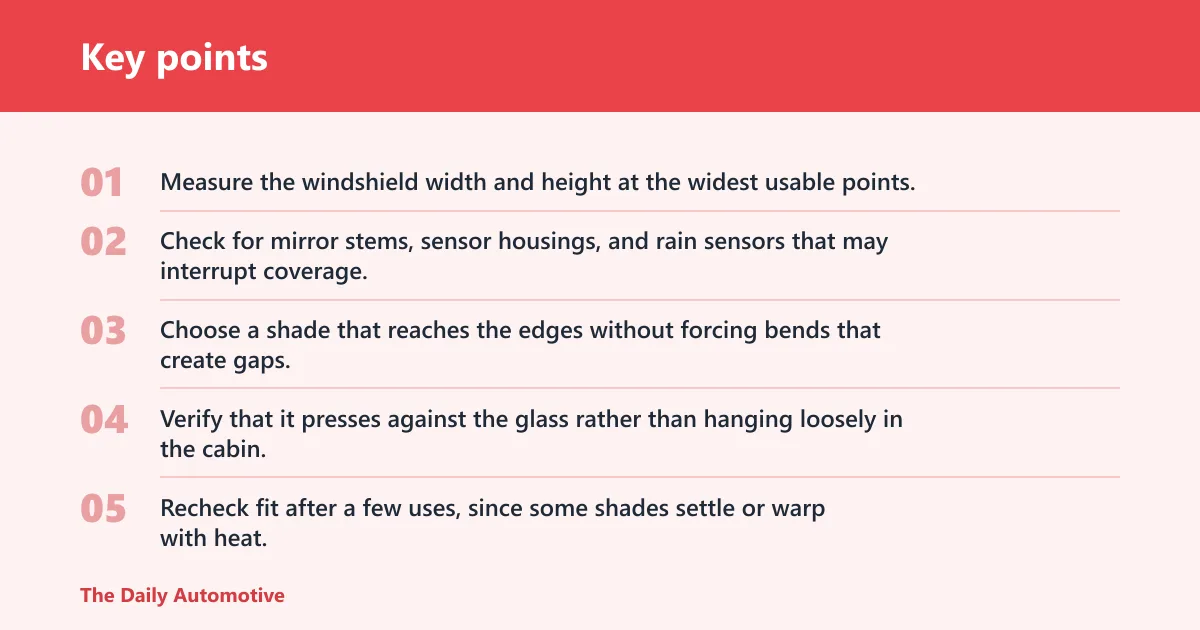
- Measure the windshield width and height at the widest usable points.
- Check for mirror stems, sensor housings, and rain sensors that may interrupt coverage.
- Choose a shade that reaches the edges without forcing bends that create gaps.
- Verify that it presses against the glass rather than hanging loosely in the cabin.
- Recheck fit after a few uses, since some shades settle or warp with heat.
Where gaps and slippage reduce the payoff
Even a good material loses value if sunlight can sneak around the edges. Slippage near the dash, a loose top edge, or a gap around the rearview mirror all let light reach the hottest surfaces. The result is more heat buildup and less protection for the dashboard.
A common first-timer mistake is buying a premium shade for the wrong windshield shape. The material may be excellent, but if it leaves open corners on a truck or minivan, the cabin still heats up fast.
Which vehicles get the biggest payoff?
The biggest payoff usually goes to vehicles with large glass areas, large dashboards, and long parking exposure. The more sun that enters through the windshield and roof, the more a shade can help. Smaller cars with tight glass coverage still benefit, but the difference may be less dramatic.
Sedans and compact cars
Sedans and compact cars often get solid results from a simple windshield shade because the glass area is easier to cover. A basic or reflective fold-up model can be enough if the windshield shape is conventional and parking times are moderate.
SUVs, minivans, and pickups
These vehicles often have larger windshields, taller cabins, and sometimes more roof glass. That means more solar load and more opportunity for heat to build. They tend to benefit more from custom-fit shades or a whole-car cover, especially when parked for longer periods.
Classic cars and vehicles with large glass areas
Classic cars can be especially sensitive because they may have large glass surfaces, older interior materials, or dashboards that are already vulnerable to heat and fading. A better-fitting shade can help, and a whole-car cover may make sense for outdoor storage or regular all-day parking.
Correct use is simple, but it matters. The shade should be installed while parked, pressed against the inside of the windshield, and oriented so the reflective side faces outward toward incoming sunlight. That placement helps bounce solar energy back through the glass instead of letting it heat the cabin.
Which side faces the windshield?
The reflective side typically faces outward. That is the side meant to meet the sun through the glass. The non-reflective or foam side faces the interior. If the shade has printed instructions or a labeled front, follow those directions, since some multi-layer designs are built with a specific orientation.
Placement tips for side-window shades
Side-window shades can help reduce direct sunlight on passengers, particularly children, when the car is parked. They should not block driver visibility while the vehicle is moving. If a side-window shade stays in place when the car is driven, remove it before departure.
These shades are best treated as parked-car comfort tools, not driving accessories. They can reduce glare and direct sun on the side that gets hit first, but they do not replace a proper windshield shade for overall heat control.
Storage and daily-use tradeoffs
Quick-install shades are easiest to use every day, which matters because a shade left at home does nothing. Fold-up accordion styles and cardboard panels win on convenience. Whole-car covers and some custom-fit products often work better, but the extra minutes of install and storage can erase the benefit for short stops.
That tradeoff is the core buying decision. For a ten-minute grocery stop, a simple shade may be enough. For all-day curb parking in direct sun, a more complete cover can be worth the added effort.
Frequently asked questions
Do car sun shades actually work?
Yes. A windshield sun shade can reduce cabin air temperature, lower dashboard heat, and slow sun damage to interior materials. The effect is strongest in direct sun and when the shade covers most of the glass. It will not make a parked car cool, but it can make a real difference.
How much cooler does a windshield sun shade keep a car?
Florida Solar Energy Center testing reported that a conventional cardboard windshield shade reduced average interior air temperature by around 15 degrees Fahrenheit and dashboard temperature by approximately 40 degrees Fahrenheit. Radiant-barrier shades reduced average cabin air temperatures by an additional three to five degrees Fahrenheit. Real-world results vary by vehicle and parking conditions.
Which side of a sun shade faces the windshield?
The reflective side should usually face outward toward incoming sunlight. That orientation helps bounce solar radiation away from the glass before it heats the cabin. If the shade has labeled sides or specific instructions, follow those directions, especially with multi-layer or custom-fit products.
Are reflective sun shades better than cardboard ones?
Usually, yes. Reflective shades bounce more solar energy back through the windshield, and radiant-barrier designs have been reported to perform about 3 to 5°F better than conventional shades. Still, a better-fitting cardboard shade can beat a poorly fitted reflective one, so coverage and placement matter a lot.
Do sun shades protect the dashboard from cracking and fading?
Yes, they can help. By cutting direct sunlight and UV exposure, a shade reduces heat stress and slows the fading and cracking that often affect dashboards and interior trim. The protection is partial, not complete, and it works best when the shade covers most of the windshield and stays put.
Can a sun shade make it safe to leave a child or pet in the car?
No. A sun shade lowers heat buildup, but it does not make a hot car safe for children or pets. Interior temperatures can rise quickly, and some cabins can reach 120 degrees after an hour. Never treat a shade as a safety measure for unattended occupants.
Products related to this article
Sponsored / affiliate links. As an Amazon Associate I earn from qualifying purchases. I may earn additional commission from eligible campaigns.
 Yidcidu Car Windshield Sun Strip Tint, PET Anti-Glare Windshield Window Tint Film, 51.2" x 8.27" Cuttable Sun Visor Decorative Decals, for Cars Trucks SUVs (Black)
 Tunrisy 51.18"× 7.87" Car Windshield Sun Strip Tint, Waterproof Matte Front Windshield Banner Tint Strip, Vehicle Sun Visor Film Decals, Universal for Cars Trucks SUVs (Black)