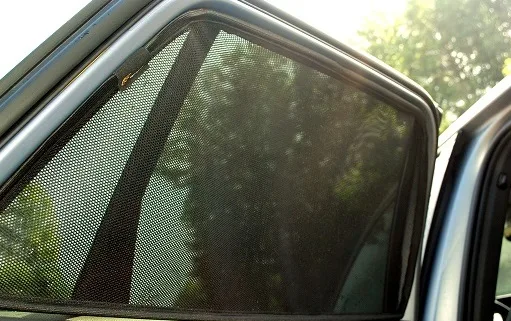
Car Sun Shade Review: Which Windshield Fits Best Today
The best car sun shade is the one that fits your windshield’s width, height, and curve. A custom-fit foldable suits daily parking, a universal accordion style works across more than one car, and a roll-up panel helps when storage space is tight. Choose the wrong size and you get heat gaps, sagging edges, and extra work every time you park. This review compares fit precision, fold size, storage hassle, and value so you can choose the right type.
Verdict


For most drivers, EcoNour Car Windshield Sun Shade is the practical starting point because its expandable overlap gives it a better chance of covering a range of sedan and SUV windshields without jumping straight to custom pricing. That said, fit still depends on your glass shape, mirror placement, and dashboard height. A shade that is “cheap” but leaves edges exposed costs you more in daily annoyance.
📊 Car and Driver’s best overall pick is AutoTech Zone at $32. Source: Best Car Sunshades of 2026, Tested.
Specs at a glance
| Shade style | Fit profile | Storage format | Setup behavior | Notes |
|---|---|---|---|---|
| Accordion-style sun shade | Best on flatter windshields; fit can vary with curve and height | Folds into compact segments | Uses visor support on some models | AutoTech Zone is described this way; Car and Driver names it best overall at $32 |
| Umbrella-style sun shade | Depends on correct windshield width match | Collapses like an umbrella | Fast deployment | Car and Driver’s umbrella-style pick is the Nmoiss Sunshade Umbrella |
| Custom-fit laser-cut shade | Vehicle-specific, edge-to-edge coverage | Typically rolls up | Usually simpler once sized correctly | WeatherTech’s sunshades are laser-cut to fit a vehicle and cost $84 as Car and Driver’s premium pick |
| Universal overlap shade | More forgiving for mixed fleets | Often folds into a pouch | Quick to deploy, fit varies | EcoNour uses an expandable overlap design and includes a storage pouch |

Who is this for?
This is for drivers who park outdoors and want less cabin heat without turning shade storage into a daily chore. It also fits buyers comparing a universal shade against a vehicle-specific option, especially if they split driving between a sedan, SUV, or work truck.
Commuters who park outside
If your car sits in direct sun for hours, fit matters more than marketing claims. A shade that reaches close to the windshield edges, even with a little slack, usually does more useful work than a cheaper panel that leaves mirror cutouts or top corners open.
Drivers with unusual windshields
Tall dashboards, steep glass, and rearview mirror housings create the most fit mistakes. A windshield that looks “close enough” on a product page may still bow at the center or leave gaps at the A-pillars, especially with universal accordion or umbrella styles.
Buyers balancing price and storage
If you hate bulky cargo, the tradeoff is simple: custom-fit shades usually cost more, while universal shades save money but can be fussier to position. Storage bag quality matters here, because a shade that folds badly becomes irritating long before it wears out.
Quick picks
- Best for daily parking: Custom-fit laser-cut shade, because edge-to-edge coverage usually reduces gaps and repeat adjustments.
- Best for mixed vehicles: Accordion-style universal shade, because it balances cost, compact storage, and broad fit potential.
- Best for fast deployment: Umbrella-style shade, because it opens quickly if the windshield width matches.
- Best for tight storage: Roll-up custom-fit shade, because it tends to pack flatter than folded panels.
- Best budget add-on: Simple storage accessories and suction hardware, if the shade already fits but needs better handling.
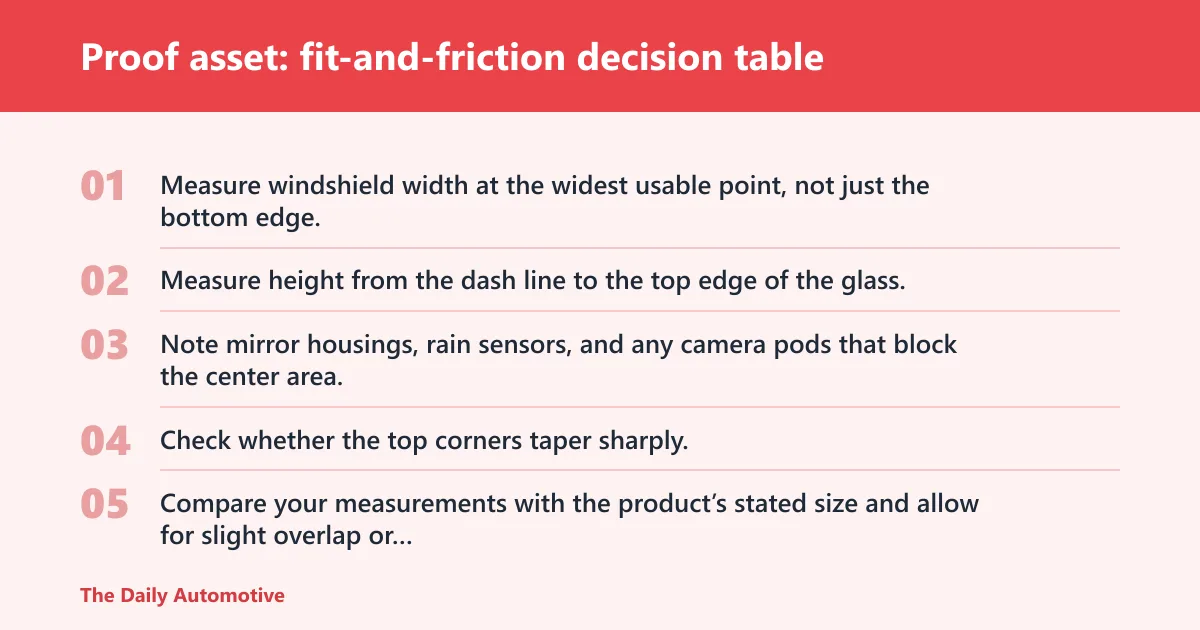
Fit-and-friction decision table
| Shade style | Windshield shape | Storage space | Install speed | Daily-use scenario |
|---|---|---|---|---|
| Accordion-style | Best on standard sedan glass; less forgiving on very tall or heavily curved windshields | Moderate, because folded segments still take some room | Medium | Good for commuters who want a familiar fold-and-place routine |
| Umbrella-style | Works best when width is matched closely to the windshield | Low when collapsed | Fast | Good for rideshare drivers or quick parking-lot stops |
| Custom-fit laser-cut | Best for a vehicle-specific windshield, including mirror cutouts | Low to moderate because it usually rolls up | Fast once sized correctly | Good for drivers who park outside every day and want repeatable coverage |
| Universal overlap | Broadest tolerance for sedan and SUV variation | Moderate | Fast to medium | Good for households that swap cars or do not want a vehicle-specific purchase |
Measurement checklist before buying
- Measure windshield width at the widest usable point, not just the bottom edge.
- Measure height from the dash line to the top edge of the glass.
- Note mirror housings, rain sensors, and any camera pods that block the center area.
- Check whether the top corners taper sharply, since that affects accordion and umbrella fit.
- Compare your measurements with the product’s stated size and allow for slight overlap or slack only if the design is meant to use it.
- If the car has a tall dashboard, add extra attention to lower edge coverage so the shade does not sit on plastic trim instead of glass.
Say your sedan windshield measures 60 inches wide, but the rearview mirror housing hangs low in the middle. A shade that is technically wide enough can still sag around the mirror and leave hot gaps above the dash. That is a fit problem, not a price problem.
What works in a car sun shade
A good windshield sun shade blocks heat and UV rays while the car is parked, covers the obvious openings around the mirror and top corners, and stays in place without constant readjustment. The best designs balance surface coverage with a shape that does not fight the windshield frame.
Heat and UV blocking
Reflective material usually means a silver outer layer that reflects sunlight away from the glass. That helps with heat and UV blocking, but it does not erase cabin heat entirely; it reduces how much solar load enters through the windshield during parking.
Coverage around mirror cutouts and dashboard height
Mirror cutouts help with fit, but they can also create openings if the cutout is too large or the glass shape is unusual. Tall dashboards can steal lower-edge coverage, so a shade that looks wide enough on paper may still leave exposed trim and some direct heating near the base of the windshield.
Stability from visor support or edge tension
Some accordion shades use windshield visors as support, which can help hold the top edge in place. Others depend on spring tension or a snug width match. The more unusual the windshield shape, the more stability depends on precise sizing rather than raw material thickness.
Which car sun shade fits your windshield?
The right fit depends on width, height, and shape, not just whether the car is a sedan, SUV, or truck. A sedan often works with standard universal sizes, while SUVs and trucks more often need taller panels, larger widths, or a custom fit to avoid top and side gaps.
Sedan fit guidance
Most sedans are easiest to cover with accordion or overlap shades because their windshields are usually less tall than those on larger vehicles. Still, compact sedans with steep glass can surprise you, so width and mirror placement matter more than the body style badge on the trunk.
SUV and truck fit guidance
SUVs and trucks often need more height, and that is where many universal shades fail first. A windshield may be wide enough but still leave a strip of exposed glass at the top or bottom, especially when the dash sits high or the glass leans sharply.
Slack, overlap, and size-chart checks
Size charts are only useful if you read them against your own measurements. A little overlap can help on accordion designs, but too much slack causes sagging and edge gaps. For umbrella shades, the width match has to be close enough that the frame can stay spread without forcing the corners out of place.
Suppose a crossover has a 65-inch windshield width and a very tall dash. A 59-inch shade may look close in a listing, but the lower corners can miss the glass entirely. In that case, a larger size or a custom-fit option is the safer buy.
Are custom-fit sun shades better than universal ones?
Custom-fit shades are better when exact coverage matters most, because laser-cut shapes follow the vehicle’s windshield more closely and usually reduce edge gaps. Universal shades still make sense for budget shoppers, shared cars, and drivers who want decent coverage without paying premium pricing.
Coverage gains from laser-cut fit
WeatherTech’s sunshades are laser-cut to fit a vehicle, and that is the core advantage: they can match mirror cutouts, top contours, and edge lines better than generic panels. WeatherTech’s $84 premium price is easier to justify when daily convenience matters more than lowest cost.
Where universal shades still make sense
Universal shades are still useful for drivers who switch cars, want a lower entry price, or do not need perfect edge coverage every day. EcoNour’s expandable overlap design is a good example of a universal approach that aims to cover more windshield shapes without going fully custom.
Price versus convenience tradeoff
Car and Driver’s $32 best overall pick, AutoTech Zone, sits in the middle because it is an accordion-style design rather than a premium laser-cut panel. That middle ground is often where value lives, enough fit control to avoid obvious gaps, without the cost of a vehicle-specific product.
What does not work well
The biggest failures are predictable: odd windshield shapes, tall dashboards, poor mirror clearance, and shades that are the wrong width. Reflective material can also become annoying during setup if glare makes alignment difficult, and some cheaper materials may wear out faster at the folds or edges.
Common fit failures
A shade can be “universal” and still miss the job if the windshield has an unusual curve or a steep rake. Mirror cutouts can be too small, top corners can lift, and the lower edge can sit on the dash instead of the glass. Those are fit errors, not user errors.
Storage pain points
Storage is where many shade owners lose patience. Folding panels can spring open in the back seat, rolling styles may be easier to flatten, and some shades are simply awkward once removed from the windshield. A storage bag or carrier helps, but only if the shade actually fits back into it without a fight.
Durability and glare concerns with reflective material
Silver reflective outer layers are useful, but they can show scuffs, crease wear, and edge fraying over time. They also throw bright glare during setup, which makes alignment harder in direct sun. That is normal for the material, but it is still a real ownership tradeoff.
Alternatives
EcoNour Car Windshield Sun Shade is the better alternative if you want a budget-friendly universal shade with an expandable overlap design. It folds into an included storage pouch, which makes it easier to live with than bulkier panels. The drawback is the same one that follows most universal shades: fit will still depend on your windshield shape and mirror placement.
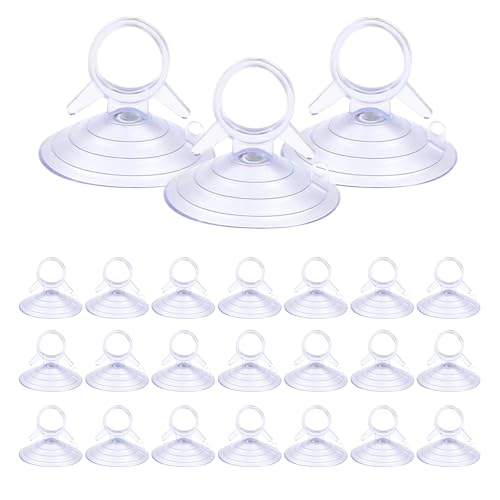
Tecledsn 24PCS Car Glass Windshield Sunshade Suction Cups is not a windshield shade itself, but it can be a useful accessory if you need replacement suction hardware for car accessories on smooth glass. Based on the product listing, the PVC construction and pull-ring design point to simple use, but suction cups are not a substitute for a properly sized sun shade, and they add another part that can fail or loosen.
Should you buy it
Buy a sun shade if your car spends real time in direct sun and you are willing to measure before ordering. If you want the least hassle, lean custom-fit. If you want lower cost and flexible use across cars, a universal accordion or overlap shade is the safer value pick.
Best use cases by driver type
Daily commuters should prioritize repeatable fit and easy storage. Rideshare drivers should favor fast deployment, since frequent stops punish complicated setups. Parents often benefit from a shade that folds or rolls quickly and does not leave sharp edges or oversized loose panels in the cabin.
What to check before you order
Confirm windshield width, height, mirror placement, and whether the product relies on visor support. Check whether the listing includes a storage bag or carrier. Then compare your measurements with the stated size and make sure the shade style matches how much time you want to spend setting it up every day.
When to keep shopping
If your windshield has a tall dash, unusual curvature, or heavy sensor hardware, do not buy on price alone. Keep shopping when the size chart is vague, the fit notes ignore your vehicle type, or the storage method looks inconvenient enough that you will stop using the shade after the first week.
Frequently asked questions
what is the best sun shade for car
The best sun shade for car use is the one that fits your windshield shape and your daily routine. A custom-fit laser-cut shade is usually best for repeat parking, while a universal accordion or overlap shade makes more sense if you need flexibility across different vehicles or a lower price.
do car sun shades really work
Yes, car sun shades really work as a parked-car heat and UV barrier, but they work best when coverage is close to the glass edges. They reduce direct sun load on the windshield, yet they do not make the cabin cool on their own, especially in long exposure.
how effective are car sun shades
Car sun shades are effective enough to reduce heat buildup and UV exposure, especially through the windshield, which is one of the largest solar entry points. Effectiveness depends on fit, material, and how much of the glass is actually covered. Gaps at the mirror or corners reduce the benefit.
are car sun shades worth it
Car sun shades are worth it if you park outside often, care about dashboard wear, or want a less punishing cabin when you return. They are less useful if your vehicle stays in shade or garage parking most of the time, because the fit and storage hassle may outweigh the gain.
which car sun shade fits my windshield
The right shade fits your windshield width, height, and shape, not just your vehicle class. Measure the glass, check mirror cutouts and dash height, then compare those numbers with the product listing. If the windshield is unusually tall or curved, custom-fit is the safer route.
how do I store a car sun shade without damaging it
Store a car sun shade by folding, rolling, or collapsing it the way the maker intended, then place it in the included pouch or carrier if there is one. Avoid forcing creases in the same spot every time, because repeated stress at one fold line is how many shades wear out early.
Products related to this article
Sponsored / affiliate links. As an Amazon Associate I earn from qualifying purchases. I may earn additional commission from eligible campaigns.
 Yidcidu Car Windshield Sun Strip Tint, PET Anti-Glare Windshield Window Tint Film, 51.2" x 8.27" Cuttable Sun Visor Decorative Decals, for Cars Trucks SUVs (Black)
 Tunrisy 51.18"× 7.87" Car Windshield Sun Strip Tint, Waterproof Matte Front Windshield Banner Tint Strip, Vehicle Sun Visor Film Decals, Universal for Cars Trucks SUVs (Black)