Do Key Fobs Need a Battery to Start Your Car
Many people wonder, Do Key Fobs Need a Battery to Start Your Car? It can seem a bit tricky when your car won’t start and you’re not sure if it’s the car or the key fob. This is a common question, especially for those new to modern cars and their fancy gadgets. Don’t worry, we’ll break it down simply.
You’ll learn exactly why your key fob needs power and how to fix it if it doesn’t. Let’s get your car starting again with ease.
How Key Fobs Use Batteries
Key fobs are amazing little devices that let you lock, unlock, and even start your car without needing to put a physical key in an ignition. They work by sending a unique radio signal to your car. This signal tells the car that you are the authorized driver and it’s okay to start.
To send these signals, the key fob needs a small power source. This power source is almost always a tiny battery, much like the ones you find in watches or small electronics.
Think of the battery as the fuel for your key fob’s communication system. Without it, the fob can’t generate the radio waves needed to talk to your car. This is why, even though the car itself has a much larger battery, the key fob relies on its own small battery to function properly.
This battery is designed to last a long time, often for several years, but eventually, it will weaken and need to be replaced.
The Role of the Key Fob Battery
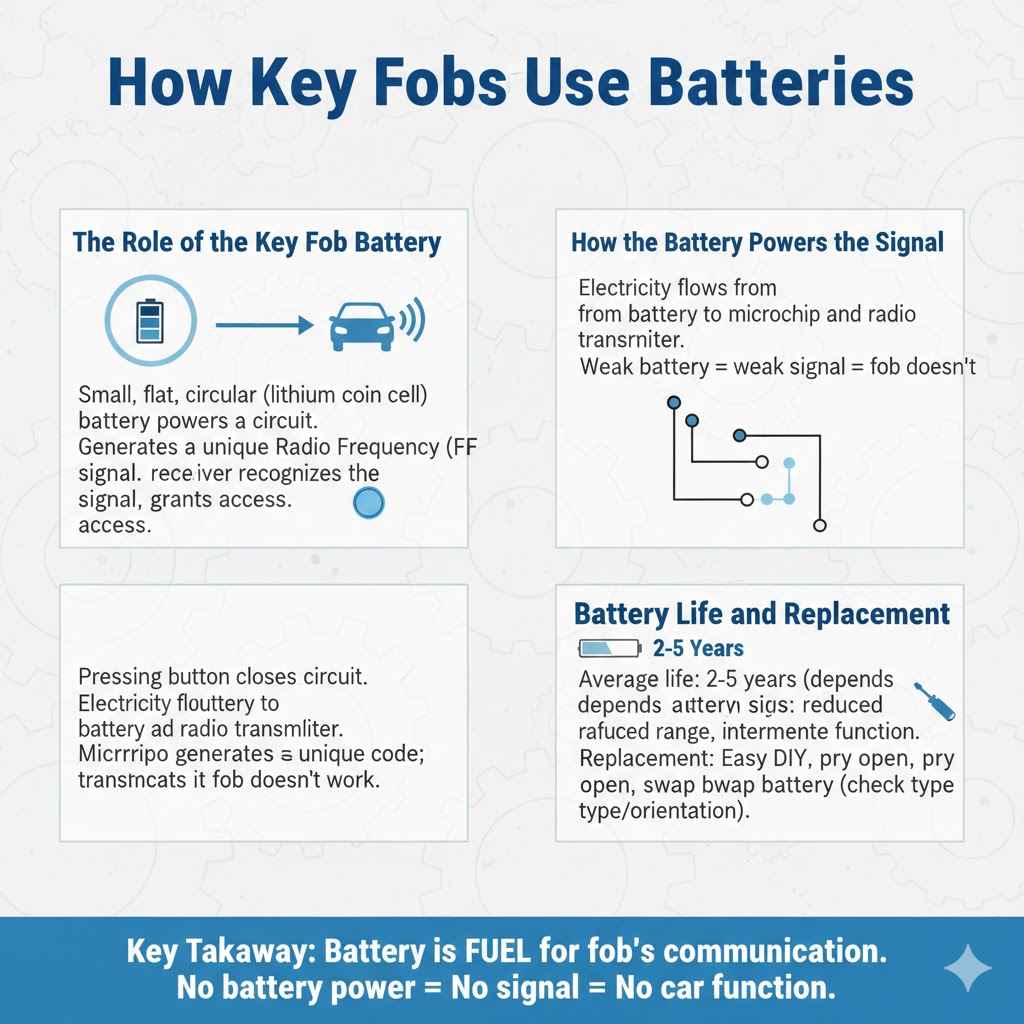
The battery inside your key fob is a small, flat, circular battery, often a lithium coin cell. These batteries are chosen for their long life and compact size, which allows them to fit easily within the small casing of the key fob. When you press a button on your key fob, like the unlock button or the start button, you are activating a small circuit inside.
This circuit draws power from the battery to generate a radio frequency (RF) signal.
This RF signal is a specific code that your car is programmed to recognize. The car’s receiver antennae pick up this signal. If the signal matches the car’s unique code, the car’s computer grants permission to perform the requested action, whether it’s unlocking the doors or allowing the engine to start.
The strength of the battery directly impacts the strength and range of this signal. A weak battery might mean the signal is too weak to reach the car, or it might be corrupted, preventing the car from recognizing it.
How the Battery Powers the Signal
The process starts when you press a button on the key fob. This action closes a small electrical circuit. The battery acts as the power supply for this circuit.
When the circuit is closed, electricity flows from the battery to a small microchip and a radio transmitter. The microchip contains the unique code for your car, and the radio transmitter broadcasts this code as a radio wave.
The battery must provide a steady and sufficient voltage for the microchip to generate the correct code and for the transmitter to broadcast it effectively. If the battery voltage drops too low, the microchip might not function correctly, or the transmitter might not have enough power to send a strong enough signal. This is why a dead or dying battery is the most common reason a key fob stops working.
The battery itself is a consumable part, just like the gasoline for your car’s engine, and it will eventually run out of power.
Battery Life and Replacement
Key fob batteries are designed to last a considerable amount of time. On average, you can expect a key fob battery to last anywhere from two to five years, depending on the usage and the type of battery. Factors like how often you use the buttons, the ambient temperature, and the specific model of your key fob can influence its lifespan.
Some modern key fobs also include features like remote start or proximity sensors, which can consume battery power more rapidly.
When the battery starts to weaken, you might notice that you have to be closer to your car for the fob to work. The signal might also become intermittent, meaning it works sometimes and not others. Eventually, the battery will become too weak to send a signal that the car can detect, and the fob will stop working altogether.
Replacing the battery is usually a straightforward process. Most key fobs can be opened by gently prying them apart with a small flathead screwdriver or a plastic prying tool. You then remove the old battery and insert a new one of the same type, ensuring the positive and negative ends are correctly oriented.
Why Do Key Fobs Need a Battery to Start Your Car
The primary reason your key fob needs a battery to start your car is due to the technology used for modern vehicle access and ignition. Instead of a traditional metal key inserted into a physical ignition cylinder, most cars today use a keyless entry and ignition system. This system relies on the key fob communicating wirelessly with the car.
The key fob contains a transponder chip that emits a unique identification code. When you are near the car and press the start button, the car’s receiver detects this code.
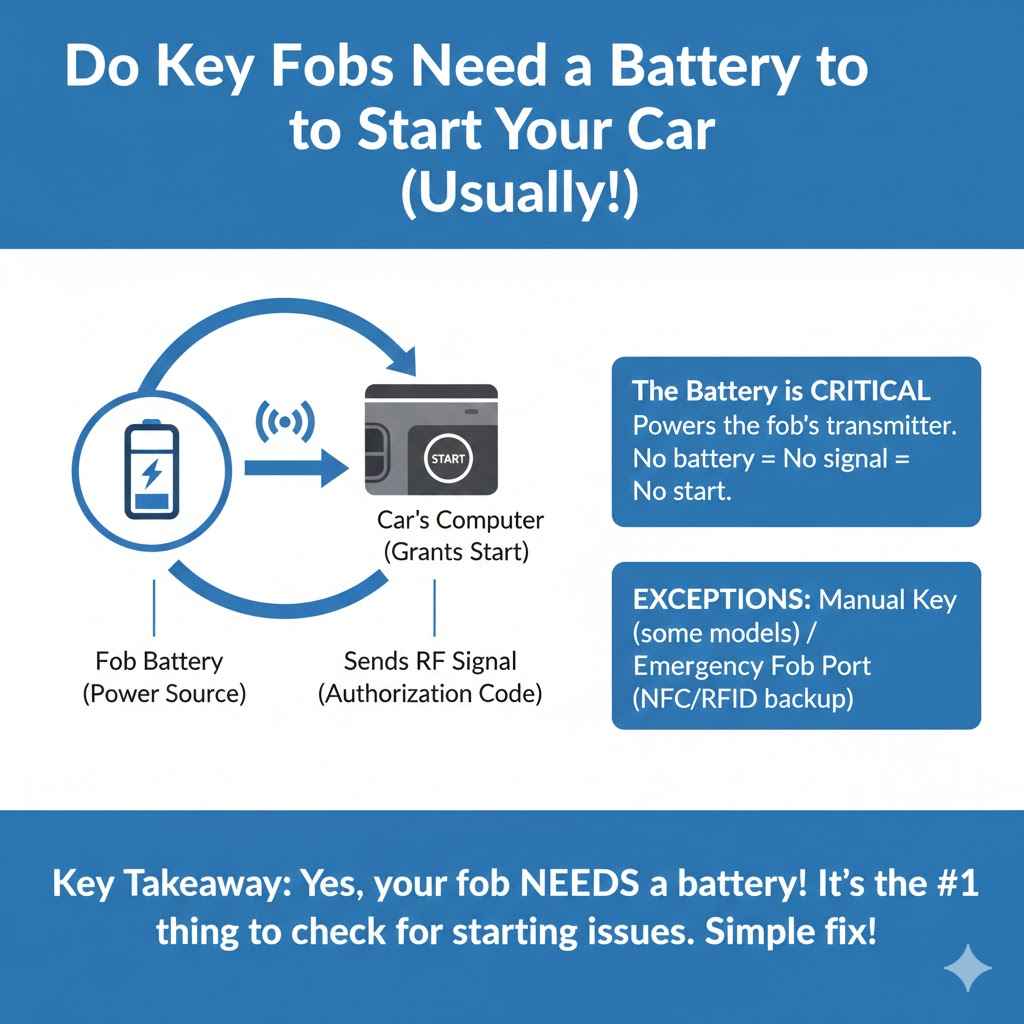
For the transponder chip to emit its code, and for the button press to be registered and transmitted, the key fob requires a power source. This is where the small battery inside the fob comes into play. Without a functioning battery, the key fob cannot power up its internal components, send its signal, or communicate with the car’s security system.
Therefore, the battery is absolutely essential for the key fob to perform its role in starting the vehicle.
The Role of the Transponder Chip
The transponder chip is a critical component within your key fob. It’s essentially a tiny radio transmitter and receiver. When you press a button on the fob, it activates the transponder chip.
This chip then sends a specific radio signal containing a unique code that identifies your key fob to your car. This code is like a digital fingerprint for your key, and the car’s computer is programmed to recognize it.
This system is a form of anti-theft technology. Even if someone were to get hold of your physical key fob, without the correct transponder code being transmitted, they wouldn’t be able to start the car. The battery is what powers this transponder chip, allowing it to generate and transmit the signal.
Without battery power, the transponder remains dormant, unable to communicate with the car.
Keyless Ignition Systems
Keyless ignition systems, often called push-button start, have become incredibly popular because they offer convenience. You no longer need to find your car key and insert it into an ignition slot. Instead, as long as the key fob is detected within the car’s proximity (usually within a few feet), you can simply press the brake pedal and push the start button to turn on the engine.
This detection and authorization process is entirely wireless.
The key fob’s battery is what enables this wireless communication. It powers the fob to continuously broadcast a low-frequency signal. When the car’s sensors detect this signal, they confirm that the correct fob is present.
Then, when you press the brake and the start button, the car’s computer checks the signal again and, if valid, allows the engine to crank and start. If the fob’s battery is dead, the car won’t detect it, and the keyless ignition system will not engage, preventing the car from starting.
When a Key Fob Battery is Low
When your key fob battery is running low, you’ll likely start to notice some signs. These are your car’s way of letting you know that the fob is losing power and might soon stop working altogether. It’s important to pay attention to these indicators so you can replace the battery before you get stranded.
One of the first things you might notice is a reduced range for your key fob. This means you have to be much closer to your car for the buttons to work. You might have to stand right next to the driver’s door to unlock it, whereas before you could do it from across the parking lot.
You might also find that the buttons sometimes don’t respond, or they require multiple presses before the car registers the command. This is because the weak battery is sending an inconsistent or weak signal.
Signs of a Weak Battery
Several tell-tale signs indicate your key fob battery is on its way out. The most common is a diminished range; you’ll have to stand closer to your vehicle for the fob to communicate. You might also experience delayed responses from the fob.
For instance, when you press the unlock button, it might take a second or two longer than usual for the doors to unlock. In some cases, the fob might only work intermittently.
Some vehicles will also provide a dashboard warning light or a message on the infotainment screen alerting you to a low key fob battery. This is a direct notification from the car’s system, which is designed to monitor the signal strength of the fob. If your car has a feature that shows the fob’s battery level, this would be the place to check.
Ignoring these signs can lead to the fob completely failing, leaving you unable to start your car remotely or even unlock it without using the physical emergency key.
What Happens if the Battery Dies Completely
If your key fob battery dies completely, the fob will no longer be able to transmit any signal to your car. This means you won’t be able to use the remote to unlock your doors or start the engine using the push-button start system. Your car will essentially not recognize that you have the correct key present.
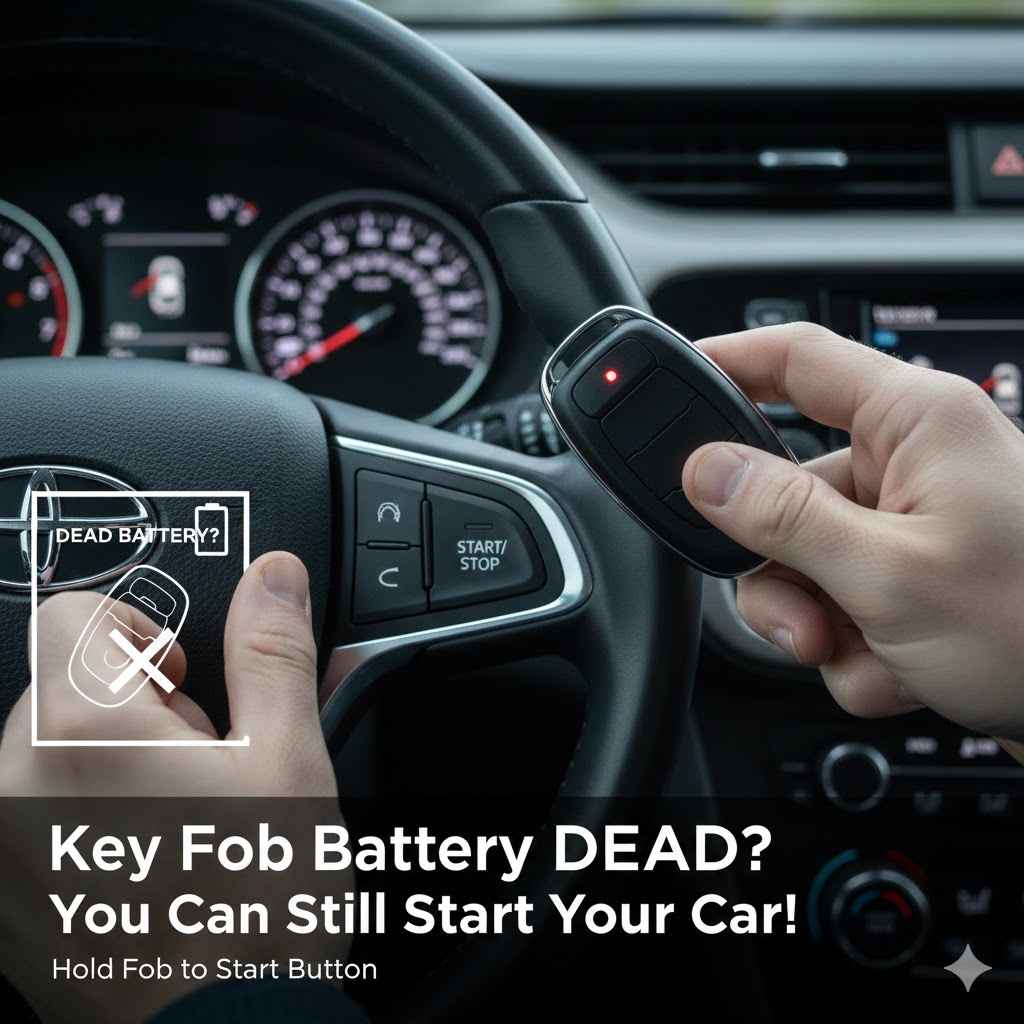
However, most cars are designed with a backup plan for this exact situation. Usually, there’s a hidden physical key inside your key fob or a separate metal key provided with your car. You can use this physical key to manually unlock the driver’s door.
Once inside, there’s typically a specific place where you can hold the dead key fob very close to the start button or insert it into a slot near the steering column. This allows the car’s internal antenna to pick up any residual signal from the fob or activate a direct connection, enabling you to start the engine.
Replacing Your Key Fob Battery
Replacing a key fob battery is usually a simple task that most car owners can do themselves without needing to visit a dealership or a mechanic. The process typically involves opening the key fob, removing the old battery, and inserting a new one. The specific steps can vary slightly depending on the make and model of your car and the design of its key fob.
Before you start, it’s helpful to know the type of battery your key fob uses. You can often find this information in your car’s owner’s manual or by looking at the old battery once you have it out. Common battery types include CR2032, CR2025, and CR2016 coin cells.
These are readily available at most supermarkets, drugstores, and electronics stores.
How to Access the Battery
To get to the battery, you’ll first need to open the key fob itself. Many key fobs have a small seam running around their edge. You can usually insert a small, flathead screwdriver or a specialized plastic prying tool into this seam and gently twist to separate the two halves of the fob.
Some fobs might have a small latch or a button that needs to be pressed to release a cover or a section of the fob.
It’s important to be gentle during this process to avoid damaging the plastic casing or any internal components. If your key fob has a physical emergency key attached, you might need to eject that first. Often, there’s a small switch or button on the side of the fob that, when pressed, releases the metal key.
Once the key is out, it might reveal a slot where you can insert your prying tool to open the rest of the fob.
Choosing the Right Replacement Battery
The most important step in replacing your key fob battery is to use the correct type of replacement battery. Using the wrong battery can lead to the fob not working or even damage to the fob’s electronics. Your car’s owner’s manual will specify the exact battery model number.
This is usually a code like CR2032, CR2025, or similar. These numbers refer to the battery’s size and chemistry (CR usually means lithium coin cell).
Once you have identified the correct battery type, you can purchase it. It’s a good idea to buy a reputable brand to ensure reliability and longevity. Once you have the new battery, pay close attention to the orientation of the positive (+) and negative (-) sides.
The battery should be inserted with the correct side facing upwards, as indicated by markings inside the key fob’s battery compartment. Incorrect installation will prevent the fob from working.
Troubleshooting Common Key Fob Issues
Even with a new battery, sometimes key fobs can still act up. There are a few common issues that can cause your key fob to stop working or behave erratically. Understanding these problems can help you troubleshoot and get your fob back in working order quickly.
One frequent issue, besides a dead battery, is interference. Other electronic devices or even strong radio signals in the area can sometimes disrupt the communication between your key fob and your car. This is less common but can happen, especially in densely populated areas or near radio towers.
Interference from Other Devices
Radio frequency (RF) interference can sometimes prevent your key fob from communicating with your car. This happens when other electronic devices or radio signals are broadcasting on a similar frequency to that of your key fob. Devices like portable Wi-Fi hotspots, certain cordless phones, or even strong broadcast radio stations can potentially cause interference.
The stronger the interfering signal, the more likely it is to block your key fob’s signal.
If you suspect interference, try moving your car to a different location, away from potential sources of disruption. For example, if you’re trying to start your car in a garage filled with electronic equipment, moving it outside to an open area might resolve the issue. While rare, it’s a possibility to consider if your key fob suddenly stops working without any obvious reason like a dead battery.
Key Fob Not Recognized
If your car doesn’t recognize your key fob even after replacing the battery, there could be a few reasons. The most common is an incorrectly installed battery. Double-check that the battery is oriented correctly with the positive side up (or as indicated in the fob).
Also, ensure the battery is making good contact with the terminals inside the fob.
Another possibility is that the key fob itself has become damaged. If it’s been dropped, exposed to water, or experienced some other physical trauma, internal components might be broken. In such cases, the fob may need to be reprogrammed by a dealership or a specialized locksmith.
Some cars also have a limit on the number of key fobs that can be programmed to them, so if you have too many, an older one might stop working.
Reprogramming Your Key Fob
If you’ve replaced the battery and your key fob still isn’t working, or if you’ve lost a key fob and need to program a new one, reprogramming might be necessary. The process for reprogramming a key fob varies greatly between car manufacturers and models. Some vehicles allow you to reprogram the fob yourself using a specific sequence of actions involving the ignition, door locks, and the fob buttons.
These instructions are usually found in your car’s owner’s manual.
However, for many modern cars, especially those with more complex security systems, you will need to visit a dealership or a qualified automotive locksmith. They have specialized diagnostic tools that can communicate with your car’s computer and program the new fob to your vehicle. This process typically involves entering a security code or using a diagnostic port to establish communication.
Key Fob Battery Life Statistics
The longevity of key fob batteries is a significant aspect of their convenience and reliability. Understanding the typical lifespan and usage patterns can help car owners anticipate when a replacement might be needed. While exact figures can vary widely based on car model, fob design, and usage habits, general statistics provide a good guideline.
On average, a key fob battery is expected to last between two to five years. Some sources suggest that with moderate use, a battery might last up to three years. Heavy users, those who frequently use functions like remote start or lock/unlock their car from a distance, may find their battery life closer to the lower end of this range.
Conversely, a fob with very infrequent use might last even longer than five years.
Factors Affecting Battery Life
Several factors influence how long a key fob battery will last. The primary factor is usage. Every time you press a button, the battery expends energy to send a signal.
Fobs with more buttons or more complex functions, such as those that allow for remote engine start or have proximity sensors that keep the car “aware” of the fob’s presence, will drain the battery faster.
Temperature also plays a role. Extreme heat or cold can affect battery performance and shorten its lifespan. For example, leaving your car in a very hot environment for extended periods can degrade the battery more quickly.
Similarly, very cold temperatures can temporarily reduce battery power, making the fob seem weaker until it warms up.
Battery Replacement Costs
The cost of replacing a key fob battery is generally quite low. If you plan to replace it yourself, the cost of a single coin cell battery typically ranges from $2 to $5, depending on the brand and where you purchase it. These batteries are widely available at drugstores, supermarkets, and online retailers.
If you choose to have a dealership or a professional locksmith replace the battery for you, the cost will be higher. You will likely be charged for the battery itself, plus a service fee for their time and expertise. This service fee can range from $10 to $50 or more, depending on the shop’s labor rates.
For a simple battery change, this professional service is often unnecessary, but it might be an option if you are uncomfortable doing it yourself or if the fob is particularly difficult to open.
Do Key Fobs Need a Battery to Start Your Car
To wrap up, yes, absolutely. Your key fob relies on a small internal battery to power its transmitter and send the unique signal that tells your car it’s okay to start. Without that battery, the fob is just a piece of plastic.
If your car isn’t starting and you suspect the fob, checking and replacing its battery is your first and most important step. It’s a simple fix that can get you back on the road quickly and easily.
Frequently Asked Questions
Question: Can a car start without a key fob battery
Answer: If your car has a push-button start, it cannot start without a functional key fob, which requires a battery to send its signal. However, most cars have a backup method, like a hidden physical key or a specific slot to place the dead fob, that can be used to start the engine in emergencies.
Question: How long does a key fob battery last
Answer: A key fob battery typically lasts between two to five years, depending on how much you use the fob and the environmental conditions it’s exposed to.
Question: What happens if I put the wrong battery in my key fob
Answer: Putting the wrong battery in your key fob can prevent it from working, or in some cases, it might damage the fob’s electronic components due to incorrect voltage or size.
Question: Can a smartphone replace a car key fob
Answer: Some newer vehicles allow you to use your smartphone as a digital key, but this is a feature that must be supported by both your car and your phone. It’s not a universal replacement for a physical key fob.
Question: Where can I buy a replacement key fob battery
Answer: You can buy replacement key fob batteries at most drugstores, supermarkets, electronics stores, and online retailers. They are common coin cell batteries.
Conclusion
Your key fob needs a battery to start your car because it sends a wireless signal. This battery allows the fob to communicate with your car, confirming your identity as the owner. If your fob isn’t working, a dead battery is the most likely culprit.
Replacing it is usually simple and inexpensive. Always check your car’s manual for specific instructions. Keeping a fresh battery in your fob ensures you can always start your car reliably.