3 Best Radiator Flushes for Cars: Based on Specs and Reviews
The best radiator flush depends on the deposit: use a mild cleaner for routine scale, a heavy-duty flush for rust and sludge, and an oil-contamination remover if coolant is oily or foamy. Pick the wrong one and you can leave residue behind, clog the heater core, or waste a coolant change. This guide compares three top flushes by contamination type and tells you which one fits each cooling-system job.
Quick comparison
| Product | Badge | Best for | Price | ||
|---|---|---|---|---|---|
 |
BlueDevil 3 in 1 Radiator Flush | 1 Quart | Automotive OilBlueDevil Products | Our pick | 1 Quart · Multi-Vehicle Formula · Dual-Action | $12.99
Price as of 21 Oct 2026
|
View |
 |
Design Engineering Radiator Relief Cooling System Flush 16Design Engineering | Budget pick | 16 oz · Made in USA · Rust Removal | $9.99
Price as of 21 Oct 2026
|
View |
 |
Liqui Moly Engine Flush Plus 300mlLiqui Moly | Also great | 300ml · Engine Flush Plus · Liqui Moly | $15.52
Price as of 21 Oct 2026
|
View |
This page ranks products by failure mode first, not brand name. That matters because a flush for light maintenance is a poor match for gelled Dex-Cool, while a rust remover may fit a neglected mixed-metal system better.
How we chose
The shortlist focuses on contamination type, chemistry, compatibility, and treatment strength. That means liquid versus powder matters, but so does whether the formula is acid-free, whether it needs a neutralizer, and whether it is safe for aluminum, copper, brass, cast iron, plastic parts, rubber seals, and hoses.
Dwell time and coverage matter too. A cleaner that handles routine coolant service is not the same thing as a deep-clean formula for rust, oil, scale, or sludge. The best fit is the one that matches the deposit you actually have.
We also weighed package size and practical dose range. A product that treats up to 12 quarts is not the same fit as one aimed at a 3-gallon cooling system or a powder formula built for heavier contamination.
CRC Thermocure: best for rust
CRC Thermocure fits drivers dealing with rust-heavy cooling systems, especially older mixed-metal setups or vehicles that have been neglected for a long time. It is a 32 oz, water-based cleaner that is described as non-toxic, non-corrosive, and non-flammable, and it is said to treat up to about 3 gallons.
That profile makes it a strong match when the system needs rust removal without a harsher acid-based approach. It is also a sensible choice when you want a cleaner that is easier on aluminum parts, plastic components, and rubber seals than a more aggressive formula can be.
The drawback is that it is aimed mainly at rust. If the cooling system also has heavy sludge, oil contamination, or gelled Dex-Cool, a broader cleaner or a powder treatment may be the better fit.
Why its water-based, non-corrosive formula matters
Water-based flushes are often the safer place to start when the goal is corrosion removal without stripping the system too aggressively. Non-corrosive chemistry lowers the risk of damaging aluminum radiators, plastic tanks, and hose materials during a flush.
Where it fits in a 3-gallon cooling system
That 3-gallon treatment range makes it a practical option for many light-truck and passenger-car cooling systems. It is less about brute force and more about targeted rust cleanup before you refill with fresh coolant.
Pros and cons
- Pros: rust-focused, water-based, non-toxic, non-corrosive, suitable for many mixed-material systems.
- Cons: not the strongest match for sludge, oil, or gel contamination.
Prestone AS105: best for routine maintenance
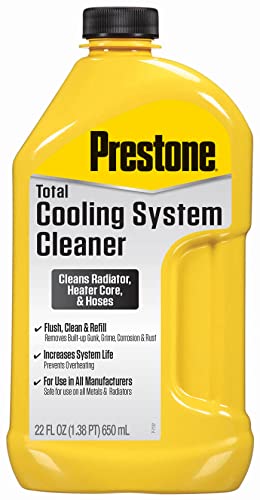
Prestone AS105 is the better fit for routine cooling-system cleaning when the goal is maintenance rather than recovery. It is a 22 oz total cooling system cleaner marketed as non-toxic and non-acidic, which makes it a practical general-purpose choice for the radiator, heater core, and hoses.
Use this when the system is due for a service and the buildup is still moderate. It is a sensible answer for drivers who want a cleaner that targets everyday residue without moving straight to a heavy restoration product.
The drawback is strength. For serious rust, thick sludge, or coolant gel, this is usually not the most aggressive option on the shelf.
Why it fits general-purpose cleaning
Non-acidic chemistry suits routine service because it is easier to pair with an ordinary coolant change. It also tends to be the safer choice when you are cleaning the full circuit, including the heater core and hoses, rather than chasing a severe blockage.
What its 22 oz size means in practice
A 22 oz bottle is best understood as a maintenance-size cleaner, not a dramatic repair product. It is sized for regular flush intervals and moderate contamination, not for systems that have been ignored long enough to build scale or sludge in layers.
Pros and cons: pros: non-toxic, non-acidic, general-purpose, good
- Pros: non-toxic, non-acidic, general-purpose, good for radiator, heater core, and hoses.
- Cons: less suited to heavy rust, oil contamination, or stubborn gel.
BlueDevil Radiator Flush: best for deep cleaning
BlueDevil Radiator Flush is the stronger all-around deep-clean pick in this group. It is a 32 oz product that is described as removing rust, grease, grime, and scale, and it treats cooling systems up to 12 quarts.
That wider treatment range and broader cleaning claim make it the better match when the system has more than light residue. It is the choice for a deep-cleaning flush when the deposits are a mix of oily film, dirt, and scale.
The drawback is the same one that comes with most stronger flushes: it is not always the best first move for delicate or lightly contaminated systems. If the problem is mainly routine maintenance, a milder cleaner can be enough.
Rust, grease, grime, and scale removal
This is the product to look at when contamination is mixed, not singular. A system that has rust plus oily residue plus mineral scale usually needs more than a mild maintenance flush.
How its 12-quart treatment range compares
Treating up to 12 quarts gives it coverage for many passenger vehicles. That matters because dose range should match system size, or the cleaner can be diluted too much to do useful work.
Pros and cons: pros: broader cleaning range, handles
- Pros: broader cleaning range, handles rust and oily deposits, good for deeper service.
- Cons: may be more than you need for routine maintenance.
Radiator flush decision table
This table maps the contamination first, then the cleaner. That order matters more than brand loyalty.
| Contamination type | Best match | Why it fits | Watch-outs |
|---|---|---|---|
| Rust | CRC Thermocure | Water-based, non-corrosive rust removal with a 32 oz bottle and up to 3 gallons of coverage. | If rust comes with oily film or sludge, you may need a broader cleaner afterward. |
| Scale | BlueDevil Radiator Flush | Built for rust, grease, grime, and scale, with a 32 oz size and up to 12 quarts of coverage. | Severe scale can still point to a clogged heater core or thermostat issue. |
| Sludge | BlueDevil Radiator Flush | Strong general deep-clean choice when deposits are mixed and heavy. | If sludge is thick and tar-like, inspect hoses, radiator passages, and the thermostat before flushing. |
| Gelled Dex-Cool | IRONTITE Thoro-Flush | Powder formula aimed at rust, scale, oil, sludge, and gelled Dex-Cool. | A gel problem can also mean a contaminated system that needs more than one flush cycle. |
| Oily residue | IRONTITE Thoro-Flush | Strong match for oil, sludge, and contamination that a mild cleaner may miss. | Oil in coolant can point to a failed gasket or another mechanical issue. |
| Routine maintenance | Prestone AS105 | Non-toxic, non-acidic general-purpose cleaner for radiator, heater core, and hoses. | Not the first pick for heavy rust or hard scale. |
Radiator flush vs coolant flush: what’s the difference?
A radiator flush cleans contamination out of the cooling system, while a coolant flush is the service that replaces old coolant and often includes the cleaning step. The two terms overlap in everyday use, but the important difference is whether you are cleaning deposits, replacing fluid, or doing both.
That matters because some products are built for residue removal and some are just part of the service cycle. A flush should almost always be followed by fresh coolant refill, and the refill has to match the vehicle’s coolant specification.
What each service is meant to remove
A cleaning flush targets rust, scale, sludge, gel, and oily residue. A coolant change restores the antifreeze package and corrosion protection after the old fluid is drained out.
When a flush is enough and when you need inspection first
If the coolant is discolored but the system still circulates normally, a proper flush may be enough. If the heater goes cold, the engine runs hot, or the overflow bottle shows heavy contamination, stop and inspect before you keep flushing.
When to stop and check hoses, thermostat, heater core, or water pump
- Stop if the drain comes out with chunks, gel, or thick oily residue.
- Inspect hoses if they feel soft, swollen, cracked, or clogged.
- Check the thermostat if the engine warms up unevenly or stays hot after a flush.
- Isolate the heater core if cabin heat is weak or inconsistent.
- Inspect the water pump if flow remains poor after the system is refilled.
Which one should you buy?
Pick the flush by contamination first. If rust is the main issue, start with CRC Thermocure. If you need a routine service cleaner, Prestone AS105 is the better match. If the system has mixed deposits, BlueDevil Radiator Flush is the broader deep-clean option.
For sludge, oily residue, or gelled Dex-Cool, neither routine cleaner nor simple rust remover is the right fit. That is where a powder treatment such as IRONTITE Thoro-Flush matters more, and where a gel-specific cleaner like Rislone Hy-per Cool Super Flush can be the better contamination match.
Best by budget
Design Engineering Radiator Relief is presented as a value-leaning maintenance pick because it is a 16 oz bottle, uses about 1 oz per quart, and adds corrosion inhibitors and anti-foaming agents. It is the kind of product to choose when you want a maintenance flush and compatibility with all antifreeze and coolant mixtures matters more than aggressive cleaning.
Best by contamination type
For rust, CRC Thermocure is the cleanest match. For sludge and Dex-Cool gel, IRONTITE Thoro-Flush is the stronger contamination-specific choice because it is a 16 oz powder formula that is aimed at rust, scale, oil, sludge, and gelled Dex-Cool. For coolant gel plus acid neutralization, Rislone Hy-per Cool Super Flush is the specialized option to consider.
Best by vehicle material and coolant type
For aluminum-heavy systems, choose a formula that is explicitly non-corrosive or safe for aluminum, plastic, and seals. That makes CRC Thermocure, Prestone AS105, and Design Engineering Radiator Relief easier to place in modern cooling systems than a harsher cleaner would be.
For older mixed-metal systems with cast iron, copper, and brass, a deeper cleaner can be useful if deposits are heavy. That is where BlueDevil and IRONTITE are more relevant, especially when the problem is not just maintenance residue.
Say your compact car has milky coolant, weak cabin heat, and a slow temperature climb after idling. A mild maintenance flush is unlikely to fix that by itself. The better first step is to match the cleaner to the visible contamination, then inspect the thermostat and heater core if flow still looks poor after the service.
Suppose an older truck with a copper-and-brass core shows rusty coolant but no oil film. That is a straightforward rust case, so a rust-focused cleaner makes more sense than a gel remover. The decision changes only because the deposit changed.
Frequently asked questions
What is the best radiator flush product?
The best radiator flush product depends on the deposit, not the logo on the bottle. For rust, CRC Thermocure is the best fit here. For routine maintenance, Prestone AS105 is the cleaner match. For mixed heavy deposits, BlueDevil is the broader deep-clean option.
What is the best radiator flush?
If you want one answer by contamination type, use CRC Thermocure for rust, Prestone AS105 for maintenance, and BlueDevil for deeper mixed deposits. There is no universal winner because a flush that is strong enough for sludge can be more than you need for routine service.
How do you flush a car radiator?
Drain the old coolant, add the chosen cleaner, run or soak it for the time the product requires, drain again, and rinse until the fluid runs clear. Then refill with the correct coolant mix, bleed trapped air, and check for leaks, weak heat, or temperature rise.
What is the best radiator flush for aluminum radiators?
For aluminum radiators, the safer pick is usually a non-corrosive or non-acidic formula. CRC Thermocure, Prestone AS105, and Design Engineering Radiator Relief are easier matches when you want compatibility with aluminum, plastic parts, and rubber seals to matter as much as cleaning power.
What is the best radiator flush for sludge and clogging?
For sludge and clogging, BlueDevil Radiator Flush is the broad deep-clean option in this group, while IRONTITE Thoro-Flush is the stronger powder choice for sludge, oil, and gelled Dex-Cool. If clogging is severe, inspect the heater core, hoses, and thermostat before assuming a flush alone will solve it.
Products related to this article
Sponsored / affiliate links. As an Amazon Associate I earn from qualifying purchases. I may earn additional commission from eligible campaigns.