Dry Cell Battery for Car Audio: What It Is and How to Choose One
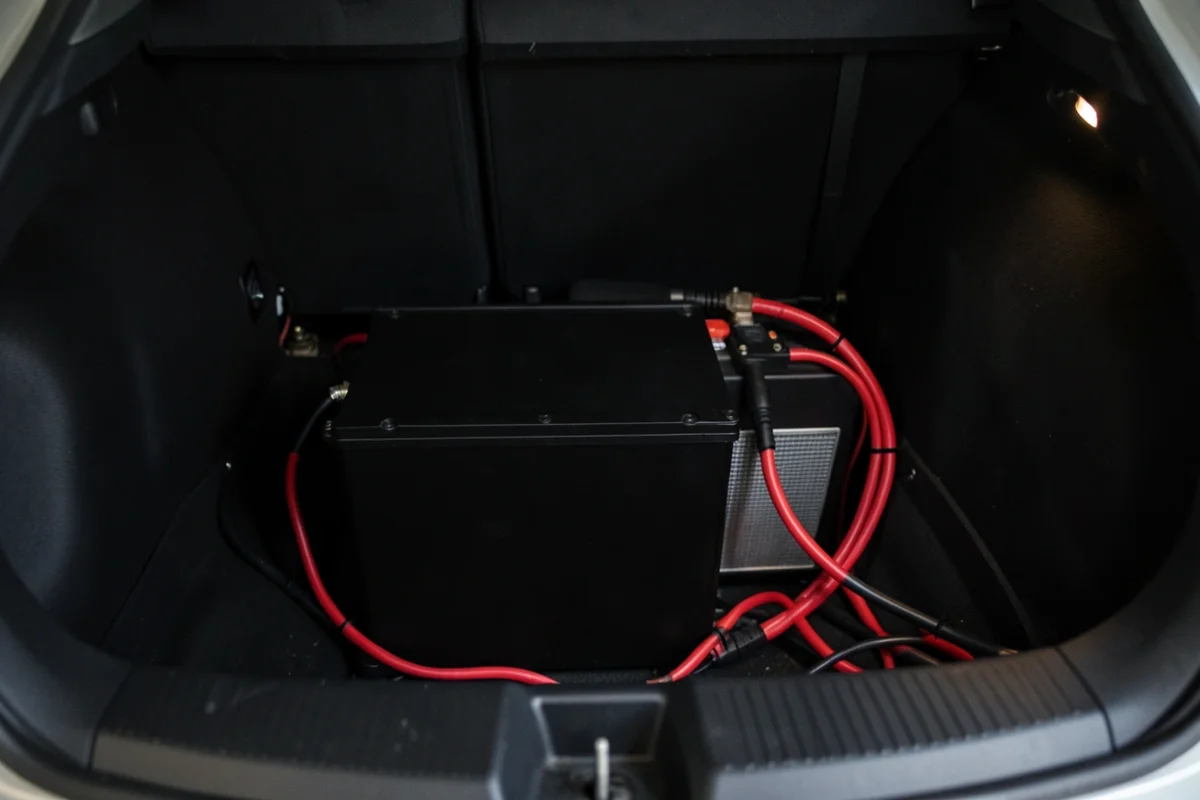
A “dry cell” battery for car audio is almost never a true dry cell in the strict battery-chemistry sense — it’s a sealed AGM (Absorbed Glass Mat) auxiliary battery built to deliver the sudden bursts of current a car audio amplifier demands without dimming your headlights or draining your car’s starting battery.
If you’ve added an amplifier or subwoofer setup that pulls more current than your factory electrical system was designed to handle, a dedicated power cell battery mounted near the amp is one of the most common fixes installers reach for. Below is a plain-language explanation of what these batteries actually are, when you genuinely need one, how they compare to a capacitor, and what to look for before you buy.
What Does “Dry Cell” Actually Mean in Car Audio?
In strict battery terminology, a true dry cell is a single-use, non-rechargeable chemistry — the zinc-carbon or alkaline cells you’d find in a flashlight or a TV remote. That chemistry isn’t used in any car audio product, and it can’t deliver the hundreds of amps a car amplifier needs on a bass hit.
What’s actually sold under names like “dry cell battery for car audio” is an AGM (Absorbed Glass Mat) battery: a sealed lead-acid battery where the electrolyte is absorbed into a fiberglass mat instead of sitting as free liquid, the way it does in a traditional flooded (“wet cell”) car battery. Because there’s no free-flowing liquid to leak, marketing sometimes calls these AGM power cells “dry,” even though the term is being used loosely rather than in its original chemistry sense. That sealed design is also what lets these batteries mount in any position — even on their side — which matters in a tight trunk installation.
If you want a deeper look at how AGM chemistry works for a vehicle’s main starting battery, see our guide to what AGM car batteries are. The rest of this guide focuses specifically on how that same AGM design is used as a second, dedicated battery for car audio.
800-WATT AGM POWER CELL
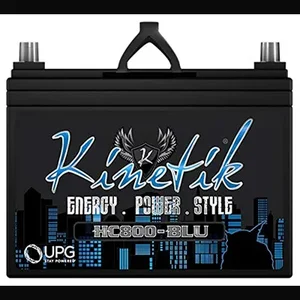 |
Kinetik HC800-BLU 12V 800 Watt AGM Power Cell – $114.99 A sealed, spill-proof AGM auxiliary battery sized for mid-to-large car audio amplifiers that need extra current on hard bass hits.
|
Why Car Audio Systems Need a Dedicated Power Cell
Your car’s factory battery and alternator are sized to start the engine and run everyday accessories — lights, climate control, infotainment. A powerful amplifier doesn’t draw a steady load like those systems; it demands short, extremely high bursts of current on every deep bass hit, sometimes far beyond what the alternator can supply in that instant.
When that happens, the amp pulls the difference straight from the electrical system’s voltage, which is why heavy bass can make your headlights dim or your dash lights flicker in time with the music — a classic sign of voltage sag under a high-current load. A dedicated AGM power cell mounted close to the amp acts as a local reserve: it supplies those brief current spikes on the spot instead of asking the starting battery and alternator to cover the whole demand through a long run of cable.
Dry Cell Battery vs. Capacitor: Which Do You Actually Need?
This is one of the most common questions once someone understands they have a voltage-sag problem, and the honest answer is that batteries and capacitors solve slightly different parts of it.
- A capacitor charges and discharges almost instantly (in milliseconds), which makes it good at smoothing extremely brief current spikes, but it stores far less total energy and doesn’t add meaningful reserve capacity for sustained heavy bass.
- A dry cell (AGM) battery stores much more total energy and can keep supplying high current for longer stretches — a better fit when your system is drawing hard for more than an instant, such as extended bass-heavy passages.
Many competition-level and larger installs use both together: the battery for sustained reserve capacity, the capacitor for the very fastest transient spikes. If you’re still deciding whether you need a second battery at all, our guide on whether you need a battery isolator for car audio walks through how a second battery is wired in safely, and if you’re considering a lithium option instead of AGM, see how to run lithium batteries for car audio.
Popular AGM Power Cells for Car Audio
AGM power cells built for car audio are typically sold by their maximum current (in amps) or wattage rating rather than the ampere-hour rating used for starting batteries. Here’s how three commonly recommended options compare:
| Battery | Current / Wattage | Price | Best For |
|---|---|---|---|
 Kinetik HC600B Kinetik HC600B |
750A | $59.99 | Smaller single-amp systems on a budget |
 Kinetik HC800-BLU Kinetik HC800-BLU |
800W | $114.99 | Mid-to-large single-amp setups |
 Kinetik HC1200-BLU Kinetik HC1200-BLU |
1200W | $149.99 | Multiple amps or competition-level SPL builds |
How to Choose the Right Battery for Your Setup
- Match capacity to your amp, not just the box: look at your amplifier’s actual RMS power draw at the volume you actually listen at, not only its peak “max power” rating, when comparing against a battery’s current rating.
- Check physical fit and mounting: measure your trunk or under-seat space and confirm the battery’s dimensions and terminal style (side-post studs vs. threaded terminals) before ordering.
- Confirm it’s genuinely sealed/AGM: a true sealed AGM power cell is spill-proof and safe to mount in more orientations than a flooded battery — verify this in the listing if you plan to mount it on its side.
- Size your wiring to the battery, not just the amp: the power wire, ground, and fuse between your starting battery, the new power cell, and the amp all need to be rated for the full current your system can draw — a wire gauge chart from your amp or battery manufacturer will specify the right size for your cable run length.
Installation and Safety Basics
A dry cell/AGM power cell for car audio is usually wired in parallel with your starting battery, close to the amplifier, using an isolator or a distribution block so the two batteries share the load without draining each other unexpectedly. A few safety basics apply regardless of which battery you choose:
- Always fuse the power wire close to the battery it connects to, sized for that specific wire’s rating.
- Disconnect the negative terminal on your main battery before working on any high-current wiring.
- Secure the new battery so it can’t shift or short against metal during driving.
- Keep both terminals covered when the battery isn’t actively being wired.
If you’re not comfortable running heavy-gauge power wiring yourself, a car audio installer can add a dedicated power cell safely in under an hour for most single-amp setups.
Frequently Asked Questions
What Is a Dry Cell Battery for Car Audio?
A “dry cell” battery for car audio is typically an AGM (Absorbed Glass Mat) auxiliary battery, not a true dry cell chemistry. It’s a sealed, spill-proof battery designed to supply the high, sudden current bursts a car audio amplifier needs, in addition to your car’s starting battery.
Is a Dry Cell Car Audio Battery the Same as an AGM Battery?
In almost every case, yes. Products marketed as “dry cell” car audio batteries use AGM construction, where the electrolyte is absorbed into a fiberglass mat instead of sitting as free liquid. The name refers to the sealed, non-spillable design rather than a different underlying chemistry.
Do I Need a Second Battery for My Car Audio System?
You likely need one if your headlights dim or flicker with heavy bass, or if your amplifier is rated for more current than your factory alternator and battery were designed to supply. Smaller single-amp systems running well within factory electrical capacity often don’t need a dedicated power cell.
Should I Use a Capacitor or a Battery for My Amp?
A capacitor reacts fastest to very brief current spikes but stores little total energy. A dry cell (AGM) battery stores much more energy and holds up better under sustained heavy bass. Many larger installs use both together rather than choosing one over the other.
How Do I Choose the Right Battery for My Car Audio Setup?
Match the battery’s current or wattage rating to your amplifier’s actual power draw, confirm it physically fits your trunk or mounting space, check the terminal style, and make sure your power wiring and fusing are rated for the full current the system can draw.
Can I Install a Dry Cell Power Cell Myself?
Yes, if you’re comfortable working with heavy-gauge automotive wiring, using a fuse rated for the wire, and disconnecting your main battery’s negative terminal before starting. If you’re not confident with high-current wiring, a car audio installer can add one safely.
The Bottom Line
A “dry cell” battery for car audio is really an AGM auxiliary battery, chosen specifically to keep your amplifier fed with high current on demand without dragging down the rest of your car’s electrical system. Match the battery’s rating to your actual amplifier draw, confirm it fits and mounts securely, and wire it in with properly sized cable and fusing, and it will do exactly what it’s built for — steady, distortion-free power on every bass hit.
Products related to this article
Sponsored / affiliate links. As an Amazon Associate I earn from qualifying purchases. I may earn additional commission from eligible campaigns.