Does a 2003 F-150 XL Triton V8 Have a Cabin Air Filter
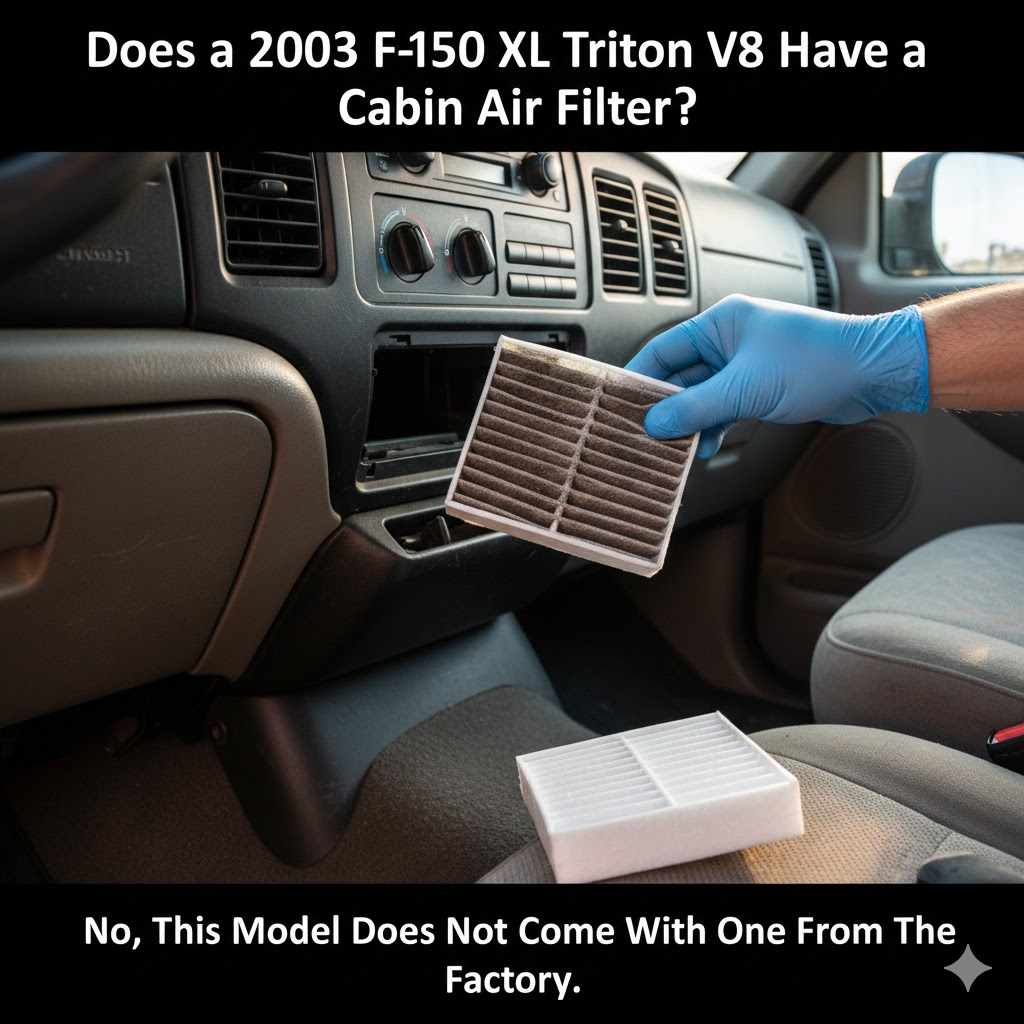
Many truck owners wonder about a simple but important part: Does a 2003 F-150 XL Triton V8 Have a Cabin Air Filter? It can be a bit confusing, especially if you’re new to working on your truck. Sometimes, the filter isn’t where you expect it to be, or it might not even have one.
Don’t worry, though! This guide will show you exactly what you need to know. We’ll make it easy to figure out if your truck has this filter and where to find it if it does.
Let’s get started.
Locating the Cabin Air Filter in Your F-150
Figuring out if your 2003 Ford F-150 XL Triton V8 has a cabin air filter can seem tricky for first-time owners. Many vehicles from this era didn’t include cabin air filters as standard equipment. This means that even though your truck is a great machine, it might not have the filter you’re looking for.
This section will help you understand why and guide you through the process of identifying its presence. We will explore the common locations where a cabin air filter would typically be found if your truck was equipped with one.
Understanding the Cabin Air Filter System
A cabin air filter is a special component in your vehicle’s ventilation system. Its main job is to clean the air that comes into the passenger compartment. It traps dust, pollen, soot, and other tiny particles before they reach you.
This makes the air inside your truck cleaner and fresher to breathe, which is especially nice on long drives or in dusty environments. Think of it like a coffee filter for the air entering your truck’s cabin. When the filter gets clogged, your air conditioning and heating might not work as well, and you might notice a musty smell.
The Triton V8 engine is known for its power and reliability. When it comes to the F-150, especially models from the early 2000s, manufacturers sometimes made different trim levels with varying features. The XL trim is often a more basic, work-focused model.
This means that some creature comforts or extra features, like a cabin air filter, might have been optional or simply not included from the factory. This is a key reason why the question Does a 2003 F-150 XL Triton V8 Have a Cabin Air Filter? comes up so often.
It’s not a given feature for this specific truck.
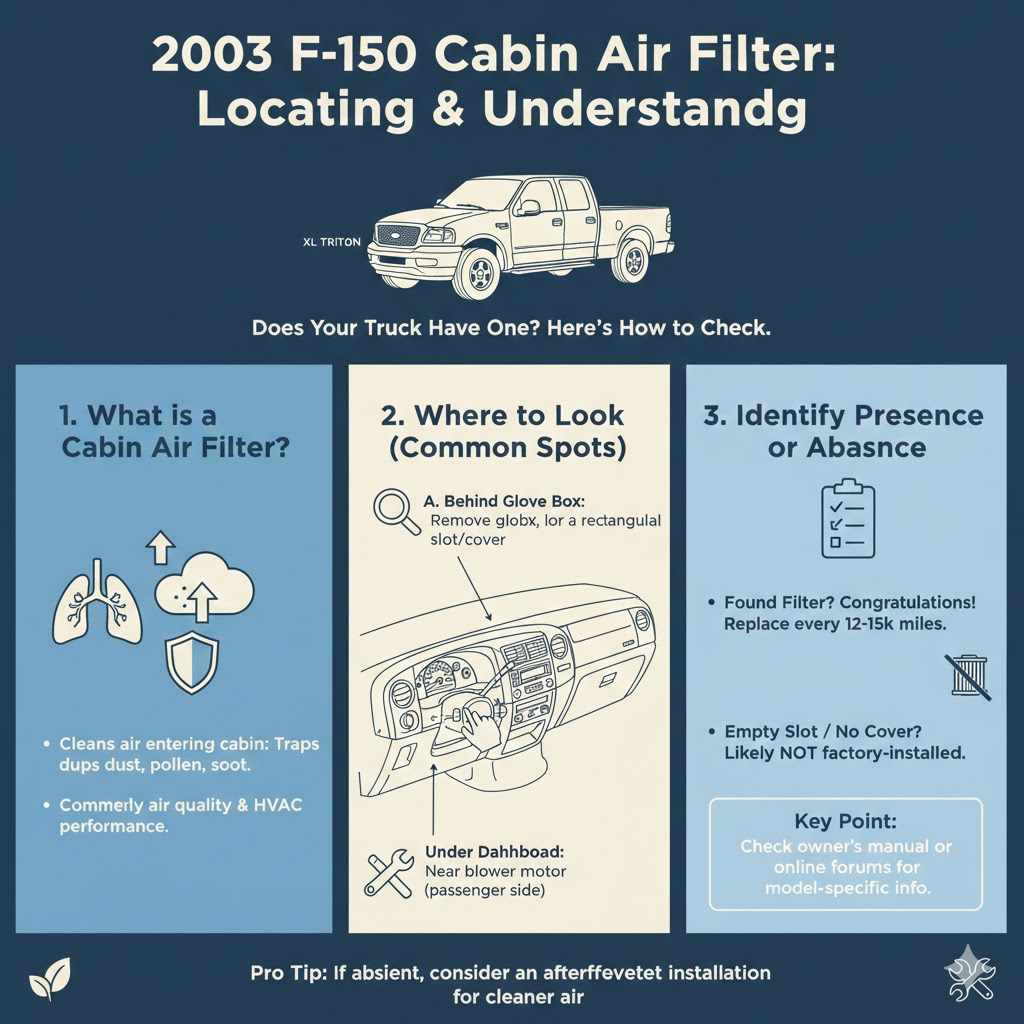
When you’re trying to find a cabin air filter, it’s usually located behind the glove box, under the dashboard, or sometimes near the blower motor assembly. For the 2003 F-150, this area under the dash is a common spot for HVAC components. The specific design can vary, and sometimes, even if the space is there, the filter and its housing might be missing if it wasn’t originally installed.
Common Hiding Spots for Truck Filters
In many trucks, including some F-150 models, the cabin air filter is tucked away in a spot that isn’t immediately obvious. The most common place is behind the glove box. To access it, you usually have to remove the glove box door.
This often involves unscrewing a few screws or releasing clips. Once the glove box is out of the way, you’ll see a housing that might contain the filter. This is where you’ll need to look carefully.
Another potential location is under the dashboard on the passenger side, near where the air conditioning and heating system components are. Sometimes, the filter is part of the blower motor assembly itself. You might need to remove a panel or cover to get to it.
Because the 2003 F-150 XL Triton V8 was designed for utility, interior access points can sometimes be a bit more involved than in luxury vehicles.
It’s important to remember that not all F-150 trucks from this year came with a cabin air filter. Ford offered various packages and options. So, while you might find the space designed for a filter, the filter itself or even the filter housing might be absent if it wasn’t ordered with your specific truck.
This is the primary reason for the confusion around the question, Does a 2003 F-150 XL Triton V8 Have a Cabin Air Filter? You might be looking in the right place but finding nothing if it was never installed.
Identifying Filter Absence or Presence
The best way to know for sure if your 2003 F-150 XL Triton V8 has a cabin air filter is to do a physical check. Start by looking behind the glove box. Remove the glove box liner if possible.
Once it’s out, look for a rectangular slot or a removable cover on the back or side of the HVAC unit. If you see a filter inside, then your truck has one. If you see an empty slot or no cover at all, it’s likely that a filter was never installed.
Another place to check is under the dashboard on the passenger side, towards the center of the truck. There might be a plastic panel that can be removed. Look for a filter housing or a space that looks like it should hold a filter.
Again, if you find a filter, great! If you find an empty space, it’s a strong indicator that your truck was not originally equipped with one.
If you are still unsure after checking these common areas, you can consult your owner’s manual. The manual often details the location of all maintenance components. You can also search online for forums or videos specific to the 2003 F-150.
Many owners share their experiences and provide step-by-step guides for checking and replacing these parts. This research will help clarify whether your truck Does a 2003 F-150 XL Triton V8 Have a Cabin Air Filter? by showing you what to look for and confirming if it’s a standard or optional feature.
The Importance of a Cabin Air Filter
Even if your 2003 F-150 XL Triton V8 didn’t come with a cabin air filter from the factory, it’s worth considering adding one. A cabin air filter plays a vital role in the air quality inside your vehicle. It acts as a barrier against many common airborne contaminants that can affect your health and comfort.
Understanding its benefits can help you decide if it’s a worthwhile addition for your truck. This section will explore why these filters are important and the positive impact they can have.
What a Cabin Air Filter Does
A cabin air filter’s primary function is to purify the air circulating inside your vehicle. It is typically made of pleated paper or synthetic material that is designed to capture small particles. These particles include dust that kicks up from roads, pollen from trees and flowers, smog from traffic, and even microscopic allergens like mold spores.
Without a filter, all these things would be blown directly into your face every time you turn on your fan or air conditioner.
The Triton V8 engine is a powerful part of your F-150, and you want the air inside your cabin to be just as pleasant. A clean cabin air filter can make a big difference. It helps reduce the amount of dust that settles on your dashboard and seats.
It also significantly lowers the levels of allergens that can trigger sneezing, watery eyes, or asthma symptoms for sensitive passengers. For anyone who spends a lot of time in their truck, whether for work or leisure, clean air is a key factor in comfort and well-being.
When a cabin air filter is in place and working correctly, it can also help your vehicle’s HVAC system run more efficiently. A clogged filter restricts airflow, making the fan motor work harder. This can lead to reduced cooling and heating performance and increased energy consumption.
So, even if the answer to Does a 2003 F-150 XL Triton V8 Have a Cabin Air Filter? is “no” from the factory, installing one can be a smart upgrade for better air quality and system performance.
Health Benefits of Cleaner Air
Breathing cleaner air inside your truck can have several positive health benefits. For people who suffer from allergies, pollen and other airborne irritants can make driving a miserable experience. A cabin air filter effectively traps these allergens, providing relief.
This is especially important if you frequently drive with the windows down or in areas with high pollen counts.
Beyond allergies, cabin air filters can also help reduce the amount of fine dust and soot particles that enter the cabin. These particles can irritate the lungs and contribute to respiratory problems over time. By filtering them out, you create a healthier environment for yourself and your passengers.
This is true for all vehicles, but for a truck like the F-150, which might be used for work in dusty conditions or spend a lot of time on the road, these benefits are particularly valuable.
Studies have shown that indoor air quality can be significantly worse than outdoor air quality due to trapped pollutants. While your truck isn’t exactly “indoors,” the air recirculates, and pollutants can build up. A cabin air filter is a simple way to combat this.
Knowing the answer to Does a 2003 F-150 XL Triton V8 Have a Cabin Air Filter? and then installing one can lead to a noticeably fresher and healthier driving experience.
Improving HVAC System Performance
A functioning cabin air filter doesn’t just improve air quality; it also plays a role in how well your heating, ventilation, and air conditioning (HVAC) system works. When the filter is clean, it allows for optimal airflow from the blower motor into the cabin. This means your AC will cool the air more effectively in the summer, and your heater will warm it up faster in the winter.
If your truck doesn’t have a cabin air filter, or if it’s extremely dirty and clogged, the blower motor has to work much harder to push air through the system. This can lead to reduced airflow from the vents, making it take longer to reach your desired temperature. Over time, this extra strain can potentially shorten the lifespan of the blower motor itself.
For owners of a 2003 F-150 XL Triton V8 who are asking Does a 2003 F-150 XL Triton V8 Have a Cabin Air Filter? and considering adding one, this is a significant benefit. It’s a simple upgrade that can lead to a more comfortable cabin and potentially save you from future repair costs by reducing stress on your HVAC components.
A clean filter ensures the system operates as intended, providing consistent comfort regardless of the weather outside.
Installing a Cabin Air Filter in Your F-150
If you’ve determined that your 2003 F-150 XL Triton V8 doesn’t have a cabin air filter, or if it’s missing, you might be wondering how to install one. The good news is that it’s often a straightforward DIY project that doesn’t require special tools. This section will walk you through the general steps involved in adding or replacing a cabin air filter, making it easy for you to enjoy cleaner air in your truck.
Finding the Right Filter
Before you can install a filter, you need to find the correct one for your truck. Since your 2003 F-150 XL Triton V8 may not have come with one from the factory, you’ll need to determine if your specific model and year have provisions for one. Many aftermarket companies offer cabin air filter kits for older F-150s, even if they weren’t originally equipped.
These kits often include the filter and any necessary mounting hardware or instructions.
To ensure you get the right part, you’ll need to know your truck’s exact year, make, model, and engine size (which you already do: 2003 F-150 XL Triton V8). You can then search online auto parts stores or visit your local auto parts retailer. Look for filters specifically listed for your truck.
Sometimes, you might find that Ford made a provision for a filter to be installed, even if it wasn’t standard on the XL trim.
A common approach is to look for aftermarket kits designed to adapt older vehicles for cabin air filters. These kits are designed to fit into the existing HVAC ductwork. When searching, use phrases like “2003 F-150 cabin air filter kit” or “add cabin air filter 2003 F-150”.
This will help you find products that are compatible. The answer to Does a 2003 F-150 XL Triton V8 Have a Cabin Air Filter? might be “no” from the factory, but it can definitely have one installed with the right parts.
Step-by-Step Installation Guide
Once you have the correct cabin air filter or kit, you can begin the installation. The exact process can vary slightly depending on whether you’re replacing an existing filter or installing one for the first time using an aftermarket kit.
For Trucks Originally Equipped with a Filter (or installing a direct replacement filter):
- Locate the Filter Housing: As discussed earlier, this is usually behind the glove box or under the dashboard on the passenger side.
- Remove the Glove Box: If the filter is behind the glove box, you’ll need to remove it. This often involves unscrewing or releasing clips that hold it in place. Some glove boxes can just be pulled down after releasing latches.
- Access the Filter Cover: Once the glove box is out of the way, look for a plastic cover or a slot where the filter sits. This cover may have clips or screws.
- Remove the Old Filter: Carefully pull out the old filter. Note the direction of airflow indicated by arrows on the filter.
- Insert the New Filter: Place the new filter into the slot, making sure the airflow arrows point in the correct direction (usually towards the cabin, but check your specific filter or vehicle manual).
- Reassemble: Replace the filter cover and reinstall the glove box by reversing the removal steps.
For Trucks Without a Factory Filter (using an aftermarket kit):
Aftermarket kits are designed to be installed in the HVAC system. These kits typically come with detailed instructions specific to the kit’s design. The general idea is to find a suitable location in the air intake path of your HVAC system, often where the air enters the blower motor.
You’ll likely need to remove a panel or access cover to expose this area. The kit will provide a housing or a method to insert the filter into the air stream. Following the kit’s specific instructions is crucial for a successful installation.
This process might involve mounting brackets or cutting into existing ductwork, so always refer to the manufacturer’s guide.
Troubleshooting Common Issues
Even with a clear guide, you might run into a few snags. If you’re trying to remove the glove box and it seems stuck, double-check for any hidden screws or clips. Sometimes, they are tucked away in the corners or under the edges.
If you can’t find them, a quick online search for “2003 F-150 glove box removal” might provide visual guides or videos.
When inserting a new filter, ensure it fits snugly. If it’s too loose, it might not seal properly, allowing air to bypass it. If it’s too tight, you might have trouble getting it in, which could damage the filter or the housing.
Most filters are designed to slide in without much force. If you are installing an aftermarket kit, follow the instructions precisely. Improper installation can lead to reduced airflow or the filter not being effective.
If you can’t locate any space that looks like it’s meant for a filter, even with an aftermarket kit, it’s possible your HVAC system’s design for the 2003 F-150 XL Triton V8 simply doesn’t easily accommodate one. In such cases, you might need to look for specialized kits or consult a professional mechanic. The core question, Does a 2003 F-150 XL Triton V8 Have a Cabin Air Filter?, is best answered by checking your specific truck first, then looking for available aftermarket solutions if it doesn’t.
Maintenance and Replacement Tips
Once you’ve confirmed that your 2003 F-150 XL Triton V8 has a cabin air filter, or you’ve installed one, it’s important to know how to maintain it. Like any filter, cabin air filters don’t last forever. Regular checks and timely replacement will ensure that you continue to benefit from cleaner air and optimal HVAC performance.
This section covers how often to change your filter and what to look out for.
How Often Should You Replace It?
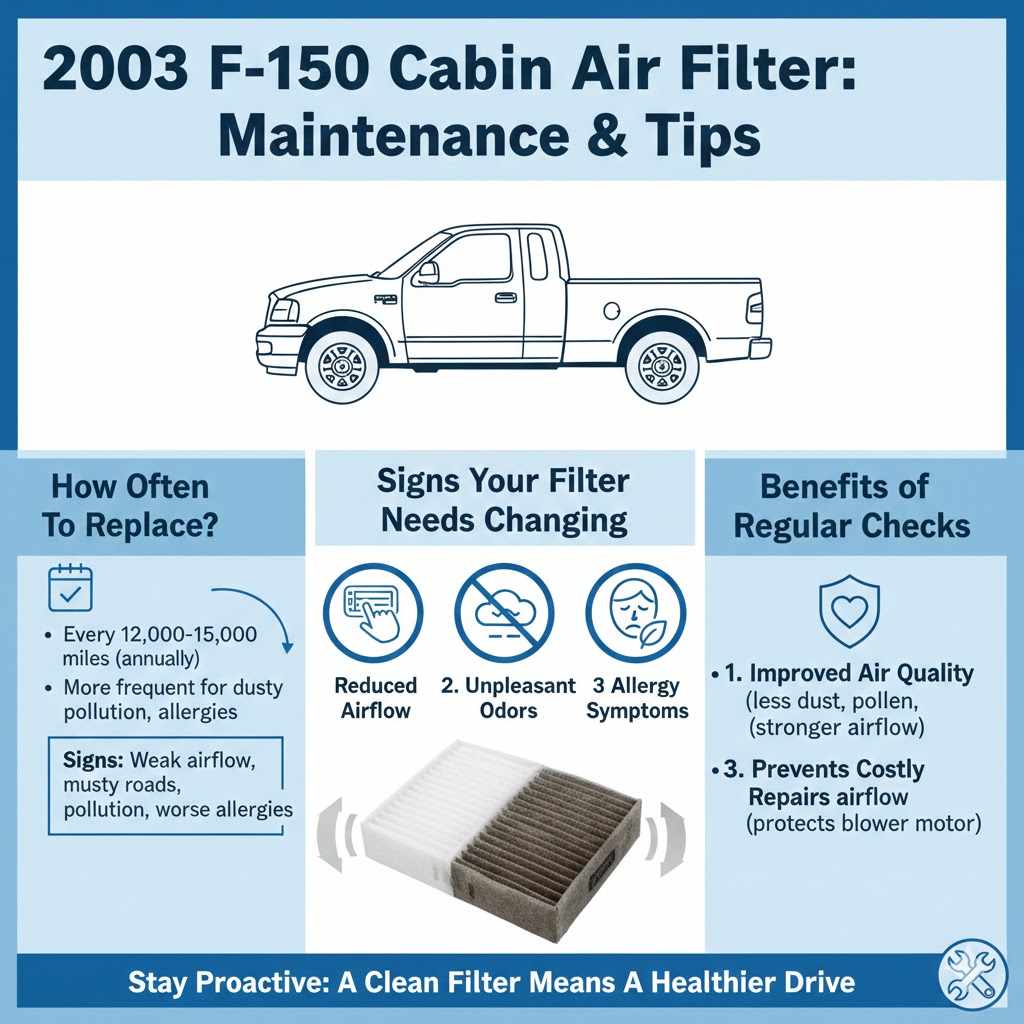
The lifespan of a cabin air filter can vary depending on several factors. These include how much you drive, the conditions you drive in (e.g., dusty roads, heavily polluted areas), and whether you have allergies. As a general rule of thumb, most manufacturers recommend replacing your cabin air filter every 12,000 to 15,000 miles, or about once a year.
However, for a truck like your 2003 F-150 XL Triton V8, which might be used for work or driven in less-than-ideal conditions, you might need to replace it more frequently. If you notice a decrease in airflow from your vents, a musty smell, or if your allergies seem worse inside the truck, it’s a good sign that the filter needs changing, regardless of the mileage.
For instance, if you live in an area with a lot of construction or dirt roads, your filter might get clogged much faster than if you primarily drive on highways. Keeping track of when you last replaced it is key. If you’re unsure about the answer to Does a 2003 F-150 XL Triton V8 Have a Cabin Air Filter?
and have recently installed one, marking your calendar or setting a reminder on your phone for 6-12 months later is a good practice.
Signs Your Filter Needs Changing
Several signs indicate that your cabin air filter is due for a replacement. The most common symptom is a noticeable reduction in the amount of air coming from your dashboard vents. If your fan is set to high but you’re only getting a weak stream of air, the filter is likely clogged and restricting the airflow.
Another tell-tale sign is an unpleasant odor inside the cabin. Over time, the filter can trap not only dust and pollen but also moisture, which can lead to the growth of mold and mildew. This results in a musty or stale smell that can be quite off-putting.
If you start smelling these odors every time you turn on your AC or heat, it’s time to check the filter.
For those who suffer from allergies or asthma, a dirty cabin air filter can worsen their symptoms. If you find yourself sneezing more, experiencing watery eyes, or having difficulty breathing inside your truck, and the weather outside doesn’t explain it, your cabin air filter could be the culprit. It’s no longer effectively trapping the allergens.
So, pay attention to how you feel inside your F-150; it can give you clues about your filter’s condition.
Benefits of Regular Filter Checks
Performing regular checks on your cabin air filter offers significant advantages. Firstly, it helps maintain the quality of the air you breathe. A clean filter ensures that dust, pollen, and other airborne particles are effectively trapped, leading to a healthier and more comfortable driving environment.
This is particularly beneficial for drivers who spend a lot of time in their vehicles.
Secondly, regular checks ensure that your HVAC system operates at its peak performance. A clogged filter forces the blower motor to work harder, consuming more energy and potentially leading to premature wear on the motor. By keeping the filter clean, you help the system run efficiently, providing better cooling and heating, and potentially extending the life of the HVAC components.
This directly impacts your comfort and can save you money on repairs.
Finally, staying on top of filter maintenance can prevent more costly repairs down the line. A severely clogged filter can lead to issues with the entire HVAC system, including the evaporator core. Addressing the filter in a timely manner is a simple yet effective way to protect your investment and ensure your truck remains a comfortable place to be, answering the question Does a 2003 F-150 XL Triton V8 Have a Cabin Air Filter?
with a proactive approach to its upkeep.
Frequently Asked Questions
Question: Does every 2003 F-150 XL Triton V8 come with a cabin air filter?
Answer: No, not all 2003 F-150 XL Triton V8 models came with a cabin air filter from the factory. It was often an optional feature or dependent on specific trim packages. You will need to check your truck physically to confirm.
Question: Where is the cabin air filter typically located on a 2003 Ford F-150?
Answer: The most common locations are behind the glove box or under the dashboard on the passenger side, near the HVAC unit and blower motor.
Question: What happens if my 2003 F-150 doesn’t have a cabin air filter?
Answer: If your truck doesn’t have one, the air entering your cabin will not be filtered, meaning more dust, pollen, and other particles will come in. Your HVAC system might also be more prone to debris buildup.
Question: Can I install a cabin air filter if my 2003 F-150 didn’t come with one?
Answer: Yes, in many cases, you can install an aftermarket cabin air filter kit. These kits are designed to adapt your truck’s HVAC system to accept a filter, even if it wasn’t originally equipped.
Question: How often should I replace my cabin air filter in my 2003 F-150?
Answer: It’s generally recommended to replace it every 12,000 to 15,000 miles or about once a year. However, if you drive in dusty conditions or have allergies, you may need to replace it more frequently.
Wrap Up
Determining if your 2003 F-150 XL Triton V8 has a cabin air filter involves a physical check, as it wasn’t always standard. If it’s missing or you wish to add one, aftermarket kits offer a way to improve your truck’s air quality. Regular filter replacement ensures cleaner air and a better-performing HVAC system, contributing to a more comfortable drive.