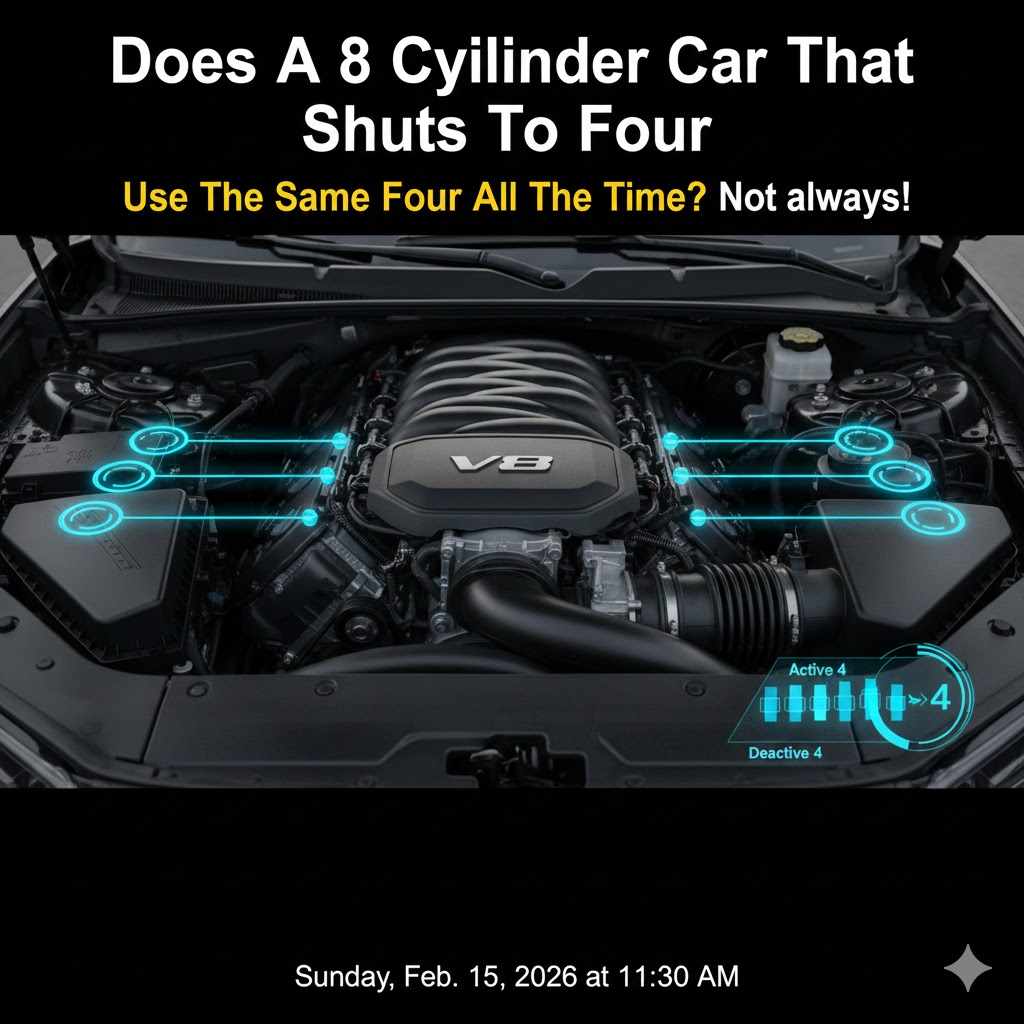
Does A 8 Cylinder Car That Shuts To Four Use The Same Four All The Time
Many car owners wonder about how their car’s engine works, especially when it has special features. A common question people have is does a 8 cylinder car that shuts to four use the same four all the time?. This can seem a bit tricky at first, but it’s actually a neat piece of technology that saves fuel.
Don’t worry if it sounds confusing, we’ll break it down simply so you can easily understand it. Let’s explore how this system works.
Understanding Cylinder Deactivation
Cars with many cylinders, like eight, can sometimes turn off some of them to save gas. This system is often called cylinder deactivation. It’s like giving your car a break when it doesn’t need all its power.
This helps your car use less fuel, especially when you’re just cruising or not accelerating hard.
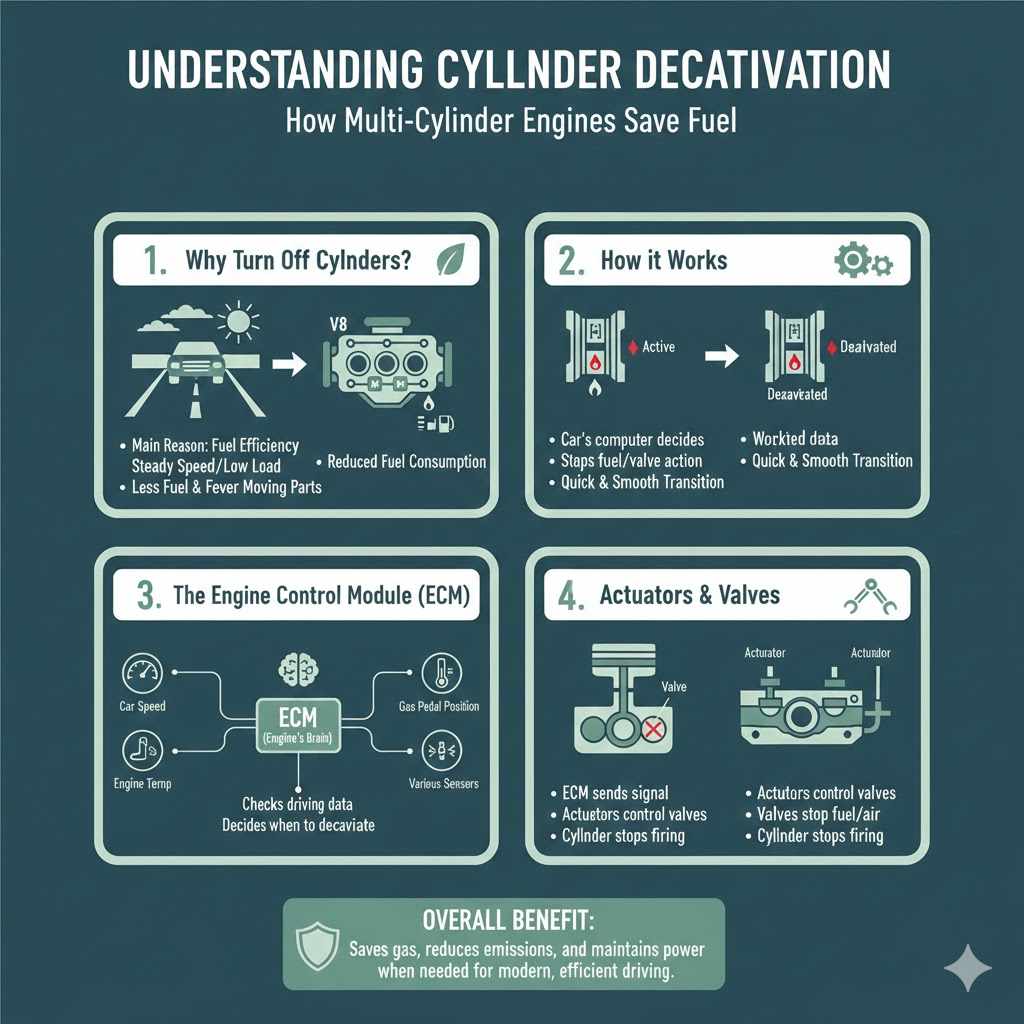
Why Turn Off Cylinders?
The main reason for cylinder deactivation is fuel efficiency. When you’re driving at a steady speed, like on a highway, the engine doesn’t need to work as hard. By shutting off half the cylinders, the engine uses less fuel.
This is because fewer parts are moving and burning gas. It’s a smart way for carmakers to make powerful cars more fuel-friendly. Many modern cars use this technology.
How Cylinder Deactivation Works
When a car’s computer decides that not all cylinders are needed, it tells them to stop firing. This usually happens when the car is moving at a constant speed and not under heavy load. The system is very quick and smooth.
You might not even feel it happening.
The Engine Control Module (ECM)
Your car has a computer called the Engine Control Module, or ECM. This computer is the brain of the engine. It constantly checks how you’re driving.
It looks at things like how fast you’re going, how much you’re pressing the gas pedal, and the engine’s temperature. Based on all this information, the ECM decides if it’s a good time to shut off some cylinders. It uses sensors all over the car to get this data.
Actuators and Valves
When the ECM decides to deactivate cylinders, it sends a signal to special parts called actuators. These actuators then control valves. These valves are like tiny doors that can stop fuel from getting to certain cylinders or stop them from opening and closing.
By closing these valves, the cylinders are essentially taken out of the combustion cycle. They stop making power but are still turning with the engine.
Does A 8 Cylinder Car That Shuts To Four Use The Same Four All The Time?
This is a great question and a common point of confusion for many drivers. The answer is no, a 8 cylinder car that shuts to four does not always use the same four cylinders. The system is designed to be smart and distribute the work.
It alternates which cylinders are active and which are deactivated.
Why Alternating Cylinders is Important
If a car always shut off the same set of four cylinders, those cylinders would experience less wear and tear over time. This could lead to uneven wear across the engine. To prevent this, the system intelligently switches which cylinders are active.
For example, in a V8 engine, which has two banks of four cylinders (one on each side), the system might deactivate cylinders 1, 3, 6, and 8 in one instance, and then later deactivate cylinders 2, 4, 5, and 7. This ensures that all cylinders get used and wear evenly.
Benefits of Alternating Cylinders
By alternating which cylinders are active, car manufacturers ensure several key benefits:
- Even Wear: All cylinders receive a similar amount of use, preventing premature wear on specific ones.
- Smooth Operation: The system is designed to switch cylinders smoothly, so the driver doesn’t notice it.
- Maximized Efficiency: By adapting to driving conditions and distributing the load, fuel economy is optimized.
- Engine Longevity: Even wear helps the engine last longer.
When Does Cylinder Deactivation Happen?
Cylinder deactivation isn’t active all the time. It works best in specific driving situations. These include:
- Highway Cruising: When you’re driving at a steady, moderate speed on the highway, the car uses fewer cylinders.
- Light Acceleration: Gentle acceleration also allows the system to engage.
- Deceleration: When you’re slowing down, the engine might deactivate cylinders.
The system typically disengages when you need more power, such as when you stomp on the gas pedal to pass someone or accelerate quickly. The ECM will quickly reactivate all eight cylinders for maximum performance.
The Technology Behind It
Cylinder deactivation systems have become more common in recent years. Different car manufacturers use slightly different names for their systems, but the core technology is similar.
Common Names for Cylinder Deactivation Systems
- Active Fuel Management (AFM): Used by General Motors (GM).
- Cylinder Deactivation (CDA): A general term used by many manufacturers.
- Variable Cylinder Management (VCM): Used by Honda.
- Cylinder On Demand (COD): Used by some European manufacturers.
Regardless of the name, the goal is the same: to save fuel by temporarily disabling some cylinders.
How it Affects Performance
For most drivers, the transition between eight and four cylinders is seamless. Modern systems are very sophisticated and designed to minimize any noticeable change in power or sound. The engine computer manages the shift very quickly.
You might hear a slight change in engine note sometimes, but it’s usually very subtle. The overall driving experience is not negatively impacted.
What If A Cylinder Is Stuck Off?
While the systems are reliable, like any complex technology, issues can arise. If a cylinder deactivation system malfunctions, it can cause problems. If the system gets stuck in four-cylinder mode when you need more power, you’ll notice a significant lack of acceleration.
If it gets stuck in eight-cylinder mode when it should be in four, you might notice worse fuel economy than expected.
Troubleshooting Cylinder Deactivation Issues
If you suspect a problem with your car’s cylinder deactivation system, the best course of action is to take it to a qualified mechanic. They have the tools and expertise to diagnose the issue. Common problems can include faulty sensors, worn-out solenoids, or issues with the actuators.
Sometimes, it might be as simple as a software update for the ECM.
The Fuel Savings
The amount of fuel saved by cylinder deactivation varies depending on the car and driving conditions. However, it can typically improve fuel economy by 5% to 10%. On the highway, where the system is most effective, the savings can be even more noticeable.
This contributes to lower running costs for the vehicle and reduced emissions.
Does A 8 Cylinder Car That Shuts To Four Use The Same Four All The Time? Recap
We’ve explored how cylinder deactivation works and addressed the common question: does a 8 cylinder car that shuts to four use the same four all the time?. The technology is designed to switch cylinders on and off to save fuel. It does not stick to the same four cylinders.
Instead, it alternates between them to ensure even wear and consistent performance. This system is managed by your car’s computer, which activates or deactivates cylinders based on driving conditions. This is a smart feature that helps powerful cars become more fuel-efficient.
By understanding this, you can better appreciate your car’s engineering.
Frequently Asked Questions
Question: How do I know if my car has cylinder deactivation?
Answer: Many modern cars with V6 or V8 engines have this feature. Check your car’s owner’s manual or look for terms like “Active Fuel Management” or “Variable Cylinder Management” in the vehicle’s specifications. You might also notice a small indicator light on your dashboard that shows when the system is active.
Question: Will cylinder deactivation make my car’s engine wear out faster?
Answer: No, modern cylinder deactivation systems are designed to alternate which cylinders are used. This ensures that all cylinders wear evenly over time, prolonging the life of the engine rather than shortening it.
Question: Can I turn cylinder deactivation off?
Answer: In some vehicles, there might be a button or setting in the car’s menu to disable cylinder deactivation. However, this will result in lower fuel economy. For most drivers, it’s best to leave it engaged for optimal efficiency.
Question: Does cylinder deactivation affect the sound of the engine?
Answer: You might notice a very subtle change in the engine’s sound when the system switches between eight and four cylinders. However, car manufacturers design these systems to be as smooth and quiet as possible, so most drivers won’t perceive a significant difference.
Question: How much fuel can I save with cylinder deactivation?
Answer: The amount of fuel saved depends heavily on your driving style and the type of driving you do. On average, you can expect an improvement of 5% to 10% in fuel economy, with greater savings during highway driving.
Final Thoughts
Understanding how your car’s engine works can be very helpful. The question of does a 8 cylinder car that shuts to four use the same four all the time? is answered by its smart design.
It uses different cylinders to save fuel and ensure long-term engine health. This technology is a great example of how cars are becoming more efficient. Enjoy the benefits of better gas mileage and smooth performance.
Your car is working smarter, not just harder.