What Is the L Gear for in a Car? When to Use Low Gear
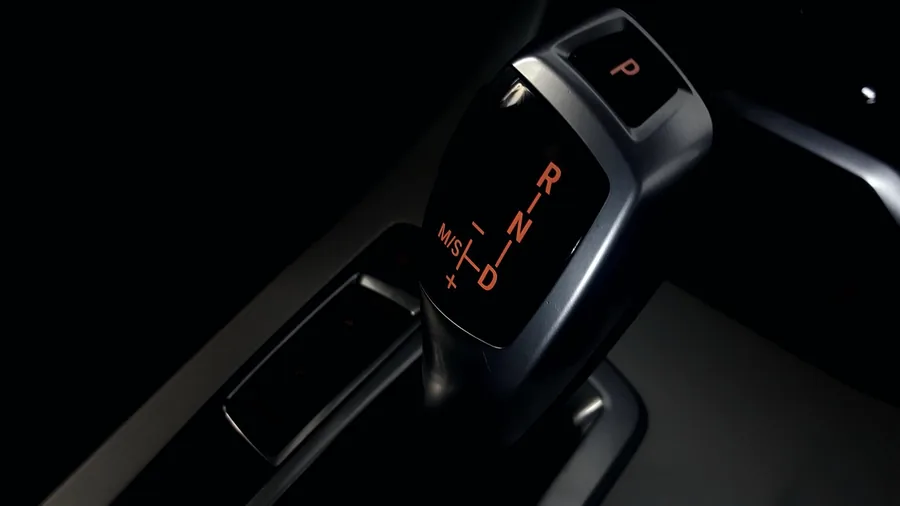
L stands for Low. On an automatic, it keeps the transmission in a lower range so the engine helps hold your speed on long downhill grades, when towing and with heavy loads, instead of leaving all the work to the brakes. Not every car has an L, and the rules differ by maker. This guide lines up what Chevrolet, Honda, Nissan and Kia owner’s manuals say, shows when L helps, and covers the mistakes to avoid.
Quick Answer
The L on an automatic shifter stands for Low. It keeps the transmission in a lower range so the engine helps slow the car on long descents, towing and heavy loads. Not every car has it, and the exact behavior is in your owner’s manual.
What Is The L Gear In A Car?
Best Pick for Watching Transmission Heat
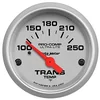 |
Auto Meter 4357 Ultra-Lite Electric Transmission Temperature Gauge, 2 1/16″
|
As an Amazon Associate we earn from qualifying purchases. Spec-based pick from the listing, not a hands-on test.
The L on an automatic shifter is the low range. Instead of letting the transmission climb to the highest gear it can, a low range holds it in lower gears, which keeps engine speed higher and makes the engine resist the wheels. That resistance is engine braking: it slows the car without using the brake pedal.
Chevrolet’s 2025 Equinox owner’s manual puts it in one sentence: L provides additional coast braking for driving downhill, towing a trailer or hauling a heavy load. Honda’s 2013 Accord manual says its Low position is used to further increase engine braking and when going up or down hills. Both describe the same job, which is why the setting exists on so many automatics. For how gear ratios themselves work, see our guide to what gears are in a car; this page is about the L position.
What Do Owner’s Manuals Say About L?
Owner’s manuals are specific about what a low range is for, and they differ on layout. The table lines up four of them.
| Manual | What it says about low | How you select it |
|---|---|---|
| Chevrolet Equinox, 2025 | L gives additional coast braking for downhill driving, towing and heavy loads; cruise control can be used in L | From D, press L on the steering wheel; shift to D or press L again to leave, at any speed |
| Honda Accord (CVT), 2013 | Low is used to further increase engine braking and when going up or down hills; the S position next to it is for better acceleration, more engine braking and hills | Press the release button and move the lever to the low position |
| Nissan Rogue, 2019 | No L. A manual gate gives ranges 1 to 7; 1st is for steep climbs, slow driving and maximum engine braking on steep downhills | Move the lever into the manual gate and tap up or down; return to D to cancel |
| Kia (2025 manual, Canadian edition) | No L. D plus a manual gate for choosing a range of gears; the transmission may not make a requested change if the next gear is outside the allowable rpm range | Push the lever from D into the manual gate; push it back to return to D |
Each manual above covers one model. The same maker may use a different layout in another model, so treat the table as a guide to what to look for and check your own. Sources: Chevrolet Equinox 2025 owner’s manual, Honda 2013 Accord owner’s manual and Nissan 2019 Rogue owner’s manual.
When Should You Use The L Gear?
The manuals converge on three situations, and each ties the low range to a specific job.
- Long or steep descents. Chevrolet’s manual has a warning that using the brakes to slow the vehicle on a long downhill slope can cause brake overheating, reduce brake performance and could result in a loss of braking, and says to shift the transmission to a lower gear to let the engine assist the brakes. Nissan’s manual says the same for towing: avoid long or repeated brake use on a descent, because it reduces effectiveness and could cause overheating.
- Towing a trailer. Chevrolet lists towing as a use for L. Nissan’s towing section says that on a downhill the weight of the trailer pushing on the tow vehicle may decrease overall stability, so reduce speed and shift to a lower gear.
- Heavy loads and steep climbs. Chevrolet lists hauling a heavy load. Honda says Low is used when going up or down hills, and Nissan says 1st is for climbing steep hills slowly.

Chevrolet’s manual also describes Automatic Engine Grade Braking, which commands downshifts on its own when driving downhill in normal driving, so check whether your car does part of the job without L.
How To Use The L Gear: A Simple Guide
- Find out what your car calls it. The shifter may show L, a Low position, or numbers. Chevrolet’s Equinox uses a button on the steering wheel, Honda’s 2013 CVT Accord uses a lever position with a release button, and Nissan’s Rogue uses a numbered gate.
- Select it before the hill, not halfway down. Chevrolet’s manual says L will not complete a downshift if engine speed is too high, so you may have to slow down and try again.
- Let the engine slow the car and use the brakes as needed. A low range adds braking but does not replace the brake pedal.
- Watch for heat. Chevrolet and Kia both describe a transmission-hot warning. Chevrolet says to stop and idle the engine to cool the fluid, and Kia says to pull over, keep the engine running, shift to P and wait.
- Return to D when the grade ends. On a Chevrolet Equinox, shift to D or press L again at any speed. On a Nissan, return the lever to D to cancel manual mode.
Will Your Car Let You Shift Into L at High Speed?
It depends on the car, and the manuals do not publish one mph cutoff that applies to all of them. What they do describe is protection built into the transmission.
- Chevrolet Equinox: L will prevent shifting to a lower gear range if engine speed is too high. If vehicle speed is not reduced within the time allowed, the lower range shift will not be completed. Slow the vehicle, then tap the left steering wheel control to the lower range.
- Nissan Rogue: In manual mode the transmission may not shift to the selected gear, which the manual says helps maintain driving performance and reduces the chance of vehicle damage or loss of control. It may also shift up on its own if engine speed is too high.
- Honda Accord: The manual notes that the fuel supply may be cut off at engine speeds in or over the tachometer’s red zone, and warns not to operate the shift lever while pressing the accelerator because it could damage the transmission.
Chevrolet also cautions that driving at a high engine rpm without upshifting in its manual mode could damage the vehicle.
How Far Can You Drive In L?
None of the manuals cited sets a distance or a single speed limit for L. Nissan says not to drive at high speeds for extended periods in a gear lower than 7th, because it reduces fuel economy. The practical limit is the road: stay in L while the grade needs it, then go back to D.
L Gear On Slippery Roads
L is often described as a snow setting, but the manuals cited above do not say that. The one direct statement is on Kia’s automatic transmission page: do not use the engine brake, meaning shifting from a high gear to a lower gear, rapidly on slippery roads, because the vehicle may slip and cause an accident. That points to slow, gentle changes on ice or snow, not to selecting L and relying on it.
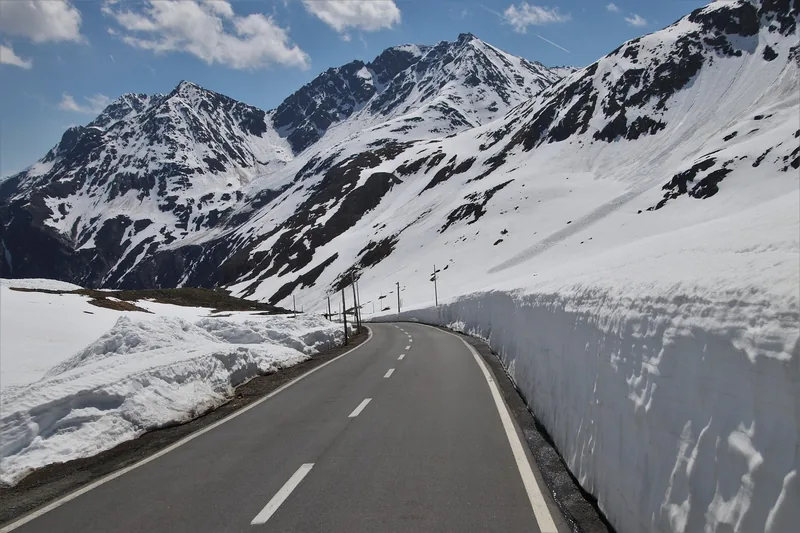
If your manual has a winter or low-traction section, read it. Chevrolet’s Equinox manual, for example, handles slippery-road traction through its AWD mode, not through L.
Benefits And Drawbacks Of Using L Gear
| Aspect | Benefit | Drawback |
|---|---|---|
| Brakes | Engine helps slow the car on a long descent, so the brakes are less likely to overheat (Chevrolet, Nissan) | Does not replace braking; steep grades may still need the pedal |
| Towing | Listed by Chevrolet as an L use; Nissan says to shift lower on trailer descents | Nissan recommends not using cruise control while towing; Chevrolet says cruise can be used in L |
| Fuel | None; it is not an economy setting | Nissan says long high-speed driving below 7th reduces fuel economy |
| Transmission | Keeps the transmission in a range suited to the grade | Heat: Chevrolet and Kia both describe a transmission-hot warning and say to stop and cool it |
A transmission temperature gauge is the way to see that heat coming instead of waiting for the warning, which is why one is the pick in the box above.
Comparing L Gear To Other Settings
| Setting | What the manuals say | Use it for |
|---|---|---|
| L (Low) | Additional coast braking (Chevrolet); further increases engine braking (Honda) | Long descents, towing, heavy loads |
| D (Drive) | Normal driving (Chevrolet, Honda, Nissan) | Everyday driving |
| S | Better acceleration, more engine braking, hills (Honda) | Acceleration and hills |
| Numbered gate (1 to 7) | 1st for steep climbs and maximum engine braking; 5th and 6th for long slopes (Nissan) | Choosing a gear range yourself |
| N (Neutral) | Do not coast in it: Honda says you lose engine braking, Chevrolet calls coasting downhill in N dangerous, Kia says the engine brake may not work | Idling at a stop (Honda); car wash mode (Chevrolet) |
For what S and the numbered positions do on other cars, see what S means in a car gear and what D1, D2 and D3 mean. For gear selection basics, see how to drive an automatic.
Common Mistakes To Avoid
- Coasting downhill in N. Chevrolet calls coasting downhill in N or with the ignition off dangerous: it can overheat the brakes and cause loss of steering assist.
- Holding the car on a hill with the accelerator. Chevrolet says this may damage the transmission; use the brake.
- Ignoring a transmission-hot message. Chevrolet and Kia both say to stop and let the transmission cool.
- Downshifting hard on slippery roads. Kia warns the vehicle may slip.
- Leaving it in L after the hill. Nissan notes that long high-speed driving below 7th gear reduces fuel economy.
- Assuming every car has L. The 2019 Rogue has a numbered gate instead.
Conclusion
L is a low range for engine braking, towing and heavy loads. Select it before the grade and cancel it after. For the wider picture, see what the lower gears in a car do; your owner’s manual is the final word on your car.
Frequently Asked Questions
What Does The L Gear Do In A Car?
L (Low) keeps an automatic transmission in a lower range. Chevrolet’s 2025 Equinox manual says L provides additional coast braking for driving downhill, towing a trailer or hauling a heavy load, and Honda’s 2013 Accord manual says Low is used to further increase engine braking and when going up or down hills.
When Should I Use The L Gear?
Use it on long or steep descents, when towing, or with a heavy load, which is where the manuals point. Chevrolet warns that riding the brakes on a long downhill can overheat them and says to shift to a lower gear so the engine helps, and Nissan’s towing section says the same. Your own manual has the exact wording for your car.
Can L Gear Hurt My Car?
Used as the manual describes, L is a normal setting. The risks come from misuse: Chevrolet warns that high engine rpm without upshifting can damage the vehicle in its manual mode, and Chevrolet and Kia both describe a transmission-hot warning that tells you to stop and let the transmission cool. Kia also warns against shifting rapidly to a lower gear on slippery roads.
Is L Gear The Same As Manual Low Gear?
The goal is similar, the mechanism is not. In a manual car you pick one gear yourself. Chevrolet’s manual says that when L is selected, the transmission shifts to a preset lower range and still shifts automatically among the gears at or below the number shown in the display.
Do All Cars Have An L Gear?
No. Honda’s 2013 Accord CVT has a Low position, and Chevrolet’s 2025 Equinox has an L button. Nissan’s 2019 Rogue has no L at all: its shift lever moves into a manual gate with ranges 1 to 7. Check the shifter and the manual for your car.
How Do I Know If I’m Using L Gear Right?
The engine will run at a higher speed than in D, and the car will slow more when you lift off the accelerator. On a Chevrolet Equinox, the display shows the highest gear available next to the L. If a transmission-hot message appears, stop and let the transmission cool, as the Chevrolet and Kia manuals describe.
Can L Gear Save Gas?
No. L is a control setting, not an economy setting. Nissan’s manual says driving at high speed for long periods in a gear lower than 7th reduces fuel economy, so leave a low range once the hill is over.
Can I Use L To Hold A Car On A Hill?
No. Chevrolet warns that holding the vehicle in place on a hill using only the accelerator pedal may damage the transmission, and Kia says not to hold a vehicle stationary on an incline with engine power. Use the brake or parking brake when stopped.
How Far Can I Drive In L Gear?
None of the manuals cited gives a distance or a single speed limit for L. Chevrolet says L will not complete a downshift if engine speed is too high, and Nissan asks you not to stay below 7th gear at high speed for long periods. Shift back to D when the hill is over.
What this guide does not cover: every make and model, towing weight ratings, and transmission repair. Manual wording was current as of October 15, 2026; see a technician if the transmission-hot warning keeps returning.
Products related to this article
Sponsored / affiliate links. As an Amazon Associate I earn from qualifying purchases. I may earn additional commission from eligible campaigns.