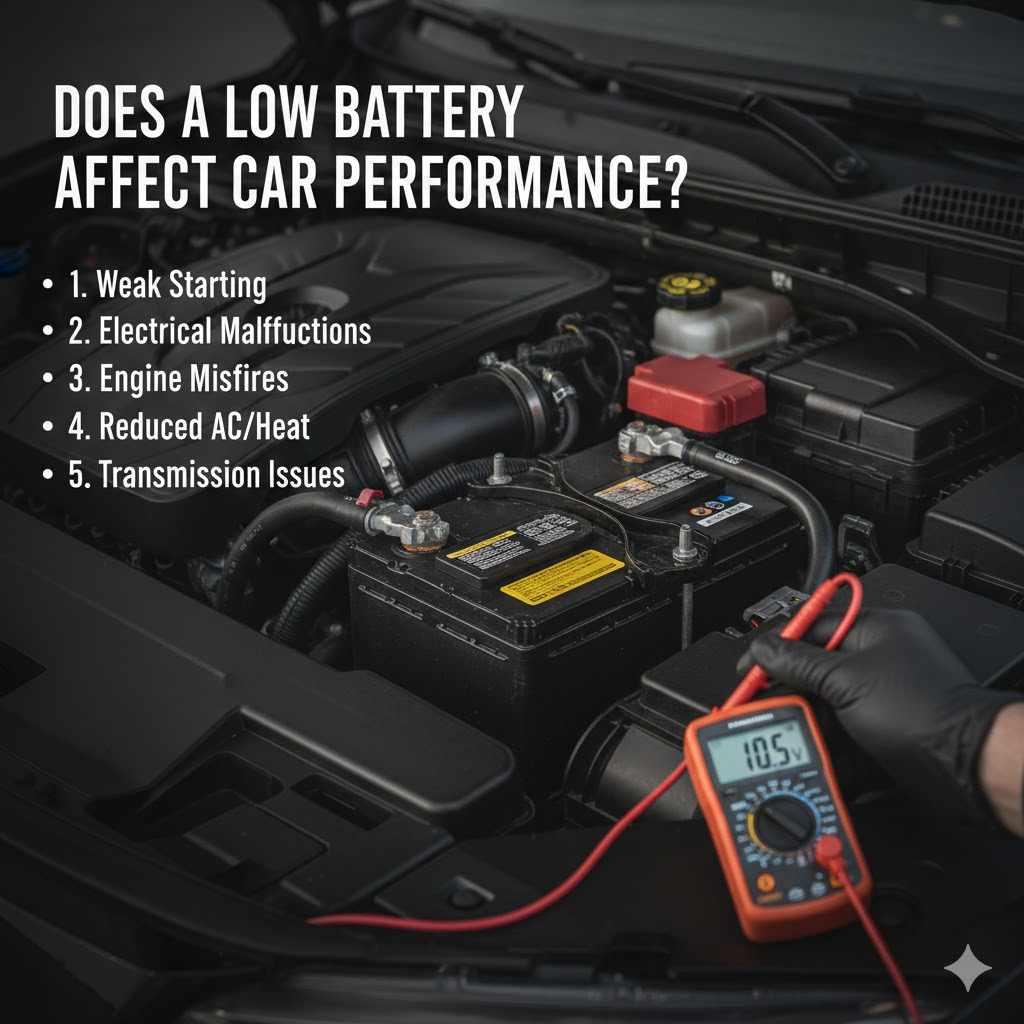
Does a low battery affect car performance?
Many drivers wonder, Does a low battery affect car performance? It’s a common question, especially for folks new to cars. You might notice odd things happening with your car, and a weak battery could be the reason. This can feel a bit tricky to figure out.
But don’t worry, we’ll break it down simply. We’ll walk through how a car battery works and what signs to look for. Get ready for some easy-to-understand steps to help you check your car’s battery and keep it running smoothly.
How Car Batteries Work
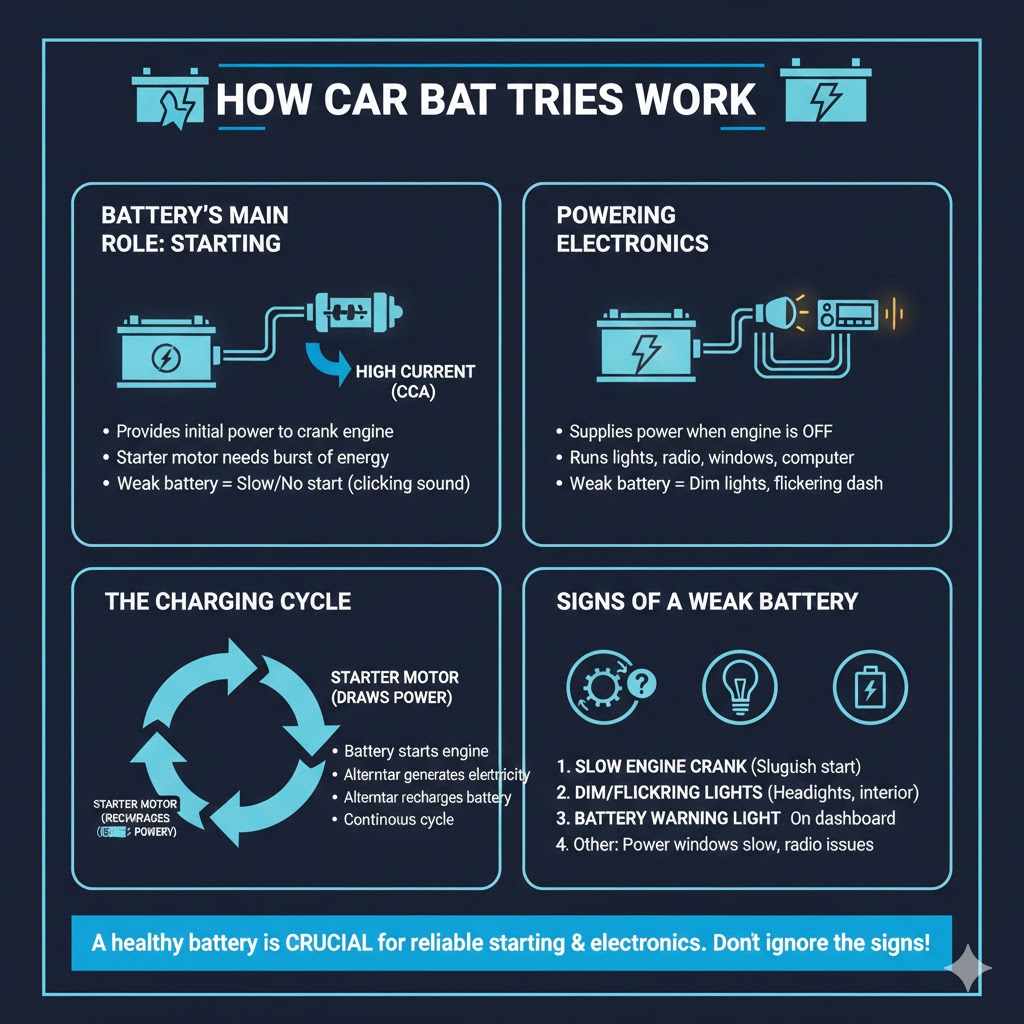
Car batteries are like the heart of your vehicle’s electrical system. They store electrical energy needed to start your car and power all its electronic parts. When you turn the key or press the start button, the battery sends a burst of power to the starter motor.
This motor then cranks the engine, getting it running. Once the engine is on, the alternator takes over. The alternator generates electricity to keep the car running and also recharges the battery.
Think of the battery as a rechargeable energy bank. It needs to hold enough power to jumpstart the engine. It also needs to supply steady energy to lights, the radio, power windows, and the car’s computer system.
Without a healthy battery, these things won’t work right, or might not work at all. A battery’s life is usually a few years, but factors like weather and how often you drive can change that.
The Battery’s Role in Starting
The most crucial job of a car battery is to provide the initial power to start the engine. This requires a significant amount of electrical current, known as cold-cranking amps (CCA). When the ignition is turned, the battery delivers this power to the starter motor.
The starter motor then spins the engine’s flywheel, which ultimately gets the combustion process going.
If the battery is weak or low on charge, it might not be able to supply enough CCA. This means the starter motor might crank the engine slowly or not at all. You might hear a clicking sound, or nothing at all, if the battery is too drained.
This is one of the most obvious signs that your battery is having trouble. The engine struggling to turn over is a direct impact on performance because the car simply can’t start.
Powering Electronic Systems
Beyond starting the engine, the car battery is responsible for powering all the electronic components when the engine is off. This includes your car’s lights, radio, dashboard displays, power seats, windows, and the onboard computer. These systems draw power from the battery, especially when the alternator isn’t running to replenish it.
When a battery is weak, it may struggle to supply consistent power to these systems. You might notice dim headlights, a radio that cuts out, or flickering dashboard lights. These are all signs that the battery is under strain and can’t provide the necessary voltage.
This impacts the car’s everyday usability and convenience features. It’s not just about starting; it’s about everything else working smoothly too.
Signs of a Weak Battery
Recognizing the signs of a weak battery is key to preventing bigger problems. One of the first things you might notice is a slow engine crank. Instead of the engine turning over quickly and starting up, it might sound sluggish, like it’s struggling.
This happens because the battery doesn’t have enough power to spin the starter motor effectively.
Another common sign is issues with your car’s electrical components. Headlights might appear dimmer than usual, especially when the engine is idling. Interior lights could also flicker, and the car’s radio might behave strangely, turning off or on by itself.
Even power windows might move slower than they normally do. These are all indirect impacts on the car’s performance, affecting how well its features work.
A warning light on your dashboard is another clear indicator. Most modern cars have a battery warning light that looks like a small battery symbol. This light illuminates when the charging system, which includes the battery, isn’t working correctly.
Ignoring this light can lead to the car eventually failing to start or even shutting down while driving.
Does a Low Battery Affect Engine Performance
This section directly addresses how a battery’s condition can influence the engine’s actual running performance, not just its ability to start. While the alternator is the primary source of power when the engine is on, the battery still plays a supporting role and can affect how smoothly the engine operates.
A healthy battery helps maintain a stable electrical voltage throughout the car’s system. This stable voltage is important for the engine control unit (ECU) and other sensors to function correctly. The ECU manages things like fuel injection and ignition timing.
If the battery voltage is inconsistent or too low, the ECU might not receive accurate signals, leading to poor engine performance.
Impact on Fuel Efficiency
A weak battery can indirectly affect your car’s fuel efficiency. When the battery struggles to provide enough stable power, the alternator has to work harder to compensate. This increased workload on the alternator draws more power from the engine, which can lead to slightly lower gas mileage.
Additionally, if the engine control unit (ECU) isn’t getting a consistent voltage supply due to a weak battery, it might make less optimal adjustments to the fuel mixture. This can result in the engine burning fuel less efficiently. While the difference might not be huge, over time, it can add up, meaning you’ll be filling up your gas tank more often.
Engine Misfires and Rough Idling
A low or failing battery can contribute to engine misfires and rough idling. The ignition system, which relies on a steady electrical current to create sparks, can be affected by voltage fluctuations. If the sparks are weak or inconsistent due to a poor battery, the fuel in the cylinders may not ignite properly.
This leads to a misfire, where a cylinder doesn’t fire when it should.
When misfires occur, you might feel the car shake or stumble, especially at idle. The engine might sound uneven or rough. This is because not all cylinders are contributing equally to the engine’s power output.
In severe cases, persistent misfires can even trigger the check engine light and potentially damage other engine components if not addressed.
Example of Engine Performance Issues
Consider Sarah, who started noticing her car would sometimes hesitate when accelerating. It wasn’t a dramatic loss of power, but more like a slight stumble. She also noticed her headlights seemed a little dimmer than usual, especially at night.
She thought it might be an issue with the spark plugs or fuel injectors, so she took it to her mechanic.
After checking these components, the mechanic found they were fine. He then tested her battery and discovered it was significantly weaker than it should be. He explained that the inconsistent voltage from the dying battery was causing the ignition system to falter just enough to create those slight hesitations and dim lights.
Replacing the battery immediately resolved Sarah’s performance issues. Her car felt more responsive, and the lights were bright again.
How Alternator and Battery Work Together
The alternator and battery work as a team to keep your car running. When your car’s engine is on, the alternator is its primary power source. It converts mechanical energy from the engine’s rotation into electrical energy.
This electricity powers the car’s systems and also recharges the battery.
The battery, in turn, acts as a buffer and an energy reserve. It supplies power when the engine is off and supplements the alternator’s output if the electrical demand suddenly exceeds what the alternator can produce. If the battery is weak, it can’t hold a charge properly.
This forces the alternator to work overtime trying to power everything and keep the weak battery topped up. This constant strain can shorten the alternator’s lifespan too.
When the Alternator Overworks
If your battery is in poor condition and unable to hold a sufficient charge, the alternator must continuously try to supply all the power needed by the car. This puts an excessive load on the alternator. Alternators are designed to handle normal electrical demands, but constantly overcompensating for a faulty battery is beyond their intended operational stress.
When the alternator overworks, it can overheat. This overheating can damage its internal components, such as the voltage regulator or diodes. A damaged alternator may not be able to produce enough electricity, leading to further electrical problems, including lights dimming, power accessories failing, and eventually, the car stalling.
This creates a cycle where a bad battery leads to a bad alternator, further impacting the car’s ability to perform.
Battery Health and Car’s Electrical Network
A car’s electrical network is a complex system where every component relies on a stable and sufficient power supply. The battery is the foundational element of this network. Its condition directly influences the health and performance of all connected electronic modules and accessories.
Think of it like a city’s power grid. If the main power source (the battery) is weak or unstable, it can cause brownouts or flickering lights in many areas. Similarly, in a car, a weak battery can lead to inconsistent voltage readings for various sensors and control units, potentially causing errors or suboptimal operation across multiple systems.
This is why maintaining battery health is so important for the overall electrical integrity of your vehicle.
Voltage Fluctuations and Sensor Accuracy
Sensors throughout your car, such as oxygen sensors, mass airflow sensors, and throttle position sensors, rely on consistent voltage to send accurate data to the engine control unit (ECU). A weak battery can cause voltage fluctuations. These fluctuations can trick the sensors into sending incorrect information.
For example, if a sensor receives a slightly higher or lower voltage than expected, it might report that the engine is running too rich or too lean. The ECU will then adjust the fuel and air mixture based on this faulty information. This leads to inefficient engine operation, reduced power, and potentially increased emissions.
The car’s performance suffers because its “brain” is working with bad data, all stemming from an unstable power source.
Impact on Infotainment and Comfort Systems
Modern cars are equipped with sophisticated infotainment systems, navigation, climate control, and other comfort features. These systems are power-hungry and sensitive to voltage changes. A weak battery can cause these systems to behave erratically.
You might experience the infotainment screen freezing, the navigation system losing its signal, or the air conditioning not blowing at full power. Even more concerning, safety systems like anti-lock brakes (ABS) and stability control rely on precise electrical signals. Inconsistent voltage can compromise their effectiveness, posing a risk to your safety.
These are direct performance impacts on features that contribute to the overall driving experience and safety.
Real-Life Scenario: Glitching Navigation
John was on a long road trip when his car’s GPS system started acting up. The navigation screen would go blank for a few seconds, then reappear with the car in a completely different location. This happened several times during his drive, making it impossible to rely on the GPS.
He also noticed that his radio reception seemed weaker than usual.
After returning home, he had his car serviced. The mechanic discovered that his car battery was several years old and was failing to hold a consistent charge. The voltage dips were causing the sensitive electronics of the GPS and radio to reset or malfunction.
Once the battery was replaced, John’s GPS worked perfectly, and the radio signal was strong again. The entire infotainment system performed as it should.
Battery Age and Performance Degradation
Car batteries have a finite lifespan, typically lasting between 3 to 5 years. As a battery ages, its ability to hold a charge and deliver power gradually decreases. This natural degradation means that older batteries are more likely to cause performance issues.
Even if an older battery can still start the car on a warm day, it may struggle in colder temperatures or when multiple accessories are in use. The chemical reactions inside the battery become less efficient over time. This leads to reduced capacity and increased internal resistance.
A battery with high internal resistance can’t deliver current as easily, impacting the car’s electrical performance.
Statistics on Battery Lifespan and Failure
According to industry experts, the average lifespan of a car battery is around 3 to 5 years. However, this can vary significantly based on climate, driving habits, and battery quality. For instance, extreme temperatures, both hot and cold, can shorten a battery’s life.
A study by AAA found that battery failure is one of the leading causes of vehicle breakdowns. They report that approximately 70% of roadside battery calls are due to dead or weak batteries. This highlights just how critical battery health is for reliable car performance and how often it’s the culprit behind unexpected issues.
Here’s a quick look at battery life factors:
| Factor | Impact on Battery Life |
|---|---|
| Extreme Heat | Shortens lifespan by accelerating chemical reactions that degrade the battery. |
| Extreme Cold | Reduces battery’s ability to start the car, as cold thickens the battery acid and slows chemical reactions. |
| Frequent Short Trips | Prevents the alternator from fully recharging the battery, leading to gradual discharge. |
| Leaving Electronics On | Drains the battery completely, which can damage it. |
Does a Low Battery Affect Car Performance Diagnosing and Solutions
Understanding that a low battery can indeed impact your car’s performance is the first step. Now, let’s look at how to diagnose these issues and what solutions are available. Pinpointing a battery problem isn’t always straightforward because its symptoms can mimic other mechanical issues.
However, by paying attention to the signs and performing some basic checks, you can often identify a battery-related problem.
The good news is that many battery-related performance issues are fixable with a relatively simple solution: replacing the battery. However, it’s also important to ensure the battery is the actual cause and not just a symptom of another underlying problem. We’ll explore diagnostic tools and professional help options.
Checking Battery Voltage
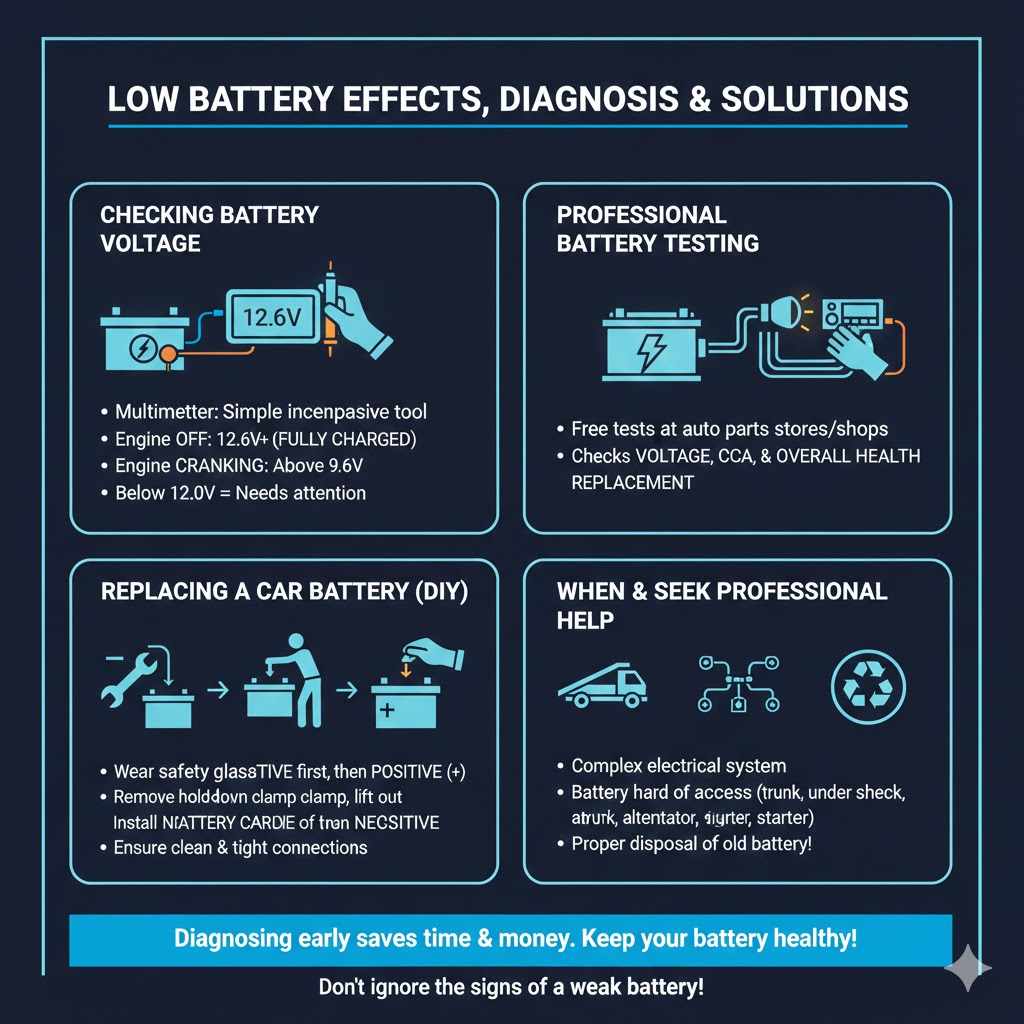
One of the most direct ways to assess your battery’s health is by checking its voltage. You can do this with a multimeter, a simple and inexpensive tool available at most auto parts stores. With the engine off, the voltage of a fully charged car battery should read around 12.6 volts or higher.
If the reading is significantly lower, it indicates a weak or discharged battery.
During engine cranking, the voltage should not drop below 9.6 volts. If it does, the battery may not have enough power to start the engine reliably. Checking the voltage provides a numerical value of the battery’s charge level and can help you distinguish between a battery problem and other potential issues.
Here’s a quick guide to voltage readings:
- 12.6 Volts or Higher: Battery is fully charged and likely in good health.
- 12.0 to 12.4 Volts: Battery is partially discharged and may need charging or is aging.
- Below 12.0 Volts: Battery is significantly discharged and needs immediate attention.
Professional Battery Testing
If you’re not comfortable using a multimeter or want a more comprehensive assessment, most auto parts stores and repair shops offer free battery testing. They use specialized equipment that not only checks the battery’s voltage but also its cold-cranking amps (CCA) and overall health. This testing can reveal if the battery is failing even if it still holds some charge.
These tests can accurately determine if the battery needs
Scenario: The Clicking Sound
Maria heard a strange clicking sound every time she tried to start her car. The engine wouldn’t turn over at all. She had experienced similar issues before, and it turned out to be a weak battery.
She went to an auto parts store, and they tested her battery for free.
The test showed that the battery’s CCA was significantly below the manufacturer’s recommendation, even though it still had some residual voltage. The store technician explained that the battery was no longer capable of delivering the high burst of power needed to engage the starter motor. Maria bought a new battery, installed it, and her car started perfectly.
The clicking sound was gone, and the performance of her electrical systems improved.
Replacing a Car Battery
Replacing a car battery is often a straightforward process that many car owners can do themselves. However, it’s important to follow the correct steps to ensure safety and proper installation. Always wear safety glasses and gloves, as car battery acid is corrosive.
First, locate the battery in your vehicle. It’s usually under the hood, but sometimes it might be in the trunk or under a seat. Disconnect the negative terminal (black cable) first, then the positive terminal (red cable).
Remove the battery’s hold-down bracket. Lift out the old battery, being careful as they are heavy. Install the new battery in the same position and secure it.
Connect the positive terminal first, then the negative terminal. Ensure all connections are clean and tight.
Important Safety Precautions
Working with car batteries involves handling corrosive materials and the risk of electrical shock. Always disconnect the battery in the correct order (negative terminal first, then positive) to prevent short circuits. When reconnecting, attach the positive terminal first, then the negative.
Ensure that there is no open flame or sparks near the battery, as batteries can release flammable hydrogen gas. Wear safety glasses and gloves to protect yourself from acid. If you are unsure about any step, it is best to consult a professional mechanic.
Improper installation can lead to electrical damage or injury.
When to Seek Professional Help
While replacing a battery can be a DIY task, there are situations where seeking professional help is advisable. If you are unsure about diagnosing the problem, if your car has a complex electrical system, or if you don’t have the right tools, a mechanic can handle it. Some vehicles have batteries located in less accessible places, like the trunk, which can make DIY replacement more challenging.
A professional technician can not only replace the battery but also perform a complete electrical system check. This includes testing the alternator, starter, and the car’s wiring harness. This ensures that the battery issue wasn’t a symptom of a larger problem and that your car’s electrical system is functioning optimally.
They can also properly dispose of the old battery, which is important for environmental reasons.
Conclusion
Yes, a low battery absolutely affects car performance in many ways. It impacts starting ease, electrical component function, and can even lead to engine issues and reduced fuel efficiency. Maintaining your battery is crucial for a reliable and smooth driving experience.