Does Apple Card Cover Rental Car Insurance? Explained
Many people wonder, Does Apple Card Cover Rental Car Insurance? Explained. This question pops up when you’re planning a trip and need to rent a car.
It can feel a bit confusing because credit card benefits are not always clear. But don’t worry! We’re here to make it super simple.
We’ll go through it step-by-step so you know exactly what you need to know about Apple Card and rental car insurance. Get ready for easy answers!
Apple Card And Rental Car Coverage Explained
Understanding what your credit card offers for rental cars can save you money and hassle. The Apple Card, issued by Goldman Sachs, has specific benefits that apply to car rentals. It’s important to know these details before you book your next vehicle.
This section breaks down the core coverage provided by the Apple Card. It explains what type of protection you can expect and under what circumstances.
Understanding Your Apple Card Auto Rental Protection
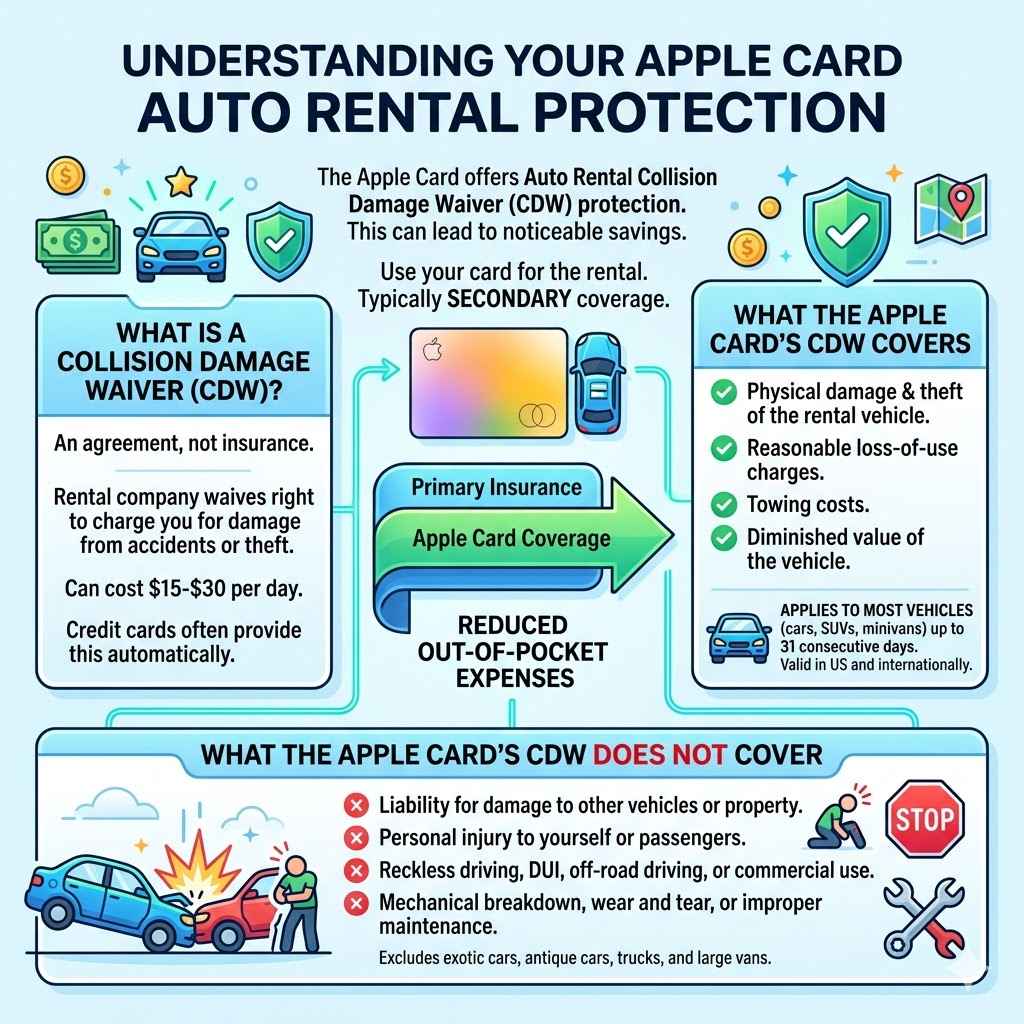
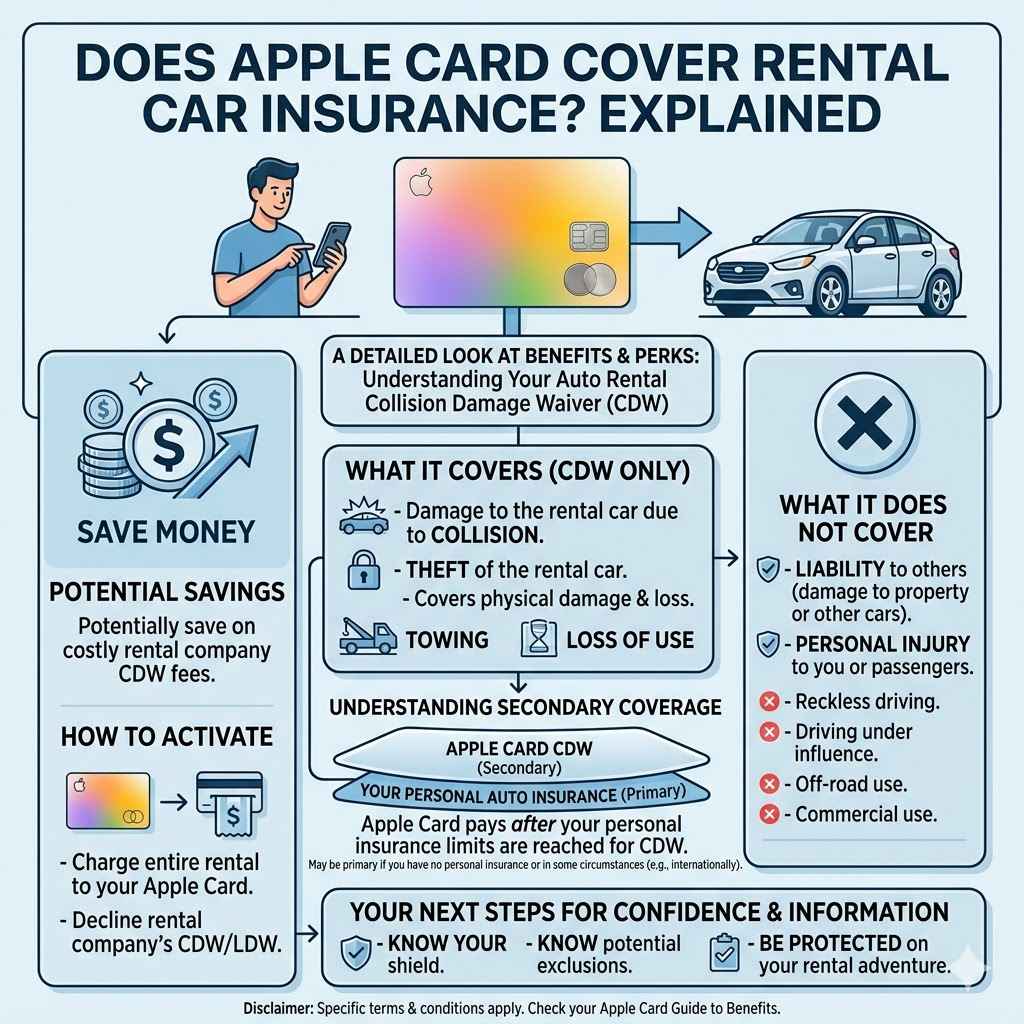
The Apple Card offers Auto Rental Collision Damage Waiver (CDW) protection. This is a significant benefit for cardholders. It means you might not need to purchase the collision damage waiver from the rental car company.
This can lead to noticeable savings on your rental costs.
This benefit covers damage due to collision or theft. It applies to most rental vehicles. However, there are limitations and exclusions to be aware of.
It’s not a blanket policy. Understanding these details is key to using the benefit effectively.
The Apple Card’s coverage is typically secondary. This means it kicks in after any other insurance you might have, like your personal auto insurance. If you have other insurance, the Apple Card covers what your primary insurance doesn’t.
This helps reduce your out-of-pocket expenses.
What Is A Collision Damage Waiver CDW
A Collision Damage Waiver (CDW) or Loss Damage Waiver (LDW) is something rental car companies offer. It’s not insurance, but an agreement. When you accept it, the rental company waives its right to charge you for damage to the car.
This includes damage from accidents or theft. The waiver often comes with a deductible or maximum coverage limit. Prices for CDWs can vary widely, often adding $15 to $30 per day to your rental cost.
For renters who do not have their own auto insurance, or whose insurance doesn’t cover rental cars, a CDW can be a crucial purchase. However, many credit cards, including the Apple Card, provide this coverage automatically if you use the card to rent the car.
What The Apple Card’s CDW Covers
The Apple Card’s Auto Rental CDW covers physical damage and theft of the rental vehicle. This includes costs for towing and reasonable loss-of-use charges incurred by the rental company. It also covers diminished value, which is the reduction in the vehicle’s market value after it has been damaged and repaired.
The coverage typically applies to most rental vehicles, including cars, SUVs, and minivans. However, certain vehicle types are usually excluded. These often include exotic cars, antique cars, trucks, and vans meant for more than 15 passengers.
Always check the terms and conditions for a complete list of exclusions.
This coverage is available in the United States and internationally. It applies when you rent a car for a period of up to 31 consecutive days. For rentals longer than 31 days, the CDW coverage may not apply.
Planning your rental duration carefully can ensure you remain covered.
What The Apple Card’s CDW Does Not Cover
While the Apple Card provides valuable rental car protection, it has limitations. It does not cover liability for damage you cause to other vehicles or property. It also doesn’t cover personal injury to yourself or passengers.
These are typically covered by separate auto insurance policies.
Other common exclusions include damage from reckless driving, driving under the influence, or using the vehicle for commercial purposes. Off-road driving is usually not covered either. Damage due to vandalism might also be excluded under certain circumstances.
Knowing these exclusions prevents surprises.
The CDW also won’t cover wear and tear, mechanical breakdowns, or damages from improper maintenance. It’s specifically for accidental damage or theft of the rental vehicle. Always drive responsibly and adhere to the rental agreement’s terms.
How To Activate Your Apple Card Rental Car Coverage
Activating your Apple Card’s rental car coverage is straightforward. The most important step is to use your Apple Card to pay for the entire rental transaction. This includes the rental agreement itself and any associated fees and taxes.
If you use another form of payment for any part of the rental, the coverage may be invalidated.
Make sure the rental period does not exceed 31 consecutive days. For longer rentals, you might need to arrange for separate insurance. If you rent a car for less than 31 days and pay with your Apple Card, the coverage should automatically apply.
Keep all your rental documentation. This includes the rental agreement, receipts, and any incident reports if damage occurs. These documents are essential if you need to file a claim.
They provide proof of your rental and your payment method.
If you are involved in an incident, notify the rental company immediately. Then, contact the Apple Card benefits administrator. They will guide you through the claims process.
Having all your paperwork organized will streamline this process significantly.
Using Your Apple Card For The Entire Rental
The primary condition for your Apple Card’s auto rental CDW to be active is using the card for the full rental cost. This means the base rental rate, all taxes, and any mandatory fees must be paid with your Apple Card. If you use another card or cash for even a portion of the rental, the credit card’s protection benefits often cease to apply.
For instance, if you book a car online and the rental company offers an optional upgrade or additional insurance that you pay for with a different card, your Apple Card’s CDW might be voided. Always ensure your Apple Card is the sole payment method for the entire rental duration. This is a critical point that many people overlook, leading to denied claims.
When you go to pick up the car, confirm with the rental agent that the entire amount will be charged to your Apple Card. This proactive step can prevent misunderstandings and ensure your coverage remains intact. It’s a simple action that provides significant peace of mind.
Rental Period Limitations
The Apple Card’s Auto Rental CDW generally covers rental periods of up to 31 consecutive days. This is a common limitation across many credit cards that offer similar benefits. If you plan to rent a car for a longer duration, you will likely need to secure separate insurance coverage.
This could come from your personal auto insurance policy or by purchasing a waiver from the rental company.
For example, if you rent a car for 35 days, the coverage may only apply to the first 31 days. The remaining four days would be unprotected by the Apple Card’s CDW. You would then be fully responsible for any damages or theft that occur during those uninsured days.
Always plan your rentals to fit within this 31-day window if you intend to rely on your Apple Card’s coverage.
Some rental agreements might allow for consecutive rentals shorter than 31 days that effectively total longer periods. These arrangements might also be subject to limitations or exclusions. It is always best to consult the official Guide to Benefits provided by Goldman Sachs for the most accurate and up-to-date information on rental period limitations.
When The Apple Card Rental Car Coverage Is Secondary
The Apple Card’s Auto Rental CDW acts as secondary coverage. This means it will only cover costs after any primary insurance you possess has been exhausted. This applies to your personal auto insurance policy.
If you have your own car insurance, it will be the first line of defense in case of damage or theft.
For example, if you get into an accident, your personal auto insurance will pay for the damages up to your policy limits. The Apple Card’s CDW will then step in to cover any remaining costs that your personal insurance does not cover. This could include deductibles or amounts exceeding your policy limits.
If you do not own a vehicle and therefore do not have personal auto insurance, the Apple Card’s CDW may function as primary coverage. However, it is crucial to verify this with the benefits administrator. The definition of “primary” and “secondary” can be complex and depends on your specific circumstances and location.
What Is Primary vs. Secondary Coverage
Primary coverage means your insurance or credit card benefit pays for claims first, regardless of any other insurance you might have. It is the first payer. Secondary coverage, on the other hand, pays only after your primary insurance has paid its share.
It acts as a backup. If you have primary coverage, the secondary coverage will pay for any remaining costs, such as deductibles or amounts beyond the primary policy’s limits.
Many credit cards offer secondary rental car insurance because it reduces their risk and the cost of providing the benefit. This is why it is essential to understand whether your coverage is primary or secondary. If you have your own auto insurance, the secondary coverage from your Apple Card will likely cover your deductible or any other costs that your primary insurance doesn’t fully reimburse.
It is always wise to confirm with the benefits administrator for your Apple Card about the specific conditions under which the coverage is considered primary or secondary. This will give you a clear picture of how your claims will be handled.
How Primary Insurance Affects Apple Card Coverage
If you have personal auto insurance, it will be considered your primary coverage for a rental car. When an incident occurs, you must file a claim with your personal insurance company first. The Apple Card’s Auto Rental CDW will then cover any expenses that your primary insurance does not fully reimburse.
This can include your insurance deductible. For instance, if your deductible is $500 and the damage to the rental car is $2,000, your personal insurance might pay $1,500. The Apple Card’s CDW could then cover the remaining $500 deductible.
This makes the Apple Card a valuable tool for reducing your out-of-pocket expenses even if you have your own insurance.
It is crucial to report the incident to both your personal insurance company and the Apple Card benefits administrator. Failure to do so might jeopardize your coverage. Always follow the claims procedures outlined by both parties to ensure a smooth process.
When You Might Need Additional Coverage
While the Apple Card provides a valuable Auto Rental CDW, it is not always sufficient on its own. There are specific situations where you might need to consider purchasing additional coverage. These situations often involve exclusions in the Apple Card’s policy or when your personal insurance may not cover everything.
One common scenario is renting vehicles that are not covered by the Apple Card’s CDW. Exotic cars, antique vehicles, and some larger trucks or vans are typically excluded. If you plan to rent such vehicles, you will need to arrange for separate insurance through the rental company or another provider.
Another instance where additional coverage might be necessary is when renting outside of the United States. While the Apple Card does offer international coverage, the terms and conditions might differ. It’s essential to verify the specific coverage details for the country you are traveling to.
Sometimes, local laws or rental company policies require specific types of insurance that the Apple Card may not fully satisfy.
Excluded Vehicle Types
The Apple Card’s Auto Rental CDW does not cover all types of rental vehicles. Certain categories are typically excluded from coverage. These exclusions are common in credit card benefits to manage risk.
Understanding these exclusions is vital to avoid unexpected costs.
Commonly excluded vehicles include:
Exotic or antique cars
Large passenger vans (typically those that can carry more than 15 passengers)
Pickup trucks and other cargo vans
Motorcycles, mopeds, and motorbikes
Recreational vehicles (RVs) and campers
If you rent any of these excluded vehicles, you will likely need to purchase insurance directly from the rental agency. Relying on your Apple Card for these types of rentals can lead to significant financial exposure in case of damage or theft. Always confirm the vehicle type’s eligibility before your rental.
International Rentals
The Apple Card’s Auto Rental CDW can provide coverage for international rentals. However, the specifics can vary significantly depending on the country. It’s essential to research the rental company’s requirements and local laws before your trip.
Some countries may require you to purchase local insurance regardless of your credit card benefits.
Additionally, the coverage limits and terms may differ abroad. Some countries might have mandatory insurance requirements that the Apple Card does not meet. You might also encounter situations where the rental company mandates that you purchase their insurance, overriding any external coverage.
This is often the case in countries like Ireland or Italy. It’s prudent to contact the Apple Card’s benefits administrator before your international trip to confirm the exact coverage details for your destination.
Keeping detailed records of your rental agreement and any communication with the rental company is especially important for international rentals. This documentation will be crucial if you need to file a claim and might need to understand how foreign regulations interact with your card benefits.
Rental Insurance from the Rental Company
Rental companies offer various types of insurance, often referred to as Collision Damage Waiver (CDW) or Loss Damage Waiver (LDW), and Supplemental Liability Insurance (SLI). The CDW/LDW covers damage to the rental car itself. SLI covers damage to other vehicles, property, and injuries to other people in an accident where you are at fault.
The cost of these can add significantly to your rental bill.
Many consumers opt for these waivers because they want complete peace of mind or because their existing insurance doesn’t cover rentals. However, if your Apple Card provides adequate coverage, purchasing these from the rental company might be redundant and an unnecessary expense. Always compare the cost of the rental company’s insurance with the value of your Apple Card’s coverage and your personal insurance deductible.
Before declining the rental company’s insurance, confirm that your Apple Card’s coverage is active for your specific rental. Also, understand your personal auto insurance policy, as it might provide primary coverage and make the rental company’s insurance unnecessary. This knowledge empowers you to make informed decisions and save money.
Making A Claim With Your Apple Card
If you experience damage or theft of a rental car paid for with your Apple Card, you need to follow a specific claims process. The first step is always to notify the rental car company immediately. Document everything thoroughly.
This includes taking photos of any damage, gathering police reports if applicable, and keeping all rental receipts and agreements.
Next, you will need to contact the Apple Card benefits administrator. This is usually done by calling a specific phone number provided in your Apple Card Guide to Benefits. You will be assigned a claim number and receive instructions on how to submit your documentation.
Timeliness is crucial, as there are often deadlines for reporting incidents and submitting claims.
Be prepared to provide detailed information about the incident. This includes the date, time, location, a description of what happened, and the names of any involved parties. The administrator will review your claim and your provided documentation to determine eligibility and process your reimbursement.
Having all your paperwork in order will make this process much smoother.
Steps To Report An Incident
The first and most critical step after an incident involving a rental car is to report it to the rental car company. Ensure you understand their procedures for reporting damage, theft, or accidents. Obtain a written incident report from them if possible.
This documentation is vital for your claim.
Next, you should contact the Apple Card’s benefits administrator as soon as possible. There is usually a limited window for reporting incidents, often within 30 days of the incident. You can find the contact information for the benefits administrator in your Apple Card’s Guide to Benefits.
When you call, you will be asked to provide details about the rental and the incident.
After reporting the incident, you will be provided with a claim number. You will then need to submit various documents. These typically include the rental agreement, your Apple Card statement showing the full rental payment, repair estimates or invoices for the damage, and any police reports.
The more thorough and organized your submission, the faster your claim can be processed.
Required Documentation For A Claim
To successfully process a claim for rental car damage or theft with your Apple Card, you will need to provide specific documentation. This ensures the benefits administrator has all the necessary information to assess your claim accurately. The core documents typically include:
- A copy of the complete rental agreement. This should clearly show the rental dates, vehicle details, and the total cost.
- Your Apple Card statement showing the full payment for the rental. This proves that you used your card for the entire rental period.
- An itemized repair bill or estimate for the damage to the rental vehicle. If the car was stolen, a police report and a letter from the rental company detailing the loss will be required.
- Any police or accident reports filed in relation to the incident.
- A letter from your primary insurance company (if applicable), detailing what your insurance covers and any amounts paid or denied.
- Receipts for any towing charges or other incident-related expenses.
It is crucial to gather all these documents promptly and submit them as per the instructions provided by the benefits administrator. Missing or incomplete documentation can cause significant delays or even lead to a denied claim.
Navigating The Claims Process
The claims process can sometimes feel complex, but by staying organized and proactive, you can navigate it effectively. Always keep copies of everything you submit. If you are unsure about any part of the process, do not hesitate to ask the benefits administrator for clarification.
Be patient. Claims can take time to process, especially if they involve multiple parties or extensive documentation. Follow up periodically to check the status of your claim.
Providing additional information or clarification promptly when requested by the administrator can help expedite the process.
Ultimately, the goal is to get reimbursed for eligible expenses. By understanding the Apple Card’s coverage, adhering to its terms, and following the claims procedure diligently, you can maximize your chances of a successful claim and recoup your costs. Remember that the Apple Card’s coverage is a valuable benefit, but it requires careful attention to detail from the cardholder.
Does Apple Card Cover Rental Car Insurance? Explained
This detailed look at Apple Card’s rental car insurance benefits provides clarity for consumers. It’s not just about having a credit card; it’s about knowing how to leverage its perks effectively. The Auto Rental Collision Damage Waiver is a substantial advantage, potentially saving you money on rental fees.
We’ve explored what it covers, what it doesn’t, and how to ensure you’re protected.
Understanding the nuances of secondary coverage and potential exclusions is key. By following the simple steps outlined, you can feel confident when renting a car. You’ll know when your Apple Card is your shield and when you might need a little extra protection.
Now you have the knowledge to make informed choices on your next rental adventure.
Frequently Asked Questions
Question: Does the Apple Card cover rental cars internationally
Answer: Yes, the Apple Card’s Auto Rental Collision Damage Waiver generally covers rentals internationally. However, the terms and coverage limits can vary by country. It’s important to check with the Apple Card benefits administrator before your trip to confirm the specifics for your destination.
Question: What if I have my own car insurance, do I still need Apple Card coverage
Answer: If you have your own car insurance, the Apple Card coverage acts as secondary protection. It can help cover your deductible or any costs not fully reimbursed by your primary insurance. This can be a valuable way to reduce your out-of-pocket expenses.
Question: Can I use my Apple Card for long-term rentals
Answer: The Apple Card’s Auto Rental CDW typically covers rentals up to 31 consecutive days. For rentals longer than this, the coverage may not apply. You would likely need to arrange for separate insurance for rentals exceeding this period.
Question: What is the difference between CDW and liability insurance
Answer: A Collision Damage Waiver (CDW) covers damage to the rental car itself, like from accidents or theft. Liability insurance covers damage you cause to other people’s property or injuries to others in an accident. The Apple Card offers CDW coverage, not liability coverage.
Question: How do I file a claim if my rental car is damaged
Answer: First, report the damage to the rental car company. Then, contact the Apple Card benefits administrator to initiate a claim. You will need to provide rental documentation, payment proof, and any incident or repair reports.
Summary
The Apple Card offers valuable Auto Rental Collision Damage Waiver coverage. This benefit protects against damage or theft of rental vehicles when you use your card for the full rental cost. Remember, it’s typically secondary to your personal insurance and has limitations on vehicle types and rental duration.
Always check the Guide to Benefits for exact terms.