
Premier Car Protection Platinum Coverage: The Ultimate Guide
Premier Car Protection Platinum Coverage is a comprehensive vehicle service contract designed to cover the costs of most major car repairs after your factory warranty expires. It protects crucial components like the engine, transmission, high-tech electronics, and air conditioning, offering you peace of mind and shielding you from expensive, unexpected repair bills.
Have you ever been driving when a strange noise starts, or a warning light pops up on your dash? Your heart sinks a little. You immediately think, “How much is this going to cost?” Car repairs can be stressful and expensive, especially when they come out of nowhere. It feels like you have to be a master mechanic just to understand what’s wrong and what you’re paying for.
I get it. That feeling of uncertainty is frustrating. But what if you could protect yourself from those huge, unexpected repair bills? That’s where a vehicle service contract comes in. In this guide, we’ll break down everything you need to know about Premier Car Protection’s Platinum Coverage, step by step. We’ll make it simple, clear, and easy to understand, so you can decide if it’s the right choice for you and your car.
What Exactly Is a Vehicle Service Contract?
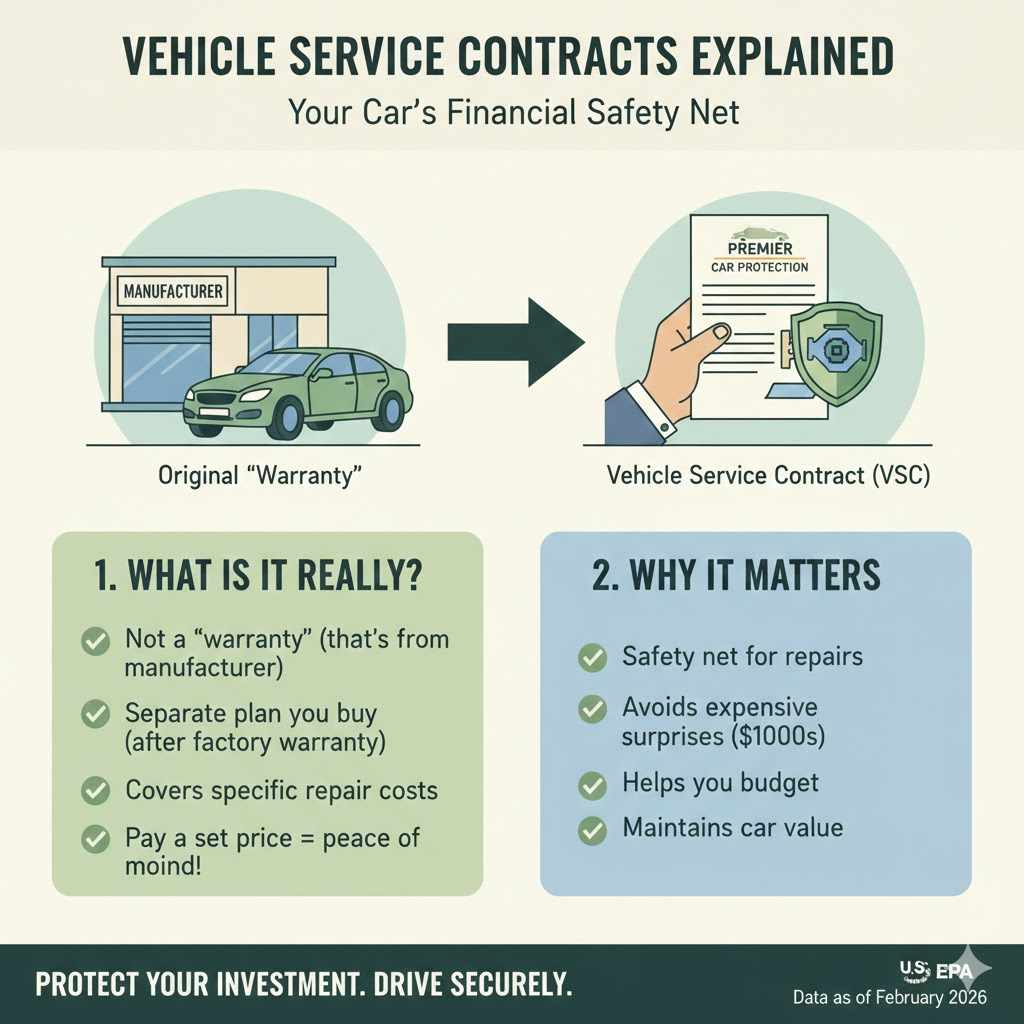
First, let’s clear up some confusion. You might hear people use the term “extended warranty.” While it sounds similar, what companies like Premier Car Protection offer is technically a vehicle service contract (VSC). A true warranty comes from the car manufacturer when the car is new. A VSC is a separate plan you buy to cover specific repair costs after that original warranty ends.
Think of it like a safety net for your car’s health. You pay a set price for the contract, and in return, the plan provider agrees to pay for covered repairs. This can save you from having to pay thousands of dollars out of pocket for a major breakdown. It’s a way to budget for car repairs and avoid financial surprises.
Introducing Premier Car Protection Platinum Coverage
Premier Car Protection is one of many companies that offer VSCs. They provide different levels of coverage, usually named something like Silver, Gold, and Platinum. As you might guess, Platinum is their highest level of coverage. It’s designed to be the most comprehensive plan, covering the largest number of parts and systems in your vehicle.
Why “Platinum” is the Top-Tier Choice
Choosing a coverage level is like choosing a tool for a job. A basic plan is like a simple wrench—it handles a few specific tasks. A Platinum plan, however, is like having a full mechanic’s toolkit. It’s built to handle almost anything that could go wrong with your car’s most important and expensive components.
This plan is often best for people who:
- Own cars with lots of modern technology and electronics, which can be very expensive to fix.
- Plan to keep their vehicle for a long time, well past the factory warranty period.
- Want the highest level of peace of mind and protection against repair costs.
- Rely on their car daily and can’t afford for it to be out of service for long.
What’s Covered Under the Platinum Plan? A Detailed Breakdown
The biggest question is always, “What does it actually pay for?” The Premier Car Protection Platinum plan is what’s known as an “exclusionary” policy. This is a good thing! It means the contract lists the very few things it doesn’t cover. If a part isn’t on that short exclusion list, it’s covered.
This is much better than “stated component” policies (often found in lower-tier plans) which only cover a specific list of parts. With Platinum, the list of what’s protected is massive.
Key Systems and Components Protected
Here are the major systems that are almost always included under a Platinum-level plan:
- Engine: This is the heart of your car. Coverage includes all the internal lubricated parts, like pistons, crankshaft, and cylinders. If your engine fails, this coverage alone can save you thousands.
- Transmission: Whether you drive an automatic or manual, the transmission is another costly component. The plan covers internal parts like gears, torque converter, and solenoids.
- Drive Axle: This system delivers power to your wheels. Coverage includes parts like the differential, axle shafts, and U-joints.
- Transfer Case: For all-wheel drive (AWD) and four-wheel drive (4×4) vehicles, this essential part is covered.
- Steering System: Includes the power steering pump and the rack and pinion assembly, which help you steer the car smoothly.
- Braking System: Vital for your safety. Coverage often includes complex parts like the master cylinder, calipers, and anti-lock brake system (ABS) components.
- Air Conditioning & Heating: Covers the compressor, condenser, and evaporator, ensuring you stay comfortable no matter the weather.
- Electrical System: Includes the alternator, starter motor, voltage regulator, and wiring harnesses.
- Cooling System: Protects the radiator, water pump, and thermostat to prevent your engine from overheating.
- Fuel System: Covers the fuel pump, fuel injectors, and fuel pressure regulator.
- High-Tech Electronics: This is a huge benefit of Platinum. It covers sophisticated and expensive parts like the navigation system, electronic control unit (ECU or the car’s “brain”), and various sensors.
Coverage Comparison: Platinum vs. Other Tiers
To see the difference clearly, let’s look at how Platinum typically stacks up against lower-level plans.
| Component/System | Basic (Silver) Coverage | Mid-Tier (Gold) Coverage | Premier Platinum Coverage |
|---|---|---|---|
| Engine & Transmission | Covered (Core components) | Covered (More comprehensive) | Covered (Most comprehensive) |
| Drive Axle | Covered | Covered | Covered |
| Air Conditioning | Not Usually Covered | Covered | Covered |
| Steering System | Not Usually Covered | Covered | Covered |
| Braking System (ABS) | Not Usually Covered | Often Limited | Covered |
| High-Tech Electronics (GPS, Sensors) | Not Covered | Not Covered | Covered |
| Suspension Components | Not Covered | Often Limited | Covered |
The Important Part: What’s NOT Covered?
No plan covers absolutely everything. It’s crucial to understand the exclusions so there are no surprises later. Being an informed car owner means reading the fine print. With any vehicle service contract, you can expect the following items to be excluded:
- Routine Maintenance: Things you do to keep your car healthy, like oil changes, tire rotations, and filter changes, are your responsibility.
- Wear and Tear Items: Parts that are expected to wear out over time are not covered. This includes tires, brake pads, rotors, wiper blades, and clutch linings.
- Cosmetic Issues: The plan won’t cover things like paint scratches, upholstery tears, or cracked dashboards. It’s for mechanical breakdowns, not appearance.
- Damage from Accidents or Misuse: If a part fails because of a car crash, flood, vandalism, or if you were using the vehicle for racing, the repairs won’t be covered.
- Pre-Existing Conditions: The problem must start after your contract begins. If your transmission was already failing when you bought the plan, that repair won’t be covered.
- Alterations or Modifications: If you’ve modified your car with aftermarket parts (like a turbocharger or a lift kit), any damage caused by those parts may not be covered.
More Than Just Repairs: The Extra Perks of Platinum
A great protection plan offers more than just repair payments. Premier Car Protection’s Platinum level often comes with a suite of benefits that can be a lifesaver when you’re in a tough spot.
- 24/7 Roadside Assistance: Locked your keys in the car? Got a flat tire? Run out of gas? This benefit provides help for these common problems, often including towing to the nearest repair shop.
- Rental Car Reimbursement: If your car is in the shop for a covered repair, the plan can help pay for a rental car. This means you aren’t left without transportation while your vehicle is being fixed.
- Trip Interruption Coverage: If your car breaks down more than 100 miles from home and you have to stay overnight for a covered repair, this benefit can help reimburse you for meals and lodging.
- Transferability: If you decide to sell your car while it’s still under contract, you can often transfer the coverage to the new owner. This can be a great selling point and may increase your car’s resale value.
Is Premier Car Protection Platinum Right for YOUR Car?
This is the most important question. A top-tier plan is a significant investment, and it’s not the right fit for everyone. The best way to decide is to think honestly about your car, your driving habits, and your finances.
Ask Yourself These 4 Key Questions
- What is my car’s age, mileage, and reliability record? If you have an older car with high mileage, or a model known for certain expensive repairs (like transmission issues), a comprehensive plan makes more sense. You can check your car’s reliability and recall information on trusted sites like the National Highway Traffic Safety Administration (NHTSA).
- How long do I plan to keep my car? If you plan on driving your car for many years to come, long after the manufacturer’s warranty is gone, a service contract can provide protection for that entire time. If you think you’ll sell it in a year, it might not be worth it.
- How comfortable am I with unexpected expenses? Do you have a healthy emergency fund set aside specifically for car repairs? Or would a sudden $3,000 bill be a major financial crisis? If you prefer a predictable monthly or one-time payment over a surprise bill, a VSC can provide that stability.
- How much do I rely on my vehicle? If your car is essential for getting to work, taking kids to school, and running your life, you can’t afford for it to be out of commission. The rental car and roadside assistance benefits can be incredibly valuable in this case.
A Quick Cost-Benefit Example
Let’s imagine a common but expensive repair to see how the numbers might work.
| Scenario | Cost Without a Plan | Cost With Platinum Coverage |
|---|---|---|
| Major Transmission Failure | $3,500 – $5,000+ | $100 (Your Deductible) |
| A/C Compressor Replacement | $800 – $1,200 | $100 (Your Deductible) |
| Navigation System/Head Unit Fails | $1,500 – $2,500 | $100 (Your Deductible) |
As you can see, a single major repair can easily cost more than the entire service contract. The plan is a bet on your car’s future, protecting you from the worst-case financial scenarios.
How to Get Started: Your Step-by-Step Guide to Getting Covered
If you think the Platinum plan might be right for you, the next steps are simple. Taking a little time to do this right will ensure you get the best value and understand exactly what you’re buying.
- Gather Your Vehicle Information: You’ll need your car’s year, make, model, current mileage, and the Vehicle Identification Number (VIN). The VIN is usually on a small plate on the driver’s side of the dashboard or on the driver’s side door jamb.
- Request a Free Quote: Contact Premier Car Protection directly through their website or by phone. They will ask for your vehicle information and provide you with a customized quote for the Platinum plan, including pricing and deductible options.
-
Ask Smart Questions: Don’t be shy! A good company will be happy to answer everything. Ask them:
- “What are my deductible options? Is it per-repair or per-visit?”
- “Can I take my car to my favorite local mechanic, or do I have to use a specific network of shops?”
- “How are claims paid? Do you pay the repair shop directly, or do I have to pay first and get reimbursed?”
- “Is there a waiting period before my coverage starts?”
- Read the Entire Contract: This is the most important step! Before you sign or pay anything, ask to see a sample contract. Read it all, especially the “What Is Not Covered” (Exclusions) section. The Federal Trade Commission (FTC) provides excellent advice on what to look for in these contracts. Make sure everything the salesperson told you is written in the document.
- Make Your Decision: Once you’re confident you understand the coverage, the cost, and the terms, you can make an informed decision.

Frequently Asked Questions (FAQ)
What’s the difference between this and my factory warranty?
A factory warranty is included by the manufacturer when a car is new and lasts for a specific number of years or miles (e.g., 3 years/36,000 miles). A Premier Car Protection plan is a vehicle service contract you purchase separately to extend that coverage, protecting you from repair costs after the factory warranty expires.
Can I cancel the plan if I change my mind?
Yes, most vehicle service contracts have a “free look” period, often 30 days, where you can cancel for a full refund if you haven’t made a claim. After that period, you can usually cancel and receive a prorated refund for the unused portion of your contract.
How do I file a claim?
The process is straightforward. When you have a breakdown, you take your car to a licensed repair facility (your choice, in most cases). You provide them with your contract information. The shop diagnoses the problem and contacts the plan administrator to get authorization for the repair. Once approved, the shop performs the work.
Do I have to pay for repairs upfront?
With reputable companies like Premier Car Protection, you typically do not. They pay the repair shop directly for the covered repair costs. You are only responsible for paying your deductible (if you have one) and the cost of any non-covered services, like an oil change you decided to get at the same time.
Is the Platinum plan transferable if I sell my car?
Yes, the Platinum coverage is usually transferable to the next private owner. This can be a strong selling point, as the new owner knows the car comes with protection against major repair bills. There may be a small transfer fee.
Does my car qualify for Platinum coverage?
Qualification depends on your vehicle’s age, mileage, and condition. Platinum plans are typically for newer, lower-mileage vehicles. The best way to know for sure is to contact Premier Car Protection for a free quote; they will tell you exactly which plans your car is eligible for.
What is a deductible?
A deductible is the amount you pay out-of-pocket per covered repair claim. For example, if you have a $100 deductible and a covered repair costs $1,500, you would pay the first $100, and the plan would pay the remaining $1,400. Plans are often available with different deductible options, including a $0 deductible.
Your Road to Peace of Mind
Choosing a car protection plan can feel like a big decision, but it doesn’t have to be complicated. By understanding what Premier Car Protection’s Platinum Coverage offers—from its comprehensive parts coverage to its valuable extra benefits—you’re already halfway there. This isn’t just about avoiding repair bills; it’s about removing the worry and stress that comes with car ownership.
It’s about having the confidence to know that if that check engine light comes on, you have a plan. You have a support system ready to help you get back on the road without draining your savings. Take your time, do your research, and choose the path that gives you the most peace of mind for the miles ahead.
Products related to this article
Sponsored / affiliate links. As an Amazon Associate I earn from qualifying purchases. I may earn additional commission from eligible campaigns.