How Much Car Can I Afford? A Real 2026 Budget Guide
A safe car budget keeps your total transportation costs, not just the loan payment, at or below 10% of your gross monthly income. That single number changes everything about how you should shop.
Here is why it matters right now: the average new car buyer financed $770 a month in early 2026, and the average new vehicle sold for nearly $50,000, according to Experian and Kelley Blue Book. Stretch past what your income can actually support and you are not just signing up for a payment – you are signing up for years of insurance premiums, maintenance bills, and interest that compound if you ever need to refinance or sell early.
This guide walks through the 20/4/10 rule that lenders and financial planners actually use, shows what a realistic payment looks like at different income levels, breaks down what your credit score does to the math, and flags the mistakes that quietly blow up an otherwise reasonable budget.
The 20/4/10 Rule: A Simple Formula for What You Can Actually Afford
Most financial advisors point to the same shorthand: the 20/4/10 rule. It is not a law, and no lender will refuse to approve you for breaking it, but it is a useful ceiling to test your own numbers against before you set foot in a dealership.
- 20% down. Putting at least 20% down on a new car (or a comparable trade-in equity) keeps you from owing more than the car is worth the moment you drive off the lot, since new vehicles typically lose 15-20% of their value in the first year.
- 4-year loan term. Financing for 48 months or less, instead of the increasingly common 72- or 84-month terms, limits how much interest you pay in total and shortens how long you are underwater if the car is totaled or you need to sell.
- 10% of gross income, total. This is the part most people get wrong. The 10% figure is not the loan payment alone – it covers your payment, insurance, fuel, and routine maintenance combined. If you make $60,000 a year, that is $500 a month for everything related to owning the car, not $500 just for the note.
Once you split that 10% budget across a payment, insurance, gas, and upkeep, the actual loan payment usually works out to somewhere between 6% and 7% of your gross monthly income – noticeably less than the flat 15% figure many older budgeting guides still repeat.
Check Before You Sign: Used Car Diagnostic Scanner
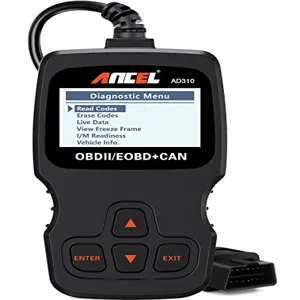 |
ANCEL AD310 OBD II Scanner – $29.99 If a used car keeps more of your budget for the down payment and insurance instead of the loan itself, this pulls any stored engine fault codes in about a minute before you commit to buying.
|
What a Realistic Car Payment Looks Like by Income
The table below applies the 20/4/10 rule to a range of gross annual incomes, assuming roughly 65% of your 10% transportation budget goes toward the loan payment itself (the rest covers insurance, gas, and maintenance), a 60-month loan, a 10% down payment, and the 2026 average new-car interest rate of 6.39% reported by Experian. Your own numbers will shift with your credit score, down payment size, and loan term.
| Gross Annual Income | Total Transportation Budget (10%) | Est. Loan Payment | Approx. Financeable Price* |
|---|---|---|---|
| $40,000 | $333/mo | ~$217/mo | ~$12,300 |
| $50,000 | $417/mo | ~$271/mo | ~$15,400 |
| $60,000 | $500/mo | ~$325/mo | ~$18,500 |
| $75,000 | $625/mo | ~$406/mo | ~$23,100 |
| $100,000 | $833/mo | ~$542/mo | ~$30,800 |
| $150,000 | $1,250/mo | ~$812/mo | ~$46,300 |
*Approximate price you could finance on a 60-month loan at 6.39% APR with 10% down. A shorter loan term or a bigger down payment lowers that ceiling but reduces total interest paid; a longer term raises it but costs more over the life of the loan.

New vs. Used: What Your Money Actually Buys in 2026
The gap between new and used has narrowed over the past couple of years, but it is still substantial. Kelley Blue Book put the average new car transaction price at $49,855 in July 2026, while the average used car sold for $27,028 – a difference of nearly $23,000. A new EV averaged even higher, at $56,126.
A used car almost always fits a tighter budget more easily, but the calculation is not just about the sticker price. Used-car loans carry a much higher average interest rate – 11.43% versus 6.39% for new, per Experian’s Q1 2026 data – because lenders price in the higher default and repair risk. That gap can eat into the savings from a lower purchase price, especially on an older vehicle financed over a long term.
| New | Used (3-5 years old) | |
|---|---|---|
| Avg. transaction price (2026) | $49,855 | $27,028 |
| Avg. loan interest rate (Q1 2026) | 6.39% | 11.43% |
| Avg. monthly payment | $770 | $531 |
| Warranty coverage | Full factory warranty | Often expired or near end |
| Depreciation in year one | 15-20% of value | Already absorbed by prior owner |
A used car three to five years old has usually already taken its steepest depreciation hit, which is one reason it is often the better financial move even with a higher interest rate. Before you commit to a specific used vehicle, run its VIN through a history report and pull any stored diagnostic codes yourself – a car that looks clean on the outside can still be carrying a check-engine code the seller never mentioned.
The Real Cost of Owning a Car Beyond the Payment
The loan payment is usually the biggest single line item, but it is rarely the only one that matters. Four other costs need a real dollar figure in your budget, not just a mental note to “leave some room.”
- Insurance. Full coverage on a newer financed vehicle typically runs $150-$250 a month depending on your state, driving record, and the car’s repair costs; liability-only on an older paid-off car can be under $60.
- Fuel. A gas vehicle driven 12,000 miles a year at current national average prices usually costs $120-$180 a month; hybrids and EVs run lower but add electricity or charging costs instead.
- Maintenance and repairs. Budget $50-$100 a month even on a reliable new car for oil changes, tires, and brakes; older or higher-mileage used vehicles should budget closer to $100-$200 to cover the higher odds of an unplanned repair.
- Taxes, registration, and fees. Sales tax alone can add several thousand dollars to the purchase price depending on your state, and annual registration renewal is a recurring cost that is easy to forget when you are focused on the monthly payment.
Add those up before you finalize a purchase price. A $400 car payment that looked comfortable on paper can turn into $650-$700 a month once insurance, gas, and upkeep are added – and that total, not the payment alone, is what should stay under roughly 10% of your gross income.
How Your Credit Score Changes What You Can Afford
Your credit score does not just decide whether you get approved – it can nearly quadruple your interest rate. Experian’s State of the Automotive Finance Market report for Q1 2026 shows just how wide that gap gets on a new-car loan.
| Credit Tier | Avg. New-Car APR (Q1 2026) | Effect on a $30,000 Loan, 60 Months |
|---|---|---|
| Excellent (super prime) | 4.55% | ~$559/mo, ~$3,540 total interest |
| Good (prime) | ~6.4% (market average) | ~$586/mo, ~$5,160 total interest |
| Fair (near prime) | ~9-10% | ~$630-640/mo, ~$8,000-8,400 total interest |
| Poor (subprime) | 16.01% | ~$730/mo, ~$13,800 total interest |
That is the same $30,000 loan costing anywhere from about $559 a month to $730 a month depending on nothing but the interest rate. If your credit score is on the lower end of that range, the highest-value move you can make before shopping is not finding a better deal on the car – it is spending a few months paying down revolving debt and correcting any errors on your credit report to move into a better tier.
Down Payment and Loan Term: The Two Levers You Control
Once you have picked a car, two decisions do more to shape your actual monthly cost than anything else: how much you put down and how long you finance it.
A bigger down payment shrinks the loan itself, which lowers both the payment and the total interest you pay over the life of the loan. It also protects you from being underwater – owing more than the car is worth – in the first year or two, when new-vehicle depreciation is steepest. Putting down 20% instead of the bare minimum a lender will accept is usually the single most effective way to bring a payment back inside your budget without downgrading the car.
Loan term works the opposite way. Stretching from 60 to 72 or 84 months lowers the monthly payment, which is exactly why dealers push longer terms so readily, but it also means paying interest for years longer and staying underwater on the loan for much of that time. A shorter term costs more per month but almost always costs less overall.

Before you sit down at the finance desk, get pre-approved by your bank or a credit union. Credit unions in particular tend to offer lower rates than dealer financing and often have more flexible terms for members. Walking in with a pre-approved rate gives you a real number to compare against whatever the dealership offers, and it puts you in a stronger negotiating position since you are no longer dependent on their financing to get the deal done.
Common Mistakes That Blow Up a Car Budget
- Shopping by monthly payment instead of total price. A dealer can hit almost any payment target you name simply by extending the loan term – which is exactly how buyers end up financing a $35,000 car for 84 months without realizing it.
- Forgetting insurance before you buy, not after. Get an insurance quote on the specific make and model before you sign anything; sports cars, trucks, and some SUVs can add $50-$100 a month over a comparable sedan.
- Rolling over negative equity from a trade-in. If you still owe more than your current car is worth, that gap gets added to the new loan, quietly inflating both the payment and the total interest.
- Skipping the pre-purchase inspection on a used car. A $100-$150 independent inspection, or pulling stored fault codes yourself with a basic scanner, can save thousands in repairs a seller has no obligation to disclose.
- Adding dealer add-ons without doing the math. Extended warranties, paint protection, and gap insurance can all be worth it, but each one added to the loan also collects interest for the life of the loan – compare the financed cost against paying cash for the same coverage.
Frequently Asked Questions
How much car can I afford on my salary?
Use the 20/4/10 rule as your starting point: keep total transportation costs, including your payment, insurance, gas, and maintenance combined, at or below 10% of your gross monthly income. On a $60,000 salary, that works out to roughly $500 a month for everything car-related, of which the loan payment itself is usually somewhere around $300-$330.
How much should I spend on a car if I make $100,000?
At $100,000 a year, the 10% rule allows about $833 a month for total transportation costs. After accounting for insurance, fuel, and maintenance, that typically leaves a loan payment in the $500-$550 range, which finances a vehicle in roughly the $28,000-$32,000 range on a 60-month loan at current average rates with 10% down.
What is the 20/4/10 rule for buying a car?
It is a three-part guideline: put at least 20% down, finance for no more than 4 years (48 months), and keep total vehicle-related costs, not just the payment, under 10% of your gross monthly income. It originated as informal advice from financial planners rather than a formal lending rule, but most major lenders and outlets cite the same benchmarks.
What car can I afford on a $60,000 salary?
On a $60,000 salary, a 60-month loan at the 2026 average new-car rate of roughly 6.4% with 10% down puts you in a vehicle priced around $18,000-$19,000 if you stick to the 10% total-cost rule. Choosing a used car instead, or increasing your down payment, can stretch that range higher without raising your monthly costs.
Is it better to put more money down or get a shorter loan term?
Both reduce total interest, but they solve slightly different problems. A larger down payment lowers the loan amount itself and protects you from being underwater early on. A shorter term forces a higher monthly payment but guarantees you pay less interest overall and pay off the car faster. If your budget can absorb a higher payment, a shorter term usually saves more money; if it cannot, a bigger down payment is the safer lever to pull.
Does my credit score really change how much car I can afford?
Yes, significantly. Experian’s Q1 2026 data shows new-car buyers with excellent credit averaging a 4.55% APR, while buyers with poor credit averaged 16.01% – more than triple. On a $30,000 loan over 60 months, that difference alone is worth roughly $170 a month, or about $10,000 in total interest, which directly changes how expensive a car you can responsibly finance.
Conclusion
The number that actually matters is not the sticker price or even the monthly payment a dealer quotes you – it is your total transportation cost as a share of your gross income. Run the 20/4/10 rule against your own numbers before you shop, get pre-approved so you know your real rate, and price out insurance and maintenance before you fall in love with a specific car.
A car that fits your budget on day one is the one that still fits it three years later, after the new-car excitement wears off and the bills keep arriving on schedule.
Products related to this article
Sponsored / affiliate links. As an Amazon Associate I earn from qualifying purchases. I may earn additional commission from eligible campaigns.