Does CarShield Cover Catalytic Converters? What You Need to Know
Figuring out auto protection plans can be tricky. A common question people have is, Does CarShield Cover Catalytic Converters? It’s a valid concern because these parts can be expensive to replace. Many folks find the details of car warranties and protection plans a little confusing at first. Don’t worry, though! We’ll explore the basics of CarShield and catalytic converters in simple terms. Let’s get started and clear up any confusion.
What Exactly Is a Catalytic Converter?
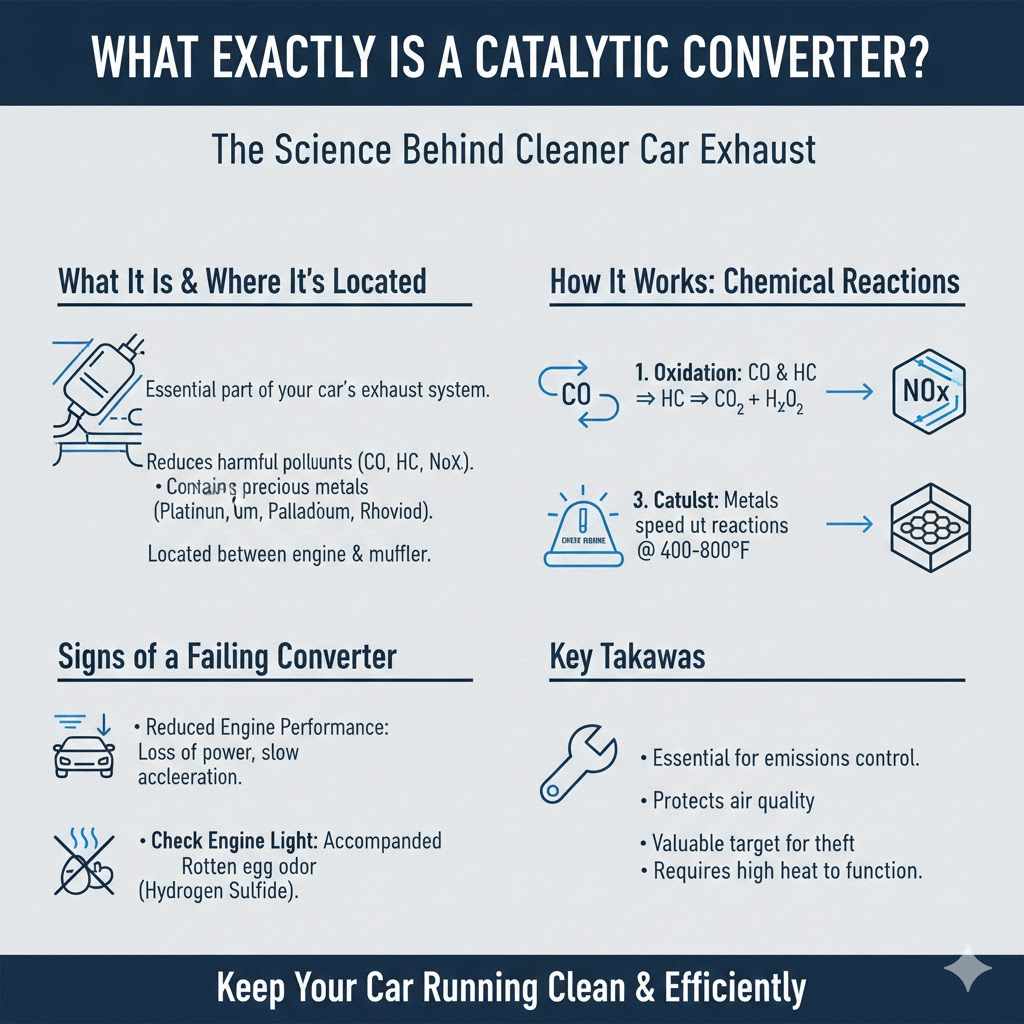
The catalytic converter is an essential part of your car’s exhaust system. Its main job is to reduce harmful pollutants that come from your engine. These pollutants are created when your car burns fuel. The converter uses a chemical reaction to turn these nasty gases, like carbon monoxide and hydrocarbons, into less harmful substances like carbon dioxide and water vapor. Think of it as a filter for your car’s exhaust.
Catalytic converters are usually located in the exhaust system between the engine and the muffler. They look like a small, metal box filled with a honeycomb-like structure. This structure is coated with precious metals like platinum, palladium, and rhodium. These metals act as catalysts, speeding up the chemical reactions that clean the exhaust. Because of the materials used and its importance to emissions, the catalytic converter is a valuable component and often targeted by thieves.
How Catalytic Converters Function
The core of a catalytic converter’s operation is the chemical reaction it facilitates. Exhaust gases from the engine flow through the converter. The precious metal catalysts inside, which are coated on a ceramic or metallic substrate, help the chemical reactions happen. This helps convert the harmful pollutants into less harmful ones. This process requires three main chemical reactions: oxidation, reduction, and de-NOx.
Oxidation: This process involves adding oxygen. Carbon monoxide (CO) is converted into carbon dioxide (CO2). Unburned hydrocarbons (HC) are changed into carbon dioxide (CO2) and water (H2O).
During the oxidation process, the catalyst helps to combine oxygen with the carbon monoxide and hydrocarbons. This process works when the engine is running and the exhaust temperature is high enough to activate the catalyst, usually around 400-800 degrees Fahrenheit. The result is a significant decrease in harmful pollutants, making the exhaust cleaner.
Reduction: This process involves removing oxygen. Nitrogen oxides (NOx) are broken down into nitrogen (N2) and oxygen (O2).
The reduction process focuses on removing nitrogen oxides, which are also harmful. The catalyst helps to break down these nitrogen oxides into harmless nitrogen and oxygen, contributing to a significant decrease in pollutants. This is especially important for areas with air quality concerns.
De-NOx: Sometimes, catalysts also help with de-NOx reactions by employing reducing agents such as ammonia or other nitrogen compounds.
Certain catalysts are specially designed to facilitate de-NOx reactions. These reduce the amount of nitrogen oxides in the exhaust, further improving air quality. The process involves complex chemistry and is essential for achieving the best emissions performance.
Signs Your Catalytic Converter Is Failing
Knowing the signs of a failing catalytic converter can save you time and money. Here are some key indicators that something might be wrong. If you notice these issues, it is essential to have your car checked by a mechanic.
Reduced Engine Performance: A clogged or failing catalytic converter can restrict exhaust flow. This can make your engine lose power and accelerate slowly.
A restricted exhaust flow prevents the engine from expelling exhaust gases efficiently. As a result, the engine might struggle to produce power, leading to reduced acceleration, especially when trying to merge onto a highway. This is often the first indication something is wrong.
Check Engine Light: One of the most common signs is the “Check Engine” light coming on your dashboard. Often, this is accompanied by specific error codes.
The car’s onboard diagnostics system monitors the catalytic converter’s performance. When the light turns on, it often means the converter isn’t working as it should. A mechanic can use a code reader to identify the exact problem and confirm whether the converter is the source of the issue.
-
- Unusual Smells: A rotten egg smell, caused by the release of hydrogen sulfide, can indicate a failing converter.
The rotten egg odor is a clear sign that the converter isn’t correctly processing exhaust gases. This smell often worsens as the converter degrades, becoming a significant problem to both the environment and the driver’s comfort.
Excessive Heat: A catalytic converter that is overheating can be a sign of a problem.
If the converter is struggling to function, it can cause excessive heat in the exhaust system. This can lead to damage to surrounding parts like the exhaust manifold, or even trigger a fire hazard. Immediate inspection is critical.
Understanding CarShield and Its Coverage
CarShield is a vehicle service contract provider. Unlike a traditional warranty from a car manufacturer, CarShield offers protection plans that help cover the cost of certain repairs. These plans work by providing financial assistance when your car needs repair due to mechanical breakdowns. CarShield offers various plans, each with different levels of coverage and costs. It’s important to carefully review these plans to determine if the one you choose meets your vehicle’s needs.
The range of plans CarShield offers can be beneficial. They aim to make sure drivers have options to fit their budgets and requirements. CarShield is not an insurance company, but rather a company offering service contracts. The plans are designed to help with unexpected repair costs. You can buy these contracts to cover things such as the engine, transmission, and electrical systems.
Types of CarShield Plans
CarShield provides a variety of plans, each with its own level of coverage. Knowing these different plans can help you select the one best for your situation. Carefully study the details of each plan to grasp what’s covered and what is not. Here are a few options:
Diamond Plan: This is CarShield’s most comprehensive plan. It is similar to a bumper-to-bumper warranty. The Diamond plan covers most parts of your vehicle, from the engine and transmission to the electrical and air conditioning systems.
The Diamond Plan is CarShield’s top-tier offering. It’s designed to provide the most protection possible, covering a wide array of components. This plan is designed for owners who want the broadest coverage, providing peace of mind against a variety of mechanical failures.
Platinum Plan: This plan offers extensive coverage, including engine, transmission, and many other components. It’s an ideal option for those seeking a good balance of coverage and price.
The Platinum plan from CarShield is a popular choice for its balance of coverage and cost. It protects key parts of your car, including the engine and transmission. This plan is great for those who want a good level of security without the highest plan cost.
Gold Plan: This plan covers major components such as the engine, transmission, and some electrical parts. It’s a good option for cars with moderate mileage.
The Gold plan gives essential coverage. It covers the essential parts of your vehicle, focusing on the engine, transmission, and essential electrical components. This plan provides security without the comprehensive coverage of the Diamond or Platinum plans, which is a good choice for cars of moderate age and mileage.
Silver Plan: This plan covers essential powertrain components. This includes the engine and transmission. This is an entry-level plan for vehicles.
The Silver plan provides basic protection. It’s designed to cover essential powertrain components, like the engine and transmission, which are key to your car’s function. This plan is a more economical choice, suitable for older vehicles or those on a tight budget.
What CarShield Usually Covers
CarShield plans typically cover a wide range of mechanical failures, depending on the plan you pick. For example, they often cover problems with the engine, transmission, and drive axle. Additionally, the plans may provide coverage for electrical systems, air conditioning, and other essential components. Always read the contract carefully to know exactly what’s included in your plan.
Engine Components: Coverage for the engine is standard, including internal parts like pistons, crankshaft, and oil pump.
Engine-related issues are often among the most costly. The plans usually cover the major internal components, such as the pistons, crankshaft, and oil pump. This protection can save owners from significant expenses should these components fail.
Transmission: Problems with the transmission are often covered, which can be important.
The transmission is a complicated and expensive part of your car. The CarShield plans generally protect the transmission components, which offers financial security against transmission failures. This coverage is essential to keep your car running.
Electrical System: Many plans also include protection for the electrical system, like starters and alternators.
Today’s cars have complex electrical systems that power almost every function. Many plans include coverage for components like the starter and alternator, which are necessary for your car to run. This protection can prevent significant costs related to these systems.
Other Components: Depending on the plan, coverage may extend to air conditioning, cooling systems, and more.
The more extensive plans often offer coverage for a wider range of components. This can include air conditioning and cooling systems. The choice of the right plan depends on your needs and budget, but more coverage gives better protection.
Does CarShield Cover Catalytic Converters? Examining Coverage Details
Determining whether CarShield covers catalytic converters needs a close look at the contract’s specifics. Because of the costs, people want to know, Does CarShield Cover Catalytic Converters? The answer varies depending on the CarShield plan you select. Generally, the more comprehensive plans like the Diamond plan usually cover catalytic converters, while the more basic plans may not. Always review the terms and conditions.
Catalytic converters can be costly to repair or replace, so it’s essential to understand the extent of your coverage. Before signing up for a CarShield plan, study the details. Check what’s covered. Also, learn what’s not, especially concerning emissions-related components. This helps you avoid surprises when you need a repair.
Catalytic Converter Coverage by Plan
Coverage for catalytic converters varies depending on the specific CarShield plan you select. Here’s a general overview, though it’s always best to check your plan’s details.
Diamond Plan: This plan typically offers the broadest coverage. This often includes coverage for catalytic converters, among many other parts.
The Diamond Plan is usually the best option for catalytic converter protection. Since the Diamond plan covers almost everything, your converter is typically covered. This provides excellent coverage.
Platinum Plan: Coverage for catalytic converters is often included in this plan. This will depend on the contract terms.
The Platinum plan may or may not include the catalytic converter, depending on the specifics of the contract. Always double-check your contract to verify whether the converter is covered.
Gold Plan: Generally, the Gold plan does not cover catalytic converters.
The Gold plan often focuses on essential components. So, it might not offer coverage for the catalytic converter. Check the plan’s exact terms before purchasing if this is a key concern.
Silver Plan: This plan rarely covers catalytic converters.
The Silver plan provides basic powertrain coverage. Since it is basic, it typically does not extend to the catalytic converter.
Factors Affecting Coverage
Several factors can affect whether CarShield will cover a catalytic converter. These factors can vary based on the specific plan, the car’s age and mileage, and the reason for the damage. Knowing these factors can help you better understand your coverage.
Plan Level: The plan you choose is the main factor. More comprehensive plans generally provide broader coverage.
The plan you select directly impacts the components covered. More comprehensive plans, like the Diamond plan, cover a wider variety of parts. This often includes the catalytic converter. Lower-tier plans usually have more limited coverage, potentially excluding emissions-related parts.
Vehicle Age and Mileage: Some plans may have restrictions based on the car’s age or mileage.
CarShield plans may have limitations based on your vehicle’s age and mileage. As vehicles age and accumulate miles, certain plans may become unavailable or offer less coverage. Older cars with high mileage may have restricted coverage options.
Cause of Failure: Coverage often depends on the cause of the catalytic converter’s failure.
The reason for the converter’s failure can impact coverage. Coverage usually applies if the damage results from mechanical failure or normal use. However, damage caused by neglect, misuse, or external factors like theft might not be covered. This aspect is crucial when filing a claim.
Pre-Existing Conditions: Any problems with your catalytic converter before you purchase the plan are usually not covered.
Pre-existing conditions are almost always excluded from coverage. CarShield plans only cover failures that happen after the policy’s effective date. If your catalytic converter has problems before the plan starts, these will not be covered.
How to File a CarShield Claim
Filing a claim with CarShield is typically straightforward, but following the correct steps is essential to ensure a smooth process. You’ll need to understand the steps involved, from getting an inspection to getting the repairs authorized. Being prepared can save time and reduce stress if you need to use your plan.
When you have a mechanical failure, following CarShield’s guidelines is key. First, have your car diagnosed by a certified mechanic. Provide CarShield with the diagnostic report and any other necessary documentation. CarShield will then review the claim and let you know if the repair is covered. Knowing the steps makes the process less complicated.
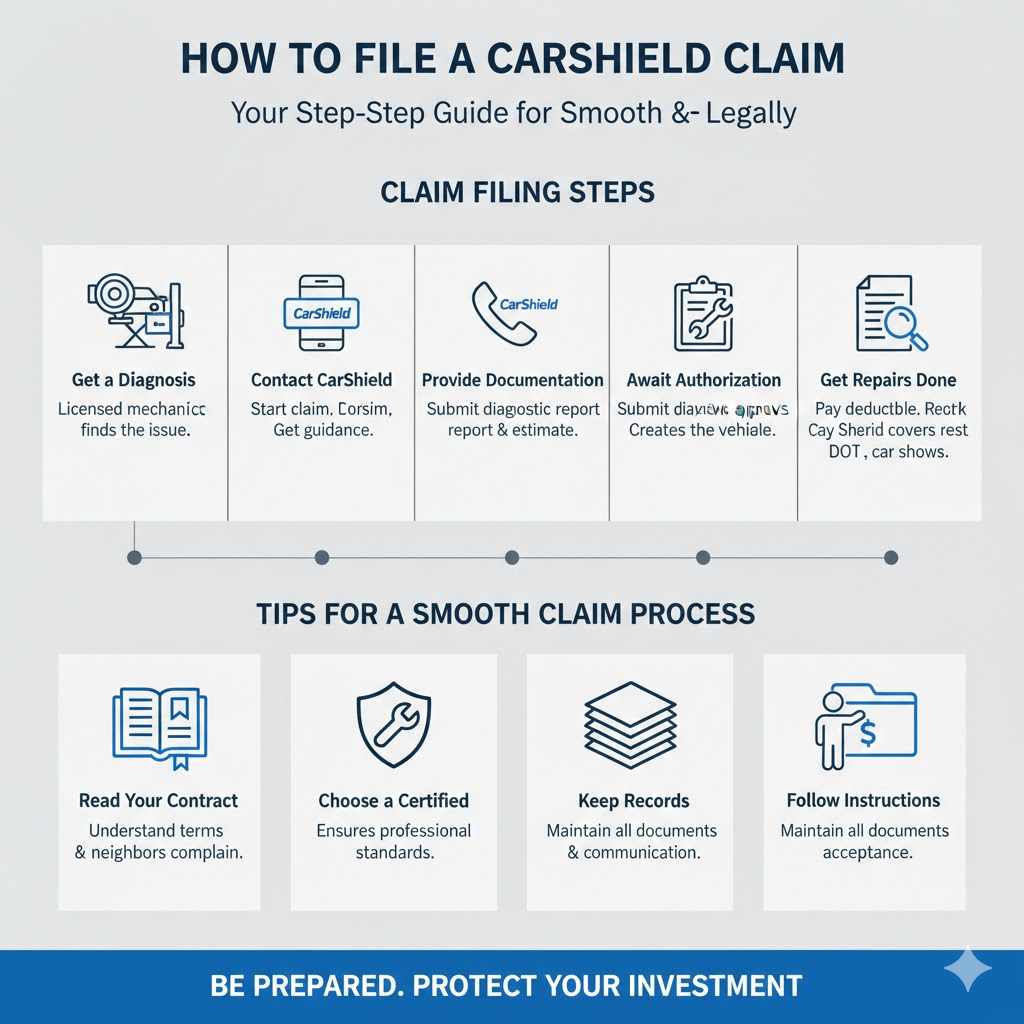
Claim Filing Steps
Here’s a step-by-step process to file a claim with CarShield:
Get a Diagnosis: Have your car diagnosed by a licensed repair facility. The mechanic should determine the exact issue.
Before filing a claim, take your car to a licensed mechanic. They will diagnose the problem and determine what’s wrong. The diagnostic report will be a key part of the claim. This step ensures that the claim is based on professional findings.
Contact CarShield: Contact CarShield to inform them of the issue and start the claim process. They will guide you.
Contact CarShield as soon as you have a diagnosis. They will walk you through the claim procedures. This will give you all the information you need to move forward efficiently and ensures you meet all requirements.
Provide Documentation: Give CarShield the necessary documentation. This includes the diagnostic report and repair estimate.
Gather the required documents, such as the diagnostic report, repair estimate, and any supporting information. Submit these to CarShield as requested. Supplying the needed paperwork promptly helps expedite the claims process.
Await Authorization: CarShield will review your claim and authorize the repairs if they’re covered.
CarShield will examine the information submitted and decide if the repair is covered under your plan. They will inform you of their decision. If approved, they will authorize the repair and guide you through the process.
Get Repairs Done: Once approved, you can have the repairs done. Pay the deductible specified in your plan.
Once the repair is authorized, your car can be repaired by the mechanic. You will be responsible for the deductible. CarShield will handle the rest of the payment. Make sure you understand the deductible amount to prepare for costs.
Tips for a Smooth Claim Process
A few tips can help make the CarShield claim process smoother. Being prepared can help reduce stress and speed up the process. Make sure you follow these tips to improve your experience.
Read Your Contract: Read your contract carefully to understand the terms and coverage details.
Knowing your contract details is crucial. Familiarize yourself with the coverage and exclusions. This ensures you know what to expect during the claim. This can prevent misunderstandings and speed up the process.
Choose a Certified Mechanic: Take your car to a certified repair facility. This can help prevent any issues with claim acceptance.
Using a certified repair facility ensures the diagnosis and repairs meet professional standards. This helps to validate the need for the repair and prevent possible disputes. Confirm that your chosen mechanic is approved or can work with CarShield.
Keep Records: Keep all records, including repair orders and communication with CarShield.
Maintain complete records of all communication and paperwork related to your plan. These documents can be necessary for resolving any questions or disputes. They provide a clear history of interactions with CarShield.
Follow Instructions: Follow CarShield’s instructions. Any deviation could affect the claim.
Following CarShield’s instructions is important. They outline how to process a claim and meet your contract’s requirements. Non-compliance could delay or prevent your claim from getting authorized. Adhering to these steps ensures that the process goes smoothly.
Frequently Asked Questions
Question: Does CarShield always cover catalytic converters?
Answer: No, coverage for catalytic converters depends on the specific CarShield plan you have. The Diamond Plan typically includes this coverage, while other plans may not.
Question: What do I do if my catalytic converter fails and I have a CarShield plan?
Answer: If you think your catalytic converter has failed, get your car diagnosed by a certified mechanic, then contact CarShield to start the claim process. Provide any documentation to help the claim process along.
Question: How do I know which CarShield plan is best for my car?
Answer: The ideal plan depends on your car’s age, mileage, and your budget. The Diamond plan offers the broadest coverage, but other plans may be a better fit if your car is older or the mileage is high.
Question: What factors might cause CarShield to deny a claim for a catalytic converter?
Answer: A CarShield claim might be denied if the catalytic converter failure results from neglect, misuse, or pre-existing conditions. Damage caused by theft might also not be covered.
Question: Can I choose my repair shop when filing a CarShield claim?
Answer: CarShield allows you to select your own repair shop, but it should be a certified mechanic.
Final Thoughts
When you’re trying to figure out, Does CarShield Cover Catalytic Converters? it’s all about checking the details of the CarShield plan. The most extensive plans often have coverage, but it’s not always a guarantee. The coverage usually depends on your car’s age, how many miles it has, and what exactly caused the problem. Knowing the plan’s fine print, knowing your plan is key before you sign up, and making sure you know the coverage. Always read your contract carefully. If you’re considering a CarShield plan, compare the different options. Make sure your plan meets the car’s needs, and gives you the protection you need.