Gap Insurance Stolen Car Coverage: How the Payout Actually Works
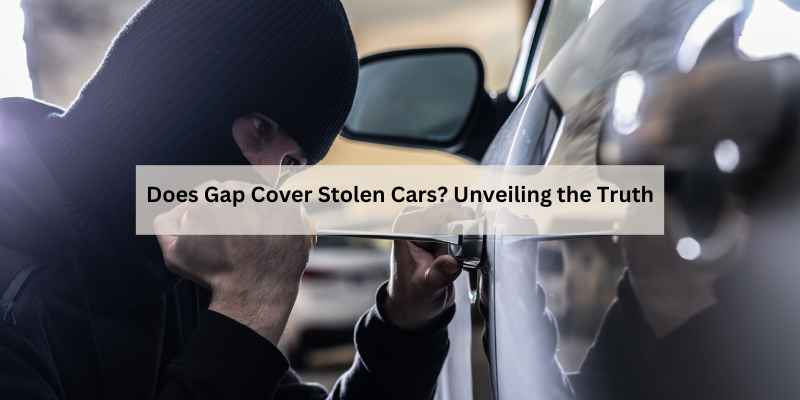
You park your car on a Tuesday night. Wednesday morning, it’s gone. After the shock wears off, the math sets in: your loan balance is $28,000, but the insurance check will likely be around $22,000. That $6,000 difference doesn’t disappear on its own. It becomes your problem unless you carry gap insurance.
This article walks through the exact mechanics of gap insurance stolen car coverage. You’ll see how the payout is calculated, what happens with leased vehicles, why negative equity can sink you, and what to do if the police recover your car after the claim is paid. No vague advice — just the numbers and steps you need.

If you’re buying coverage for a business fleet or managing commercial vehicles, the same principles apply but with bigger numbers. The Commercial Insurance Buyer's Playbook covers these scenarios in depth, including how to structure coverage across multiple vehicles and negotiate with agents. Worth a look if you’re past the personal-car stage.
What Is Gap Insurance and How Does It Apply to Theft?
Gap insurance covers the difference between what your car is worth and what you owe on it. The name comes from the “gap” between those two numbers. When a car is stolen, your comprehensive coverage pays the actual cash value (ACV) at the time of the theft. Gap coverage kicks in to pay the remaining loan balance.
Here’s a concrete example. You financed a $30,000 car with $3,000 down. After two years, the car’s ACV drops to $21,000 due to depreciation. Your loan balance sits at $24,500. The car gets stolen. Your comprehensive insurance writes a check for $21,000 minus your deductible. Gap insurance pays the $3,500 difference to your lender.
Without gap coverage, you’d owe that $3,500 out of pocket — for a car you no longer have. That’s the core value proposition. The policy doesn’t pay you directly. It pays your lender or lessor, settling the remaining balance.
You need comprehensive coverage for theft in the first place. Collision coverage doesn’t apply to theft. If you only carry liability, gap insurance is useless because there’s no primary payout to gap. Check your stolen car coverage before assuming you’re protected.
The Exact Claim Process: From Police Report to Payout
Most people don’t think about the timeline until they’re living it. A theft claim takes time — usually three to six weeks from discovery to final payout. Here’s the realistic week-by-week breakdown.
Step 1: Filing the Theft Report and Comprehensive Claim
Day one: call the police. You need a police report number before your insurer will process anything. Most departments let you file online, but a phone call gets you a report faster. Then call your insurance company and file a comprehensive claim. They’ll assign a claim number and an adjuster.
Your insurer will ask for the police report number, the car’s VIN, your loan documents, and proof of ownership. Have these ready. The adjuster will also ask where the car was stolen from and when you last saw it. Answer honestly — discrepancies here can trigger fraud investigations that delay everything by weeks.
Step 2: The Insurance Company’s Investigation and Valuation
Most insurers wait 7 to 14 days before processing a theft claim. This is the “recovery period.” They want to see if the car turns up before writing a total loss check. If the car is recovered during this window, the claim changes from theft to damage assessment.
Once the recovery period ends, the adjuster determines the ACV. They use third-party valuation tools like Kelley Blue Book or NADA, plus local market data. The ACV isn’t what you paid, and it isn’t what you owe. It’s what the car would sell for on a dealer lot in your area, adjusted for condition and mileage.
Here’s where many people get frustrated. You might owe $26,000 on a car you bought 18 months ago. The ACV comes back at $22,500. That $3,500 gap is exactly what gap insurance exists to cover. But the process isn’t automatic. You need to file a separate claim with your gap insurance provider.
Step 3: How the Gap Insurance Payout is Calculated
Your comprehensive insurer sends you the ACV payment minus your deductible. If you have a $500 deductible, you receive $22,000 on that $22,500 ACV. That check goes to you, but you’ll endorse it over to your lender.
Then you file a claim with your gap provider. They’ll ask for a copy of the comprehensive settlement, your loan payoff statement, and the theft police report. The gap payout equals the difference between your loan payoff and the ACV payment.
Using the example above: loan payoff is $26,000. The comprehensive payout is $22,000. The gap provider pays $4,000 to your lender. You’re left paying the $500 deductible. That’s it. The loan is satisfied.
But there’s a catch. Gap providers only pay up to a certain percentage of the ACV — typically 25% to 50%. If your gap exceeds that cap, you’re responsible for the rest. Read your policy’s fine print before assuming full coverage.
Lease vs. Loan: How Your Agreement Changes the Payout
Leased vehicles work differently than financed ones. When you lease, you don’t own the car. The leasing company does. Your monthly payment covers depreciation plus a finance charge, not principal.
With a lease, gap insurance is often called “waiver of deficiency.” If the car is stolen, the leasing company expects to receive the remaining lease payments plus the residual value. Your comprehensive payout covers the ACV. The waiver covers the shortfall.
For example, you lease a car with a residual value of $18,000 and 24 months left on the lease at $350 per month. The total remaining obligation is $26,400. The car’s ACV at theft is $20,000. The waiver pays the $6,400 difference to the leasing company.
Financed vehicles are simpler. The gap insurance pays the difference between the loan payoff and the ACV, up to the policy cap. But the structure matters. Some gap policies pay the lender directly. Others reimburse you after you’ve paid off the loan. The direct-payment version is better — you avoid fronting thousands of dollars.
If you’re comparing coverage options, check the gap insurance basics before signing anything. The differences between lease and loan coverage are significant enough to affect your decision.
What Gap Insurance Does NOT Cover After a Theft
Gap insurance has limits that surprise people. It doesn’t cover your deductible. If your comprehensive deductible is $1,000, that comes out of your pocket. Some gap policies offer deductible reimbursement as an add-on, but it’s not standard.
It doesn’t cover personal belongings stolen with the car. Laptops, sunglasses, golf clubs — those fall under your homeowners or renters insurance, not your auto policy. The gap coverage only addresses the vehicle loan.
It doesn’t cover extended warranties or maintenance plans you financed into the loan. Suppose you added a $2,000 extended warranty to your loan. The car is stolen. The gap insurance pays the loan difference, but the warranty cost isn’t covered. You’ll need to contact the warranty company for a prorated refund.
Late fees and missed payment penalties aren’t covered either. If you’re behind on payments when the theft occurs, the gap provider won’t pay those arrears. They’ll only cover the principal balance.
The “Negative Equity” Trap: When Gap Won’t Save You
Negative equity — or being “upside down” — happens when you owe more than the car is worth. This is common when you roll a previous car loan into a new one. You owe $5,000 on your trade-in, so the dealer adds that to your new loan. Now you’re starting $5,000 underwater before you drive off the lot.
Gap insurance covers the difference between ACV and loan payoff. But most policies cap the payout at 25% to 50% of the ACV. If your negative equity pushes the gap beyond that cap, you’re eating the difference.
Consider this scenario. You buy a $35,000 car and roll in $8,000 of negative equity. Your loan is $43,000. Two years later, the car’s ACV is $25,000 and your loan balance is $38,000. The gap is $13,000. If your gap policy caps at 50% of ACV — $12,500 — you owe $500 out of pocket. If the cap is 25% — $6,250 — you owe $6,750.
The gap provider isn’t obligated to cover the portion of your loan that came from negative equity. In fact, many policies explicitly exclude it. They consider that debt unrelated to the current vehicle’s value. Always ask your gap provider whether negative equity is covered before you buy the policy.
What Happens If Your Stolen Car Is Recovered?
Sometimes the police find the car. It happens more often than you’d think — about 60% of stolen vehicles are recovered, many within 48 hours. But recovery doesn’t mean the claim is over.
If the car is found before your comprehensive claim is paid, the claim shifts from theft to damage. The adjuster assesses the damage. If the car is drivable and damage is minor, they’ll pay for repairs. Your deductible applies. If the damage exceeds a certain percentage of the car’s value — usually 70% to 80% — it’s declared a total loss. You get the ACV minus the deductible, and gap insurance covers the loan difference.
If the car is found after your theft claim is paid, things get complicated. The insurance company owns the car at that point. They paid you the ACV, so the vehicle is theirs. If the police recover it, the insurer will sell it at auction to recoup some of their payout. You don’t get the car back, and you don’t get any additional money.
But what if the car is recovered in the gap between your comprehensive payout and the gap payout? This is rare but messy. Your gap claim is based on the theft settlement. If the car is found before the gap payment is issued, the gap provider may try to void the claim. They’ll argue the car wasn’t actually stolen. You’ll need to insist that the comprehensive claim was already settled and the car was legally transferred to the insurer.
State Regulations and Your Rights as a Consumer
Gap insurance isn’t federally regulated, but several states have specific rules. New York requires gap insurers to offer a pro-rata refund if you cancel the policy early or pay off the loan ahead of schedule. California has similar cancellation rules and requires clear disclosure of the policy’s terms.
Some states, like Connecticut and Maryland, cap the amount gap insurers can charge. Others, like Florida, require gap coverage to be offered by dealers but don’t mandate specific refund terms. If you’re buying gap insurance, ask your provider about your state’s cancellation and refund policies before signing.
You can also cancel gap insurance if you sell the car or refinance. Most policies are month-to-month or annual. If you cancel mid-term, you’re owed a refund for the unused portion — but only if your state requires it. In states without regulations, the refund is at the insurer’s discretion.
One more thing: you don’t have to buy gap insurance from the dealer. Credit unions and insurance companies often offer it at lower rates. Dealers markup gap policies significantly — sometimes by 50% to 100%. Compare prices before committing.
Is Gap Insurance Worth It? A Cost-Benefit Analysis
Gap insurance costs between $200 and $700 for a policy term, depending on the provider and your vehicle’s value. It’s typically a one-time payment or rolled into your loan. Compare that to the potential out-of-pocket cost of a theft without coverage — often thousands of dollars.
The math favors gap insurance if you’re in any of these situations:
- You put less than 20% down on the car
- You financed for 60 months or longer
- You rolled negative equity into the loan
- You’re leasing the vehicle
- The car depreciates faster than average (luxury or electric vehicles)
If you put 20% or more down and financed for 36 months, the gap between ACV and payoff shrinks quickly. You might not need it. But the cost is low relative to the risk. A $400 policy that saves you $5,000 is a good trade.
For more on whether this coverage fits your situation, check out gap insurance for new cars — the analysis applies to used vehicles too, just with smaller numbers.
Frequently Asked Questions
Does gap insurance cover a stolen car if I only have liability insurance?
No. Gap insurance only works when there’s a primary payout from comprehensive coverage. Liability insurance covers damage to other people’s property, not your own vehicle. Without comprehensive coverage, there’s no ACV payout, and gap insurance has nothing to gap.
How long does it take to get a gap insurance payout after a theft?
Typically 2 to 4 weeks after your comprehensive claim is settled. The gap provider needs paperwork from your primary insurer, your lender’s payoff statement, and the police report. Delays happen when the lender is slow to provide payoff figures or when the primary claim is disputed.
Can I keep the gap insurance payout if my loan is paid off?
No. Gap insurance pays the lender or leasing company directly. You never receive the funds. If there’s a surplus — which is rare — it goes to the lender first. You might receive a small refund if the payout exceeds the loan balance, but that’s uncommon.
What happens to my gap insurance if I refinance my car?
Your existing gap policy becomes void because the loan terms changed. You’ll need to purchase a new gap policy with the refinancing lender. Some lenders require it. Others don’t. Check your refinance agreement before signing.
Does gap insurance cover theft if the car is recovered but damaged?
Yes, but the payout structure changes. If the car is recovered and declared a total loss, gap insurance covers the difference between the ACV and your loan balance. If the car is repairable, gap insurance doesn’t apply — your comprehensive coverage pays for the repairs, and you keep the car.
Final Verdict: Protecting Yourself Financially
Gap insurance stolen car coverage is straightforward once you understand the money flow. The primary insurer pays ACV. Gap pays the difference. You pay the deductible and any amount beyond the policy cap.
- Verify you have comprehensive coverage before worrying about gap — without it, gap is worthless
- Know your gap policy’s cap (usually 25% to 50% of ACV) and whether negative equity is excluded
- Leased vehicles use waiver of deficiency — confirm your lessor requires it
- File the police report first, then the comprehensive claim, then the gap claim — in that order
- Expect a 3 to 6 week timeline from theft to final payout; delays are normal
- Check your state’s cancellation and refund rules before buying
- Compare dealer pricing against credit unions and insurance companies — the markup is real
One last piece of advice: read the gap policy before you sign. The word “gap” sounds simple, but the exclusions and caps determine whether you walk away clean or with a bill. A few minutes of reading beats a $6,000 surprise later.
Products related to this article
Sponsored / affiliate links. As an Amazon Associate I earn from qualifying purchases. I may earn additional commission from eligible campaigns.