Does Going Over Speed Bumps Hurt Your Car? What Really Happens
If you have ever winced while crawling over a speed bump too fast, you already know the feeling. Speed bumps are built to make you slow down, but how much real damage they cause depends almost entirely on your speed and your car’s ground clearance — not on the bump itself.
Quick answer: Yes, but only if you take it too fast. Crossing a standard parking-lot speed bump at 5 mph or less typically causes no measurable damage. Hitting the same bump at 15–20+ mph — or scraping a low-clearance car’s underside — can bend a wheel, knock your alignment out of spec, tear an exhaust hanger, or dent an oil pan.
What Speed Bumps Actually Do to Your Car
TIRE & BRAKE WEAR CHECK
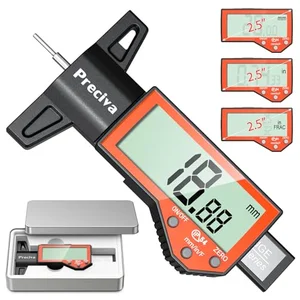 |
Preciva Digital Tire Tread Depth Gauge – $15.99 If frequent speed bumps have you worried about uneven tread or brake pad wear, this gives you a real number in seconds instead of guessing.
|
Every part underneath your car is designed to absorb some impact, but a speed bump taken too fast overloads several systems at once:
- Suspension (shocks and struts): these are designed to soak up bumps gradually. A hard hit forces them to compress and rebound faster than they are built for, which speeds up wear and, in extreme cases, can cause a leak or a broken mount.
- Alignment: a sharp jolt can knock your wheels out of their factory-set angles, especially if one side of the car hits the bump harder than the other.
- Tires and wheels: the sidewall and tread take a sudden compression load. Repeated hard hits accelerate tread wear and, on a pothole-style sharp edge, can crack or bend a wheel.
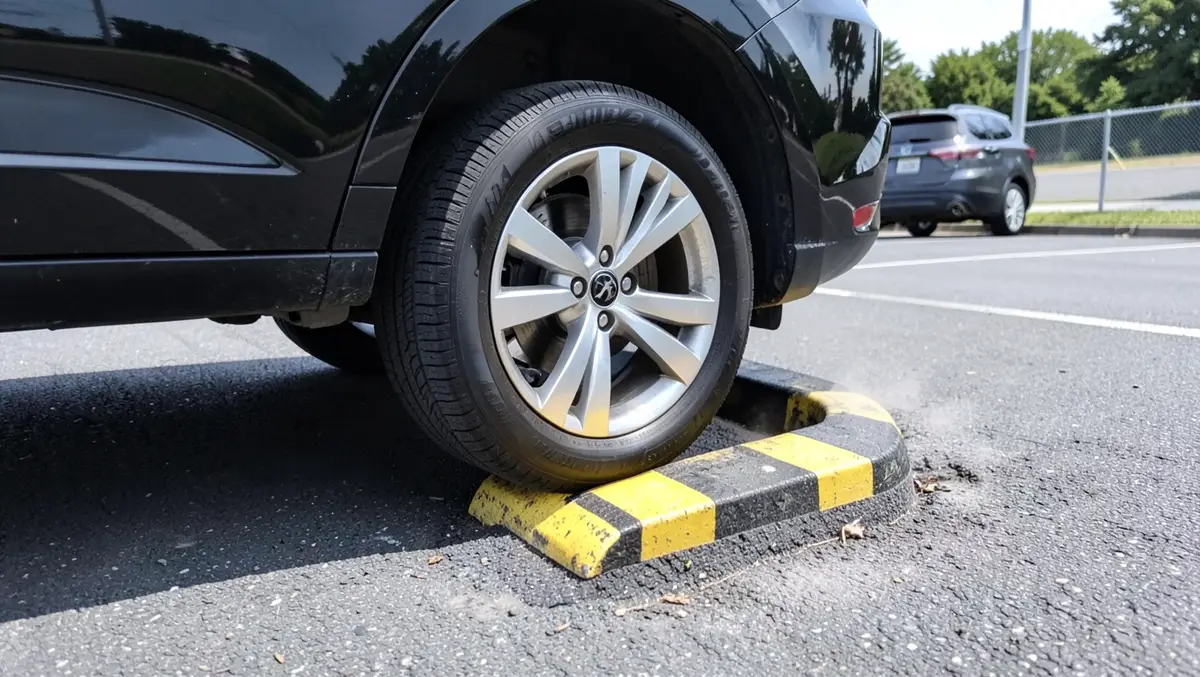
- Exhaust and undercarriage: anything hanging low — the exhaust pipe, muffler, splash shields, or front air dam — can scrape or dent if your car’s ground clearance is less than the bump’s height.
- Oil pan and chassis (worst case): a very low car hitting a tall, sharp bump hard enough can dent or crack the oil pan, or in rare cases stress the frame. This is uncommon and usually only happens at real speed on a bump well above the normal 3–4 inch height.
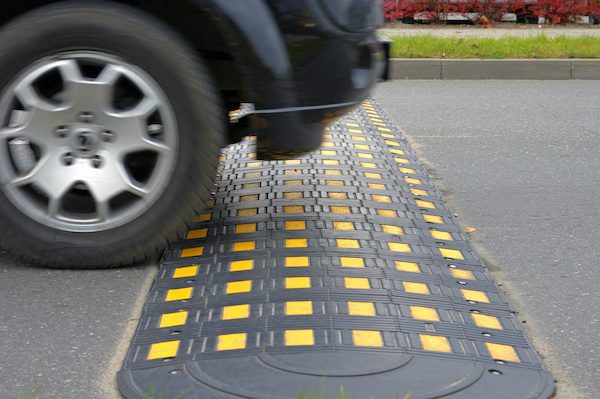
Speed Bump vs. Speed Hump vs. Speed Cushion: Why the Type Matters
Not every raised road obstacle is the same, and that is a big part of why some feel harmless while others feel like they are trying to take your bumper off. Traffic engineers actually design each type for a different crossing speed:
| Type | Typical Height | Length (in direction of travel) | Designed Crossing Speed |
|---|---|---|---|
| Speed bump | 3–4 in (75–100 mm) | ~1 ft – short and steep | 2–10 mph (parking lots, driveways) |
| Speed hump | ~3 in | ~12 ft – long and gradual | 10–15 mph (residential streets) |
| Speed cushion | similar to a hump | ~12 ft, with wheel-width gaps | 10–15 mph; lets wide emergency vehicles straddle it |
| Speed table | flat-topped, low profile | ~20+ ft with a flat middle | 15–25 mph; often doubles as a raised crosswalk |
The short, steep parking-lot speed bump is the one most likely to cause real damage, because its short ramp forces your suspension to compress quickly even at modest speed. A speed hump on a residential street is roughly the same height but three to four times longer, so it is far gentler even at its higher posted speed. If you have ever wondered why one bump barely registers while another jolts the whole car, this is usually the reason (source: NACTO Urban Street Design Guide).
How Fast Is Too Fast?
Most suspension engineers and manufacturer service advisories converge on the same rough number for a standard speed bump: 5 mph or slower. For taller, sharper, or poorly maintained bumps, or if you drive a low-clearance sports car, sedan with a front lip, or a lowered vehicle, drop that to 2–4 mph. Speed humps and speed tables, being longer and gentler by design, can usually be taken at their posted 10–15 mph without added risk to a normal-clearance vehicle.
What actually matters more than the exact number is how you cross: braking hard right on top of the bump, or hitting it at an angle with one front wheel and one rear wheel airborne at the same time, causes more twisting stress than crossing it slowly and squarely.
Warning Signs Your Car May Already Be Damaged
If you have been hitting speed bumps too fast for a while, watch for these signs rather than waiting for something to fail completely:
- The car pulls to one side while driving straight (a common alignment symptom)
- Uneven or cupped tire wear on one edge of the tread
- A clunk, knock, or rattle specifically when going over bumps
- New vibration in the steering wheel at speed
- A scrape, dent, or hanging piece of plastic under the front bumper or exhaust
- A louder exhaust note or a new rattle from underneath the car
- Oil spots appearing under the car where they were not there before
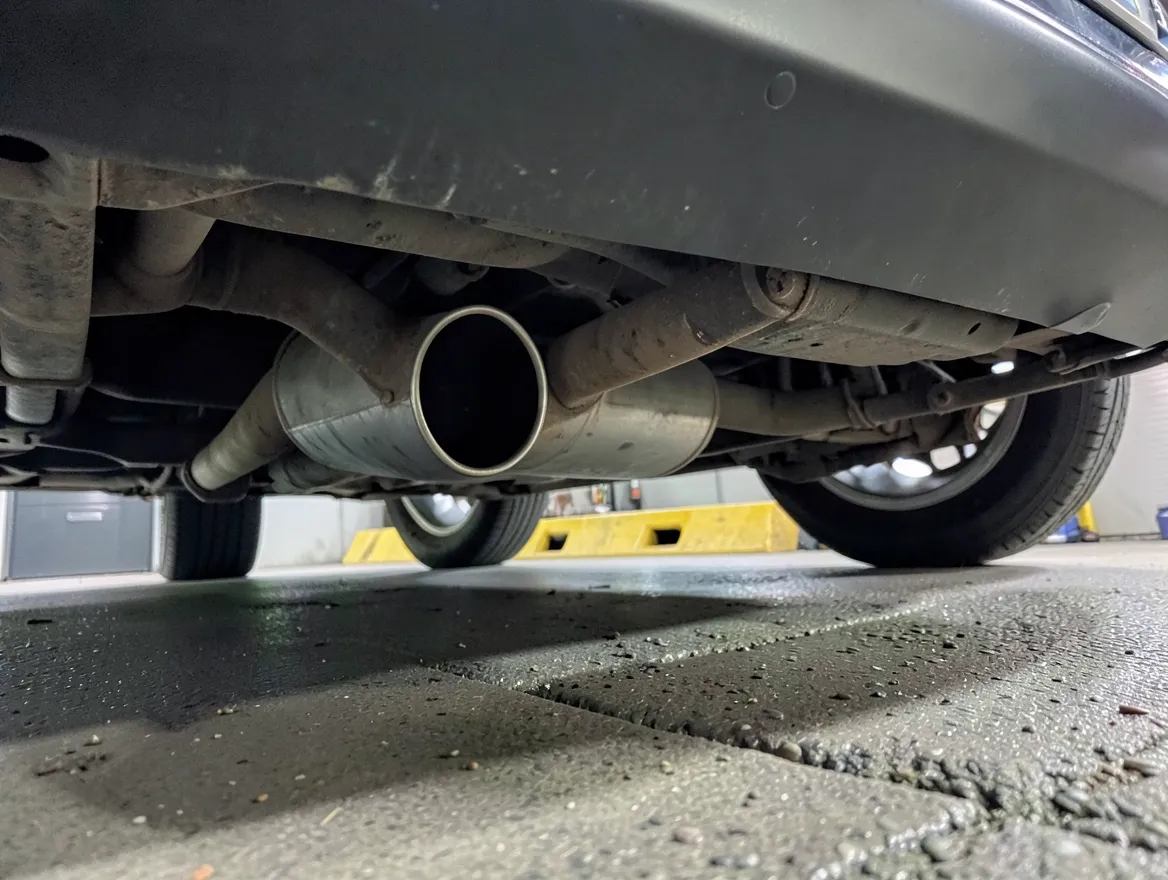
If you cannot see anything from a quick look and none of the signs above show up within a week or two of driving normally, your car most likely came through fine. When in doubt, a mechanic can put the car on a lift and check the exhaust hangers, oil pan, and suspension bushings in a few minutes.
Can You Sue If a Speed Bump Damages Your Car?
It depends heavily on where the speed bump is, and it is nowhere near as simple as older articles on this topic tend to make it sound.
- Private property (a shopping center, apartment complex, or HOA lot): this is the more realistic path. If the property owner or management company installed a bump with no warning paint or signage, let it fall into disrepair, or built it far outside standard height and length specs, you may have a straightforward negligence/premises-liability claim.
- A public street: this is much harder. Cities and counties generally have sovereign or governmental immunity for design decisions about where and how tall to build traffic-calming devices, and most states cap how much you can recover and require you to file a formal notice of claim within a short window — sometimes as little as 30 to 180 days — before you can sue at all.
In either case, document everything before you do anything else: photos of the bump and the damage, the exact location, a repair estimate, and, if possible, whether other drivers have had the same problem there. Then check whether the property is public or private and talk to a local attorney or your state’s tort claims office — do not assume a claim is automatic just because the bump damaged your car (sources: Horwitz Law, Mary Alexander & Associates).
How to Drive Over Speed Bumps Without Damaging Your Car
- Slow down well before the bump — aim for roughly 5 mph, or 2–4 mph for a tall, sharp bump or a low-clearance car.
- Finish your braking before your front wheels reach the bump. Braking on top of it dips the front end and increases the chance of scraping.
- Hold a light, steady throttle as you cross so the suspension can do its job without a sudden weight shift.
- Cross it squarely rather than at a sharp angle if the bump spans the whole lane — hitting it diagonally can twist the chassis by loading one front wheel and the opposite rear wheel at the same time.
- Resume normal speed gradually after both axles have cleared the bump.
Frequently Asked Questions
Does Going Over Speed Bumps Fast Damage Your Car?
Yes. Driving over a speed bump too quickly can stress the suspension, knock the alignment out of spec, and accelerate tire wear. Slowing to around 5 mph before you reach it removes most of that risk.
Do Speed Bumps Ruin Alignment?
They can, especially if you hit one hard or at an angle. A sharp, uneven jolt can knock a wheel out of its factory alignment angles. If you notice pulling to one side or uneven tire wear after regularly crossing bumps, have the alignment checked.
What Is the Difference Between a Speed Bump and a Speed Hump?
A speed bump is short and steep (about 1 foot long) and is designed for 2–10 mph in parking lots and driveways. A speed hump is roughly the same height but stretched out to about 12 feet, designed for 10–15 mph on residential streets, which is why it feels much gentler at a similar speed.
Can Speeding Damage Your Car?
Yes. Speeding in general increases wear on the engine, tires, and brakes, and it makes every bump, pothole, or sudden stop hit your car harder. It also raises your accident risk. Staying within posted limits protects both your car and your safety.
How Fast Should You Drive Over a Speed Bump?
Around 5 mph is the standard safe speed for a typical parking-lot speed bump. Slow to 2–4 mph for a taller or sharper bump, or if your car sits low to the ground. Speed humps on residential streets can generally be taken at their posted 10–15 mph.
Can You Sue If a Speed Bump Damages Your Car?
It depends on who owns the road. A claim against a private property owner (a mall, apartment complex, or HOA) for a poorly designed or unmarked bump is realistic if you can show negligence. A claim against a city or county is much harder because of governmental immunity and strict notice-of-claim deadlines, so check your state’s rules and consider talking to a local attorney before assuming you have an automatic case.
Bottom Line
Speed bumps themselves are not the enemy — speed is. Cross a standard parking-lot bump at around 5 mph, slow down further for tall bumps or a low car, and keep an eye out for pulling, new noises, or uneven tire wear afterward. Do that, and speed bumps stay a minor annoyance instead of a repair bill.
Products related to this article
Sponsored / affiliate links. As an Amazon Associate I earn from qualifying purchases. I may earn additional commission from eligible campaigns.