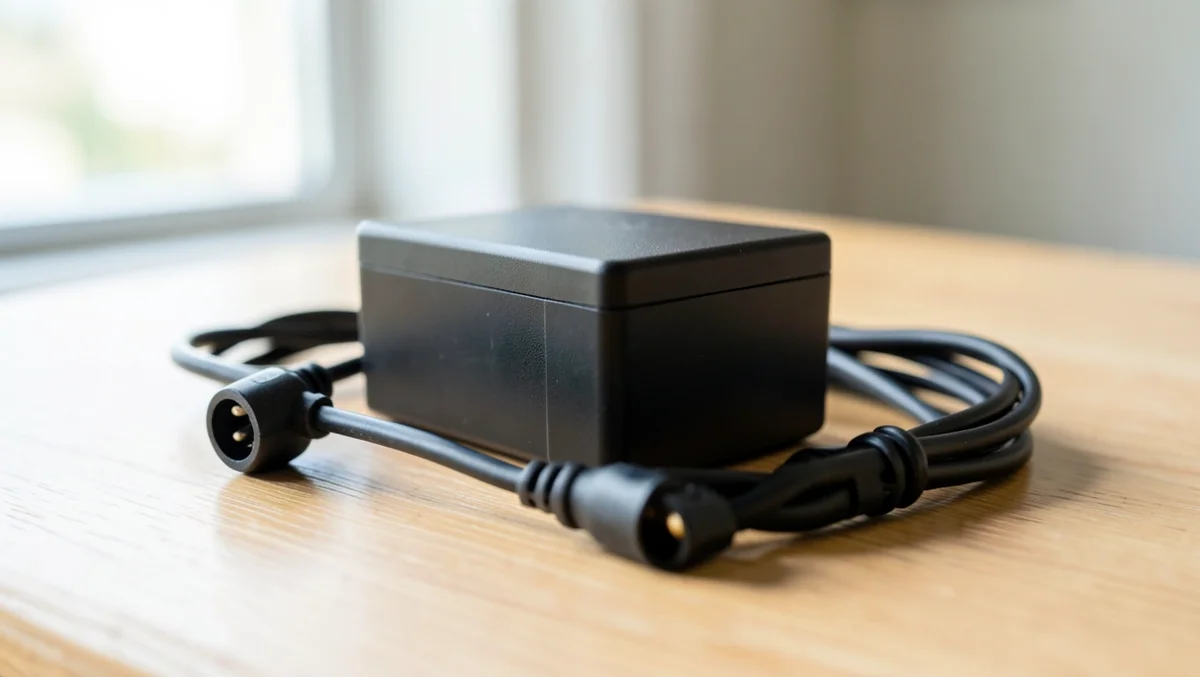
Car Lighter for Home Use: AC to DC Converter Guide
A car lighter converter (also called an AC to DC converter or cigarette lighter socket adapter) plugs into a normal 110-120V wall outlet and outputs 12V DC through a female cigarette-lighter socket, so you can run your car’s 12V accessories — tire inflators, coolers, vacuums, dash cams — indoors instead of in the car.
Below we cover how these adapters actually work, the safety limits worth knowing before you plug one in, and three real, currently-available options: the ALITOVE 10A 120W converter for high-draw devices, a lighter-duty 5A 60W converter for everyday gadgets, and the CARSUN AC/DC Tire Inflator, which skips the separate adapter entirely by building both power modes into one device.
What Is a Car Lighter Converter for Home Use?
A car lighter converter is a small step-down transformer. It takes standard household AC power (110-120V in the US) and converts it to a steady 12V DC output, matching the voltage a car’s cigarette lighter socket normally supplies. The output end is a female socket shaped exactly like the one in your car, so any accessory with a standard cigarette-lighter plug — a 12V tire inflator, a car cooler, a plug-in vacuum, a dash cam, or a phone charger — will work with it indoors without any modification.
These converters are rated by wattage and amperage (for example, 10A/120W). That rating is the single most important spec: it tells you the maximum load the adapter can safely power, and it’s the first thing to check against whatever device you plan to plug in.
HIGHEST-CAPACITY PICK (10A / 120W)
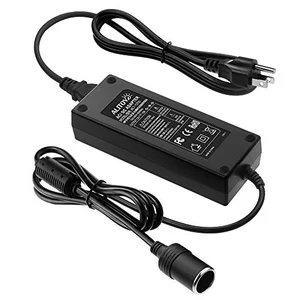 |
ALITOVE AC to DC Converter (10A / 120W) – $21.88 The highest-wattage option here, built for devices with a real startup surge like tire inflators and vacuums.
|
Is It Safe to Use a Car Lighter Converter Indoors?
Yes, but only if you respect a few real electrical limits — these adapters are low-voltage devices on the output side, but they’re still plugged into your home’s full AC power on the input side.
- Never exceed the adapter’s rated wattage/amperage. Add up the actual draw of your device (check its label or manual) and stay under the adapter’s max rating, with some headroom — motors in inflators and vacuums pull a higher surge current the instant they switch on than their steady-state rating suggests.
- Look for real safety certifications and built-in protection. UL/ETL listing plus FCC/CE/RoHS marks, along with built-in overload, over-voltage, over-temperature, and short-circuit cutoffs, are the features that actually prevent a fault from turning into a fire hazard. Skip converters that list none of this.
- Only power the 12V accessories it’s rated for. Don’t use one to run medical or life-support equipment, and don’t assume it’s interchangeable with a car-amp power supply — audio amplifiers draw far more current than these converters are built for (see our guide to powering a car amp at home if that’s what you’re trying to do).
- Give it room to breathe. These converters generate real heat under load; don’t bury one under blankets or inside a closed cabinet, and don’t run it in a damp area like a bathroom or garage floor that gets wet.
- Check the cord and plug before every use. A cracked housing, frayed cord, or loose plug is a reason to stop using it, not a cosmetic issue.
- Don’t leave high-draw devices unattended. A tire inflator or vacuum running through a converter should still be attended, the same way you wouldn’t walk away from any space heater or high-draw appliance.
Top Car Lighter Converters for Home Use
ALITOVE AC to DC Converter (10A / 120W)
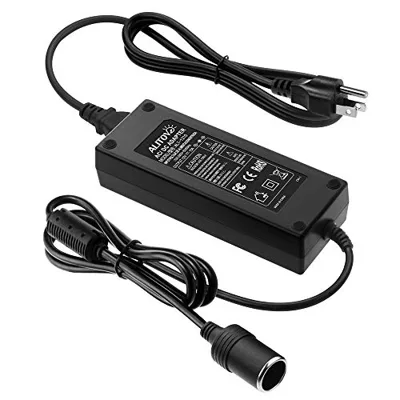
This is the highest-capacity option of the three, rated for 12V DC output at up to 10A (120W max) from a standard 100-240V input. That range comfortably covers most 12V accessories under 120W, including car refrigerators, car TVs, and vacuum-style devices, though the manufacturer notes that motor-driven devices like inflators and vacuums draw a brief surge current well above their rated amperage when they first switch on, so it’s worth staying under the adapter’s max rating rather than right at it.
Pros
- Built-in overload, over-voltage, over-temperature, and short-circuit cutoffs.
- Wide compatibility with most 12V accessories under 120W that use a standard cigarette-lighter plug.
- 8-foot cord reaches most rooms without an extension cord.
Cons
- Always confirm your specific device’s rated draw is comfortably under 120W before buying.
Overall, the ALITOVE converter is the practical choice if you’re powering anything with real current draw — check current pricing and availability on Amazon before you decide.
AC to DC Converter 5A / 60W (Budget Pick)
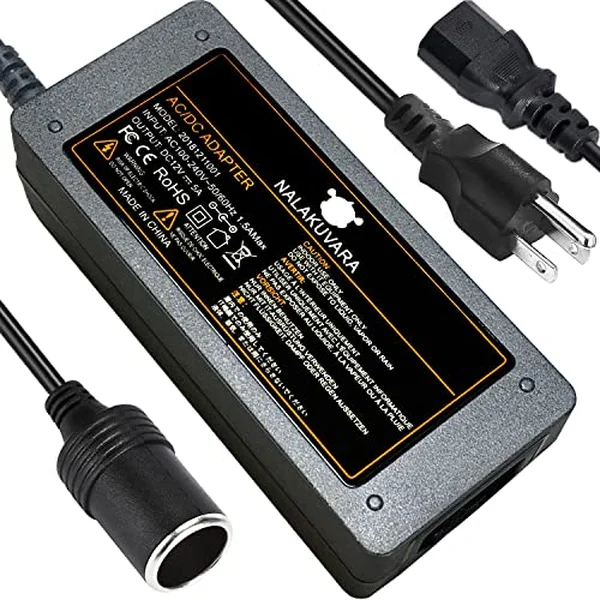
For lower-draw devices — phone chargers, small humidifiers, car MP3 players, oxygen bars — a full 120W converter is more capacity than you need. This 12V, 5A (60W max) converter covers that lighter end of the range at a lower price, with a standard US two-prong wall plug on one end and a female cigarette-lighter socket on the other.
Pros
- Lower price than the higher-wattage option, sized right for genuinely low-draw devices.
- Compact wall-plug design without a separate power brick.
Cons
- Not enough headroom for motor-driven devices like tire inflators or vacuums — step up to a 120W-plus converter for those.
This is the better pick if your device’s label shows a low amp draw and you don’t want to pay for capacity you won’t use — check current pricing and availability on Amazon before you decide.
CARSUN AC/DC Tire Inflator Portable Air Compressor
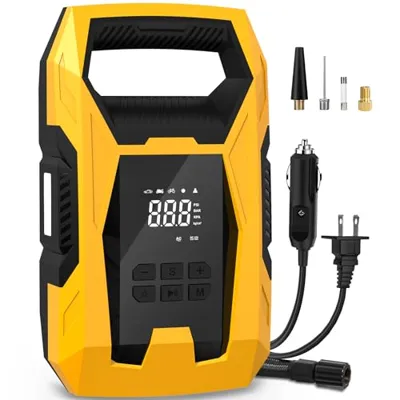
Unlike the two converters above, this one skips the separate adapter entirely — the CARSUN tire inflator has both a 110V AC cord for home use and a 12V DC car-plug cord built in, so you switch cords instead of adding an accessory. That makes it a solid pick specifically for drivers, motorcyclists, and cyclists who want one inflator that works both in the garage and on the road.
Pros
- Dual power source: runs on 110V AC at home or 12V DC in the car, with no adapter to buy separately.
- Compact and lightweight: about 2.1 pounds, easy to store in a trunk or closet.
- Auto shutoff: stops automatically once your set pressure is reached, reducing the risk of over-inflation.
- Built-in pressure gauge: for precise, real-time readings while inflating.
Cons
- Limited color options: available only in yellow.
- Cord length: may be short for larger vehicles parked further from an outlet.
The auto-shutoff feature matters here specifically because over-inflating a tire can weaken the sidewall and, in rare cases, cause a blowout, so a hard cutoff at your target PSI is a genuine safety feature and not just a convenience one. Check current pricing and availability on Amazon before you decide.
How to Choose the Right Wattage for Your Device
Check the label on your car accessory for its voltage and amp (or watt) rating, then match it against the converter’s max output. The math is simple: watts = volts × amps. A device rated 12V/5A draws 60W; a device rated 12V/8A draws 96W. Because motor-driven devices (tire inflators, vacuums, compressors) pull a brief surge above their steady-state rating the instant they start, it’s worth leaving headroom rather than buying a converter rated exactly at your device’s number — that’s the reasoning behind picking the 120W ALITOVE converter for inflators and vacuums above, and the smaller 60W option for genuinely low-draw gadgets like phone chargers or small humidifiers.
Frequently Asked Questions
What Is a Car Lighter Converter for Home Use?
A car lighter converter for home use lets you run 12V car accessories indoors. It converts standard household AC power to 12V DC, so devices like tire inflators or car coolers that normally plug into a car’s cigarette lighter socket can run on a regular wall outlet instead.
How Does a Car Lighter Socket Adapter Work?
A car lighter socket adapter is a small transformer. It steps household AC power down and converts it to a steady 12V DC output, delivered through a female socket shaped like a car’s cigarette lighter port. Any accessory with a standard cigarette-lighter plug will work with it.
Can I Use a Tire Inflator at Home?
Yes. A dual-power tire inflator, like the CARSUN model above, works on both 110V AC at home and 12V DC in the car with no separate converter needed. Auto-shutoff and a built-in pressure gauge make it straightforward to inflate tires indoors to an exact PSI.
Are Car Lighter Converters Safe for Home Use?
Yes, as long as you stay within the converter’s rated wattage and amperage, choose a unit with real safety certifications and built-in overload/short-circuit protection, and don’t leave a high-draw device running unattended. Always follow the manufacturer’s instructions and check the cord for damage before each use.
What Devices Can I Use with a Car Lighter Adapter?
A car lighter adapter supports most 12V accessories that use a standard cigarette-lighter plug, including tire inflators, car coolers and mini-fridges, dash cams, car vacuums, and phone chargers. Just confirm the device’s rated draw is comfortably under the adapter’s maximum wattage.
How Much Wattage Do I Need for a Car Tire Inflator or Vacuum?
Motor-driven devices like tire inflators and vacuums pull a brief surge current above their steady-state rating the moment they switch on, so a higher-capacity converter — 120W or more — is the safer choice for those, even if the device’s label shows a lower number. Lighter devices like phone chargers or small humidifiers are fine on a 60W converter.
Conclusion
A car lighter converter bridges the gap between your car’s 12V accessories and your home’s wall power. The ALITOVE 10A/120W converter is the right call for higher-draw devices like inflators and vacuums, a 5A/60W converter is a cheaper fit for lighter gadgets like phone chargers, and the CARSUN dual-power tire inflator sidesteps the need for a separate adapter altogether.
Whichever route you choose, match the wattage to your device, buy one with real safety certifications and built-in overload protection, and don’t leave it running unattended. Get that right and a car lighter converter is a genuinely convenient, low-cost way to use your car gadgets indoors.
Products related to this article
Sponsored / affiliate links. As an Amazon Associate I earn from qualifying purchases. I may earn additional commission from eligible campaigns.