Led Underbody Lights for Cars: Transform Your Ride with Vibrant Colors
Choose LED underbody lights by matching strip length to your wheelbase, picking about IP67 or better for weather exposure, and choosing a control method that fits your skill level and local road laws. A poor fit can leave exposed LEDs, weak adhesion, electrical faults, or a kit you cannot legally use on public roads. This guide covers strip types, power and controller options, installation difficulty, and legality so you can buy the right kit the first time.
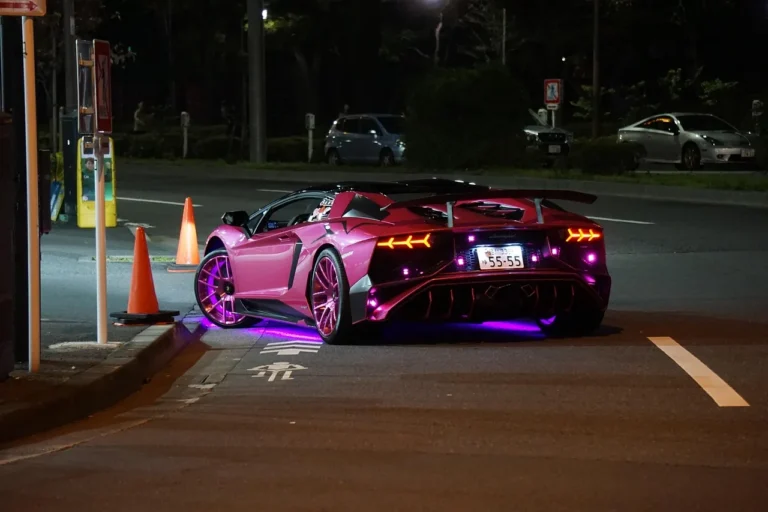
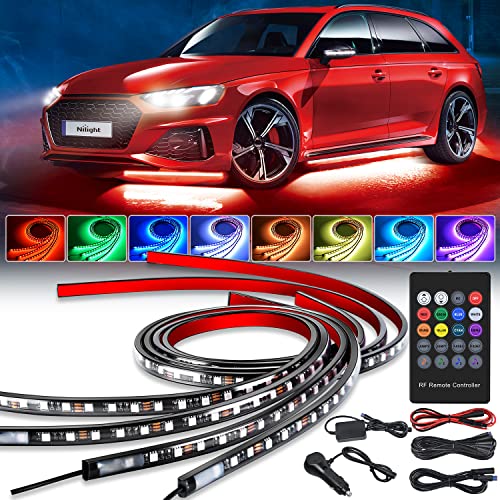
LED underbody lights mount beneath the vehicle and throw colored light onto the pavement instead of into the cabin. Most car and truck kits run on 12V vehicle power, and many add RGB underglow modes with static colors, fades, flashes, and music-synced effects. Buyers usually choose between flexible strip kits, rigid aluminum strips, app control, or a handheld remote.
What are LED underbody lights?


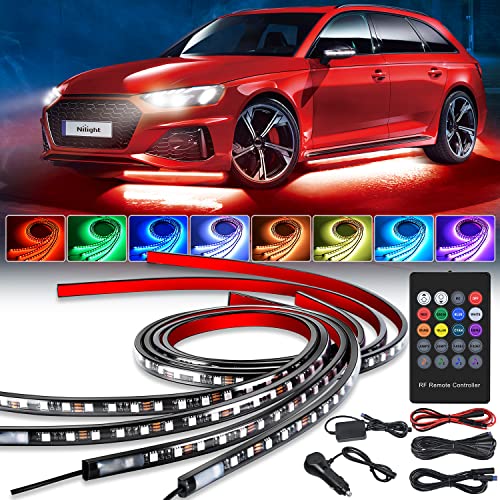
The common parts are straightforward: one or more LED strips, a controller or receiver, wiring to the battery or fuse box, and mounting hardware. Some kits use 5050 SMD LED chip packages for stronger brightness, while others trade output for easier fitment or cleaner mounting. Waterproofing and controller placement matter as much as color choice.
What the light does depends on where you use it. In a driveway, parking lot, or at a show, underglow can give the car a vivid halo. On public roads, the same setup may be limited by local rules on color, flash pattern, brightness, and whether exterior lighting can point outward or move while driving.
RGB underglow features that matter
RGB underglow usually means multiple static colors plus color-changing effects. Better kits add fade, strobe, chase, or flow patterns, and some include music-synced modes for a more animated night appearance. Those features are easy to list on a product page. The harder question is whether the controller, app, and strip layout actually match your car.
Brightness is not the same across every kit. A 5050 SMD LED chip is commonly used in aftermarket setups because it can support a strong output profile, but strip construction, diffuser quality, and power delivery still affect what you see on the ground. A dim kit can look flat even if it has many modes.
Are LED underbody lights legal on the road?
Road use depends on local lighting law, not on the kit description. A kit may be fine for show use, parking-lot display, or off-road use, yet still be restricted on public streets because of color, flash pattern, mounting position, or visible light emission. Check your state, province, or country rules before buying.
One common limit is outward-facing light that can distract other drivers. Another is flashing or strobe behavior while moving. Some areas allow underbody lighting only when parked or at events. Others allow it if the color is not red or blue, or if the light is not visible from the front while driving.
Picture a car parked at a meet with bright blue underglow and a fade mode running. That may be acceptable in one lot and prohibited on the street a block away. The hardware has not changed. The use case has.
Suppose you want the kit for nightly driving and weekend events. Then you should treat street legality as part of the purchase, not a later afterthought. If the vendor does not clearly separate show modes from road use, assume you still need to verify the legal side yourself.
Street use versus show use
Show use usually gives you the most freedom, because the car is stationary and under controlled conditions. Street use is narrower. If a kit advertises flashing, chasing, or music-sync effects, that does not mean those functions are legal to run on the road. Buy for the use case you actually have.
LED underbody lights decision table
Use this table as a fitment screen before you compare colors or apps. It maps vehicle type, ground clearance, desired effect, and install skill to a practical kit choice, plus the most common failure points.
| Vehicle type | Ground clearance | Desired effect | Install skill | Best kit type | Strip length approach | Control method | Common failure risks |
|---|---|---|---|---|---|---|---|
| Low sports car | Low | Clean glow, no exposed hardware | Intermediate | Flexible LED strip kit | Measure front, both sides, and rear; avoid hanging ends | App control with preset static colors | Scraping, adhesive failure, visible strips |
| Daily driver sedan | Medium | Balanced color and easy use | Beginner to intermediate | Flexible LED strip kit | Perimeter coverage with extra slack for routing | Remote control receiver or app control | Controller placement errors, weak mounting prep |
| Truck or SUV | Medium to high | Wide glow and strong side coverage | Intermediate | Flexible or aluminum underbody strip kit | Longer side runs, check wheelbase and bumper shape | Remote control receiver with clear line of sight | Water ingress, poor wire routing, uneven coverage |
| Lowered build | Very low | Limited show lighting only | Advanced | Flexible strip kit mounted high and tucked in | Shorter, protected zones only | App control for preset use | Road debris damage, clearance issues, legal risk |
| Specialty vehicle or unique chassis | Varies | Custom coverage | Advanced | Aluminum underbody strip kit or custom flexible layout | Custom cut planning based on mounting points | Controller matched to the full strip count | Controller mismatch, rigid fitment limits, exposed ends |
Flexible strips or aluminum underbody strips?
Flexible strips suit most cars because they bend around contours and are easier to place along rocker panels, bumper edges, and uneven underbody shapes. Aluminum underbody strips are rigid, so they need cleaner mounting surfaces and enough clearance to avoid scraping. Pick flexibility for fitment. Pick rigidity for a more fixed layout when the vehicle allows it.
A flexible LED strip is usually the safer choice for low cars and irregular surfaces. It can follow curves without forcing the strip to twist. That helps with underbody coverage and simplifies routing around brackets, seams, and bumper transitions. Self-adhesive backing is common, but it only works if the surface is clean and dry.
An aluminum underbody strip trades flexibility for structure. That can help when you want a straighter, more defined line of light, but it also demands more room under the vehicle. If clearance is tight, a rigid strip can be more likely to get hit by road debris or contact a speed bump.
For trucks and taller vehicles, rigid kits can work if the mounting points are protected and consistent. For low sports cars, flex strips are usually the better match because they reduce exposure and adapt to the car’s shape. A universal kit is only universal if the space, mounting surface, and controller layout also fit.
How many LED strips do you need for underglow on your car?
Start with the zones you want to light: front, both sides, and rear. Most buyers need enough strip length to cover the usable perimeter, not just the easiest straight sections. A short kit can leave dark gaps near the wheel wells, while a full perimeter setup gives a more even halo.
Measure the sections you can actually mount, then add slack for turns, controller routing, and any protected path around brackets or drain points. Do not order by vehicle size alone. Wheelbase, bumper shape, side skirt length, and ground clearance affect how much strip you can mount cleanly.
For compact cars, a partial setup may cover the visible zones well enough. For sedans, coupes, and SUVs, the side runs usually take the most length. Trucks can need longer side sections and more careful controller placement because the underbody is more open.
Lighting Trendz lists a Flexible Underbody LED Strip Light Kit for $241.00, an Ultimate 6-Piece Flexible Underbody LED Strip Light Kit at $286.00, and an Aluminum Underbody LED Strip Light Kit for $241.00. It also offers a Hyper Pro Max Flow Series LED Underbody Kit starting at $396.00 and a Polaris Slingshot underbody kit as an 8-piece setup. Those figures are useful because they show how kit count and construction can change the price before installation costs enter the picture.
A common first-timer mistake is choosing underbody LED kits for a flashy look without checking whether the car’s frame, ground clearance, and mounting points can support an even glow. Two sedans can need different strip lengths if one has deep side skirts and the other has open rocker panels. The measurement has to follow the mounting zones, not the badge on the trunk.
What should you check before ordering?
Check voltage, waterproof rating, controller compatibility, and where you will mount the strips before you order. Most kits are sold as universal 12V products, but universal does not mean identical fitment on every car. You still need a usable mounting surface, protected routing, and the right controller for the strip count and control method.
12V voltage and universal compatibility
Many car underbody light kits are built for 12V systems. SEAMETAL says its underglow kit uses 12V power. That matches most passenger vehicles and light trucks, but it does not remove the need to confirm your vehicle’s electrical layout and the kit’s wiring method. A universal kit still depends on space, power access, and controller match.
If the product uses direct battery wiring, confirm the lead length, fuse protection, and routing path before you buy. If the kit expects a plug-in controller or a specific app, make sure that setup fits your plan. A 12V rating helps with compatibility. It does not solve poor mounting or a mismatched control box.
IP67 and IP68 waterproof ratings
Waterproof underbody lighting needs more than a weather claim. Look for IP67 or IP68 if you expect rain, spray, and road grime. The same source states its kit has IP67 waterproofing. That matters because underbody lighting sits low, where water and debris hit it first.
Water resistance also depends on cable entry points, end caps, and how well the controller box is protected. A strip can have a strong rating and still fail if the controller sits where spray collects or the adhesive lets a section peel and collect water behind it.
APP control and remote control
APP control usually means a smartphone connection with iOS and Android compatibility, Bluetooth pairing, preset patterns, and static color control. ORACLE says its underglow kit uses free smartphone app control for iOS and Android, and it describes over 200 pre-programmed moving color patterns. That kind of control is useful if you want finer pattern selection than a handheld remote usually offers.
Remote control is simpler but less flexible. The same source says its remote range is over 100 feet, and that kind of receiver usually needs a sensible placement with a clear line of sight. If the receiver box is buried behind metal panels or shielded by the chassis, the claimed range can drop fast in real use.
Choose app control if you want presets, quick color changes, and more pattern choices. Choose a remote if you want a simple interface and do not want to depend on phone pairing. Either way, confirm that the controller supports the number of strips you plan to run.
Mounting-surface prep and adhesion
Adhesive mounting only works on a clean, dry, and stable surface. Grease, dust, road film, and loose coating can ruin the bond. If the strip is supposed to be mounted with clips or brackets, follow that path instead of relying on tape alone. The best kit in the catalog can still fail if the surface is wrong.
Before ordering, inspect the underbody for flat sections, safe wire paths, and places where the strip will not scrape. If you need to drill, confirm the mounting points first and check the vehicle manual before doing any work that affects body panels or electrical routing.
How hard is it to install underbody LED lights?
Installation ranges from simple to involved. A basic flexible kit with strong adhesive and a straightforward controller can be manageable for a careful beginner, while a rigid aluminum setup or a custom multi-piece layout can require drilling, better routing, and more time. The hard part is usually prep, not the light strip itself.
Expect to clean mounting surfaces, plan wire routing, secure the controller, and protect connections from spray. If the kit uses a battery connection, follow the vehicle and product manual for wiring order and fuse placement. Never work under a vehicle supported only by a jack; use jack stands on level ground.
The most common installation failures are predictable: stripped adhesive on dirty surfaces, pinched wires near suspension movement, controller boxes mounted where water collects, and loose connectors that corrode after wet driving. If a kit claims simple installation, that still assumes the vehicle offers the space and the installer has the right tools.
Basic install order
- Plan the front, side, and rear mounting zones.
- Clean every mounting surface until it is dry and residue-free.
- Test-fit the strips before peeling adhesive backing.
- Mount the controller where it stays dry and accessible.
- Route wires away from heat, moving parts, and sharp edges.
- Connect power exactly as the manual specifies.
- Test every color and mode before final trim and fastening.
A common first-timer mistake is mounting the strips first and planning the wire path later. That often leaves the controller in the wrong spot or forces a wire across a moving suspension point. Plan the path before any adhesive touches the car.
Frequently asked questions
What are LED underbody lights for cars?
They mount under the vehicle and project colored light onto the pavement for show use, parking-lot display, or limited street use where local law allows it. Buyers usually want a visible nighttime look, multiple color options, and a kit that fits the car without exposing the strips.
How do I choose between flexible and aluminum underbody light kits?
Choose flexible strips for curved surfaces, lower cars, and easier fitment around contours. Choose aluminum strips if you want a rigid layout and have enough clearance for the housing. Flex kits are generally easier to place; aluminum kits need more mounting room and careful spacing.
How many LED strips do I need for underglow on my car?
Measure the front, side, and rear zones you can actually mount, then add allowance for routing and turns. A compact car may need less coverage than a sedan or truck, but wheelbase and side-skirt shape matter more than body style alone. Short kits can leave visible dark gaps.
What voltage do car underbody lights use?
Most are sold as universal 12V kits. The same source says its underglow kit uses 12V power. That fits many passenger vehicles and light trucks, but you still need to confirm the controller, wiring method, and fuse setup before ordering.
Do LED underbody lights work with a phone app?
Many do. The same source says its kit uses free smartphone app control for iOS and Android, with Bluetooth pairing, preset patterns, and static color control. App control is useful if you want more pattern choices than a handheld remote, but compatibility still depends on the controller included with the kit.
Products related to this article
Sponsored / affiliate links. As an Amazon Associate I earn from qualifying purchases. I may earn additional commission from eligible campaigns.