Best Car Interior Detail Spray for a Clean Finish
The best car interior detail spray for a clean finish is the one that matches your goal: matte for zero shine, OEM-satin for factory-like trim, or light protection if you want UV help without grease. Choose the wrong finish, and dash plastics can look glossy, streaked, or unnaturally dark. This guide compares spray types, finish levels, and what to buy for a low-residue result.
Quick comparison
| Product | Badge | Best for | Price | ||
|---|---|---|---|---|---|
 |
Meguiar’s Quik Interior Detailer CleanerMeguiar’s | Our pick | 24 oz · natural finish · sun protection | $9.74
Price as of 6 Nov 2026
|
View |
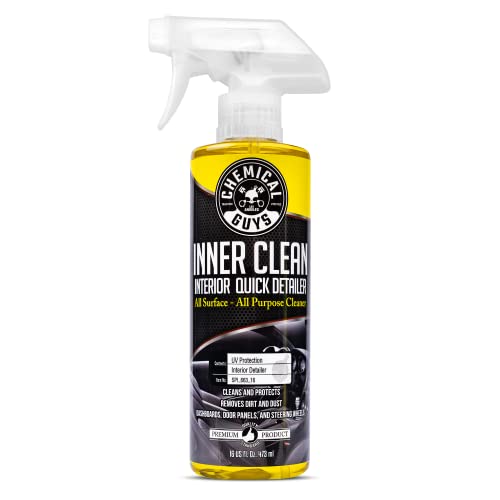 |
Chemical Guys, InnerClean Interior Quick DetailerChemical Guys | Also great | 16 oz · non-greasy · spray-and-wipe | $11.99
Price as of 6 Nov 2026
|
View |
 |
Griot’s Garage Interior Cleaner Spray for Car SeatsGriot’s Garage | Pair with it | 22 fl oz · residue-free · all-purpose cleaner | $9.99
Price as of 6 Nov 2026
|
View |
 |
303 Automotive Protectant for Vinyl303 Products | Also great | 16 oz · matte finish · UV protection | $17.40
Price as of 6 Nov 2026
|
View |
 |
Ethos Interior Detailer SprayEthos Handcrafted Car Care | Upgrade pick | 16 oz · satin finish · UV protection | $19.95
Price as of 6 Nov 2026
|
View |
For a matte or near-matte cabin, favor a cleaner that dries with very little film and no oily gloss. For a factory-looking satin, choose a light protectant with controlled residue. If you need heavier buildup removal, move to a stronger all-surface cleaner instead of trying to make a detail spray do both jobs.
How we chose
This comparison is built from manufacturer specs, listing details, and published buyer feedback. The focus stays on finish outcome first, then surface compatibility, residue, screen safety, dust resistance, and UV claims.
A recent comparison of eight products used a dusty center console for the dust-resistance check, a steering wheel for touchpoint behavior, and a Honda Crosstour rear hatch for the surface test. That matters because interior sprays can look fine on one surface and fail on another. (Thedrive)
The ranking logic below separates light-maintenance detailers from heavier cleaners. It also treats UV claims as useful in sun-exposed cabins, but secondary when the spray leaves the dash too glossy or slick.
Interior spray decision matrix
| Type | Finish | Dust resistance | Touchpoint feel | Screen safety | UV protection | Heavy-buildup performance | Best for / avoid if |
|---|---|---|---|---|---|---|---|
| Matte finish detail spray | Very low shine | Moderate | Dry, least slick | Usually better than protectants, but check listing | Low unless stated | Light | Best for: dark dashboards and factory-look trim. Avoid if: you want visible UV protection or are cleaning heavy grime. |
| Satin finish cleaner protectant | OEM-satin | Moderate to good | Controlled, slightly conditioned | Often acceptable on plastics, not all screens | Moderate | Light to moderate | Best for: a balanced finish with some protection. Avoid if: you hate any film on steering wheels or glossy trim. |
| Gloss-leaning protectant | Noticeably shiny | Variable | Slicker | Often poor for screens | Moderate to strong | Light | Best for: older trim that needs more cosmetic depth. Avoid if: you want a clean, natural finish. |
| Heavy-duty all-surface cleaner | Depends on wipe-down | Low once dry | Neutral if residue is removed | Sometimes safe, but not automatic | Usually low | Strong | Best for: stuck-on grime and neglected interiors. Avoid if: you mainly want a quick maintenance spray. |
| Screen-safe interior cleaner | Low shine | Low to moderate | Dry | Best on displays and glossy panels | Usually low | Light | Best for: infotainment screens and piano-black trim. Avoid if: you need strong stain removal on textured plastics. |
| Dust-repelling detail spray | Matte to satin | Good | Dry to lightly conditioned | Varies by formula | Low to moderate | Light | Best for: dusty daily drivers. Avoid if: you expect deep-clean power from an anti-static formula. |
| UV-focused protectant | Matte to satin | Good | Can feel slightly coated | Check the listing closely | Strongest emphasis | Light | Best for: sun-exposed dash and trim. Avoid if: you want the driest possible finish. |
| Low-residue maintenance spray | Natural to matte | Moderate | Least greasy | Often the safest starting point | Low unless added | Light | Best for: weekly wipe-downs. Avoid if: the cabin has heavy buildup. |
What is the best car interior detail spray for a clean, matte finish?
The best choice for a clean, matte finish is a low-residue detail spray or matte protectant that dries without a glossy film. If your main goal is a factory look on dash plastics and door panels, finish control matters more than strong scent, thick coating, or dramatic shine.
A matte spray helps textured dashboard plastics look uniform without turning them dark and oily. On smooth black trim, it also cuts the chance of streaks that stand out in daylight. A satin or glossy formula can look deeper, but it is easier to overapply and harder to hide.
Best fit for dark dashboard plastics
Dark plastics show residue first. A matte cleaner is the safer default because it leaves less light reflection and less visible streaking along grain lines and vents.
Textured plastic also hides minor residue better than smooth plastic, but that does not make a heavy film acceptable. Once the surface starts to look shiny, the spray is doing more than cleaning.
What to avoid if you hate slick or oily trim
Avoid gloss-leaning protectants and anything described as a thick barrier if your priority is a dry finish. Those formulas can make steering wheels, shift bezels, and dash tops feel coated, especially if too much product is applied at once.
A common first-timer mistake is spraying the panel directly and leaving excess liquid in seams. That extra product is what usually creates the shiny edge, not the wipe itself.
Meguiar’s Quik Interior Detailer: best for natural finish
This is the best fit if you want a quick-clean formula with a natural finish on plastics, leather, rubber, dashboards, and trim. The listing calls out high-lubricity wiping and sun-blocking agents, which makes it appealing when you want light cleaning plus some protection without a glossy look.
The tradeoff is that this kind of formula is usually aimed at light maintenance rather than heavy buildup. If the panel has grime packed into texture or around buttons, you may need a stronger cleaner first, then a finish spray after.
Use a microfiber towel and finish with a dry-buff step using a clean side of the cloth. That helps remove the last film before it has a chance to streak.
Chemical Guys InnerClean: best for non-greasy satin
This is a strong pick if you want a non-greasy satin finish across vinyl, plastic, leather, and rubber. The listing also points to anti-static agents, which is useful for drivers who want the cabin to stay cleaner-looking between details.
The downside is the same thing that makes it appealing: a protectant layer can leave more residue than a bare cleaner if you overapply it. On steering wheels and high-gloss trim, that extra film can be too much.
It is one of the better choices when you want one spray for common cabin surfaces. Still, screen use should be checked against the manufacturer’s listing for your model or surface before you put it on a display.
Griot’s Garage Interior Cleaner: best for heavy buildup
This is the better option when the cabin needs more than a quick wipe. It is listed as residue-free, safe for many interior surfaces, and able to cut through dirt for quick cleaning, which puts it in the heavier-cleaner bucket rather than the finish-first bucket.
That strength is the benefit and the limitation. It is a better call for neglected dashboards, door panels, and vinyl that have visible grime, but it is not the most protective choice if UV filtration or a conditioned feel matters more than cleaning power.
For light maintenance, it may be more cleaner than you need. For sticky build-up, that extra cleaning strength is the point.
303 Automotive Protectant: best for matte protection
This is the clearest matte-and-protection option in the group. The listing says it dries to a smooth, matte finish and helps protect against UV damage on vinyl, plastic, and rubber, so it fits sun-exposed trim where you want less glare and some age resistance.
The drawback is that this is a protectant first, not a deep cleaner. If the surface already has fingerprints, body oils, or old dressing, you may need to clean it before the protectant does its job well.
It is a good match for dash tops and trim that spend a lot of time in sunlight. It is less attractive if your main goal is the driest possible touchpoint feel.
Ethos Interior Detailer: best for satin protection
This spray fits the user who wants a satin finish with UV protection and odor-neutralizing agents. The listing also says it is non-greasy and suitable for all interior surfaces, which makes it a flexible choice for everyday wipe-downs.
The drawback is price. At $19.95, it sits above the simpler cleaners here, so the extra finish features only make sense if you value the added protection and the included microfiber towels.
It is a sensible middle ground when you want a more finished look than a plain cleaner, but you still want to avoid the shiny, oily look that some protectants leave behind.
Which one should you buy?
Buy a matte detail spray if your goal is a factory look with almost no shine. Buy a satin cleaner protectant if you want a little more depth and some dust control without a greasy finish.
Buy a heavy-duty all-surface cleaner if the cabin has visible buildup, sticky residue, or neglected seams. Buy a low-residue maintenance spray if you want the safest everyday option for dashboards, door panels, and other common cabin surfaces.
Suppose your 12-year-old sedan has a dark dash, smooth piano-black trim, and fingerprints around the infotainment bezel. Start with the lowest-residue option, then move up only if the grime stays behind after the first wipe.
Picture a truck cabin that sits in the sun all week. In that case, a UV-focused protectant can make sense, but only if it still dries to a finish you actually want to see every day.
Can one spray clean screens, leather, and plastic safely?
Sometimes, but not always. All-surface formulas help because they are built for more than one material, yet screen safety is not automatic, and leather can react differently from vinyl or textured plastic. If a listing does not clearly include your surface, check the manufacturer’s listing for your model or material.
Where all-surface formulas help is convenience. A single spray can cover door panels, vinyl trim, and many plastics, which reduces the chance of mixing products or leaving mismatched shine levels across the cabin.
Where separate products are safer is on delicate screens, piano-black trim, and steering wheels. Those surfaces show residue quickly and can feel slick if the formula leaves too much film.
Best for steering wheels and touchpoints
For steering wheels and other high-touch surfaces, the best spray is the one that dries clean and leaves the least slip risk. Grip feel matters more here than UV marketing because a coated wheel can feel slick during normal driving.
Light residue matters because it changes how the wheel feels after application. A cleaner that leaves a dry finish is usually safer on contact points than a thicker protectant, even if the protectant promises better gloss control or more UV filtration.
Many interior detail sprays are safe on contact surfaces, but safe does not mean ideal. If the wheel feels oily after wiping, that formula belongs on a lower-touch panel instead.
What is the difference between an interior detail spray and an all-purpose cleaner?
An interior detail spray usually aims for quick cleaning, low residue, and a cleaner-looking finish on plastics, vinyl, rubber, and sometimes leather. An all-purpose cleaner is built for heavier soil and broader cleaning strength, so it is often better when dirt has built up instead of sitting on top.
The tradeoff is finish. Detail sprays tend to leave a more polished, controlled look, while stronger all-purpose cleaners can leave less protection behind if they are not followed by a separate protectant.
If you want one spray for regular wipe-downs, pick the detail spray. If the interior has grime in seams and textured grain, start with the cleaner and decide whether a second finish product is worth it.
Do interior detail sprays protect against UV damage?
Some do, but the strength of the claim varies. UV protection matters most on sun-exposed dashboards, trim, and door tops where long hours of light can dry out plastics and make them look tired faster. It matters less on shaded surfaces or on interiors that get regular garage parking.
UV claims are useful only if they do not force a greasy finish. A product that blocks sunlight but leaves the dash shiny may be the wrong tradeoff for a clean cabin.
That is why finish control comes first. If the surface already looks right and the cabin does not live in harsh sun, a plain low-residue cleaner may be enough.
How do I avoid streaks and shiny residue on dashboard plastics?
Use less product, wipe with a microfiber towel, and finish with a dry-buff step on a clean side of the towel. That clean side matters because a loaded cloth can put the residue right back onto the dash.
Start on a small section, especially on smooth black plastic and around display bezels. Those areas reveal overapplication faster than textured panels do.
- Spray the towel or applicator instead of flooding the panel when possible.
- Wipe one section at a time.
- Flip to a clean side of the microfiber towel.
- Dry-buff until the surface looks even, not wet.
- Stop if the panel begins to look darker and reflective.
Microwave-buffing is not the goal; dry-buffing is. The finish should look clean, not coated.
Frequently asked questions
Which interior detail spray leaves the least shine or greasy residue?
Low-residue cleaners and matte protectants leave the least shine. They are the safest starting point for dark dashboard plastics, textured trim, and steering wheels because they reduce the chance of a wet look, while gloss-leaning protectants are more likely to leave visible film.
Can one interior spray clean plastic, leather, and screens safely?
Sometimes, but the listing must say so clearly. All-surface formulas are useful for plastics, vinyl, and many leather-trimmed areas, yet screens need extra caution. If the product does not explicitly support displays, check the manufacturer’s listing for your model or surface before using it there.
What interior detail spray repels dust best after cleaning?
A spray with anti-static or dust-repelling claims is the best bet if dust control matters. It can help the dash stay cleaner-looking between wipe-downs, but it is not the same as real cleaning strength. If the cabin is dirty first, clean it before relying on dust resistance.
Which interior detailer is best for a steering wheel or touchpoints?
The best choice for touchpoints is a dry-feeling cleaner that leaves minimal residue. Steering wheels, shifter knobs, and high-touch controls should not feel slick after use. A heavier protectant may look good on a dash, but it is a worse fit where grip and control matter.
Products related to this article
Sponsored / affiliate links. As an Amazon Associate I earn from qualifying purchases. I may earn additional commission from eligible campaigns.
 Ethos Interior Detailer Spray - Interior Car Cleaner Easily Cleans & Protects All Interior Surfaces | Non Greasy Satin Finish with UV Protection & Odor Neutralizing Agents
 MPD PRO Interior Detailer Spray – Car Interior Cleaner for Dashboard, Plastic & Leather Trim – Repels Dust, Professional Automotive Interior Cleaning Spray – 16 oz (Pack of 1)