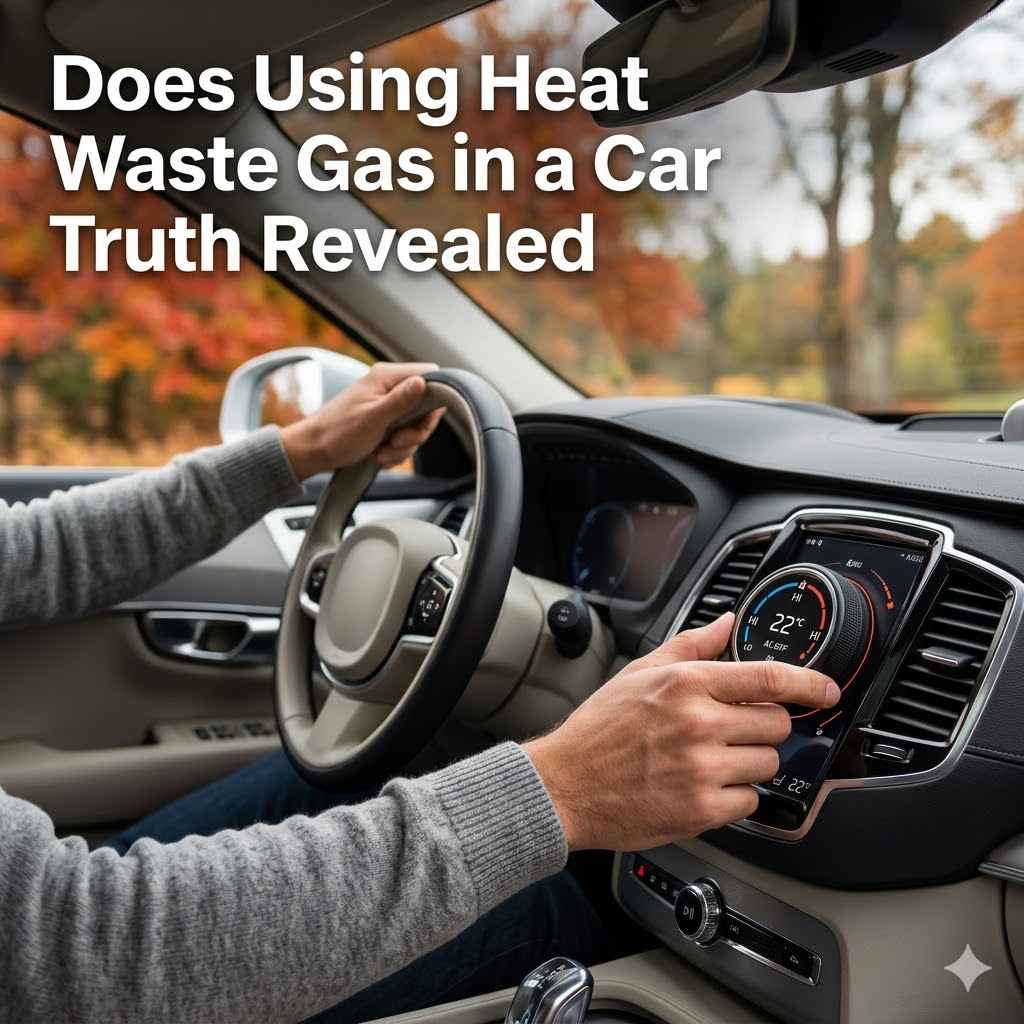
Does Using Heat Waste Gas in a Car Truth Revealed
Many car owners wonder if turning on the heat in their car uses up extra gas. It is a common question, especially when it starts getting cold outside. Some people think that using the heater means the engine has to work harder, which could burn more fuel.
This can make drivers worry about their gas mileage. We will break down this common car question simply. You will learn exactly how your car’s heater works and if it really impacts your gas tank.
Follow along for a clear, easy explanation of this car mystery.
How Your Car’s Heater Works
Cars use heat in a very clever way that is linked to how the engine stays cool. The engine makes a lot of heat when it runs. This heat needs to go somewhere, or the engine would get too hot.
A special liquid, called coolant, flows through the engine to pick up this heat. This hot coolant then travels to a small radiator inside your car’s dashboard. When you turn on the heat, a fan blows air across this hot radiator.
This makes the air warm. The warm air is then pushed into the car’s cabin for you to feel. So, the heat you feel comes from the engine’s waste heat.
It is not created by a separate system that uses extra gas.
The Coolant System Explained
The cooling system in your car is essential for keeping the engine at the right temperature. It is made up of several parts. The main part is the engine block itself, which gets very hot.
Coolant, a mix of antifreeze and water, circulates through passages in the engine block. It absorbs the heat generated by combustion. This heated coolant then flows to the radiator located at the front of the car.
Here, outside air passes over the radiator fins, cooling the coolant. A water pump moves the coolant through the system. A thermostat controls the flow of coolant, opening when the engine reaches its operating temperature.
Engine Coolant Is Key
Engine coolant is a special fluid that circulates through your engine. Its main job is to absorb the heat that the engine creates. Without it, your engine would quickly overheat and be damaged.
It is usually a mix of antifreeze and water. Antifreeze helps keep the coolant from freezing in cold weather and from boiling in hot weather. This coolant is then pumped around to where it can get cooled down.
It is like the engine’s personal air conditioner.
The Radiator’s Role
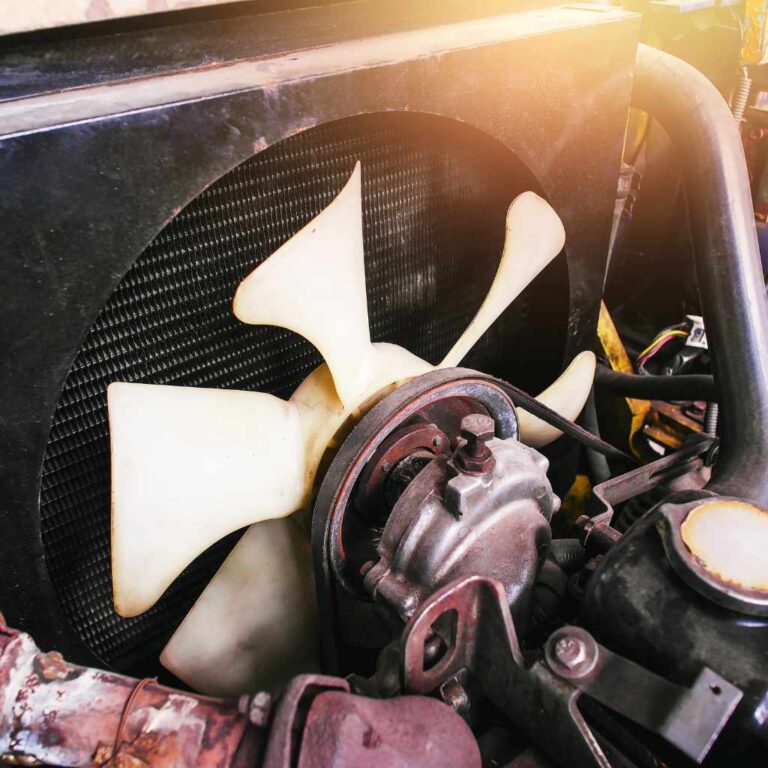
The radiator is like a heat exchanger. It is a series of thin tubes with fins. The hot coolant from the engine flows into these tubes.
As the car moves, air passes over the fins. This air takes the heat away from the coolant. If the car is not moving fast enough, a fan kicks in to pull air through the radiator.
This keeps the coolant from getting too hot. It is a very important part of making sure your engine runs smoothly.
Cabin Heater Core
The cabin heater core is a smaller radiator located inside your car’s dashboard. When you want heat inside your car, hot coolant is rerouted from the engine to this heater core. A fan then blows air across the hot heater core.
This warms up the air before it is sent into the passenger cabin through vents. It uses the same hot coolant that is already circulating to cool the engine. Therefore, it is using heat that would otherwise be wasted.
Understanding Heat Transfer
Heat transfer is the process by which thermal energy moves from one place to another. There are three main ways this happens: conduction, convection, and radiation. Conduction is heat moving through direct contact, like touching a hot stove.
Convection is heat moving through the movement of fluids, like boiling water. Radiation is heat moving through waves, like the sun warming your skin. In your car’s heating system, convection is very important.
The fan moves air, and the coolant moves heat. The heater core uses both convection (air moving over it) and conduction (heat moving from the coolant to the metal of the core).
Conduction in the Engine
Conduction happens when heat energy is passed directly from one molecule to another. In your car’s engine, the burning fuel creates immense heat. This heat is transferred directly to the metal parts of the engine block and cylinder walls through conduction.
The coolant then comes into contact with these hot metal surfaces and absorbs the heat through direct contact. This is a fundamental way heat is moved from the source (combustion) to the carrier (coolant).
Convection in the Cooling System
Convection is the transfer of heat through the movement of liquids or gases. The coolant circulating through your engine and to the heater core is a prime example of convection. The water pump forces the hot coolant to move, carrying the heat energy with it.
Similarly, the fan blowing air over the radiator and heater core uses convection to move heat away from these surfaces and into the cabin or the outside air.
Radiation From the Sun
While not directly part of the car’s heating system, radiation plays a role in how a car’s interior feels. The sun’s rays transfer heat through radiation, warming up the dashboard, seats, and windows. This is why a car left in the sun can get very hot inside, even without the engine running.
Understanding radiation helps explain why a car can feel warm even when the engine is off.
Does Using Heat Waste Gas in a Car Truth Revealed
So, does using the heater in your car waste gas? The simple answer is no, not directly. The heat for your car’s cabin comes from the engine’s cooling system.
This system is already running to keep the engine from overheating. The heat that goes to your heater core is essentially “waste heat” that would otherwise be released into the air by the radiator. Turning on the heater does not make the engine burn more fuel to create this heat.
The engine’s job is to turn fuel into power, and that process inherently produces heat. The heater just takes advantage of that heat. This is why Does Using Heat Waste Gas in a Car?
Truth Revealed is often a misunderstood topic.
Engine Load and Fuel Consumption
The engine’s load refers to how hard it is working. When you accelerate, climb a hill, or carry heavy loads, the engine is under a higher load. This requires more power, and the engine burns more fuel to produce that power.
The car’s heating system, by itself, does not increase the engine’s load. It is a passive system that utilizes existing heat. Therefore, engaging the heater does not make the engine work harder in a way that demands more fuel for its primary function of propulsion.
Factors That Increase Engine Load
Several factors can increase the demand on your car’s engine, leading to higher fuel consumption. These include accelerating quickly, driving at high speeds, carrying heavy cargo, and driving uphill. When the engine has to produce more power to overcome resistance or achieve higher speeds, it burns more gasoline.
The heating system, however, operates independently of these power-generating demands. Its energy source is already available.
The Heater’s Minimal Impact
The only way the heater could indirectly affect fuel consumption is if it were to slightly increase the engine’s operating temperature or resistance on the engine’s accessories. Some older cars might have had a small fan motor that drew a tiny bit of power from the engine. However, modern cars have electrical systems that power these fans, drawing minimal power from the alternator, which in turn is powered by the engine.
The amount of fuel this might add is negligible, often less than a tenth of a mile per gallon.
Real-World Fuel Savings
Because the heater uses waste heat, turning it on does not cost you extra fuel. In fact, in very cold weather, letting the engine warm up to its optimal operating temperature might be more efficient than driving with extreme cold affecting engine performance. Some studies suggest that a cold engine burns more fuel until it reaches its normal operating temperature.
Using the heater can actually help the engine reach this temperature slightly faster by drawing off some of that initial heat.
Electrical System Drain
Modern cars have electrical systems that power various components, including the blower fan for the heater. The alternator generates electricity to run these systems and recharge the battery. When the electrical system demands more power, the alternator has to work a bit harder.
This increased work for the alternator puts a small load on the engine. However, the power consumed by the heater’s fan is very small compared to the overall power the engine produces. It is usually not enough to cause a noticeable drop in fuel economy.
Alternator Functionality
The alternator is driven by a belt connected to the engine’s crankshaft. Its job is to generate electrical power while the engine is running. This power is used to run the car’s electrical components, such as headlights, radio, air conditioning, and the blower motor for the heater.
It also recharges the battery. The more electrical components you use, the harder the alternator has to work.
Load on the Engine
When the alternator works harder, it creates a slight drag on the engine. Imagine pedaling a bicycle. If you have a dynamo light that is turned on, it adds a little resistance to your pedaling.
Similarly, the engine has to exert a tiny bit more effort to turn the alternator when more electrical power is needed. This extra effort is what might lead to a minuscule increase in fuel consumption.
Comparing Loads
To put it in perspective, the electrical load from a car’s heater fan is very small. It is much less than the load from the air conditioning compressor, which actually cools the air and requires significant engine power. Even running the headlights and the radio together draws more power than the heater fan.
Therefore, the impact on fuel economy is practically unnoticeable.
Engine Warm-Up Time
When an engine is cold, its components are not at their ideal operating temperature. This can lead to less efficient combustion and increased friction. As the engine warms up, oil flows better, and metal parts expand to their proper tolerances, reducing friction.
This means a warm engine generally runs more efficiently. Using the heater can actually help the engine reach its optimal operating temperature a bit faster by drawing off some of the initial heat generated. This can lead to slightly better fuel economy sooner after starting.
Cold Engine Inefficiencies
A cold engine is like a person who just woke up. It is not running at its best. The oil is thicker and does not flow as easily, leading to more friction between moving parts.
Fuel does not vaporize as well when it is cold, which can result in incomplete combustion. This means some fuel might pass through the engine unburned, reducing efficiency and increasing emissions. It takes time and heat for the engine to reach its peak performance.
The Heater’s Role in Warming Up
The heater core is part of the engine’s cooling system, which is designed to regulate the engine’s temperature. By circulating hot coolant through the heater core, a small amount of heat is drawn from the engine. This process can help the engine reach its optimal operating temperature slightly faster than if no heat were being drawn off.
This is a subtle effect but contributes to the overall efficiency of the engine.
Optimizing Start-Up
For short trips in very cold weather, especially if you need heat, running the engine for a minute or two before driving can be beneficial. This allows the oil to circulate and the engine to start warming up. Using the heater during this time is fine, as it is using the heat that is already being produced.
It is not an extra burden on the engine.
How Does Using Heat Waste Gas in a Car Truth Revealed
The core principle behind your car’s heating system is its reliance on the engine’s waste heat. When your engine runs, it generates a significant amount of thermal energy. A portion of this energy is used to propel your car, but a much larger portion is dissipated as heat to prevent the engine from overheating.
The cooling system, with its coolant and radiator, is designed to manage this heat. The heater core is a clever addition that taps into this already-existing heat. Therefore, the question of Does Using Heat Waste Gas in a Car?
Truth Revealed centers on the fact that the heat is a byproduct, not an added expense.
The Myth of Added Fuel Consumption
Many drivers believe that turning on the heater is like turning on an extra appliance that requires energy, thus consuming more fuel. This is a common misconception. Imagine your engine is like a furnace that is always on when running.
It produces heat as a natural outcome. The heater is like opening a vent to let some of that warmth into your house. You are not turning up the furnace to produce more heat just for the vent; you are simply using the heat that is already there.
This is the key to understanding why the heater does not directly increase fuel usage.
Origin of the Myth
The myth likely stems from comparing car heaters to electric heaters. Electric heaters directly consume electricity, which is generated by the car’s alternator, placing a direct load on the engine and thus consuming more fuel. However, the car’s heater is not electric; it is powered by the engine’s coolant.
This fundamental difference is often overlooked, leading to the widespread belief that using the heater wastes gas.
Comparison to Air Conditioning
A more appropriate comparison is with the car’s air conditioning system. The AC compressor is directly driven by the engine and requires a significant amount of power to operate. When you turn on the AC, the engine must work harder, resulting in a noticeable decrease in fuel economy.
This direct link between AC use and increased fuel consumption makes it easy to see how people might incorrectly assume the heater works the same way.
Focus on Efficiency
The car’s heating system is an excellent example of efficient engineering, utilizing heat that would otherwise be lost. This approach minimizes the impact on fuel economy. It demonstrates how vehicle systems can be designed to maximize utility while minimizing additional resource consumption.
The truth revealed about Does Using Heat Waste Gas in a Car? Truth Revealed is that it is remarkably efficient.
Temperature Regulation Benefits
Maintaining a comfortable temperature inside your car is not just about comfort; it can also contribute to driver alertness and safety. Being too cold or too hot can be distracting. A properly functioning heating system ensures a more pleasant driving experience.
This can lead to better focus on the road, which is a crucial safety factor. The minimal fuel impact is a small price to pay for enhanced driver comfort and potentially improved safety.
Driver Comfort and Safety
When a driver is comfortable, they are generally more alert and less stressed. Extreme temperatures, whether too hot or too cold, can cause discomfort that leads to distraction. A driver who is shivering or sweating profusely may find it harder to concentrate on driving tasks, such as steering, braking, and observing their surroundings.
Therefore, using the heater to maintain a moderate temperature can indirectly contribute to safer driving.
Reduced Fatigue
Being in an uncomfortable temperature environment can lead to fatigue. Extreme cold can make muscles tense and sluggish, while extreme heat can cause drowsiness. A comfortable cabin temperature can help reduce this fatigue, allowing the driver to stay more alert for longer periods.
This is particularly important for long drives where driver fatigue is a significant concern.
Focus on the Road
The primary responsibility of a driver is to operate the vehicle safely. Anything that detracts from this focus, such as being uncomfortably cold or hot, needs to be addressed. The car’s heating system provides a simple and effective way to manage the cabin environment, allowing the driver to concentrate fully on the task of driving.
The minimal fuel impact is a worthwhile trade-off for this benefit.
Examples of Heat Usage
Consider a scenario where you are driving to work on a chilly autumn morning. Your car is parked outside overnight. Upon starting your engine, the coolant begins to warm up.
By turning on your heater and setting the fan to a medium speed, you are drawing hot coolant from the engine block to the heater core. Air blows over this core, warming your cabin. Your engine is still running efficiently to get you to work, and the heat is just a bonus from the engine’s normal operation.
There is no extra fuel being burned to make that heat.
Morning Commute
Imagine it’s 40 degrees Fahrenheit outside. You start your car and turn on the heat to a comfortable level. The engine is cold, and the coolant circulating is also cold.
As the engine burns fuel and runs, it generates heat. This heat is absorbed by the coolant. This hot coolant then flows to the heater core.
The fan blows air across it, and warm air enters your car. Your fuel consumption is determined by how much gas the engine needs to move the car and keep it running, not by the heat coming out of the vents.
Long Road Trip in Winter
On a long winter drive, maintaining a comfortable cabin temperature is crucial for driver alertness. You’ve had the heater on for hours. The engine has been running for a long time, reaching its optimal operating temperature.
The heating system is continuously using the engine’s waste heat to keep you warm. The fuel you are using is primarily for propulsion and maintaining the engine’s temperature, not for creating heat. The heater is simply redirecting existing thermal energy.
Errands on a Cold Day
You have several errands to run. Each time you start your car, the engine is cold. You turn on the heat to warm up the cabin quickly.
While the engine might be slightly less efficient when cold, the heater itself is not making it burn more fuel. It is using the heat generated by the engine’s combustion process. This is a fundamental aspect of how cars are designed for comfort and efficiency.
The Truth About Does Using Heat Waste Gas in a Car
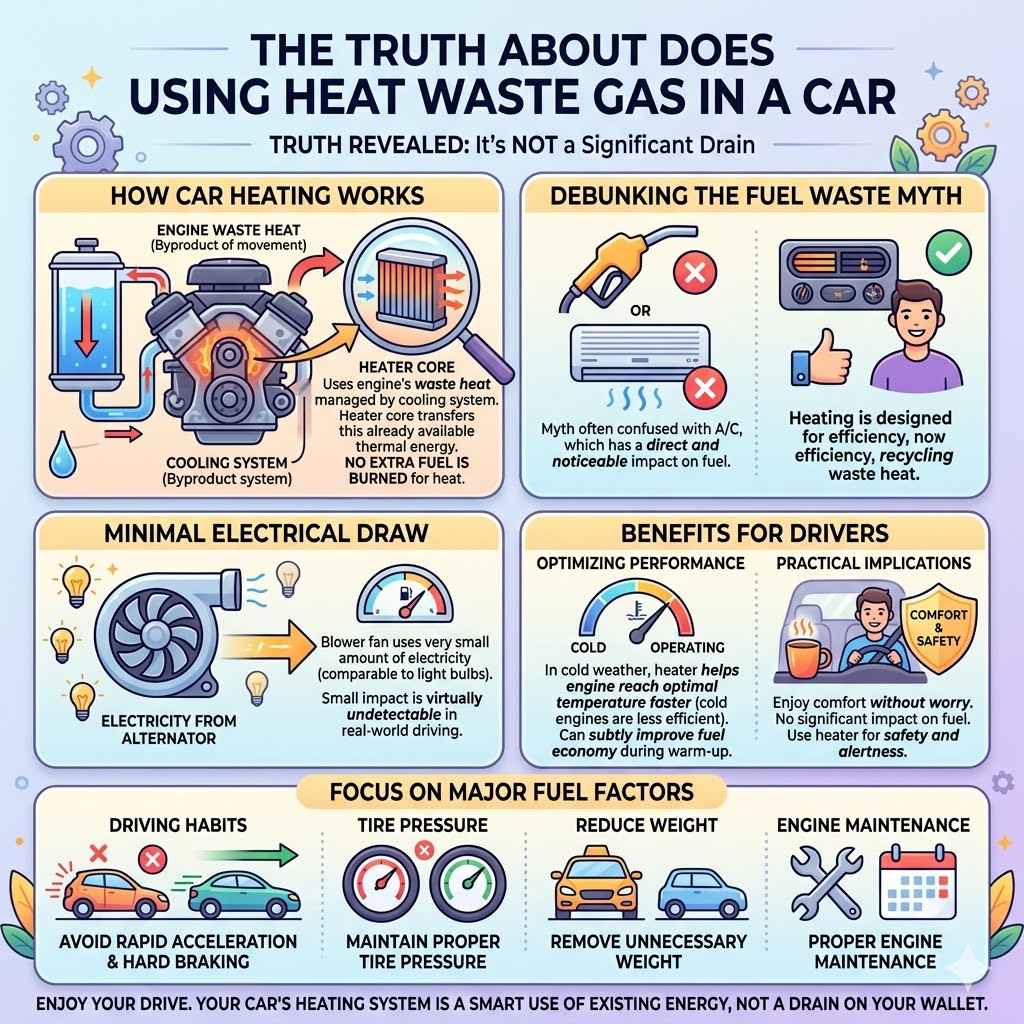
After exploring how your car’s heating system works, it is clear that turning on the heater does not directly consume extra gasoline. The heat comes from the engine’s waste heat, which is managed by the cooling system. The heater core simply takes advantage of this already available thermal energy.
While the electrical components of the heating system (like the fan) draw a minimal amount of power from the engine via the alternator, this impact on fuel economy is negligible for most vehicles. The primary purpose of the engine is to move your car, and the heat it produces is a byproduct of that process.
Debunking the Fuel Waste Myth
The idea that using the heater significantly wastes gas is a myth. This misunderstanding often comes from confusing it with systems like air conditioning, which do have a direct and noticeable impact on fuel consumption. The car’s heating system is designed to be efficient by recycling waste heat.
This means you can enjoy a warm cabin on cold days without worrying about a substantial increase in your fuel bill. The engineering behind this feature is focused on making the most of the energy the engine already produces.
Focus on Engine Function
The engine’s primary function is to convert fuel into mechanical energy for movement. This process inevitably generates a large amount of heat. The cooling system’s main job is to prevent the engine from overheating.
The heater is an extension of this system, using the heat that would otherwise be vented out. It does not require the engine to burn additional fuel for its operation.
Minimal Electrical Draw
The blower fan for the heater uses electricity. This electricity is supplied by the alternator, which is powered by the engine. However, the amount of electricity the fan uses is very small.
It is comparable to running a few light bulbs. The engine’s capacity is so much larger than this small electrical demand that the impact on fuel economy is virtually undetectable in real-world driving.
Optimizing Engine Performance
In fact, in cold weather, using the heater can help the engine reach its optimal operating temperature slightly faster. A cold engine is less efficient. By drawing off some of the initial heat, the heater can contribute to bringing the engine to its most efficient running temperature more quickly, which can subtly improve fuel economy during the initial warm-up period.
Practical Implications for Drivers
For drivers, this means you can use your car’s heater with confidence. There is no need to suffer through a cold drive to save a negligible amount of fuel. Enjoy the comfort and safety that a warm cabin provides.
The next time someone asks, “Does Using Heat Waste Gas in a Car Truth Revealed?” you will have the clear, simple answer. Your car’s heating system is a smart use of existing energy, not an extra drain on your wallet.
-
- Driving Comfort Matters
Prioritize your comfort and safety on the road. If you need heat to drive comfortably and stay alert, do not hesitate to use it. The small amount of fuel saved by not using the heater is not worth the potential discomfort or distraction.
Many modern vehicles are designed with efficiency in mind, and the heating system is a prime example of making good use of available resources.
-
- Focus on Major Fuel Factors
If you are looking to improve your car’s fuel economy, focus on the factors that have a significant impact. These include driving habits (avoiding rapid acceleration and hard braking), maintaining proper tire pressure, reducing unnecessary weight in your vehicle, and ensuring your engine is properly maintained. The impact of using the heater is so small it is often outweighed by simply driving smoothly.
-
- Enjoy Your Drive
Understand that your car is engineered to provide comfort. The heating system is a feature designed to be used. By understanding the mechanics, you can drive with peace of mind, knowing that you are not significantly impacting your fuel consumption by turning up the heat.
So, go ahead and enjoy a warm and pleasant drive, regardless of the outside temperature.
Frequently Asked Questions
Question: Does turning on the car heater use more gas?
Answer: No, turning on the car heater does not directly use more gas. The heat comes from the engine’s waste heat, which is already being produced to keep the engine cool.
Question: Is it true that the heater uses fuel that would have been used for driving?
Answer: No, it is not true. The heat is a byproduct of the engine running for its primary purpose of moving the car. It does not take away fuel meant for driving.
Question: Does the fan for the heater use gas?
Answer: The fan uses electricity. This electricity is produced by the alternator, which puts a very small load on the engine. The impact on gas usage is almost unnoticeable.
Question: If the heater doesn’t use more gas, why do some people think it does?
Answer: People often confuse it with air conditioning, which does use more gas. Also, they might think of electric heaters, which directly use energy that comes from burning gas.
Question: Can using the heater actually help the engine?
Answer: In very cold weather, using the heater can help the engine reach its ideal operating temperature a little faster. A warm engine is more efficient.
Wrap Up
The truth is that turning on your car’s heater does not waste gas. It uses engine waste heat, a smart engineering solution. You can drive warm and comfortable without worrying about significant fuel costs.
Focus on smooth driving and car maintenance for better gas mileage.