Wheel Brush Kit for Cleaning Wheel and Tire: A Material-Safe Buying Guide
You spend an hour hand-washing the paint, then you grab the same old sponge for the wheels. That sponge has been sitting in a bucket with grit and road film. You scrub the face of the rim, and you are basically dragging sandpaper across the clear coat. Most wheel damage happens this way—not from impacts, but from improper cleaning tools and technique.
This guide covers the material science behind a proper wheel brush kit for cleaning wheel and tire surfaces. You will learn why bristle type matters more than handle color, which brushes are safe for acidic cleaners, and how to avoid micro-scratches on expensive finishes. You will also get a practical breakdown of the four brush types that solve 95% of wheel cleaning jobs.
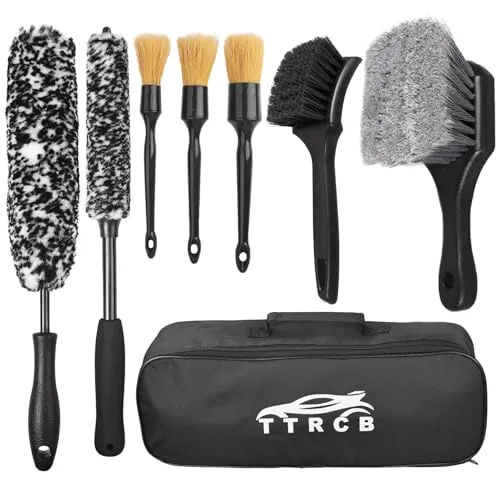
TTRCB
8Pcs Wheel Brush, Tire Brush, Wheel Cleaner…
- 8-Piece Wheel & Tire Detailing Kit: Our all-in-one kit includes 4 specialized wheel brushes (for rims, wheel faces, and gaps) and…
- Scratch-Free & Safe for All Wheels: Crafted with a 100% metal-free design and ultra-soft synthetic bristles, our wheel cleaner bru…
- Efficient Grime Removal: Our tire cleaning brush and wheel brushes hold ample cleaning liquid, cutting through light, medium, and…
If you are building a kit from scratch, the TTRCB 8-piece set covers the essentials: two soft wheel brushes for faces, a stiff tire scrubber, and several boar-hair detailing brushes for lug nuts. It is a solid starting point because it gives you dedicated tools instead of forcing you to improvise with a mitt.
Why a Dedicated Wheel Brush Kit Beats a Sponge or Mitt
A sponge holds dirt. That is its main job. When you press a sponge against a wheel face, the dirt you picked up from the first wheel gets ground into the second wheel. A microfiber mitt is better, but it still cannot reach the barrel or the backside of the spokes.
Wheels have geometry. Brake calipers sit behind the spokes. Lug nuts sit in recessed holes. The barrel curves away from you at a 90-degree angle. A flat mitt simply cannot bend into those spaces. A brush with long bristles and a flexible core can.
There is also the chemical factor. Wheel cleaners often contain acidic compounds to dissolve brake dust. Those chemicals break down sponge foam over time. The foam degrades, sheds particles, and leaves debris inside the barrel. Brush bristles—especially nylon and polypropylene—resist chemical breakdown far better than open-cell foam.
The real argument for a kit is separation of duties. You use one brush for the delicate face, a different one for the gritty tire sidewall. That separation prevents cross-contamination. The dirt from the tire never touches the painted face. That alone is worth the price of admission.
Anatomy of a High-Quality Wheel Brush Kit
Not all brushes are created equal. The cheapest kits use the same bristle material for every brush and just change the handle shape. That is a mistake. A tire brush needs stiff, aggressive fibers. A rim face brush needs soft, forgiving ones. If you use a tire brush on a painted rim, you will leave swirl marks.
Bristle Material Breakdown: Nylon, Polypropylene, and Microfiber
Nylon is the workhorse. It is stiff enough to break up brake dust but flexible enough to conform to curved surfaces. Nylon bristles are also chemically resistant, so they hold up to acidic wheel cleaners without melting or warping. Most professional detailing brushes use nylon.
Polypropylene is stiffer and more abrasive. It is a good choice for tire sidewalls and wheel wells where you need aggressive scrubbing action. Do not use polypropylene on painted or chrome surfaces—it will scratch. It is also less resistant to strong acids, so rinse it thoroughly after use.
Microfiber is the gentlest option. It is a synthetic fabric cut into strips or wrapped around a foam core. Microfiber lifts and traps fine dust particles without scratching. It is ideal for matte black finishes and polished aluminum where even nylon can leave faint marks. The trade-off is that microfiber does not scrub. It only wipes. For heavy contamination, you need a bristle brush first and a microfiber brush for the final pass.
Boar hair is a natural material that falls between nylon and microfiber in stiffness. It is soft enough for delicate finishes but has a natural crimp that grabs dirt. The TTRCB kit uses boar hair for its detailing brushes, which makes sense for lug nut cavities and tight crevices where you need precision without abrasion.
Handle Length and Grip: Ergonomics for Long Detailing Sessions
Your back will tell you the truth about a brush handle. If you have to crouch and twist to reach the backside of a wheel, you will get tired in ten minutes. A long-handled barrel brush lets you stand upright while reaching through the spokes. That reduces strain significantly.
Look for a handle that is at least 12 inches long for barrel work. Shorter handles are fine for lug nuts and face brushes where you are working close to the wheel. The grip material matters too. A silicone or rubberized grip stays put when wet. Bare plastic gets slippery fast.
One thing to check is whether the handle bends. Some brushes have a flexible neck that angles up to 360 degrees. That flexibility lets you reach behind the brake caliper without repositioning the wheel. It is a nice feature, but it adds cost. If you have deep-dish wheels, the bendable handle is worth it. For standard wheels, a fixed angle is fine.
The 4 Essential Brushes Every Kit Must Include
A complete kit has four distinct tools. Each one serves a specific purpose. If a kit skips one of these, you will end up improvising and risking damage.
The Barrel Brush for Deep Rims
The barrel is the inner cylinder of the wheel that faces the brake rotor. It collects a thick layer of baked-on brake dust. A barrel brush has a long handle and a cylindrical head with bristles radiating in all directions. You insert it through the spokes and rotate it to scrub the entire circumference.
Choose a barrel brush with a head diameter of about 3 inches for most passenger cars. For deep-dish or wide wheels, you need a larger diameter to reach the full depth. For small 15-inch wheels, a smaller head gives you more maneuverability. The bristles should be medium-stiff nylon—stiff enough to break up dust but soft enough to avoid scratching the barrel’s clear coat.
The Lug Nut Brush for Tight Spaces
Lug nut wells are narrow, recessed, and full of trapped grime. A regular brush cannot fit. A lug nut brush has a small, cylindrical head—usually less than 1 inch in diameter—with dense bristles. You push it into the well and twist. The bristles work their way around the nut and into the threads.
This brush is also useful for cleaning the gaps between spokes on multi-spoke wheels. The small head fits between closely spaced spokes where a larger brush would not. Boar hair or soft nylon works best here because the area is small and you do not need aggressive scrubbing.
The Face Brush for Delicate Finishes
The wheel face is the visible front surface. It gets the most attention and the most damage. A face brush has wide, flat bristles that cover a large area quickly. The bristles should be soft—microfiber or fine nylon—to protect the clear coat.
Use the face brush with a pH-neutral wheel cleaner. Acidic cleaners can etch the clear coat if left on too long, and a soft brush does not help that. The face brush is for maintenance washing, not for heavy contamination. If you have caked-on mud, pre-rinse the wheel before using the face brush.
The Tire Brush for Sidewalls and Tread
Tires are the dirtiest part of the wheel assembly. They pick up road grime, mud, and rubber dust. A tire brush has stiff polypropylene bristles that can handle that abuse. The bristles are usually arranged in a block pattern to scrub the tread grooves and sidewall texture.
You can be aggressive with a tire brush. The rubber surface is tough and does not scratch. Use it with a dedicated tire cleaner or a degreaser. Rinse the brush thoroughly after each tire—the dirt it picks up is the dirt you do not want on your paint.
Matching Brushes to Wheel Finishes and Contaminants
Painted wheels have a clear coat. Chrome wheels have a thin plated layer. Matte black wheels have a porous finish that scratches easily. Polished aluminum has no protective coating at all. Each finish demands a different approach.
For painted and clear-coated wheels, use soft nylon or microfiber brushes exclusively. The clear coat is tough, but it is not scratch-proof. A stiff brush will leave swirl marks that show up in direct sunlight.
Chrome is harder but more brittle. It can crack or peel if you use abrasive tools. Stick to microfiber and soft nylon. Avoid acidic cleaners on chrome—they can cause pitting. Use a pH-neutral cleaner and a gentle touch.
Matte black is the most fragile. The matte finish has no gloss layer to protect it, and any abrasive contact leaves a permanent shiny spot. Use only microfiber brushes on matte wheels. Do not use wax or polish on them either—it will change the sheen.
For contamination levels, match the brush to the job. Light daily dust: a microfiber face brush with a quick detailer. Heavy brake dust from city driving: a nylon barrel brush and lug nut brush with a dedicated wheel cleaner. Track-day brake dust that has baked on: a stiff polypropylene tire brush for the sidewalls and a nylon brush with more pressure on the face. Caked-on mud: pre-rinse with a pressure washer, then use the tire brush on the rubber and a soft brush on the face.
Chemical Compatibility: Which Cleaners Are Safe with Which Brushes
Acidic wheel cleaners dissolve brake dust quickly. They are effective, but they are also corrosive. They can damage aluminum wheels if left on too long, and they degrade certain brush materials.
Nylon bristles handle acidic cleaners fine. Polypropylene is less resistant—it can soften and deform over time. Microfiber is not resistant at all. Acidic cleaners will break down the synthetic fibers and ruin the brush.
pH-neutral cleaners are safe with everything. They are slower acting but much gentler on both the wheel and the brush. For regular maintenance washing, use a pH-neutral cleaner. Save the acidic cleaner for occasional deep cleaning of heavily contaminated wheels.
One combination to avoid: acidic cleaner with a polypropylene tire brush. The acid weakens the bristles, and the stiff scrubbing action breaks them off. You end up with polypropylene particles embedded in your tire tread. Not a disaster, but not something you want.
Always rinse brushes immediately after use, regardless of the cleaner. Residual chemicals dry on the bristles and cause them to stiffen or crack. A quick rinse with water extends brush life significantly.
How to Clean and Maintain Your Brushes for Longevity
Brushes need maintenance too. After each detailing session, rinse them under running water to remove cleaner residue and loosened dirt. Use your fingers to work through the bristles and dislodge trapped particles.
For a deeper clean, mix a small amount of mild dish soap in a bucket of warm water. Swish the brushes in the solution for a minute, then rinse thoroughly. Do not use hot water—it can warp the bristles and weaken the glue that holds them in place.
Dry the brushes properly. Shake off excess water, then lay them flat on a towel. Do not stand them upright on the bristles—that deforms the shape. Do not store them wet in a sealed bag. Mildew grows on damp bristles and creates an unpleasant odor.
Once dry, store the brushes in a breathable bag or open container. Many kits, including the TTRCB set, come with a storage bag. Use it. Keeping brushes separated prevents bristle compression and keeps them organized for the next wash.
Check the bristles periodically for signs of wear. If they start to splay or lose stiffness, it is time to replace them. A worn brush does not clean effectively and can actually hold more dirt than it removes.
Step-by-Step: Using Your Kit Safely with Wheel Cleaners
Start with a cool wheel. Hot brakes and hot wheels cause cleaners to dry too quickly, leaving streaks and potentially etching the surface. Let the car sit for at least 30 minutes after driving.
Rinse the wheel with water to remove loose dirt and dust. This prevents large particles from scratching the surface when you start brushing.
Apply the wheel cleaner. Follow the product instructions for dilution and dwell time. Do not let an acidic cleaner sit for more than the recommended time—usually 3 to 5 minutes. It can stain or etch the wheel if left longer.
Use the tire brush on the sidewall and tread first. The tire is the dirtiest part, and you want to isolate that contamination. Scrub in a back-and-forth motion, then rinse.
Use the barrel brush next. Insert it through the spokes and rotate it to scrub the inner barrel. Work your way around the full circumference. Pay extra attention to the area behind the brake caliper.
Use the lug nut brush on each lug well. Twist the brush to work the bristles around the nut. Do not forget the center cap if your wheels have one.
Use the face brush last. Work from top to bottom, using light pressure. The face brush is for final cleaning, not for heavy scrubbing. Rinse the wheel thoroughly with water to remove all cleaner residue.
Dry the wheel with a clean microfiber towel to prevent water spots. If you want to add tire shine, apply it after the wheel is completely dry.
Frequently Asked Questions About Wheel Brush Kits
Can I use the same brush for the face and the tire?
You can, but you should not. The tire brush picks up rubber dust and road grime. Using that same brush on the face transfers that grit onto the painted surface. It is the fastest way to create swirl marks. A good kit gives you separate brushes for a reason.
How often should I replace my wheel brushes?
With regular maintenance, a good nylon brush lasts 6 to 12 months. Microfiber brushes wear out faster—3 to 6 months—because the fibers break down with use. Signs of replacement include splayed bristles, loss of stiffness, or a persistent odor that does not wash out.
Are acidic wheel cleaners safe for all wheel finishes?
No. Acidic cleaners are safe for painted and clear-coated wheels when used correctly. They are not safe for polished aluminum, uncoated magnesium, or chrome that has existing cracks. When in doubt, use a pH-neutral cleaner. It takes a little more scrubbing but is safe on everything.
Do I need a separate brush for matte black wheels?
Yes. Matte finishes scratch easily, and even soft nylon can leave marks. Use a microfiber brush or a dedicated matte-safe brush. Do not use any brush that has been used on other wheels—cross-contamination of embedded grit will ruin the finish.
What is the best way to clean brake dust off without scratching?
Use a pH-neutral wheel cleaner and a soft nylon brush. Let the cleaner dwell for 2 to 3 minutes to dissolve the dust, then agitate gently with the brush. Rinse thoroughly. The key is letting the chemical do the work instead of scrubbing hard.
Final Verdict: What to Look for When Buying
Buy a kit that gives you at least four distinct brush types. A barrel brush, a lug nut brush, a face brush, and a tire brush. Anything less and you will be improvising with the wrong tool.
Check the bristle material. Soft nylon for faces, stiff polypropylene for tires, microfiber for delicate finishes. If the kit uses the same bristle for everything, it is a compromise kit that does not protect your wheels properly.
Look at handle length and grip. Long handles for barrel work, short handles for precision work. Silicone grips are worth the extra money. Your back and your hands will thank you after a full four-wheel detail.
Consider the storage solution. A bag or case keeps brushes organized and prevents bristle damage. It also keeps your garage tidy.
Here is what to remember:
- Match brush bristle hardness to your wheel finish—soft for painted, softer for matte, stiff only for tires.
- Use separate brushes for the face and the tire to prevent cross-contamination.
- Acidic cleaners work fast but degrade polypropylene and microfiber brushes over time.
- Rinse and dry brushes after every use to prevent mildew and bristle deformation.
- Let the wheel cleaner dwell before scrubbing—chemical action beats physical force.
- Store brushes flat in a breathable bag to preserve their shape.
- Replace brushes when bristles splay or lose stiffness, usually every 6 to 12 months.
A good wheel brush kit for cleaning wheel and tire surfaces is not a luxury. It is the difference between maintaining your wheels and slowly destroying them. Spend the money on a kit with proper materials, take care of the brushes, and your wheels will look new for years.
Products related to this article
Sponsored / affiliate links. As an Amazon Associate I earn from qualifying purchases. I may earn additional commission from eligible campaigns.