Best Car Vacuum for Detailing: Portable Picks
For detailing, pick a cordless handheld for quick upkeep and a compact wet/dry vac for pet hair or deep carpet cleaning; buy at least one crevice tool and a motorized brush. A weak vacuum leaves grit in seams, smears trim, and turns a ten-minute cleanup into a full interior reset. This guide compares portable and cordless options by workflow, battery life, suction, attachments, and the jobs each type handles best.
Choosing the right car vacuum for your detailing routine


The best car vacuum for detailing is the Fanttik Slim V10 APEX if you want the cleanest balance of low weight, strong suction, and enough runtime for a full cabin touch-up. It is the pick for people who clean often, want a narrow handheld form, and need a tool that can move from seats to seams without feeling bulky.
The tradeoff is plain: more suction usually means less runtime and more noise. The Fanttik Slim V10 APEX weighs 1.16 lb, ran 14 minutes, 26 seconds at max power, hit 70 inches of water on high, and averaged 71.7 dBA. That makes it strong for crumbs, pet hair on light fabric, and seam work, but not a replacement for a corded vacuum on heavy sand or wet messes.
Quick picks
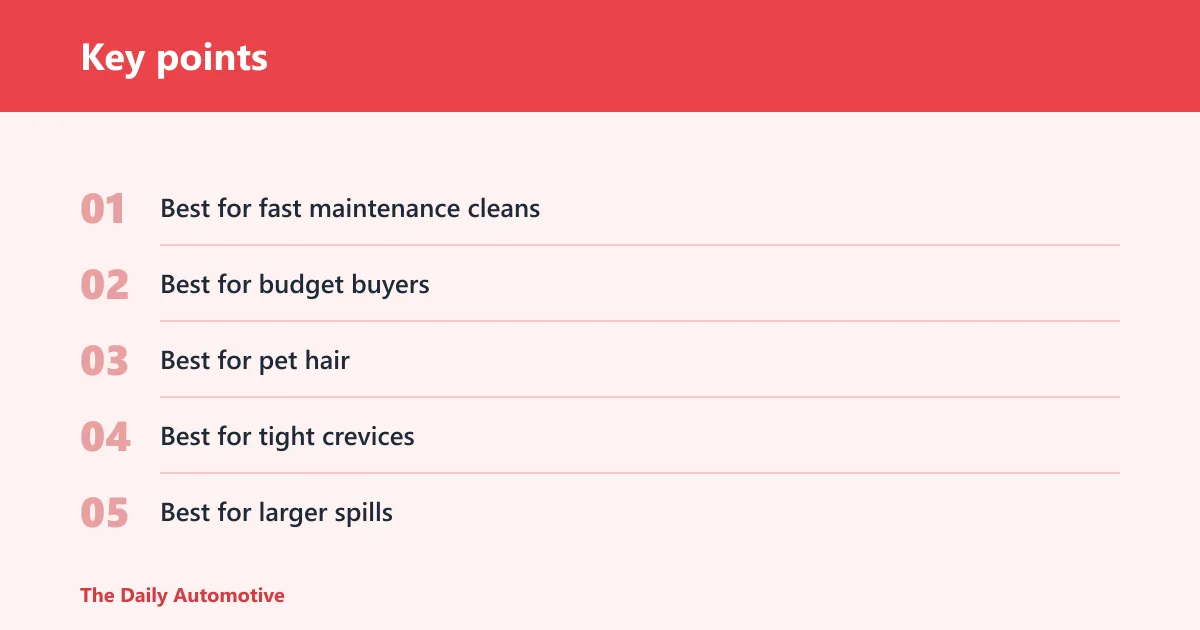
- Best for fast maintenance cleans: Fanttik Slim V10 APEX, because it is light, narrow, and strong enough for weekly touch-ups.
- Best for budget buyers: Black+Decker Dustbuster, because it costs $45 and handles basic cabin debris with a built-in crevice tool.
- Best for pet hair: Dyson Car+Boat, because it pairs high cordless power with a motorized brush.
- Best for tight crevices: Fanttik Slim V10 APEX, since the slim handheld format is easier to work into seat rails and console gaps.
- Best for larger spills: Armor All AA255W wet/dry utility vac, because a 2.5-gallon tank and 120 Volts AC suit mixed wet-and-dry cleanup.
📊 Worx Cordless Cube weighed 3.96 lb with battery. Source: Best Portable Cordless Car Vacuums of 2026.
Car vacuum decision table
Use the mess first, not the badge. Carpeted seats packed with grit need more suction and better agitation than leather trim. Rubber mats can handle stronger pickup and larger debris, while leather wants a gentler brush-first approach so you do not drag grit across the surface.
| Interior mess type | Recommended suction band | Minimum runtime | Preferred attachment | Likely failure mode | Better choice |
|---|---|---|---|---|---|
| Fast crumbs on cloth seats | Low to mid handheld suction | 10 minutes | Crevice tool | Small chamber fills fast | Cordless handheld |
| Sand in carpet and floor mats | Mid to high suction | 12 minutes | Crevice tool plus brush | Filter clogs and airflow falls | Cordless for light loads, wet/dry for heavy loads |
| Pet hair on cloth or carpet | High suction with agitation | 10 minutes | Motorized brush | Hair wraps the filter and brush | Dyson Car+Boat or wet/dry with brush |
| Leather seats with grit in seams | Low to mid suction | 8 minutes | Crevice tool, then soft brush | Nozzle can scratch if debris is dragged | Cordless handheld |
| Wet drink spill plus dry crumbs | Wet pickup capability matters more than suction band | N/A | Wet nozzle or utility attachment | Handheld filter saturates | Wet/dry vac |
| Deep-seat crevice under rails | Mid suction with narrow airflow path | 10 minutes | Long crevice tool | Nozzle cannot reach the debris | Cordless handheld with slim tool |
What matters for detailing?
The best detailing vacuum is the one that keeps suction through the whole cleanup, fits into narrow gaps, and is not so heavy that one hand tires before the seats are done. Runtime, chamber size, and attachments matter as much as raw suction numbers. A strong vacuum with a tiny bin can lose usefulness fast.
Suction, runtime, and battery fade
Suction tells you whether the vacuum can lift grit from carpet and seams. Runtime tells you whether it can finish the job at full power before falling off. Battery fade matters for weekly users, because a battery that weakens over years lowers max runtime and can make a once-usable vacuum poor for whole-cabin jobs.
A practical floor for compact cordless detailing is about 10 to 15 minutes at usable power. Less than that can be fine for quick center-console cleanups, but it becomes limiting for sand, pet hair, or two-row interiors. For frequent use, cost-per-clean drops only if the battery and filter stay serviceable.
Attachments that matter most
Start with a crevice tool. It reaches seat rails, cupholder grooves, door pockets, and the gap where floor mats meet trim. Add a brush for cloth, carpet, and dusty vents. For pet hair, a motorized brush matters more than extra accessories. Blower or inflator extras are useful, but they are bonuses, not the core buy.
Weight, noise, and emptying frequency
Weight shows up in the wrist during seat backs and overhead corners. Noise matters when you clean in a garage, driveway, or parking lot. Emptying frequency matters because small dust chambers fill fast with sand, crumbs, and pet hair, and performance drops once airflow is blocked by packed debris or a dirty filter.
Say your SUV has three school bags’ worth of cereal, sand, and pet hair across the rear footwell. A vacuum with a tiny chamber may need to be emptied halfway through, which wastes time and lets the filter clog sooner than the suction spec suggests.
Which vacuum fits your cleanup?
Match the tool to the mess and the interior material. Cordless handhelds are best for crumbs, light sand, and spot work on seats and trim. Wet/dry vacs win when the job includes damp messes, heavy debris, or several vehicles in a row. Leather, cloth, carpet, and rubber all ask for different attachments and suction behavior.
Cordless handhelds for crumbs and light sand
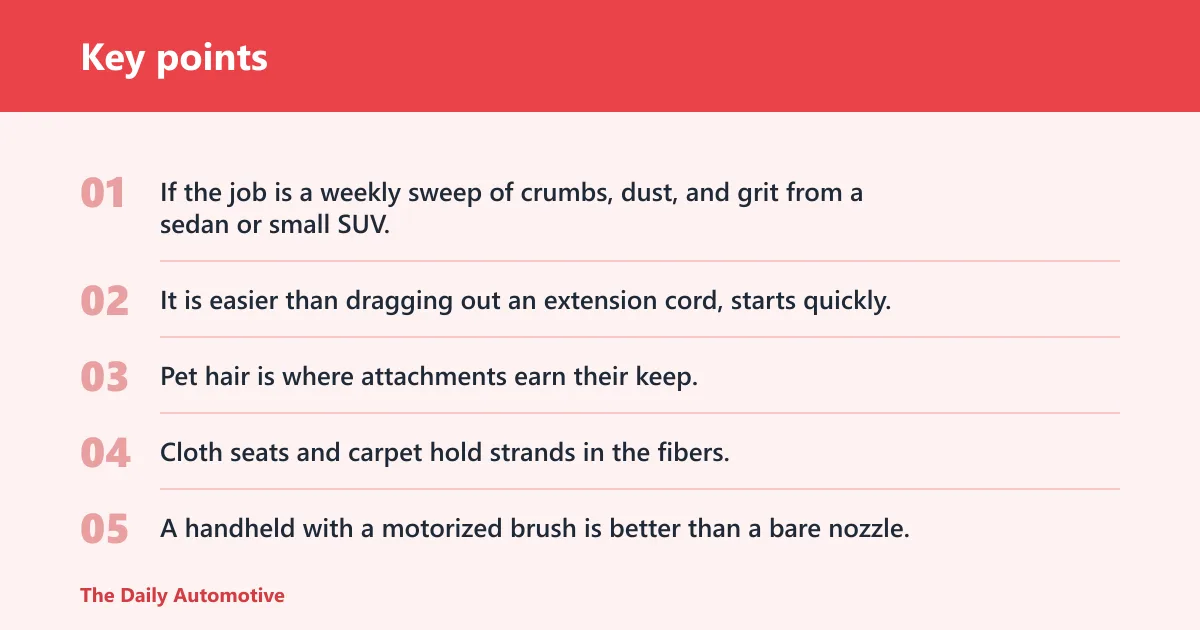
If the job is a weekly sweep of crumbs, dust, and grit from a sedan or small SUV, a cordless handheld makes the most sense. It is easier than dragging out an extension cord, starts quickly, and reaches cupholders and console edges without setup time. The limit is the bin and the battery.
Pet hair and fabric seats
Pet hair is where attachments earn their keep. Cloth seats and carpet hold strands in the fibers, so suction alone can miss what a brush or motorized head lifts first. A handheld with a motorized brush is better than a bare nozzle, and a wet/dry vac can outperform both when shedding is heavy.
Rubber mats and larger debris
Rubber mats often collect heavier grit, leaf fragments, and small stones. Those jobs stress weak suction and narrow nozzles, and they clog filters faster than light dust. A vacuum with stronger airflow and a wider pickup path handles that load better, especially if the debris is packed into the mat grooves.
Wet spills and mixed messes
Mixed wet-and-dry cleanup is where a wet/dry utility vac pulls ahead. Handheld cordless models are built for dry detailing, not soaked carpet padding or spilled drinks. A wet/dry vac with a 2.5-gallon tank and 120 Volts AC gives you room for larger spills, and it does not lose capability when the mess turns damp.
Suppose a child drops a half-cup of juice into the rear footwell and cereal follows. A cordless vacuum can handle the dry pieces after the liquid is removed, but a wet/dry vac is the cleaner first step because it manages the spill without saturating a filter.
Portable vacuum picks by job
Fanttik Slim V10 APEX
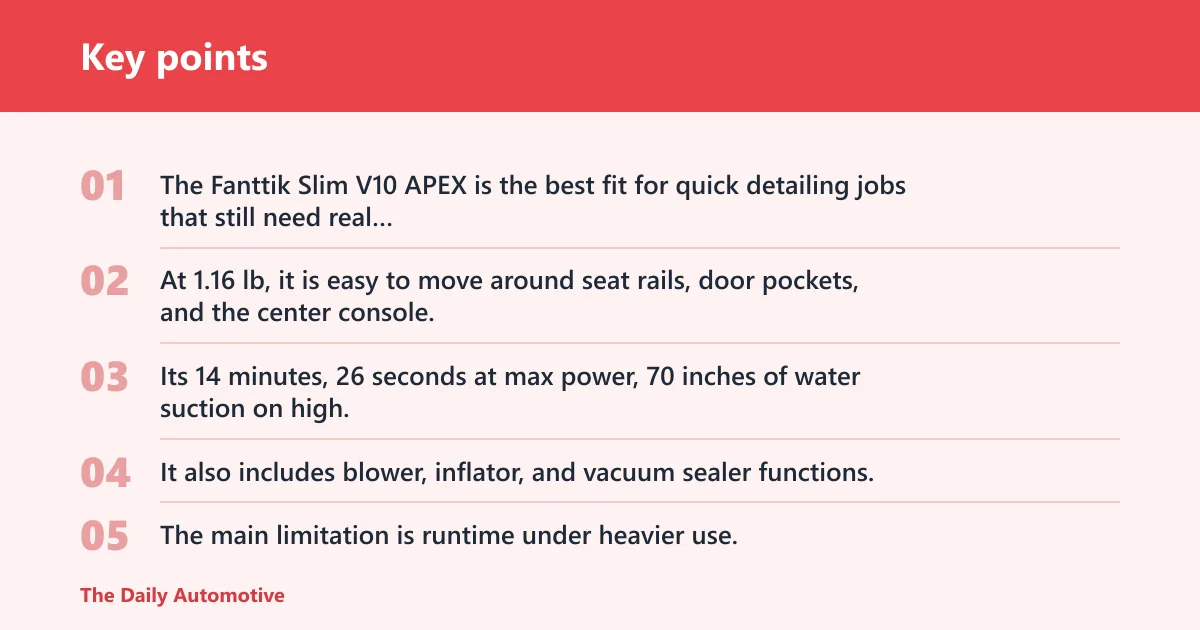
The Fanttik Slim V10 APEX is the best fit for quick detailing jobs that still need real suction. At 1.16 lb, it is easy to move around seat rails, door pockets, and the center console. Its 14 minutes, 26 seconds at max power, 70 inches of water suction on high, and 71.7 dBA average make it the strongest balance of portability and cleaning ability in this group.
It also includes blower, inflator, and vacuum sealer functions, which add versatility if you want extras. The main limitation is runtime under heavier use, so it is better for regular touch-ups than for a full deep-clean day across several vehicles.
Black+Decker Dustbuster
The Black+Decker Dustbuster fits buyers who want a basic, budget-minded handheld for crumbs and light cabin debris. It costs $45, weighs 2.42 lb, ran 14 minutes, 1 second at max power, and measured 16 inches of water in suction testing. That is enough for easy pickups and quick seat cleanups, not for packed sand or pet hair.
Its built-in crevice tool and flip-down brush help with seams and dashboard dust. The limitation is clear: the suction ceiling is low compared with the stronger handhelds here, so it is best when the mess is light and the budget is tighter than the cleaning demands.
Worx cordless Cube
The Worx Cordless Cube makes sense if you already own the battery ecosystem and want a compact cordless with better pulling power than a bare-bones handheld. It weighed 3.96 lb with battery, ran 11 minutes, 20 seconds on high suction, and reached 50 inches of water on high. It is louder too, averaging 78.8 dBA.
That weight and runtime fit shorter jobs, not long cabin sessions. It works better for quick sand pickup and floor mats than for all-day detailing, and the battery ecosystem requirement matters because the buy-in may be higher than the sticker price suggests.
Dyson Car+Boat
The Dyson Car+Boat is the most powerful cordless option in this ranking, and it is the pick for tough pet hair and stubborn debris where a motorized brush matters. It includes a motorized brush attachment and a crevice tool. The catch is runtime: it lasts less than seven minutes on max power, so it is built for bursts, not long sessions. (Caranddriver)
That short max-power runtime puts it in the premium tier for buyers who care more about peak cleaning than endurance. It fits a focused interior detail, especially on cloth and carpet, but it is not the most practical choice for multiple cars back to back.
Armor All AA255W wet/dry utility vac
The Armor All AA255W is the better answer when the job includes wet spills, muddy residue, or heavier debris in the garage and vehicle interior. It has a 2.5-gallon tank and uses 120 Volts AC, so it is portable but corded. That tradeoff gives you more practical capacity for larger messes than most handheld cordless vacuums can offer.
Use it when the cleanup goes beyond touch-ups. For a weekly crumb sweep, it is more setup than you need. For soaked mats, muddy cargo areas, or multiple messy seats, it is the safer first tool.
Are cordless car vacuums powerful enough?
Yes, cordless car vacuums are powerful enough for most detailing jobs if the goal is maintenance cleaning, seams, and light to moderate debris. They are not enough for every job. Runtime at max power, chamber size, and filter loading decide where they stop being efficient and where a corded wet/dry vac takes over.
Where cordless works well
Cordless handhelds work well on crumbs, dust, light sand, and surface pet hair, especially when the interior is cleaned often. They are useful in leather cabins, where a brush-first pass can lift dust without aggressive scrubbing. They also make more sense for smaller cars, where a full clean can happen inside one battery charge.
Where a corded wet/dry vac wins
A compact wet/dry vac wins for soaked carpet, larger spills, and heavy debris that would clog a small handheld filter. It also helps when the car has not been cleaned in a while and the floor mats hold more grit than a handheld chamber can comfortably hold. For multi-vehicle work, corded capacity matters.
How to think about weekly use and battery wear
If the vacuum will be used weekly for years, think beyond day-one runtime. Battery wear lowers practical cleaning time, especially on high power. A model that starts at 14 minutes on max power but fades quickly may cost less per purchase and more per usable clean over time if the battery is not replaceable or easy to service.
- Estimate the mess you clean most often: crumbs, sand, pet hair, or wet spills.
- Choose the attachment that fits that mess first.
- Check max-power runtime, not just a low-power figure.
- Compare dust chamber size and how often it will need emptying.
- Match the vacuum type to the job: cordless for quick dry detailing, wet/dry for larger mixed messes.
Frequently asked questions
What is the best car vacuum for detailing?
The best car vacuum for detailing is the one that matches your mess pattern, but the Fanttik Slim V10 APEX is the strongest all-around portable pick here for routine interior work. It combines 1.16 lb weight, 70 inches of water suction on high, and 14 minutes, 26 seconds of max-power runtime, which is enough for most quick detailing jobs.
Are cordless car vacuums powerful enough for detailing?
Yes, cordless car vacuums are powerful enough for many detailing tasks, especially crumbs, dust, and light sand. They become less convincing when the job involves deep carpet, heavy pet hair, or large debris that fills the chamber fast. At that point, a compact wet/dry vac is the better tool.
What suction power do I need for a car vacuum?
For light cabin cleanup, mid-range suction is often enough if the vacuum has a good crevice tool. For sand, carpet, and pet hair, higher suction helps because debris sits deeper in fibers and seams. Look at suction together with attachment quality, because a strong motor cannot make up for a poor nozzle.
How long should a cordless car vacuum battery last?
For detailing, a cordless battery should last at least 10 minutes at usable power, and more is better if you clean a larger SUV or more than one row. Very short max-power runtimes can still work for spot jobs, but they limit how much dirt you can remove before the battery fades.
Which car vacuum works best for sand and pet hair?
For sand and pet hair, the best option is usually a stronger cordless with a brush attachment for light to moderate loads, or a wet/dry vac for heavier cleanup. The Dyson Car+Boat is the strongest cordless pick here for pet hair, while the wet/dry vac is better when the mess is larger and more abrasive.
What attachments matter most for car detailing vacuums?
The crevice tool matters most because it reaches seams, rails, and cupholders. A brush comes next for cloth seats, carpet, and dust on trim. For pet hair, a motorized brush is the attachment that changes the result most. Blower and inflator extras are useful, but they are secondary features.
Products related to this article
Sponsored / affiliate links. As an Amazon Associate I earn from qualifying purchases. I may earn additional commission from eligible campaigns.