Essential, Dangerous Risks Of Idling Your Car
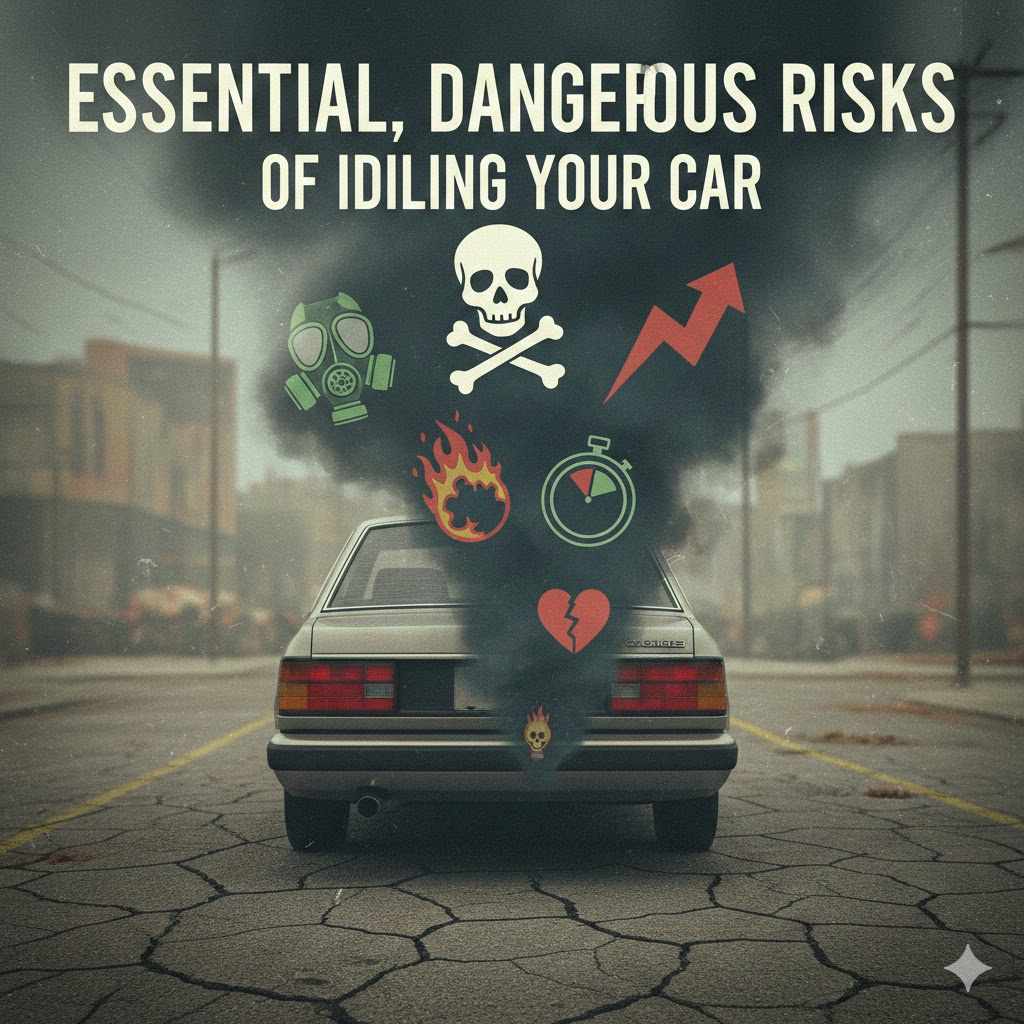
Letting your car idle for too long is surprisingly harmful. It damages your engine by causing carbon buildup, degrading engine oil, and fouling spark plugs. Running the heater while idling puts extra strain on the battery and alternator and, most dangerously, increases the risk of carbon monoxide poisoning, especially in enclosed spaces or with an exhaust leak.
Hey there, Md Meraj here! It’s a chilly morning, and you’re waiting in your car. What’s the first thing you do? You probably turn the key, start the engine, and crank up the heat. Letting your car run while it’s parked—also known as idling—feels harmless. We do it to warm up the engine, stay comfortable, or just wait for a friend. But what if I told you this common habit could be silently damaging your car and even posing a risk to your health?
It’s a frustrating thought, right? Don’t worry. In this guide, I’ll break down exactly why idling is a bad idea. We’ll look at the damage it causes, the money it wastes, and the simple things you can do instead. Let’s get you in control of your car’s health.
What Exactly is Car Idling?
Before we dive into the risks, let’s get on the same page. “Idling” is simply leaving your car’s engine running while the vehicle is not moving. This happens more often than you might think. Here are a few common scenarios:
- Warming up the car on a cold day before driving.
- Waiting in a drive-thru line.
- Sitting in a school pickup line.
- Stuck in heavy, standstill traffic.
- Waiting for a passenger to run a quick errand.
- Using your car’s heater or air conditioner while parked.
In each of these moments, your engine is running, burning fuel, and circulating fluids, but it’s not operating the way it was designed to. Modern cars are built to be driven, and when they just sit there running, a lot of things start to go wrong under the hood.
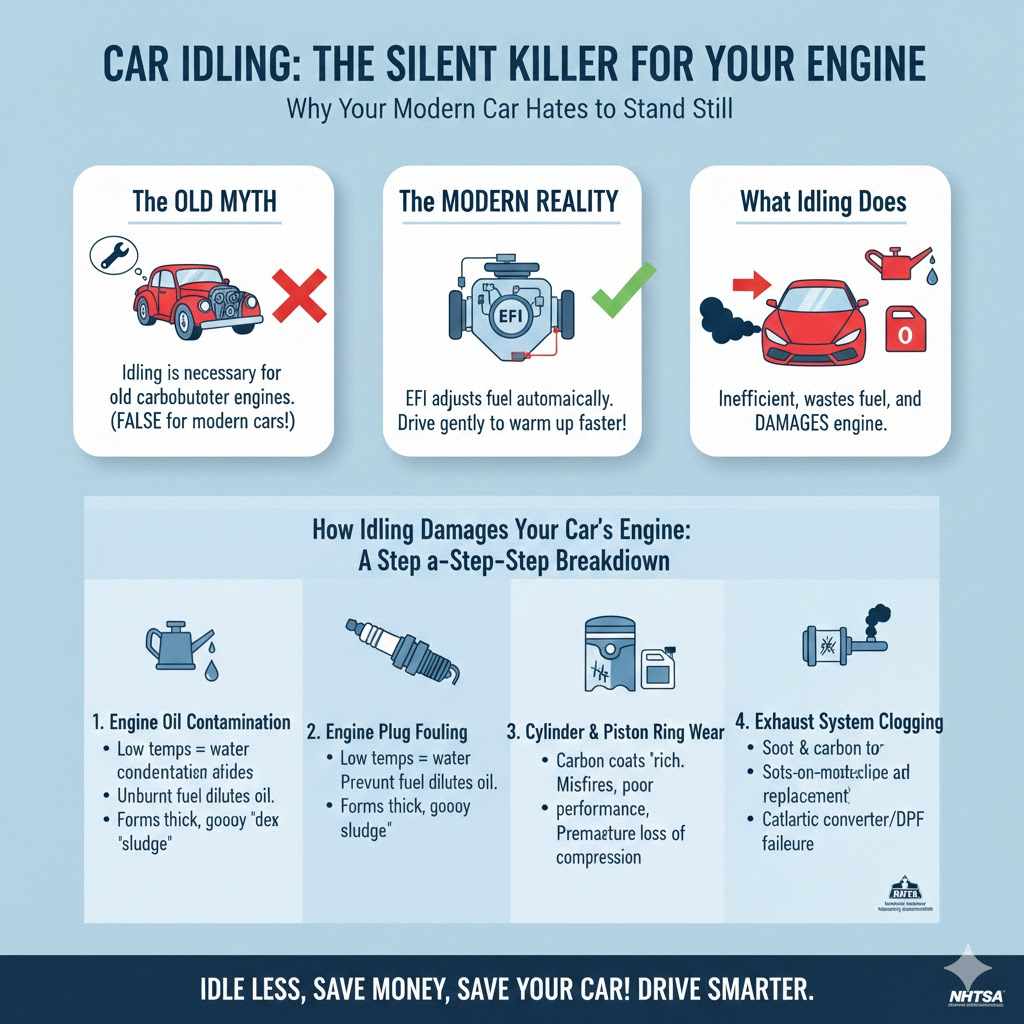
The Old Myth: “You Need to Warm Up Your Car”
Let’s tackle the biggest reason people idle: warming up the car. Decades ago, with older carburetor engines, this was necessary. Those engines needed time for the fuel and air mixture to get just right before you could drive smoothly.
However, your modern car is different. It uses an electronic fuel injection system. This system is smart! It automatically adjusts the fuel-air mixture, even when the engine is cold. The best way to warm up a modern engine is to drive it gently for the first few minutes. In fact, driving warms up the engine, transmission, and other components much faster and more efficiently than idling ever could. Idling only warms the engine itself, leaving the rest of your car’s parts cold.
How Idling Directly Damages Your Car’s Engine
Think of your engine like an athlete. It’s designed to run, jump, and move. Idling is like forcing that athlete to stand still for long periods—it’s inefficient and leads to problems. Here’s a step-by-step look at the damage that occurs when you let your car idle for too long.
1. Engine Oil Breakdown and Contamination
Your engine oil is the lifeblood of your car. It lubricates moving parts, cleans away debris, and helps control temperature. For oil to do its job properly, it needs to reach its optimal operating temperature—typically around 200°F (93°C).
When you’re driving, the engine works hard and heats up quickly, bringing the oil to this temperature. At idle, the engine isn’t working hard at all. It runs at a low RPM (revolutions per minute) and never gets hot enough. This causes two big problems:
- Water Condensation: An engine produces water as a byproduct of combustion. At normal driving temperatures, this water turns to steam and is expelled through the exhaust. At low idling temperatures, it condenses inside the engine and mixes with the oil, turning it into a thick, gooey substance called “sludge.” Sludge is a terrible lubricant and clogs up oil passages, starving parts of your engine of a proper oil supply.
- Fuel Contamination: Idling causes the engine to run “rich,” meaning there’s more fuel than air in the combustion chamber. Not all of this fuel burns. The unburnt fuel can seep past the piston rings and dilute the engine oil. Diluted oil loses its viscosity (its thickness) and can’t protect engine components from wear and tear.
2. Spark Plug Fouling
Spark plugs are essential for igniting the fuel-air mixture in your engine’s cylinders. A clean, hot spark is needed for efficient combustion. During idling, the engine runs cool and rich, creating the perfect conditions for carbon buildup.
This black, sooty carbon coats the tips of your spark plugs. This is called “spark plug fouling.” A fouled spark plug can’t produce a strong spark, leading to:
- Misfires (the engine stumbles or hesitates).
- Reduced fuel economy.
- Poor acceleration.
- Difficulty starting the engine.
Over time, you’ll need to replace your spark plugs much sooner than the manufacturer recommends, costing you money in parts and labor.
3. Damage to Cylinders and Piston Rings
This is a more severe consequence of idling. As mentioned, the rich fuel mixture from idling allows unburnt gasoline to wash down the cylinder walls. This phenomenon is known as “cylinder wash.”
The cylinder walls are supposed to be coated with a thin layer of oil to lubricate the piston rings as they move up and down. When gasoline washes this oil away, it causes metal-on-metal contact between the piston rings and the cylinder walls. This results in premature wear, scratches, and a loss of compression. A loss of compression means a loss of engine power and efficiency. Fixing this type of damage is often incredibly expensive and can require a complete engine rebuild.
4. Exhaust System Clogging
Your car’s exhaust system is designed to handle hot, fast-moving gases produced during driving. It includes critical components like the catalytic converter (in gasoline cars) and the diesel particulate filter (DPF) in diesel cars. Their job is to burn off harmful pollutants and soot.
Idling prevents these components from reaching the high temperatures they need to function. The exhaust gases are cooler and move more slowly. This allows soot and carbon deposits to build up, eventually clogging the system. A clogged catalytic converter or DPF can cause:
- A significant drop in engine performance.
- The “Check Engine” light to come on.
- Failed emissions tests.
- Expensive replacement costs (these parts can cost thousands of dollars).
| Component | Effect of Long-Term Idling | Effect of Normal Driving |
|---|---|---|
| Engine Oil | Contaminated with fuel and water; turns to sludge. | Reaches optimal temperature, cleans engine, and lubricates effectively. |
| Spark Plugs | Coated in carbon (fouled), leading to misfires. | Stay clean due to high temperatures, ensuring a strong spark. |
| Cylinders | Protective oil layer is washed away by fuel, causing wear. | Properly lubricated, minimizing wear on rings and walls. |
| Exhaust System | Clogs with soot because it never gets hot enough to clean itself. | Reaches high temperatures, burning off soot and pollutants. |
The Specific Danger: Idling with the Heater On
Running the heater while idling feels necessary in the cold, but it adds another layer of risk, particularly concerning your safety and your car’s electrical system.
Extra Strain on the Battery and Alternator
Your car’s heater fan, along with lights, the radio, and other electronics, all run on electricity. This electricity comes from the alternator, which is driven by the engine. However, at idle, the engine is spinning slowly, so the alternator isn’t producing much power.
If the electrical demand from the heater fan and other accessories is greater than what the alternator can supply at idle, your car will start drawing power directly from the battery. This can slowly drain your battery. If you idle for too long with the heat blasting, you might find yourself with a dead battery when you finally try to drive away. This puts extra wear on both the battery and the alternator, potentially shortening their lifespan.
The Silent Killer: Carbon Monoxide (CO) Poisoning
This is the most critical and dangerous risk of idling. Carbon monoxide is a colorless, odorless gas present in your car’s exhaust fumes. It is extremely toxic. When you are driving, the exhaust fumes are left far behind you. When you are idling, they can collect around and underneath your vehicle.
A small leak in your exhaust system—which you might not even know you have—can allow CO to seep into the car’s cabin. The risk is significantly higher if you are parked in an enclosed or poorly ventilated space, like a garage or a snowbank. The Centers for Disease Control and Prevention (CDC) warns that CO poisoning can happen quickly, causing dizziness, headaches, nausea, and in severe cases, unconsciousness or death.
Running the heater can make this worse. The car’s ventilation system can pull the contaminated air from outside directly into the cabin where you are sitting. Never, ever idle your car for an extended period in a garage, even with the door open, and be extremely cautious if your car is buried in snow, as the exhaust pipe can become blocked.
Beyond Your Car: The Wider Impacts of Idling
The damage isn’t just limited to your vehicle. Idling has significant financial, environmental, and health consequences.
Wasting Fuel and Your Money
An idling car gets 0 miles per gallon. It’s burning fuel without taking you anywhere. While it may not seem like much, it adds up quickly. According to the U.S. Department of Energy, idling can use between a quarter to a half-gallon of fuel per hour, depending on your engine size and whether the AC is on.
Think about it: if you idle for just 10 minutes every day, that’s over an hour of wasted fuel each week. Over a year, you could be throwing away dozens of gallons of fuel—and hundreds of dollars—for nothing.
| Engine Size | Estimated Fuel Wasted Per Hour of Idling | Estimated Cost Per Hour (at $3.50/gallon) |
|---|---|---|
| Small Car (4-Cylinder) | ~0.25 Gallons | ~$0.88 |
| Mid-Size SUV (6-Cylinder) | ~0.40 Gallons | ~$1.40 |
| Large Truck (8-Cylinder) | ~0.60 Gallons | ~$2.10 |
Harming the Environment
Burning fuel releases pollutants into the atmosphere. Every hour of idling releases pounds of carbon dioxide (CO2), a primary greenhouse gas, along with other harmful pollutants like nitrogen oxides and volatile organic compounds. These contribute to smog, acid rain, and climate change. By reducing your idling time, you are doing a small but meaningful part to protect our air quality and environment.
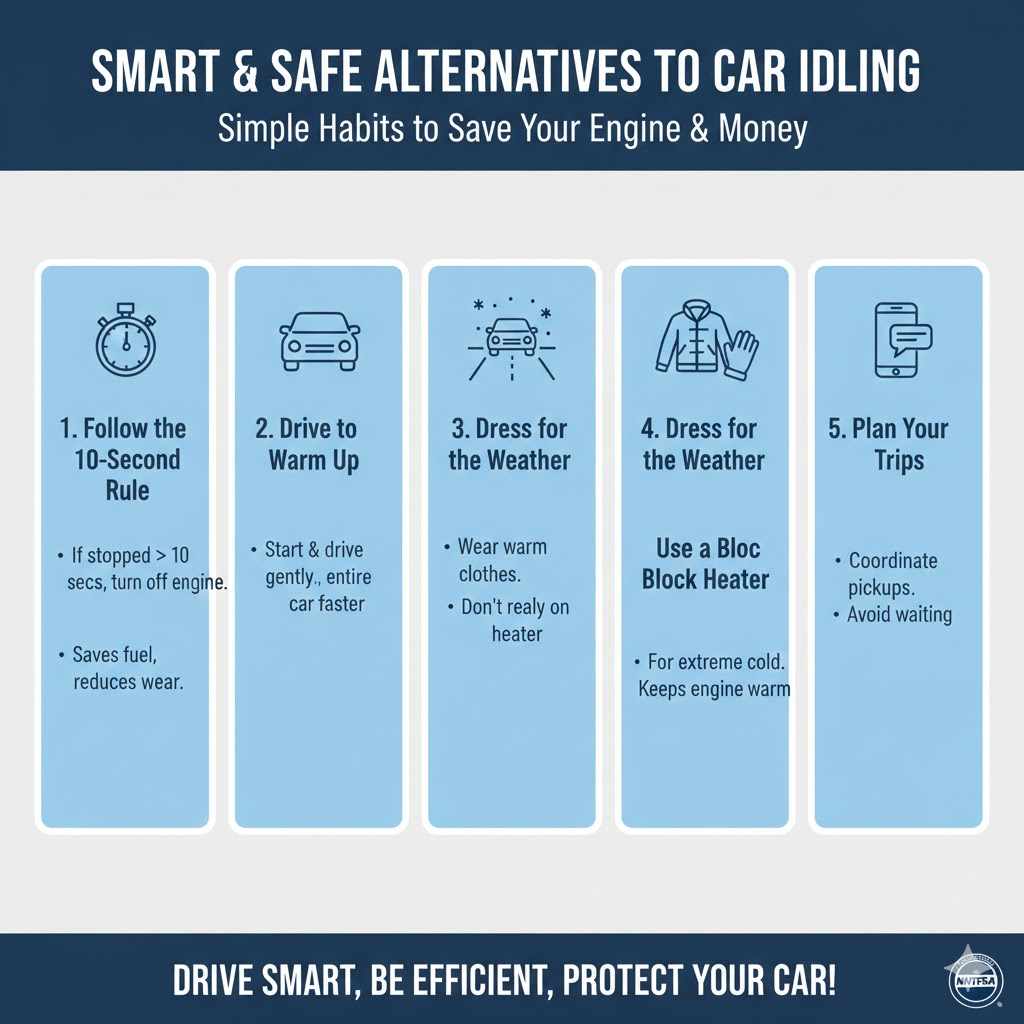
Smart and Safe Alternatives to Idling
Okay, so we know idling is bad. What should you do instead? The good news is that the alternatives are simple, save you money, and protect your car.
- Follow the 10-Second Rule. If you’re going to be stopped for more than 10 seconds, turn off the engine. Modern starters are durable and designed for frequent use. Restarting your car uses less fuel than idling for 10 seconds, so you’ll save gas and reduce engine wear. This applies to drive-thrus, train crossings, and long red lights.
- Drive to Warm Up. Instead of idling to warm up your car, just start it and begin driving gently. Keep the RPMs low for the first 3-5 minutes. This warms up the entire drivetrain—engine, transmission, and all—much more effectively and quickly than idling.
- Dress for the Weather. On a cold day, don’t rely solely on your car’s heater. Wear a warm jacket, gloves, or even keep a blanket in the car. This way, you won’t feel the need to idle for 15 minutes just to get the cabin toasty.
- Use a Block Heater in Extreme Cold. If you live in a very cold climate, a block heater is a fantastic investment. It’s a small electric heater that keeps your engine’s oil and coolant warm. You plug it in overnight, and in the morning, your car starts easier and your heater will provide warm air almost instantly, eliminating the need to idle.
- Plan Your Trips. If you’re waiting for someone, ask them to call or text you when they are ready to leave. This avoids sitting in a parking lot with the engine running. Small changes in habits can make a big difference.
Frequently Asked Questions (FAQ)
1. Is it bad to idle a car for 30 minutes?
Yes, it is very bad. Idling for 30 minutes causes significant engine wear, wastes about a quarter-gallon of fuel, and needlessly pollutes the air. It allows engine oil to become contaminated and can lead to carbon buildup on spark plugs and in the exhaust system.
2. Does idling charge a car battery?
Not effectively. At idle, the engine runs so slowly that the alternator produces very little electricity. If you have your heater, lights, and radio on, you may actually be draining the battery faster than the alternator can charge it. To properly charge a battery, you need to drive the car at normal speeds for at least 20-30 minutes.
3. Is it better to turn your car off or let it idle?
For any stop longer than 10 seconds, it’s better to turn the car off. The myth that restarting a car uses a lot of gas and wears out the starter is outdated. Modern cars are designed to handle frequent starts efficiently, and you will save fuel and prevent engine damage by shutting it off.
4. How long can you safely idle a car?
From a mechanical and safety standpoint, you should avoid idling for more than a minute or two. The only time extended idling is necessary is in extreme traffic situations where you are constantly starting and stopping. Otherwise, there is no “safe” amount of prolonged idling; all of it contributes to wear and tear.
5. Can idling with the heater on kill you?
Yes, tragically, it can. If there is an exhaust leak, carbon monoxide (CO) can enter the car’s cabin. Since CO is odorless and colorless, you wouldn’t know it’s there until you start feeling symptoms like dizziness or nausea. This is especially dangerous if you are asleep in the car or parked in an enclosed space like a garage. Always ensure proper ventilation if you must idle for any reason.
6. Does idling use a lot of gas?
It uses more than you think. While it’s not as much as driving at high speed, it’s still a complete waste. An average car will burn about 0.25 to 0.5 gallons of fuel for every hour it idles. This can add up to hundreds of dollars in wasted money over a year.
Conclusion: Turn the Key to a Healthier Car
Let’s face it, idling is a habit. It’s one we often do without even thinking about it. But now you know the truth: that seemingly harmless habit is silently hurting your engine, draining your wallet, and polluting our air. From fouling your spark plugs and turning your oil to sludge to the very real danger of carbon monoxide, the risks are simply not worth it.
The good news is that changing this habit is easy. By following the 10-second rule and simply driving your car to warm it up, you can protect its most vital components. You’ll save money on fuel and repairs, and you’ll be doing your part for a cleaner, safer environment. So the next time you’re tempted to let the engine run, remember what you’ve learned today. Turn the key, shut it down, and give your car—and your wallet—the break it deserves.
Products related to this article
Sponsored / affiliate links. As an Amazon Associate I earn from qualifying purchases. I may earn additional commission from eligible campaigns.